Today the museum is closed

Map

Exhibit description

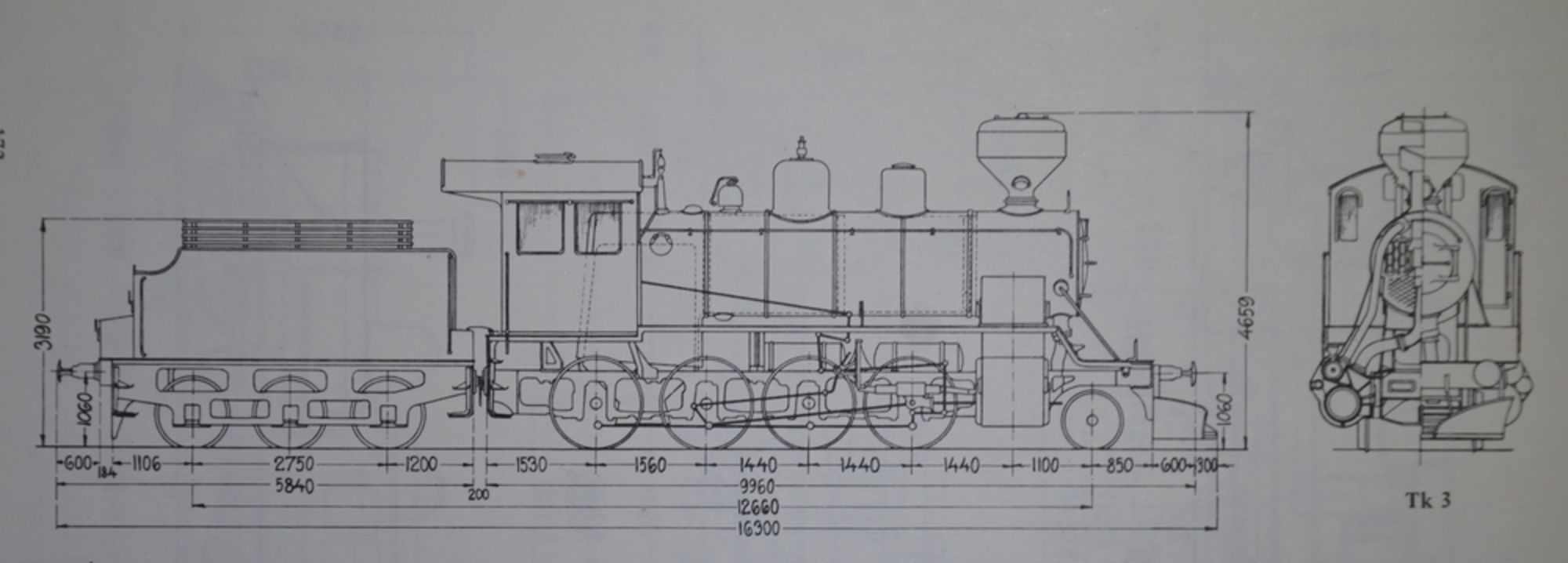
Freight locomotive Тк3 1105

As a result of the armed conflicts that took place with Finland from 1939 to 1945, approximately 90 Finnish steam locomotives ended up in the Soviet Union.

The arrival of Finnish steam locomotives in the USSR can be divided into several stages. During the Winter War from November 1939 to March 1940, the USSR obtained six steam locomotives; under the peace treaty of 1940, the USSR obtained 75 more; during the Karelian offensive in summer 1944, nine; under the peace treaty of 1944, one more.

During military action and a part of peace treaties, the Soviet Union obtained 91 Finnish steam locomotives, three of which were reclaimed by Finnish troops.

However, as a result of military action in 1941, Finnish troops succeeded in reclaiming from Soviet territory three steam locomotives (one of class Tk1 and two of class Tk3, per the 1942 class designations) from those that had passed into Soviet hands.

In the early years of WWII, low-power steam locomotives prevailed in Finland, due in part to the weak technological infrastructure of the Finnish railways (weak track superstructure, low-capacity cars) and the type of work they were used for. Thus, the most powerful Finnish TK3 freight locomotives brought to the USSR were only a little more powerful than the Soviet class OV.

The weak superstructure of the Finnish tracks and low carrying capacity of their cars meant that most steam locomotives in Finland were low power.

Most of the Finnish freight steam locomotives that came to the USSR were type 1-4-0 class Tv1 and class Tk3 (16 and 26 respectively). Passenger and freight locomotives of other classes built between 1898–1913 came to the USSR in small numbers.

Operation

Most of the steam locomotives that came to the USSR from 1939 to 1940 were on the Oktyabrskaya Railway on 1st January 1941. This railway’s fleet included 74 Finnish vehicles: 53 freight and 21 passenger locomotives. Two more Finnish steam locomotives were in the inventory of the Leningrad Railway. The fates of these locomotives were diverse. Some were transferred to industrial works railways in 1941, and some remained in the Ministry of Railways’ fleet. And as already mentioned, three of the steam locomotives were reclaimed by Finnish troops in 1941.

After the end of the Great Patriotic War, the Finnish steam locomotives remaining in the Ministry of Railways’ fleet inventory were mainly concentrated on the Oktyabrskaya and Kirov Railways. There were operated at the Sortavala, Lodeynoye Pole, Vyborg and Gatchina Depots, among others, for service and support work.

The last Finnish steam locomotives were decommissioned from Soviet railways in the 1950s. They remained in operation at industrial enterprises for only a little longer.

Finnish steam locomotives were only in service on Soviet railways for a short period of time: the last of them was decommissioned in the 1950s, and at industrial enterprises, they were used for a little longer. And in 1951, a decree from the Council of Ministers of the USSR saw five Finnish locomotives (three of class Tv1 and two of class Tk3) returned to their former owners.

Museum Exhibit

Freight steam locomotive Tk3 1105 was built at the Lokomo plant in Finland in 1943 and was assigned serial number 143. The “Tk” part of the class name comes from the Finnish words “Tavarajunaveturi”, meaning “freight locomotive”, and “kevyt”, meaning “light”.

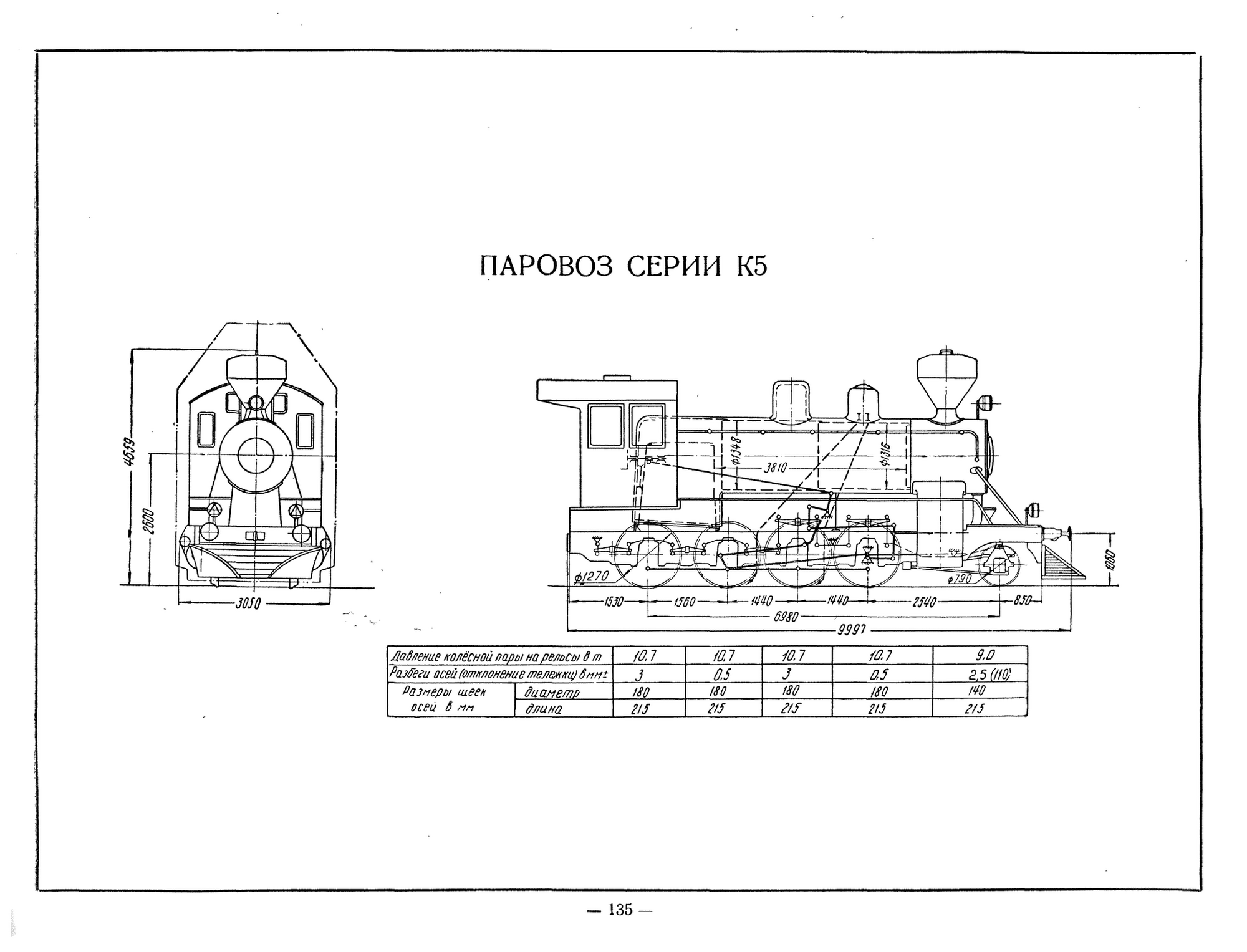
Tk3 freight steam locomotives (designated K5 prior to 1942) were built from 1928 to 1953 at the Finnish plants Lokomo and Tampella. Additionally, in 1949, 20 locomotives were built by Danish plant Frichs. In total, 161 steam locomotives were built in this class. Tk3-class locomotives were in operation on Finnish railways until the mid 1970s. Today, some of these locomotives can be found in museums in Finland and some have been installed as monuments.

Only one Finnish steam locomotive survived to the present day in Russia. It stands in the St. Petersburg-Finlyandsky Station. Therefore, in 1998, Soviet TE 3397 was exchanged for Finnish Tk3 1105.

As only one Finnish locomotive survived to the present day in Russia — steam locomotive H2 293, which stands in the St. Petersburg-Finlyandsky Station — the decision was made to purchase a Finnish steam locomotive from the Finnish Railway Museum in order to expand the collection of the Central Museum of the Oktyabrskaya Railway. In 1998, TE 3397 from the collection of the Central Museum of the Oktyabrskaya Railway was sent to Finland, and in return, the museum received Tk3 1105.

Parameters

Technical
specifications

Year
1943
Locomotive weight in working condition without tender, t
51,8
Weight of the locomotive in working order with tender, t
73
Design speed, km/h
60
Maximum power at the wheel rim, hp
600
Locomotive empty weight, t
47,4
Locomotive coupling weight, t
42,8
Tender type
Triaxial
Full wheelbase steam locomotive with tender, mm
13 720
Length of locomotive with tender by buffers, mm
16 720
Diameter of driving wheels, mm
1 270
Nominal curve radius, m
80
Steam pressure, kg/cm2
14
Firebox type
Crumpton
Grate area, m2
1,6
Full evaporative heating surface of the boiler (water), m2
58,8
Axial formula
1–4–0
Number of smoke pipes, pcs.
106
Diameter of smoke pipes (outer), mm
45
Number of flame tubes, pcs.
18
Diameter of flame tubes (outer), mm
127
Diameter of steam superheating pipes (outer), mm
35
Superheater type
Double turn

Drawings
and diagrams

History

Chronology

  1. 1928 The new Tk3 steam locomotive class is developed in newly independent Finland.
  2. 1939–1945 Some Tk3s are captured by Soviet troops during military conflicts between the USSR and Finland.
  3. 1943 Steam locomotive Tk3 1105 is built in Finland.
  4. 1950s The class Tk33 is decommissioned in the USSR, and some are returned to their former owners.
  5. 1974 Class Tk3 steam locomotives are decommissioned from Finnish railways.
  6. 1998 Steam locomotive Tk3 1105 becomes an exhibit at the Central Museum of the Oktyabrskaya Railway.
  7. 2001–2016 Steam locomotive Tk3 1105 is exhibited at the Russian Railway Museum in St. Petersburg.