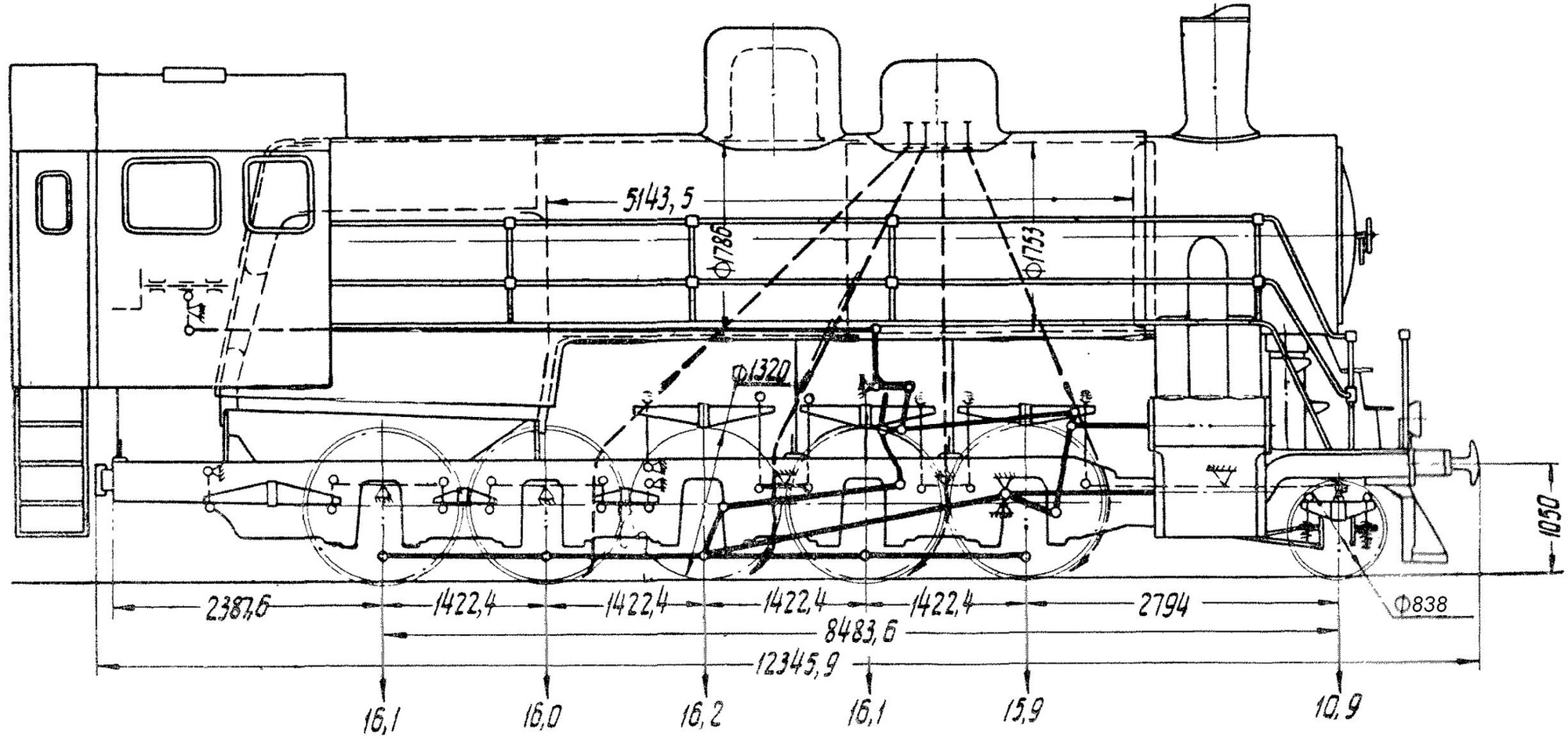
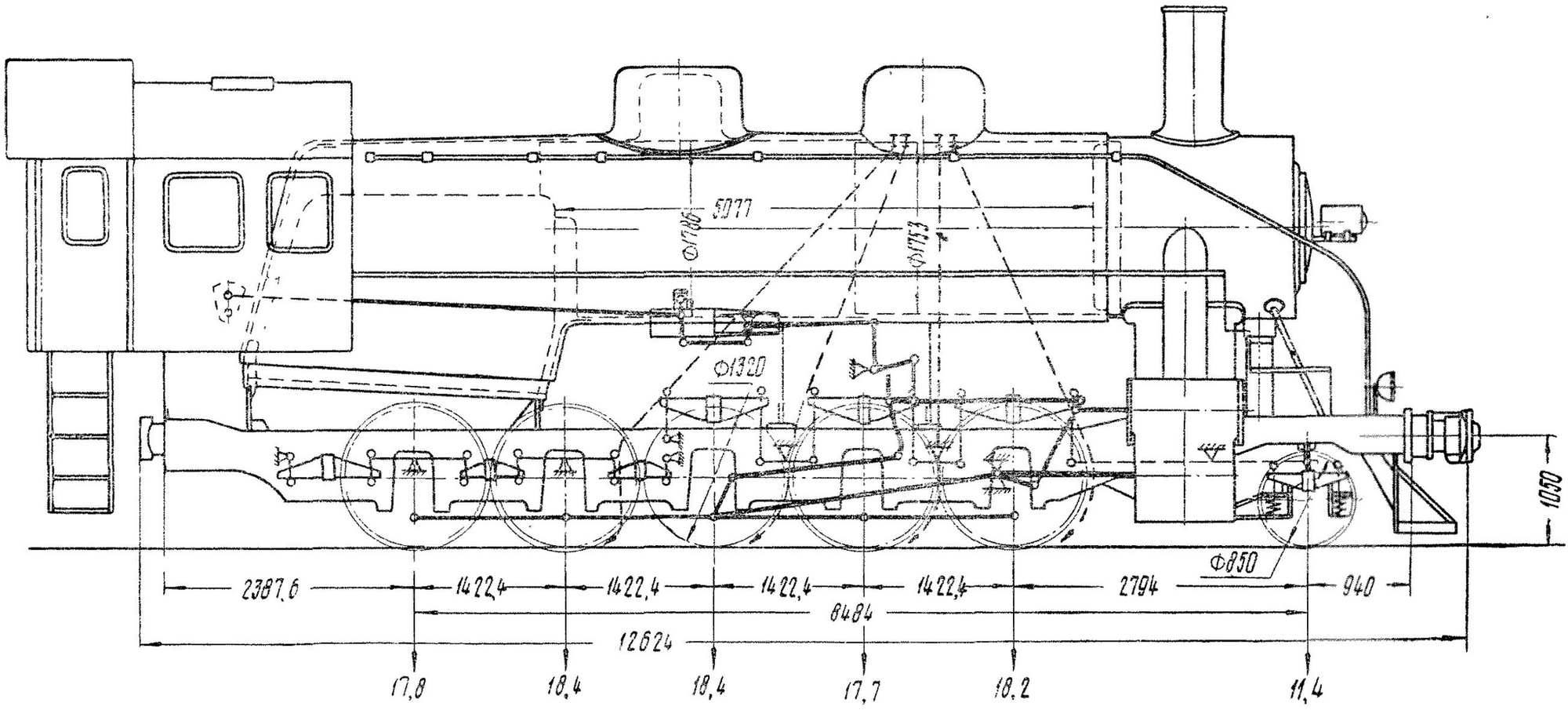
Initially, the majority of the class E steam locomotives of various indexes operated on the railways of the European part of Russia, the Urals, and Siberia. As of 1 January 1923, 604 steam locomotives listed in the inventory fleet of the Ministry of Railways were distributed as follows: Yekaterininsky Railway—61 steam locomotives, Perm Railway—266 steam locomotives, Siberian Railways—277 steam locomotives.
By the beginning of the Great Patriotic War, class E steam locomotives were primarily used on the East Siberian Railway, in Transbaikal, and in the Far East of the USSR. In 1954, 12 EL steam locomotives were converted to operate on a 1,435 mm gauge and were kept in reserve on sections of railways bordering China. A small number of EL steam locomotives were transferred to Mongolia in 1955 to operate on the Ulaanbaatar Railway. In the mid-1950s, the process of transferring E F -, E S -, E K -, and E L -class steam locomotives to the branch lines of industrial enterprises and removing them from the inventory of the Ministry of Railways began.
A significant chapter in the history of the class EL steam locomotives is their operation on the Chinese Eastern Railway. At the beginning of the 1920s, there were 124 class EL locomotives in the Chinese Eastern Railway fleet. Of these, 80 machines were later transferred to the USSR in the 1930s, while the remaining locomotives were sold in 1935, along with the USSR’s share of the Chinese Eastern Railway property, to Manchukuo, a state entity under Japanese control. These 44 locomotives were eventually converted to the 1,435 mm gauge and went on to serve on the railways of China, where they were assigned the class DK 2 . One of these steam locomotives, DK 2 114, has been preserved in China as a museum exhibit.