Today the museum is closed

Map

Exhibit description

Freight wagon bogie New generation bogie 18-9855

First models

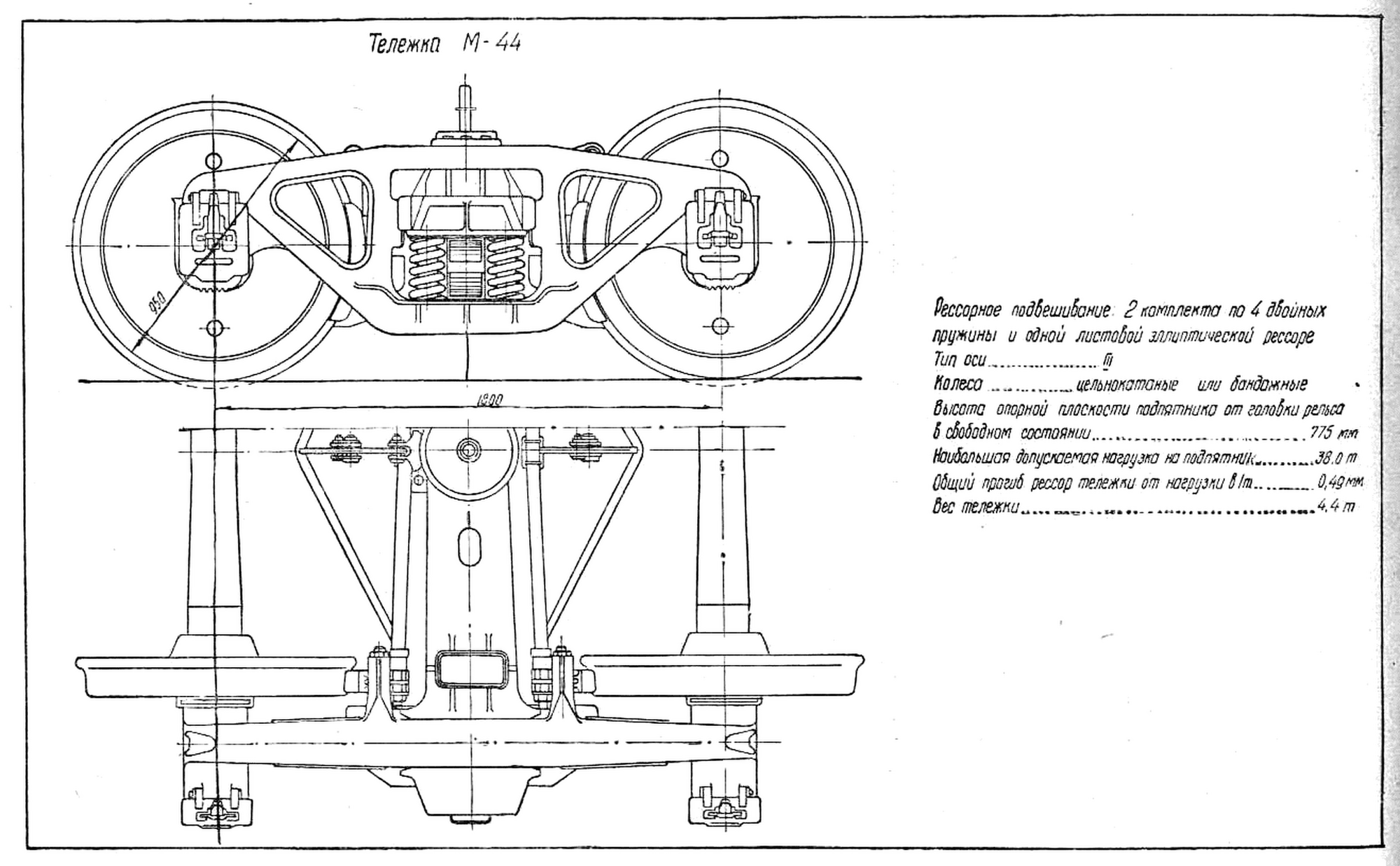
For the first time on the USSR railways, freight bogies with cast sidewalls appeared in 1943 together with flat cars ordered from the USA during the war. Their design was reworked by the Ural Carriage Works in 1944 Type of bogie — M-44. It turned out to be unmanufacturable in casting and made it difficult to roll out the wheel pairs.

Further development of this type was the strengthening of the side beam and the production of the sliding box housing separately from it. For a smoother ride, a mixed set of springs — spiral and elliptical. The type of bogie developed by UVZ in 1950 is the MT-50. Starting from 1951, all freight cars were equipped with this type. However, it did not ensure a smooth ride.

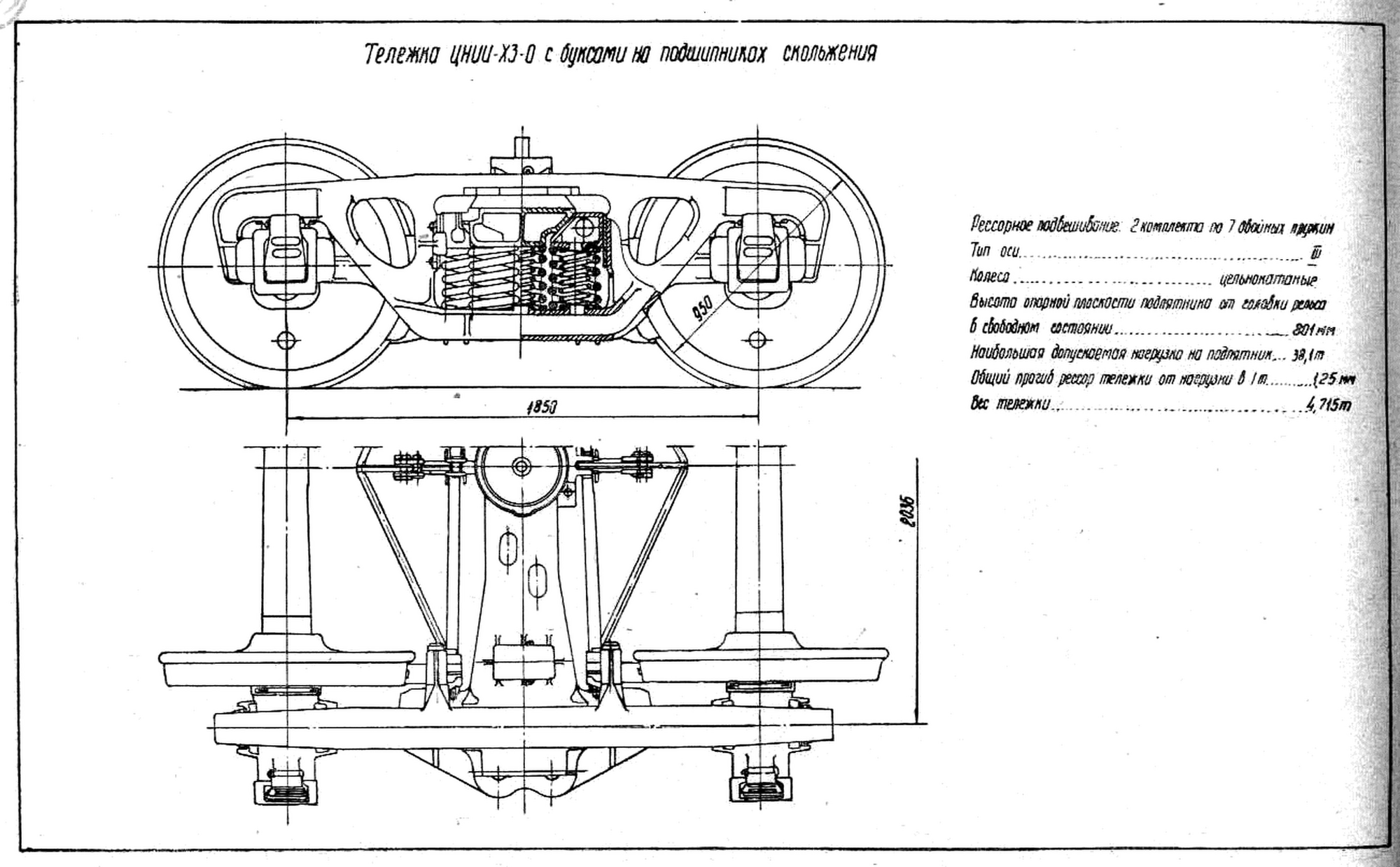
Therefore, the next step was the creation of a bogie that became the main one for many years up to the present day — the TsNII-Kh3-O type. TsNII developed this design, "X" is the first letter of the designer Khanin's surname, 3 is the third option, and "O" is lightweight. Prototypes developed by engineer A.G.Khanin appeared as early as 1940. Mass production began in October 1956.

Initially, the bogie still used plain axle boxes, but with the development of in-line rolling bearings, the axle box housing was redesigned. This bogie has sufficient strength and reliability in operation. Until 1972. it was only called that — TsNII-KhZ-O. Now it is simply called by the model number — 18-100..

The bogie uses two spring sets, each of which consists of seven double-row springs. Depending on the weight of the car, six or even five double-row springs can be used in the spring set instead of seven. The outer side springs support the wedges of the vibration dampers. The bogie is equipped with a braking device with one-sided pressing of the shoes.

Cars on bogies of these types could be safely operated at speeds of up to 120 km/h.

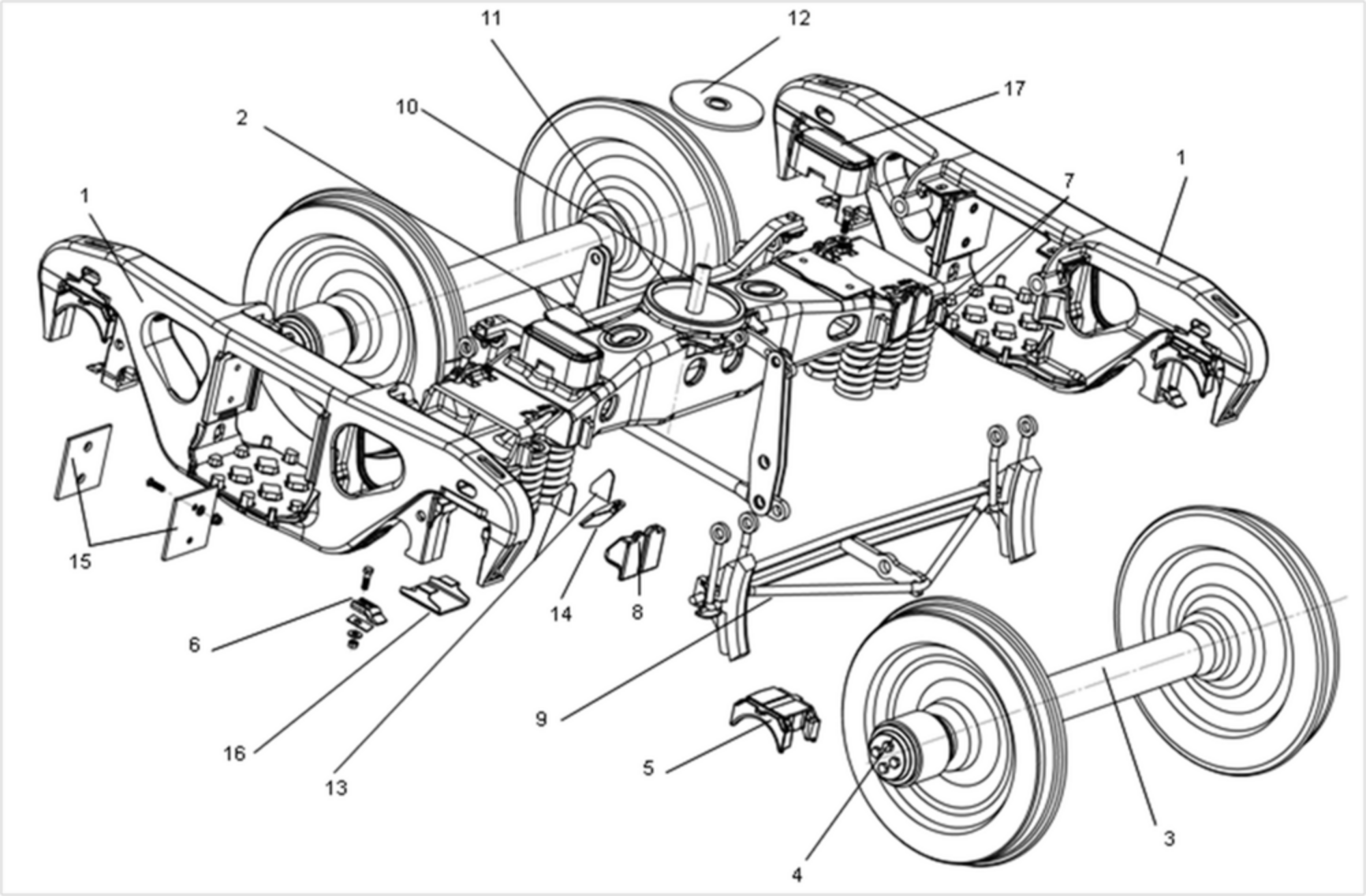
The modern innovative bogie 18-9855 is designed for installation under freight cars with an axle load of up to 25 tf and a design speed of up to 120 km/h. The bogie was developed by JSC NVC Wagons based on the technical design of Standard Car Truck (Wabtec Corporation, USA) for the Tikhvin Freight Car Building Plant.

Design solutions were used for the new generation of cars. Despite the increased axle load, compared to standard cars, the impact on the track was reduced to 3%. Due to the use of wear-resistant elements, the overhaul mileage of the bogie model 18-9855 is 1 million km or 8 years. The dynamics were improved, wheels of increased hardness and special brake pads began to be used. This reduced the wear rate and the rate of development of wheel chips, which increased their service life to 12 years.

Parameters

Technical
specifications

Service life, years
32
Bog weight, kg
5,000
Bog base (nominal), mm
1,850
Design speed of the car, km/h
120
Calculated static load from the wheelset on the rails, kN (tf)
245.25 (25)
Standard time between repairs, up to million km (years)/thousand km (years)
1 (8)
Distance between the lines of application of loads to the axle journals of the wheel pairs and the longitudinal axes of the spring assemblies, mm
2,036
Distance between the longitudinal axes of the side bearings, mm
1,524
Wheel diameter along the tread circle, mm
957
Distance from the level of the rail heads to the supporting surface of the thrust pad in a free state/under an empty car (car tare 21 t), mm
830/795
Difference in deflections between empty and loaded cars, mm
55
Calculated static suspension deflection under an empty car (car tare 21 t for 18-9855)/under a loaded car (car gross 100 t for 18-9855), mm
17/49
Side sliders
Spring elastic

Drawings
and diagrams

History

Chronology

  1. 1940 And so the next step was the creation of a bogie, which became the main one for many years up to the present day — a bogie of the TsNII-Kh3-O type. TsNII — that was the previous name of VNIIZhT (which developed this design), X — the first letter of the designer Khanin’s surname, 3 — the third option, O — lightweight based on the results of MIIT research. Prototypes of this bogie, developed by engineer A. G. Khanin, appeared as early as 1940. Mass production of these bogies began in October 1956. Initially, the bogie still used plain axle boxes, but with the development of in-line rolling bearings, the axle box housing was redesigned. This bogie is durable and reliable in operation. Until 1972, the cart was called only by that name - TsNII-KhZ-O. Now they call it simply by its model number - 18-100.
  2. 1943 The bogie is a single-suspension freight bogie with a cast sidewall on rolling bearings. Freight bogies with a cast sidewall first appeared on Soviet railways in 1943, along with flat cars ordered from the United States during the war. It was a single-suspension bogie with sliding axle boxes, with the axle box housing cast as a single piece with the sidewall. Its design was reworked by the Ural Carriage Works (UVZ) in 1944. The bogie type was M-44. But it was not technologically advanced in casting and made it difficult to roll out the wheel pairs.
  3. 1950 Further development of this type was the strengthening of the side beam and the production of the sliding axle box housing separately from it. For a smoother ride, a mixed set of springs was used - spiral and elliptical. A new type of bogie — MT-50 — was developed by UVZ in 1950. Since 1951, all freight cars were equipped with this type of bogie. But it did not ensure a smooth ride.