Today the museum is closed

Map

Exhibit description

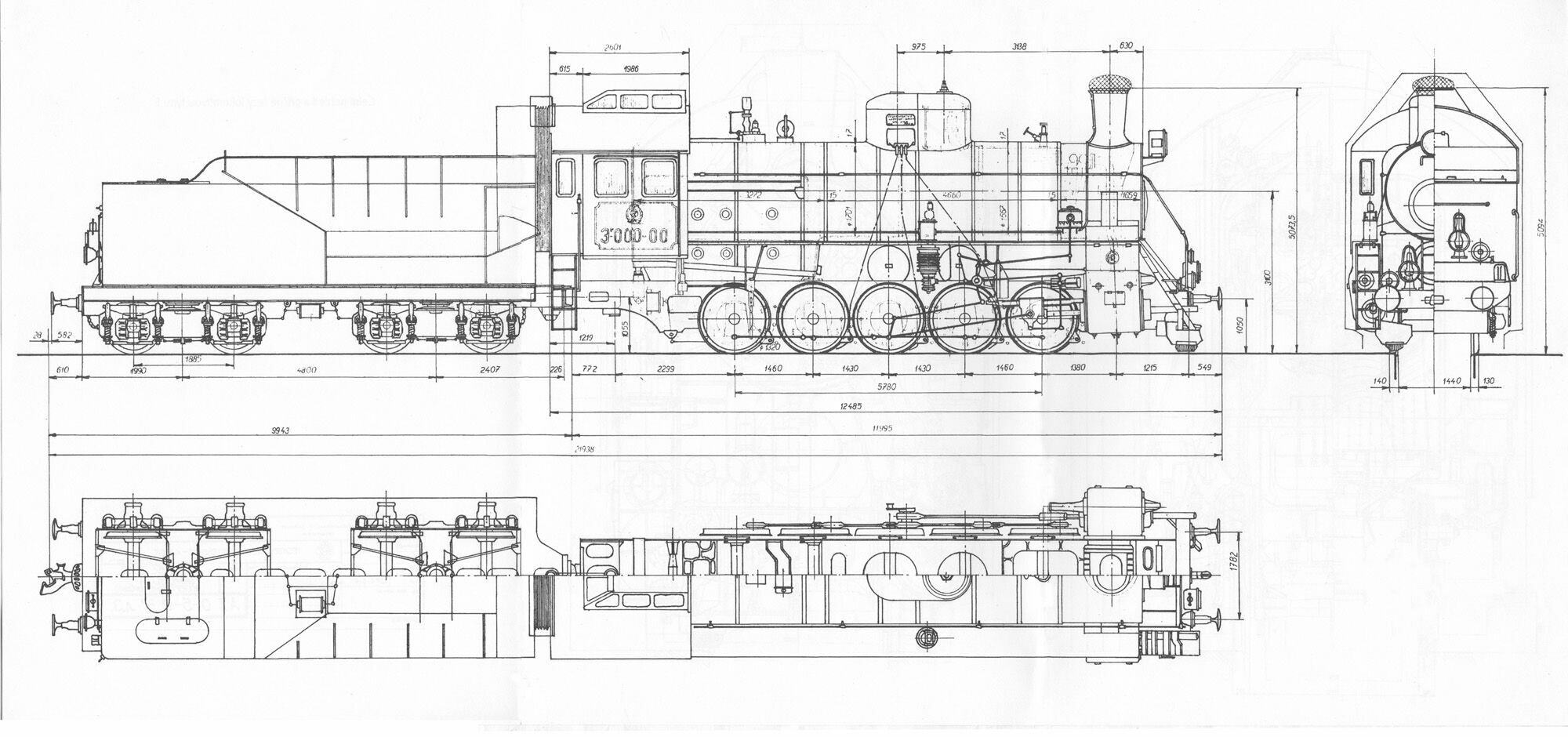
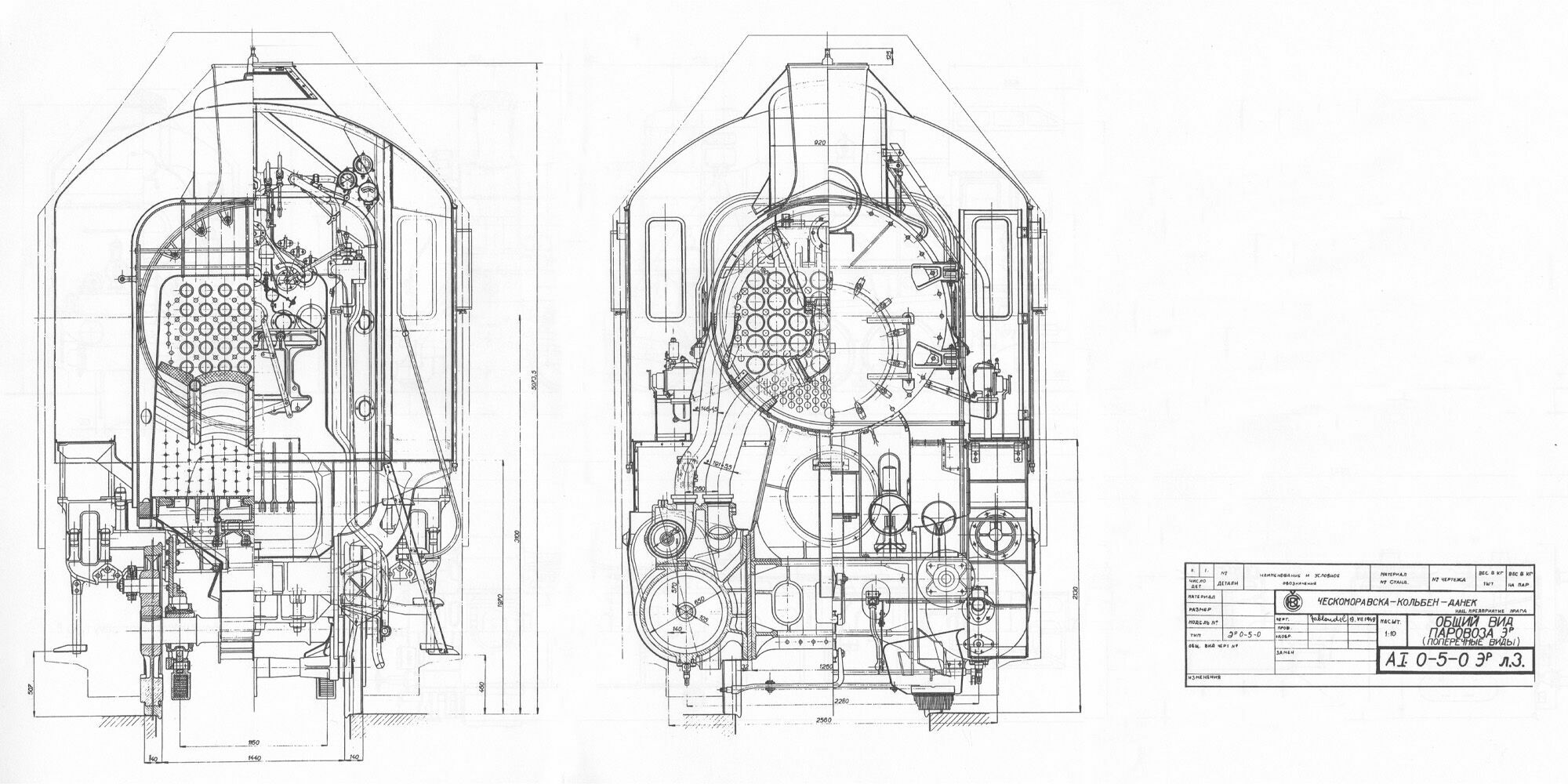
Freight locomotive ER791 81

During the Great Patriotic War, the steam locomotive units of the USSR’s railways suffered great damage. Some steam locomotives were destroyed in military action, some were broken down for scrap metal by the occupying forces, and even more were severely damaged and had to be struck from the railway fleet inventory. Additionally, many steam locomotives were in need of serious repair work, which the destroyed steam locomotive repair plants in the western part of the USSR made particularly difficult.

During the war, the main Soviet steam locomotive plants were located in occupied territory. Plants in the east produced fewer than 100 new steam locomotives in that time.

The main Soviet steam locomotive plants were located in occupied territory, and after the liberation, a long repair and recovery period was required to return them to pre-war capacity for locomotive production. From 1942 to 1945, the plants located in the east of the country and the Kolomna Locomotive Works produced fewer than 100 new steam locomotives for the railways of the USSR.

Imported Machines

Delivery during the war and in the immediate post-war years of approximately 2,200 ShА, EА and EM steam locomotives from the USA and the arrival of Class 52 steam locomotives (renamed in 1951 to class TE) both captured and as German reparations were a great boost to the USSR’s steam locomotive operations. However, even these machines remain insufficient to meet the railway’s need for new locomotives.

The ER variant developed in 1943 at the Kolomna Locomotive Works was commissioned in Romania, Hungary, Poland, and Czechoslovakia (now Czechia).

As a result, the decision was made to commission new steam locomotives in Romania, Hungary, Poland, and Czechoslovakia (now Czechia). The class E steam locomotives — simple and lightweight vehicles of medium power — proved themselves in military operations. With this taken into account, along with the weakened condition of the track, the ER variant, developed in 1943 at the Kolomna Locomotive Works, was selected. Steam locomotives ER750 02 and 03 were built to these drawings.

The new steam locomotives were to be built both as compensation for the damage caused to the USSR by Germany’s former allies, and as part of trade agreements. Some steam locomotives were delivered as reparations.

The first ER760 01 steam locomotive was manufactured in Romania in 1946. Production began at MÁVAG in Hungary from 1947, and at plants in Czechoslovakia and Poland from 1949. In total, the plants in these countries produced 2,920 class ER steam locomotives for the USSR from 1946 to 1957. Of these, 316 were manufactured in Romania, 1,345 in Hungary (five more were built with a 1,524-mm gauge to operate on a section of the Hungarian railways), 360 in Czechoslovakia, and 899 in Poland.

Initially, the imported class ER steam locomotives were no different to the ER class produced in Kolomna in 1943. From 1949, for the Czech and Polish imports, and from 1951 for the Romanian and Hungarian, the imported ER class had a more powerful 40-pipe steam superheater, which improved efficiency and traction. When tests were performed in 1957 on the 1955 ER792 09 at the Shcherbinka Station test loop, compared to the 1931 EM716 55 tested in 1941, the ER792 09 had a maximum power of 1,670 hp compared to 1,450 hp, and its efficiency was 7.4 % compared to 6.9 %.

After construction, the ER steam locomotives were sent from the manufacturers on special 1,435-gauge transport wheelskates to Soviet border stations, where the 1,524-mm gauge wheelsets were rolled under them. After testing on the wide gauge, they were sent on to their destinations.

In Operation

Upon arrival from the plants on the USSR’s rail network, many new class ER locomotives were not put into operation. Instead, they were sent to cold steam locomotive storage bases, where they were kept in storage by the Ministry of Railways in case of military action. They were put through routine tests and re-conservation every few years and remained directly at the disposal of the Ministry of Railways. Post-war ER steam locomotives were supplied to almost all USSR railways from the Baltic states to the Far East. Later on, the majority of them were assigned to the railways of the European part of the country.

Many new ER locomotives were not put into operation when they left the factories, but were sent to storage bases in case of war.

In addition to the railways for public use, some of the new foreign-built class ER steam locomotives were delivered to the works railways of large industrial enterprises. Most of these were late-1955–mid 1956 Hungarian-made and late 1955–1957 Polish locomotives. A few Romanian steam locomotives built in 1948–1949 likely also ended up on industrial railways. Class ER steam locomotives were put into operation in the coal-mining industry and in iron and non-ferrous metal extraction enterprises.

After use in industrial enterprises, some of these steam locomotives were transferred to the Ministry of Railways’ rail network. In turn, from the 1960s, post-war class ER locomotives were transferred from the Ministry of Railways to industrial enterprises; however, the number transferred was small and the Ministry of Railways preferred to keep these relatively new vehicles in their fleet.

Retirement

The post-war class ER locomotives were destined to close out the era of steam traction on the USSR’s railways. By 1970, steam locomotives handled an almost negligible volume of the total railway traffic, transporting approximately 3.5 % of freight turnover. The number of sections served by steam traction dwindled each year. By the end of the 1970s, diesel and electric locomotives were already in operation on all significant lines.

By 1970, steam locomotives handled an almost negligible volume of the total railway traffic, transporting approximately 3.5 % of freight turnover.

By 1980, the length of line served by steam locomotives across the entire rail network was approximately 800 km. Many of these sections were served by post-war class ER steam locomotives: Okulovka-Nebolchi, Budogoshch-Tikhvin, Khvoynaya-Budogoshch, and others. Gradually, steam locomotives were replaced by diesel locomotives on these sections as well. The last section of the USSR where steam locomotives were used for train operations was Yanisyarvi-Pitkaryanta-Olonets on the Oktyabrskaya Railway. Post-war class ER locomotives were in operation there until spring 1986.

Class ER steam locomotives were still used for general service and support work for the following 10–15 years: washing cars, supplying steam as mobile boilers, and sometimes performing shunting operations. Use of ER locomotives in industrial enterprises was mostly concluded by the mid-1980s.

Today, post-war ER steam locomotives can be found in almost every railway museum in all states of the former Soviet Union, and several dozen have been mounted on plinths. A few of them are in operational condition and are used to drive historical trains and participate in various festive events.

Museum Exhibit

Steam locomotive ER791 81 was built in 1955 at the Joseph Stalin Metal Works in Poznań (Polish People’s Republic, now H. Cegielski-Poznań S.A.). The tender was built at the Pafawag plant in Wrocław. The steam locomotive’s serial number is 2216.

After construction, the steam locomotive was delivered to the Oktyabrskaya Railway in August 1955. Later, it was in operation on the Belarusian and Oktyabrskaya Railways at the Leningrad-Finlyandsky, Zhlobin and Sonkovo Depots. It remained in operation until 1966. Its total mileage came to 823,002 km. After the end of operation, the steam locomotive was store at the Gatchina Storage Base.

In 2012, by order of Russian Railways, the steam locomotive was transferred to the Central Museum of the Oktyabrskaya Railway for storage in the museum’s archive.

On the initiative of senior vice-president of Russian Railways V.A. Gapanovich, it was decided to create a sectional model of one of the post-war class ER steam locomotives for display at exhibitions put on by Russian Railways. Steam locomotive ER791 81 was selected for this purpose.

Steam locomotive ER791 81 was transformed into a sectional model for display in exhibitions.

The sectional model was produced in June–August 2012 by the Experimental Plant of the Oktyabrskaya Railway and ARS-M LLC. It formed part of exhibitions commemoration 175 years of Russian Railways in September 2012 and 180 years of the first Russian steam locomotive in August 2014. Both events were held at the Railway Research Institute test loop at the Shcherbinka Station on the Moscow Railway.

Parameters

Technical
specifications

Factory
Stalin Plant in Poznan (Poland)
Factory number of the locomotive
2216
Year
1955
Weight of the locomotive in working condition without tender, t
85.8
Weight of the locomotive in working condition with tender, t
150
Design speed, km/h
65
Maximum power at the wheel rim, hp
1,500
Axial formula
0–5–0
General data
Empty weight of a steam locomotive, t
75
Adhesive weight of a steam locomotive, t
85.8
Tender type
Four-axle
Complete wheelbase of a steam locomotive with tender, mm
17 226
Length of locomotive with tender by buffers, mm
21,943
Diameter of driving wheels, mm
1,320
Minimum radius of a passable curve, m
63
Boiler
Steam pressure, kg/cm2
14
Firebox type
Belpera
Grate area, m2
5.09
Total evaporating heating surface of the boiler (water), m2
183.07
Heating surface of superheater pipes (gas), m2
71.97
Number of smoke tubes, pcs.
109
Smoke tube diameter (outer), mm
51
Number of fire tubes, pcs.
40
Diameter of fire tubes (outer), mm
133
Superheater type
Double-turn
Superheater tube diameter (outer), mm
35
Type of heating
Coal, manual
Car and crew
Number of cylinders, pcs.
2
Cylinder diameter, mm
650
Piston stroke, mm
700
Diameter of valves, mm
250
Frame type
Sheet
Frame thickness, mm
32
Steam distribution system, t
Walschaer
Tender
Empty weight, t
35
Weight with full supply of water and coal, t
82
Water supply, m3
27
Coal stock, t
20
Type of trolleys
Riveted
Suspension
Double spring

Drawings
and diagrams

History

Chronology

  1. 1943 The Kolomna Locomotive Works develops a design for class ER steam locomotives — simple and lightweight vehicles of medium power.
  2. 1946 The first ER760 01 steam locomotive is built in Romania.
  3. 1946–1957 2,920 class ER steam locomotives are produced for the USSR.
  4. 1947 Production of class ER steam locomotives begins at a plant in Hungary.
  5. 1949 Production of class ER steam locomotives begins at plants in Czechoslovakia and Poland.
  6. 1955 Steam locomotive ER791 81 is produced at the Joseph Stalin Metal Works in Poznań (Poland).
  7. August 1955 Freight steam locomotive ER791 81 arrives on the Oktyabrskaya Railway.
  8. 1970s Steam locomotives handle an almost negligible volume of the total railway traffic, transporting approximately 3.5 % of freight turnover.
  9. Late 1970s Diesel and electric locomotives are already in operation on all significant lines.
  10. Early 1980s The length of line served by steam locomotives across the entire rail network is approximately 800 km.
  11. Mid-1980s Use of class ER locomotives in industrial enterprises is mostly concluded.
  12. 2012 By order of Russian Railways, steam locomotive ER791 81 is transferred to the Central Museum of the Oktyabrskaya Railway for storage in the museum’s archive.
  13. June–August 2012 The sectional model of steam locomotive ER791 81 is produced by the Experimental Plant of the Oktyabrskaya Railway and ARS-M LLC.