Today the museum is closed

Map

Exhibit description

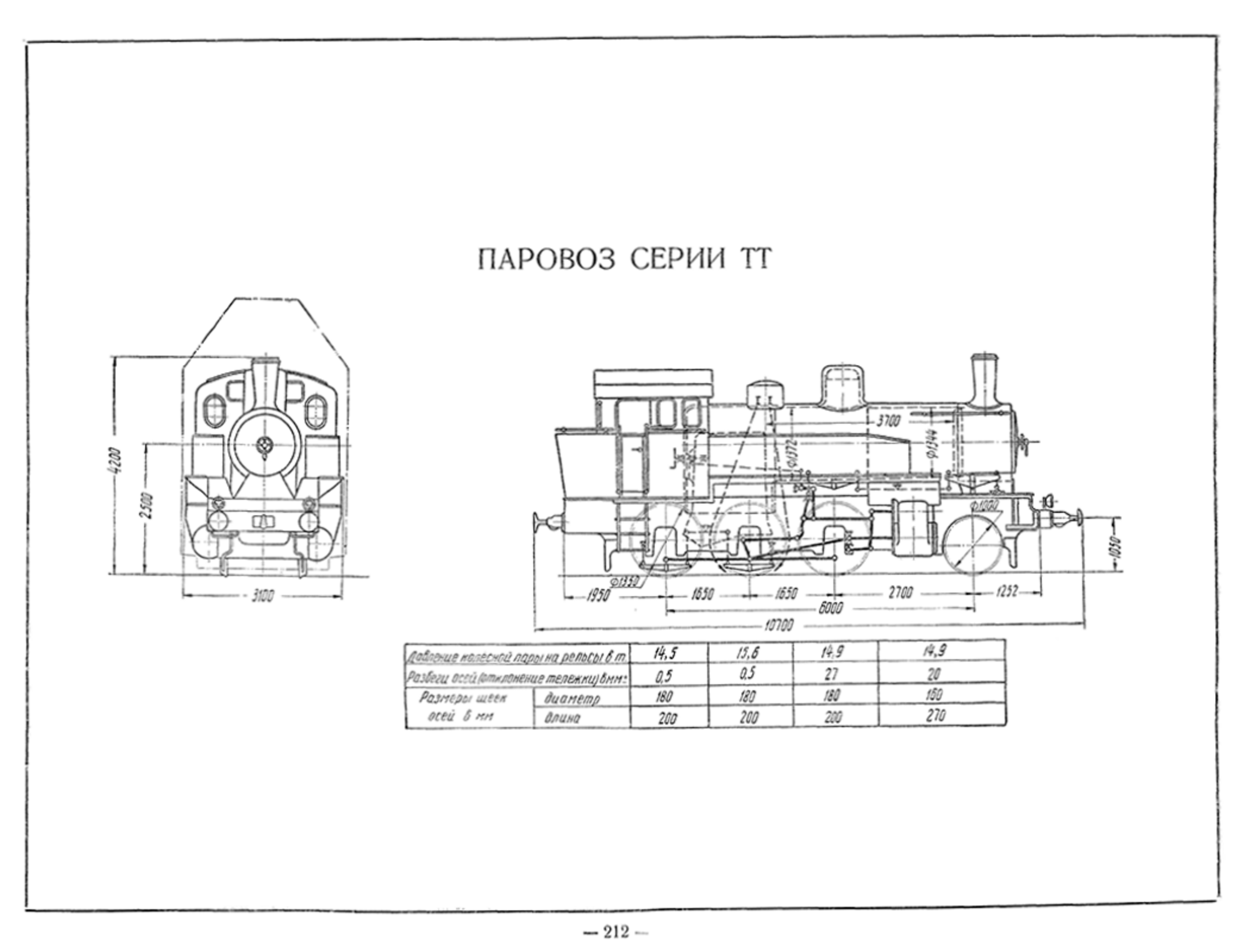
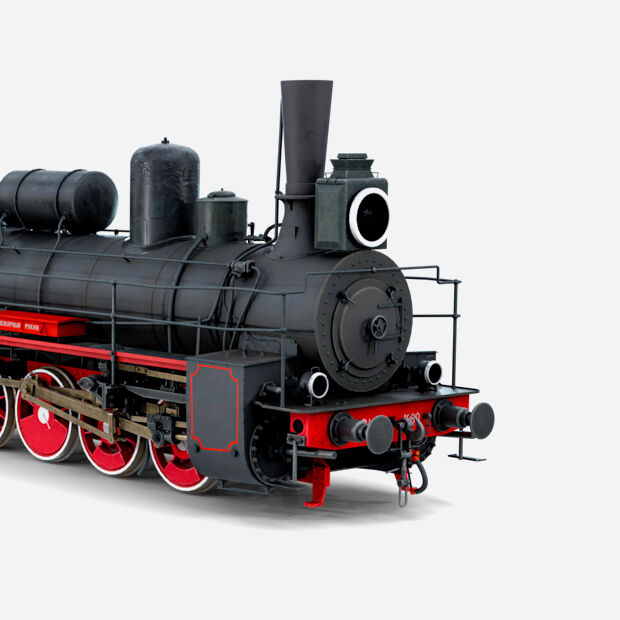
Tank Locomotive TT 1770

During their operation on German railways, TT steam locomotives were designated as class 91, and even earlier, when there were no unified railways in Germany, they were designated T9.3 on the Royal Prussian State Railways.

TT steam locomotives were developed in Germany in 1901 and were initially designated as class T9.3, and then as class 91.

The T9.3 steam locomotives were developed by the German Union Plant in Königsberg in 1901 and were intended for passenger and freight transport, as well as for shunting work. These were “universal” steam locomotives for secondary lines. They were very simple in design, operated on saturated steam, and had a single-expansion engine. The design speed was 65 km/h.


In total, various German factories built about 2,050 steam locomotives from 1901 to the early 1920s, which was a very significant number for Europe. Originally intended for the Royal Prussian State Railways, these steam locomotives were also used to a limited extent on other state railways and some private railways.

TT in the USSR

After World War I, steam locomotives were scattered across many European countries as a result of military operations, having been actively used by the Germans in the territories they occupied. Several hundred T9.3 locomotives ended up in Poland, where they were designated as class Tki3. They also found their way to Belgium and France. Russia acquired some T9.3s at the first day of World War I, when several Prussian T9.3 locomotives arrived at the Russian border station of Verzhbolovo (now Kybartai, Lithuania) at a bad time.


In Germany, in 1925, during the general renumbering of steam locomotives, T9.3 class was reintroduced as class 91.

TT steam locomotives were acquired by the USSR as war trophies in the first days of World War II in 1939. A total of about 270 steam locomotives were captured.

These steam locomotives first arrived in the USSR in 1939. Along with other locomotives from the railways of eastern Poland, the Tki3s were used on the Soviet railways. Shortly afterwards, with the annexation of the Lithuanian Railways, several locomotives bearing the old Prussian designation T9.3 were added to the fleet of the People’s Commissariat of Communication Routes of the USSR. The majority of 91 steam locomotives “changed their citizenship” to Soviet during and after World War II.


Many of these locomotives had been used by the Germans in occupied Soviet territories and were left behind when the Wehrmacht retreated westward. As of 1st January 1946, the inventory of the People’s Commissariat of Communication Routes of the USSR included 77 class 91 steam locomotives, 21 former Polish class Tki3 steam locomotives, and three Lithuanian class T9.3 steam locomotives. The supply of these steam locomotives continued later as part of war reparations.


It is nearly impossible to determine the exact number of these locomotives that ended up in the USSR. However, we can estimate that approximately 200 steam locomotives were incorporated into the Ministry of Railways routes, with another 70 or so going directly to industrial enterprises. In total, about 270 class 91 steam locomotives entered service in the Soviet Union.

In industry, class 91 steam locomotives were employed at various enterprises, primarily in the European part of the USSR and the Urals. The vast majority were decommissioned in the 1960s.


On the railways of the Ministry of Railways, the class 91 steam locomotives, reintroduced as TT in 1952 (while the Polish Tki3s retained their original designation), were used exclusively as shunters. Their relatively short length made them particularly well-suited for working on turntables in roundhouse depots. Examples include depots in Babaevo, Riga, Alexandrov, Tambov, Malaya Vishera, and others.


It is also a fact that the last operational steam locomotive of the class 91 in the USSR and Europe was TT 831, based at the Malaya Vishera Depot. It continued shunting operations until 1979. In Germany, regular use of the class 91 steam locomotives on railways ended in 1964, while in Poland, they were decommissioned by 1969. Today, around 15 locomotives of the class 91 are preserved in Europe, with only one or two still operational.

Museum Exhibit

The TT 1770 steam locomotive was built on 10th September 1913, at the Arnold Jung Locomotive Works with factory number 1935. Its first designation was KED Halle 7083, indicating its assignment to the Halle Depot of the Royal Prussian State Railways. Halle, located near Leipzig, was then part of the province of Saxony in the Kingdom of Prussia. The steam locomotive remained listed at the Halle Depot as late as 1945, suggesting it may have operated in the Leipzig area for all those years. In 1925, its designation was changed to 91 1770.


The exact circumstances of how the 91 1770 steam locomotive ended up in the USSR remain unclear. It is uncertain whether it was taken to the Soviet Union immediately after the war, or arrived later as part of reparations deliveries. According to German records, which should be viewed with caution, it was sent to the USSR in 1947.

The steam locomotive’s arrival at the Kharkiv Locomotive Works is similarly shrouded in mystery. Local accounts suggest it served as a factory locomotive before being abandoned along with the old depot. Over time, it became buried under piles of scrap metal.

In the spring of 1991, the Central Museum of the Oktyabrskaya Railway purchased the steam locomotive from the plant. After a complex two-stage loading to the railway platform during the winter of 1991–1992, it was transported to the museum site in Shushary, Saint Petersburg. At the time, no one could have imagined that it would eventually go on display at the museum 16 years later.


Over the years, the steam locomotive was unloaded from the platform and placed among the many exhibits awaiting restoration. While the museum staff were determined to renovate it, they lacked the resources for such an extensive project. Additionally, no contractors were willing to take on such an unusual and challenging task for a reasonable cost. Meanwhile, the exhibition was relocated to the Varshavsky Station, while the TT locomotive remained in Shushary.


It wasn’t until the winter of 2007, that restoration work on the steam locomotive became possible. Repairs were carried out at the branch of the Experimental Plant of the Oktyabrskaya Railway at the Rzhev Station. The locomotive was loaded onto a platform for the second time and transported to the Rzhev–Baltiysky Station for restoration. It is worth noting that, previously, such an extensive repair of a museum steam locomotive was executed in the country only once—during the restoration of the S 68 steam locomotive in the early 1980s.


On 29th February 2008, the restoration was completed. The steam locomotive was once again loaded onto a railway platform and transported to Saint Petersburg by separate locomotives, accompanied by museum specialists. At the museum at the former Varshavsky Station, the locomotive was unloaded onto the railway tracks. Shortly afterward, a team from the Experimental Plant completed its final assembly at the exhibition site.


On 29th June 2016, for the first time in many years, the steam locomotive moved under its own power, travelling from the closed museum at the former Varshavsky Station to the new museum at the Saint Petersburg–Baltiysky Station.

Parameters

Technical
specifications

Plant
Jung Arnold Lokomotivfabrik
Year
1913
The factory number
1935
Weight in working condition, tonnes
59,9
Constructed speed, km/h
65
Maximum power at the wheel rim, hp.
950
Axial formula
1–3–0
General data
Unladen weight of the locomotive, tonnes
46,5
Coupling weight of the locomotive, tonnes
45
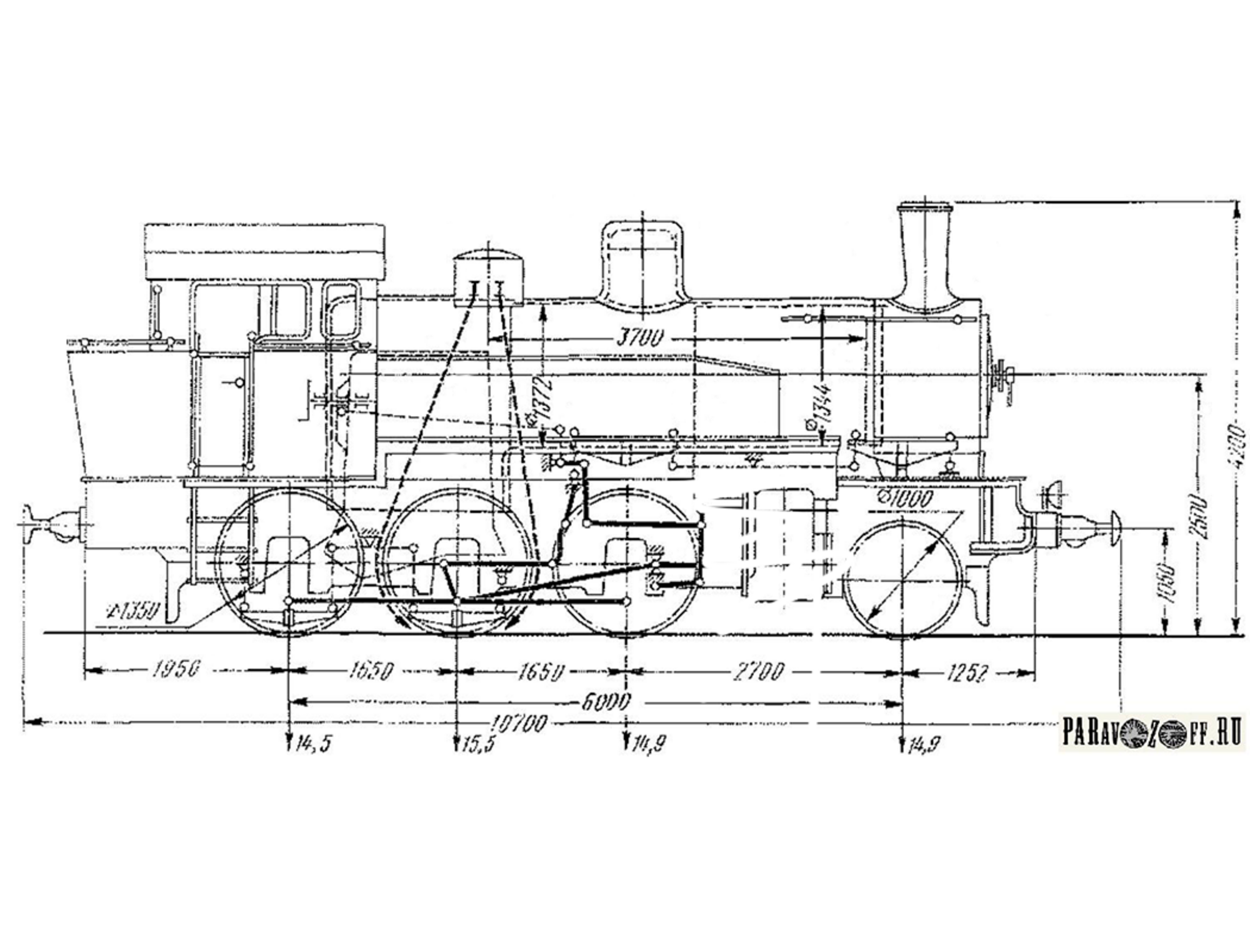
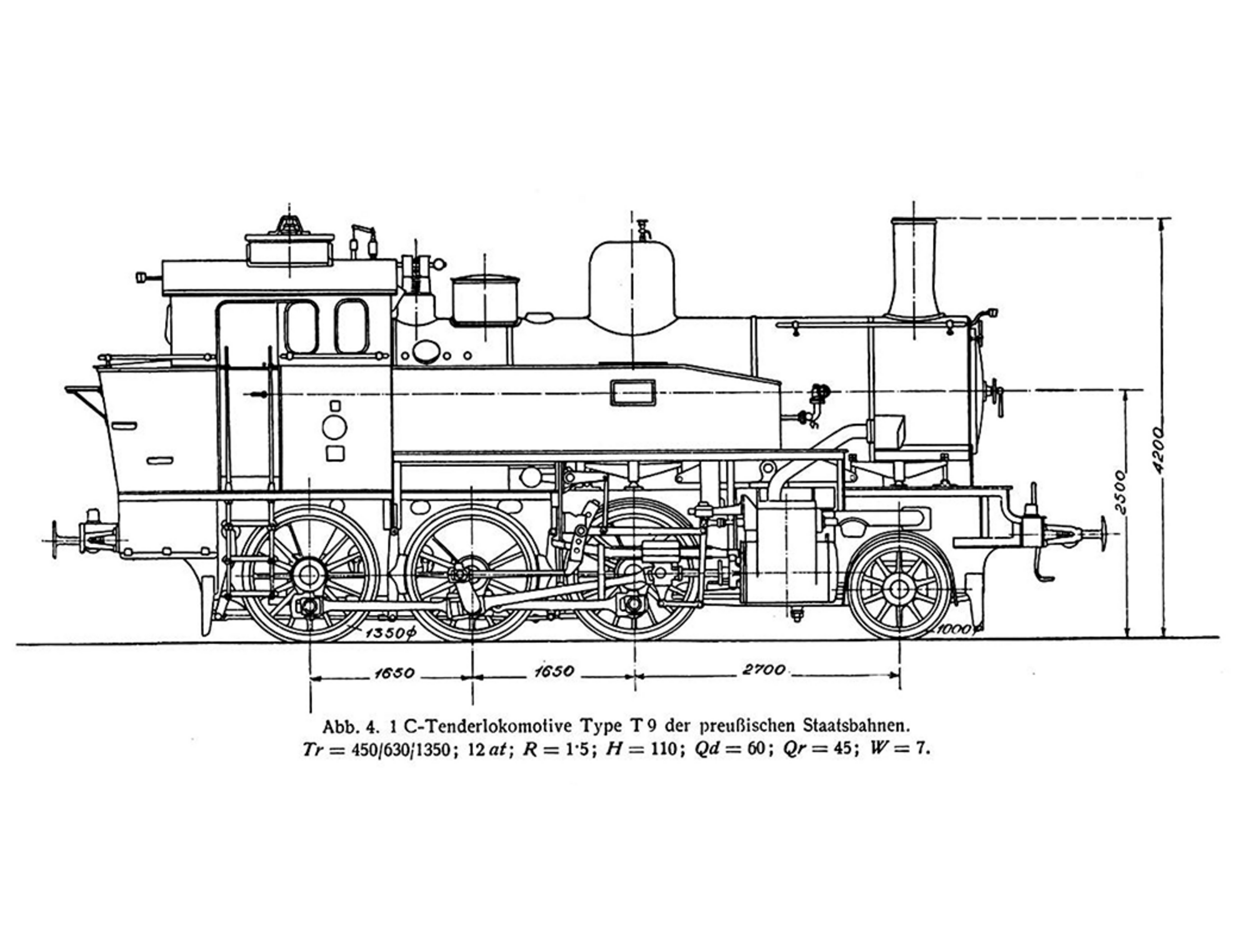
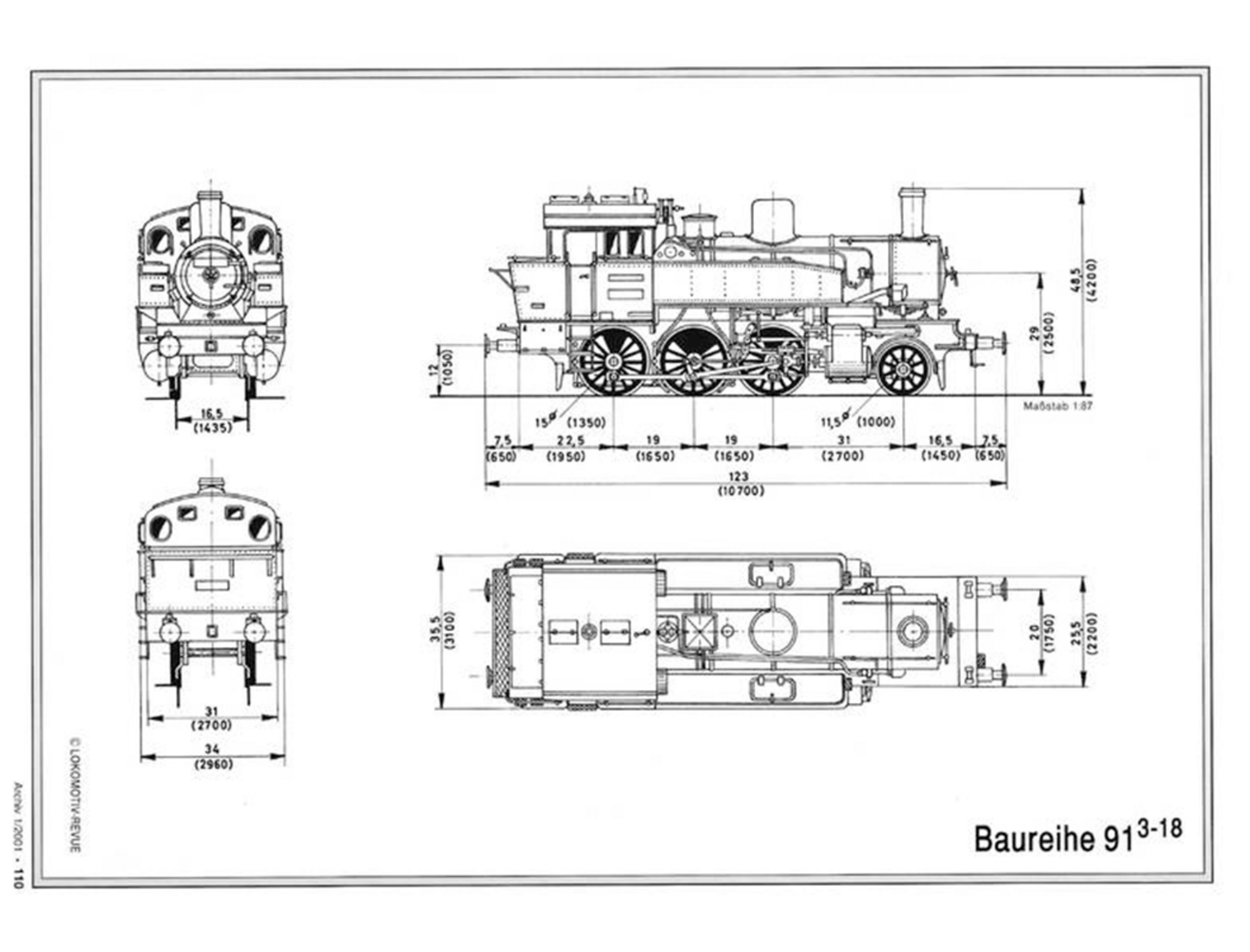
Full wheelbase of the locomotive, mm
6 000
Steam locomotive length by buffers, mm
10 700
Diameter of driving wheels, mm
1 350
Smallest radius of a passable curve, metres
100
Tender type
Absent
Boiler
Steam pressure, kg/cm2
12
Type of furnace
Crumpton's
Grate area, m2
1,53
Total evaporating heating surface of the boiler (water), m2
104,3
Number of smoke tubes, units
209
Diameter of smoke tubes (outer), mm
44
Type of superheater
No
Type of heating
Charcoal, manual
Car and crew
Number of cylinders, units
2
Cylinder diameter, mm
450
Plunger stroke, mm
630
Spools
Flat
Fuel reserve, tonnes
2
Water supply, m3
7
Frame thickness, mm
25
Frame type
Sheet
Steam distribution system, t
Walshar

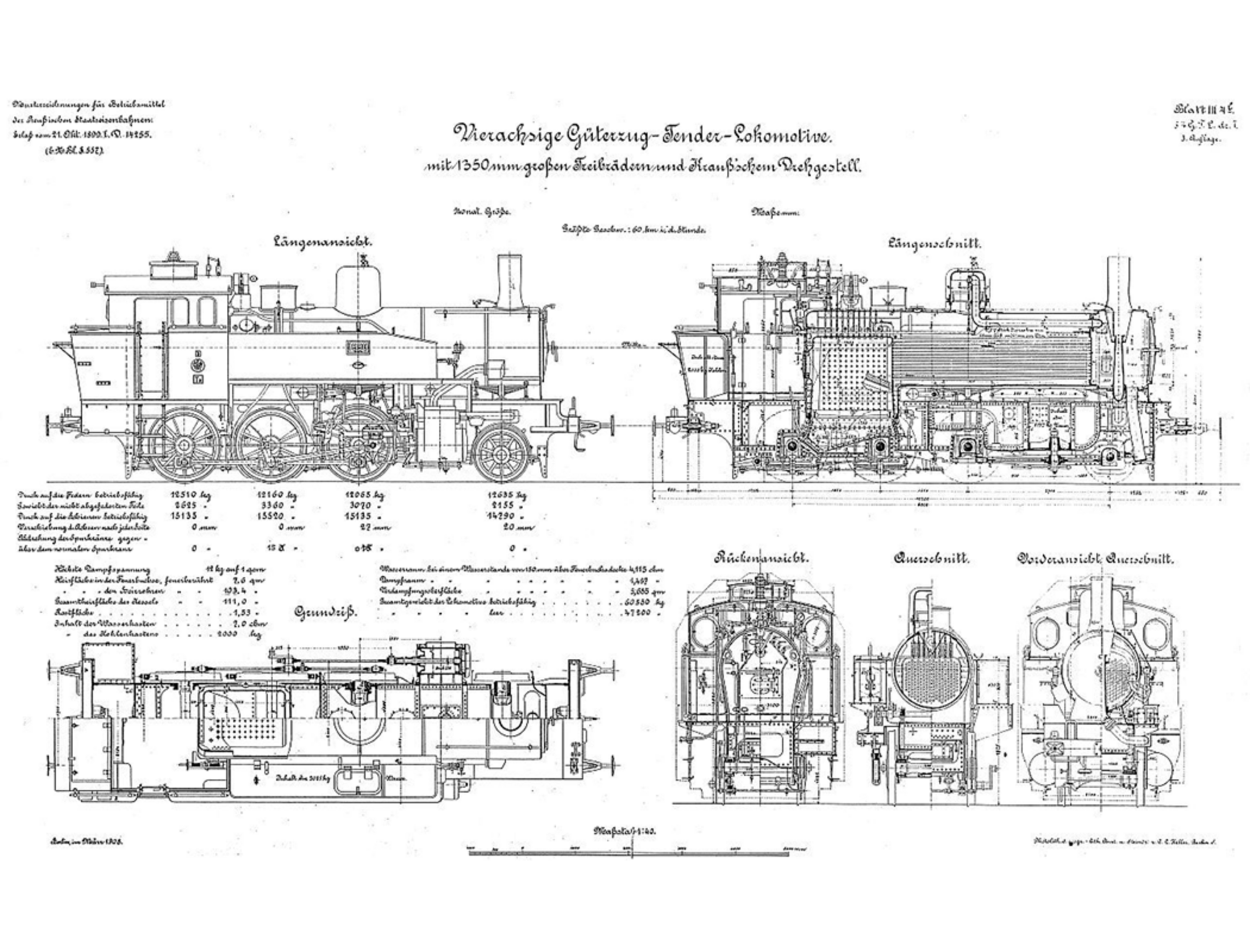
Drawings
and diagrams

History

Chronology

  1. 1901 The German Union Plant developed steam locomotives, then designated as T9.3.
  2. 10th September 1913 The TT 1770 steam locomotive with factory number 1935, which is located in the museum, was built at the Arnold Jung Locomotive Works.
  3. Early 1920s Production of T9.3 was discontinued.
  4. 1925 In Germany, during the general renumbering of steam locomotives, class T9.3 machines were reintroduced as class 91.
  5. 1st January 1946 The inventory of the People’s Commissariat of Communication Routes of the USSR included 77 class 91 steam locomotives, 21 former Polish Tki3 steam locomotives, and three Lithuanian T9.3 steam locomotives.
  6. 1952 The class 91 series steam locomotives received the designation TT, but the Polish Tki3 retained the previous class.
  7. 1964 Regular operation of the class 91 steam locomotives on German railways was discontinued.
  8. 1969 The class 91 steam locomotives completed their service in Poland.
  9. 1960s The vast majority of class 91 steam locomotives were decommissioned.
  10. 1979 TT 831, based at the Malaya Vishera Depot, remained the last operational class 91 locomotive in the USSR and Europe.
  11. Spring 1991 The Central Museum of the Oktyabrskaya Railway purchased TT 1770.
  12. Winter 1991–1992 TT 1770 arrived in Saint Petersburg at the museum site in Shushary.
  13. 2007 Restoration repairs of TT 1770 were carried out by the branch of the Experimental Plant of the Oktyabrskaya Railway at the Rzhev Station.
  14. 29th February 2008 Repair of TT 1770 was completed.
  15. 29th June 2016 TT 1770 became part of the museum exposition at the Saint Petersburg–Baltiysky station.