Today the museum is closed

Map

Exhibit description

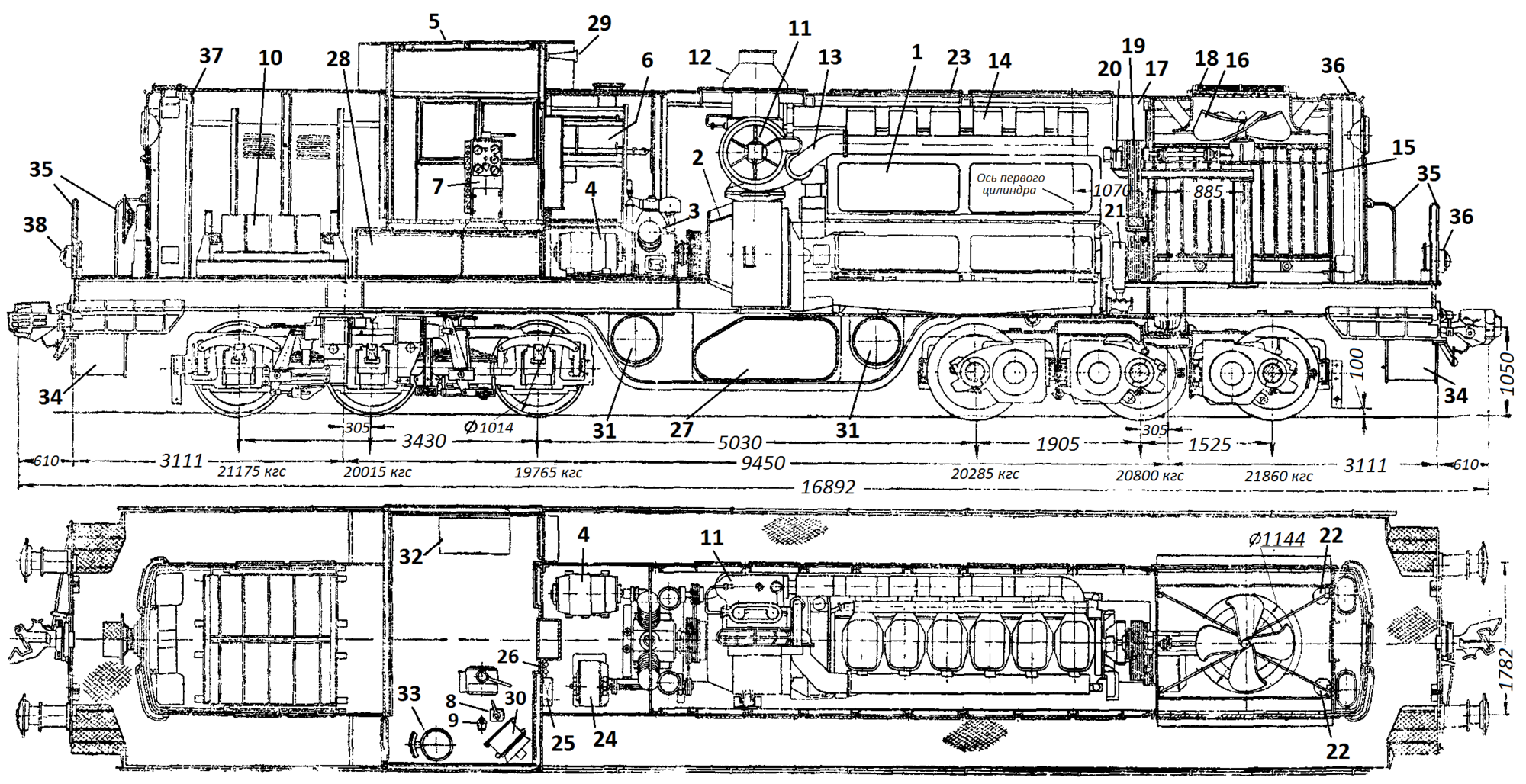
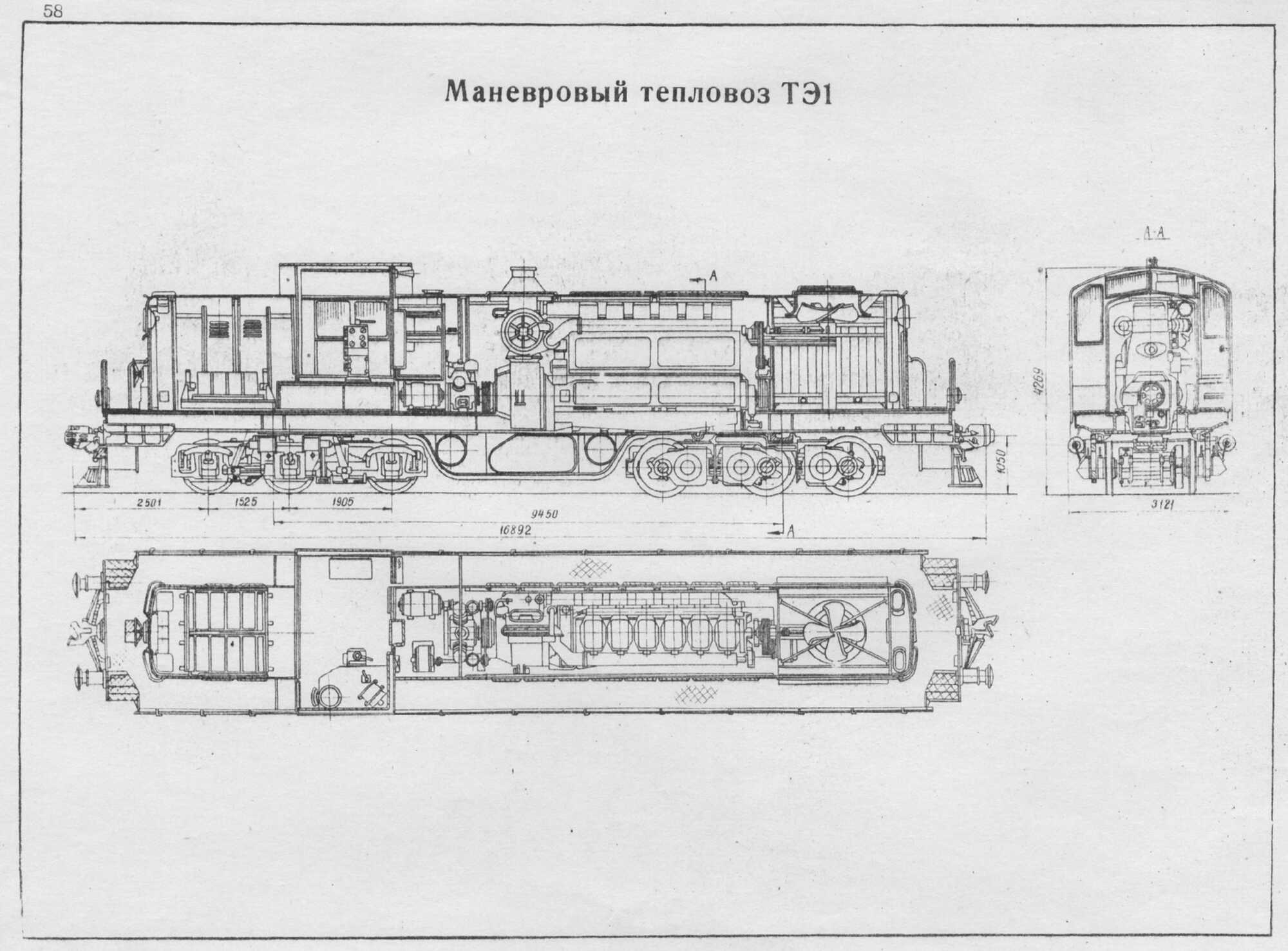
Diesel locomotive TE1-20-135

Lend-Lease Aid

Despite the creation of several diesel locomotive designs in the pre-war USSR, the introduction of diesel locomotive traction on domestic railways at that time never actually left the experimental stage.

During the Great Patriotic War, when the advantages of diesel traction had already become obvious, when Soviet specialists placed large orders in the USA under Lend-Lease for the supply of a wide variety of products for railway transport, the supply of diesel locomotives was also envisaged. The ALCO (American Locomotive Company) plant manufactured a batch of factory-type RSD-1 locomotives during 1944, which were delivered by sea to the USSR. On domestic railways, they were designated as the DA series.

August 5 1945 I.V. Stalin held a meeting at which a decision was made to restore the production of diesel locomotives in the USSR, and the American DA was to be used as a model for new Soviet diesel locomotives. The Kharkov plant was chosen as the base for the production of diesel locomotives, where an unused diesel locomotive DA20-52 was transferred as a model - its equipment was damaged by sea water during transportation to the USSR.

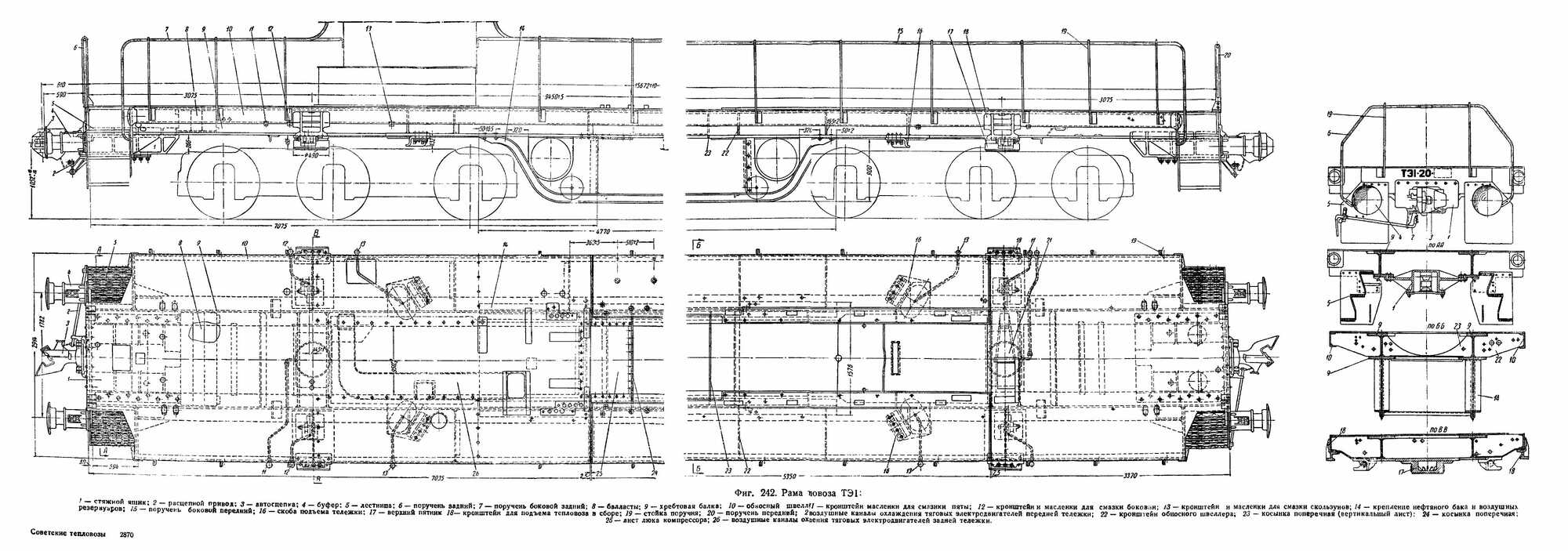
An interesting feature of the TE1: when starting off and at low speeds, six engines were connected in series, then upon acceleration and reaching certain current and voltage values, automatic switching occurred and two parallel groups of three engines in series were formed. Also noteworthy is the excitation of the generator according to the Lemp scheme with anti-compound winding, bogie bar frames, axle boxes with plain bearings and a large number of riveted joints.

The TE1 series diesel locomotives proved themselves to be fairly simple and unpretentious machines, which were successfully used on domestic railways, and in almost all types of traffic, especially in the early years. With freight trains, they were often used in rafts of two machines according to the "multiple unit system".

Parameters

Technical
specifications

Number of locomotive sections
1
Axle arrangement
3o-3o
Length of locomotive, mm
16,892
Wheelbase, mm
11,890
Service weight, t
123.9
Coupling weight, t
123.9
Rail axle load, t
20.65
Diameter of driving wheels, mm
1,050
Design speed, km/h
90
Power, hp
765
Diesel
D50
Rated power, hp (diesel engine)
1,000
Number of revolutions per minute
740

Drawings
and diagrams

History

Chronology

  1. 1945 In July 1945, locomotives for the government train were being prepared for a trip to the conference of the three powers in Potsdam (a suburb of Berlin). In view of its greater autonomy, it was decided to use the DA-20-27 diesel locomotive as a cover locomotive. During the trip, the locomotive skidded on an incline near Drovnino station (near the city of Mozhaisk), and the diesel locomotive was used for the rest of the journey to Potsdam. As a result, on August 5, 1945, in honor of Railway Worker's Day, I. V. Stalin held a meeting at which it was decided to resume the construction of diesel locomotives in the USSR and to use the DA diesel locomotive as a model. It was delivered from the USA in 1944-1945. Following the meeting, the production of diesel locomotives was transferred to the Kharkov Locomotive Plant, later the V. A. Malyshev Kharkov Heavy Machinery Plant.
  2. 1947 The DA20-52 diesel locomotive, which had not been used because its equipment had been in water, was chosen as a model for the construction of the TE1 diesel locomotive. The Moscow Dynamo Plant named after S. M. Kirov was engaged in the design and manufacture of traction electric motors and electrical equipment, and the Kharkov Electric Machinery Plant was engaged in the traction generator. In total, from 1947 to 1950, the plant built 300 TE1-20 series locomotives. Initially, they worked on the Ordzhonikidzevskaya, Ashgabat, Ryazan-Uralskaya railways - where there was a shortage of water for steam locomotives. Most of the locomotives worked until the 1980s.

    The diesel locomotive located in the museum was still working at shunting stations at the Khovrino station of the October Railway in the early 1980s. It was received by the museum from the Ostashkov track section in 1991.