Today the museum is closed

Map

Exhibit description

Railway crane PC6-1160

Technical details

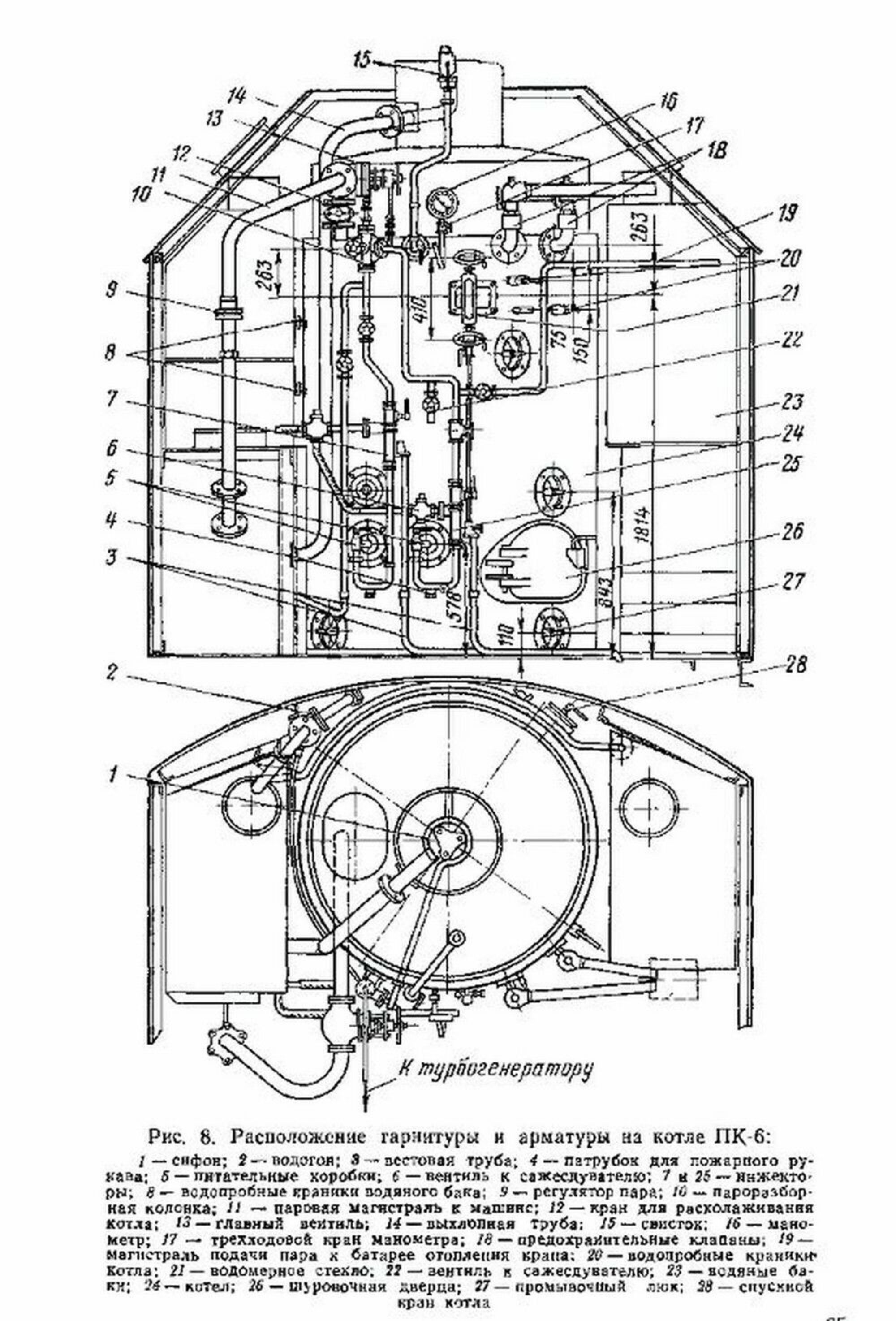
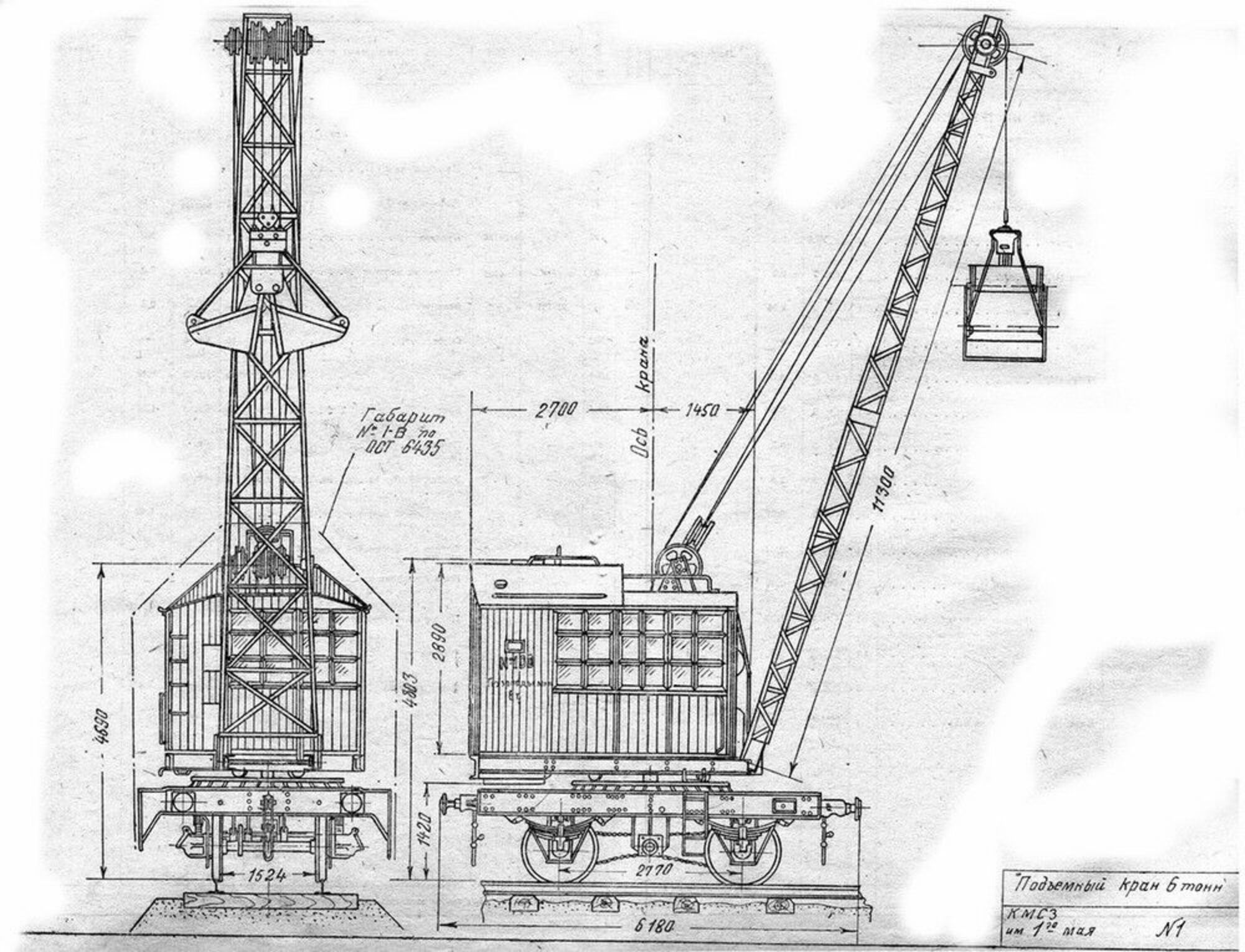
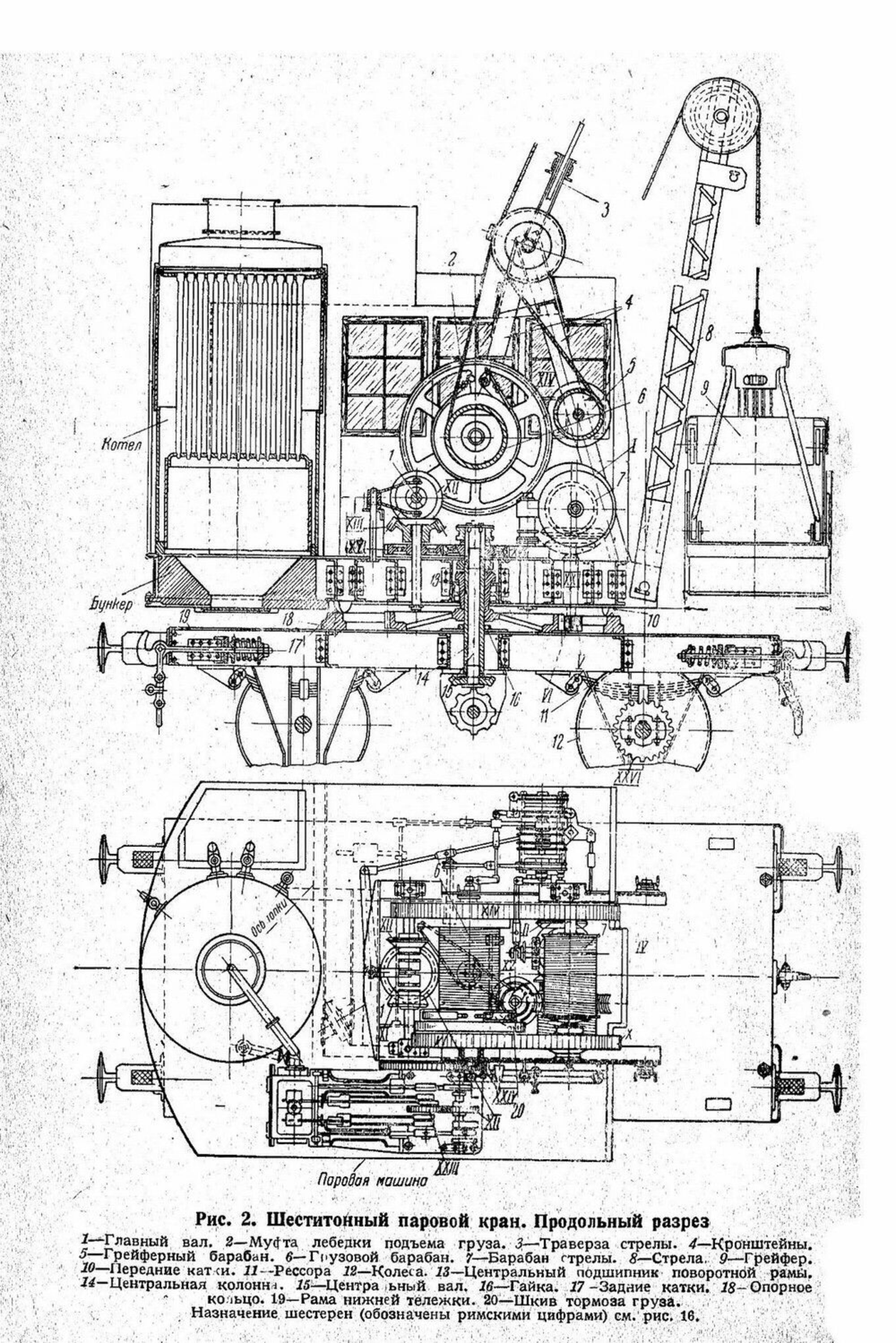
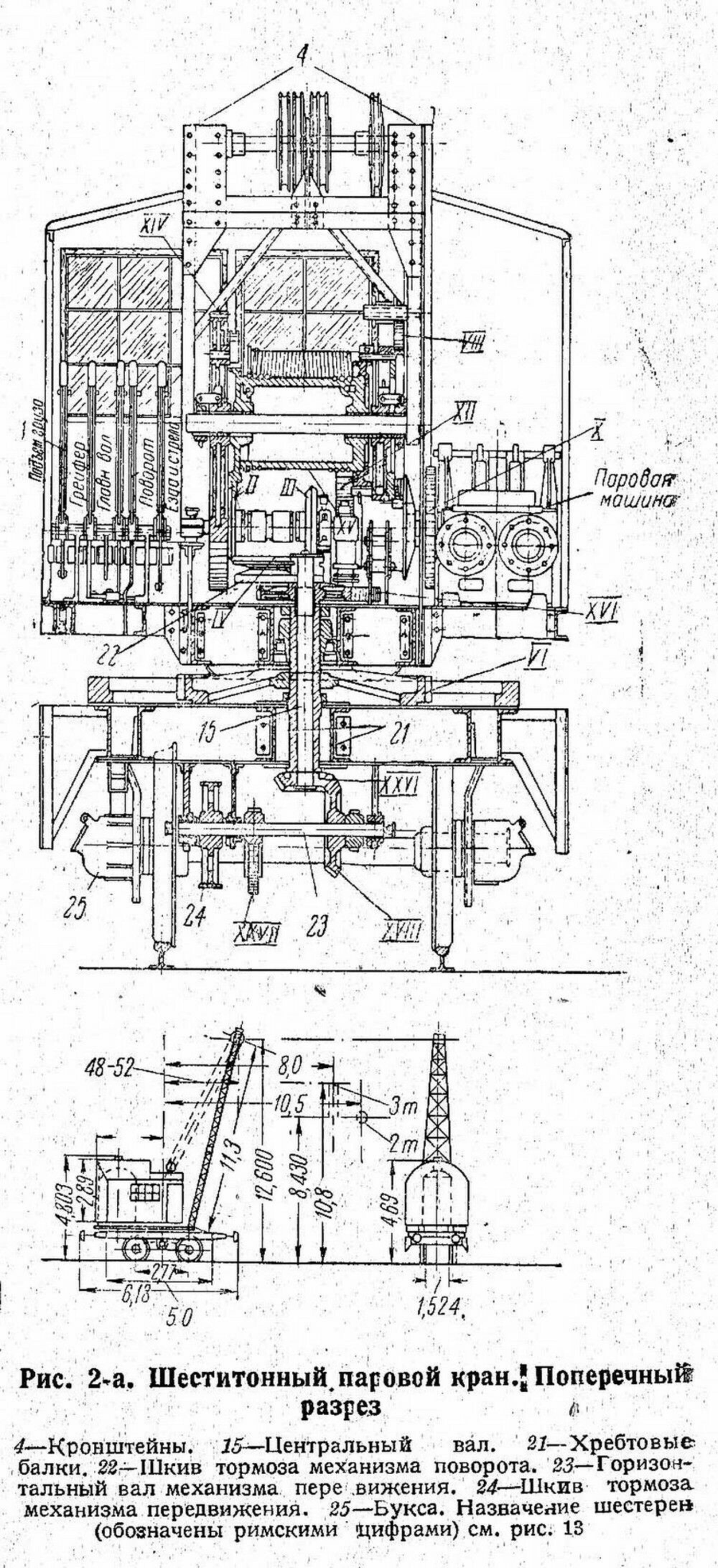
The PK-1160 crane mechanisms were driven by a vertical steam boiler with a capacity of 45 hp, equipped with smoke tubes. Mechanical control, lever. For movement, there was a special reversing mechanism, the torque from which was transmitted to the vertical shaft passing along the axis of rotation of the crane platform. Then, using two bevel gears, a horizontal shaft with two sprockets rotated, from which the torque was transmitted to both wheel pairs by Gall chains. The crane was equipped with a boom with a length of 10.3 m and could work with a grab with a volume of 1.5 m3. The speed of independent movement is up to 4 km/h.

The boom and load were lifted using ropes and pulley blocks with winches. When lifting a heavy load, the crane was attached to the rail heads with special pincers to ensure stability. There were four chains, and they were located at the ends of the buffer bars.

The PK-6 cranes turned out to be extremely durable and repairable, although they did not have a simple kinematic scheme: the crane mechanisms have 12 cylindrical and eight bevel gears, four chain drive sprockets, six clutches — of which four were cam. The crane control required stopping to switch the operating mode; synchronizers for such purposes were not provided in the kinematic scheme, so switching could be accompanied by impacts.

Museum exhibit

Steam crane PK6-1160 arrived at the museum from the Brest depot of the Belarusian Railway.

The engineering plants of the Russian Empire built steam railway cranes both for their own needs and by orders from railways and factories. There was no standard design, and their production was piecemeal.

Most often, cranes were used to unload coal from gondola cars, and load and unload coal into stockpiles in warehouses. Their main role was loading coal into locomotive tenders. The ability to move independently made them universal and independent.

The PK6-1160 steam crane was delivered to the museum from the Brest depot of the Belarusian Railway.

Parameters

Technical
specifications

Minimum boom reach, m
5
Maximum boom reach, m
10
Load capacity at minimum boom height, t
6
Load capacity at maximum boom height, t
2.5
Boom length, m
10.3
Craft capacity, m³
1.5
Full boom lift time, min
1.5
Load lifting speed, m/min
12/24
Crane rotation frequency, rpm
2.0
Self-propelled crane travel speed, m/min
70
Speed ​​in a train, km/h
50
Total crane weight in working condition, t
34
Drive type
Steam engine
Engine power
45

Drawings
and diagrams

History

Chronology

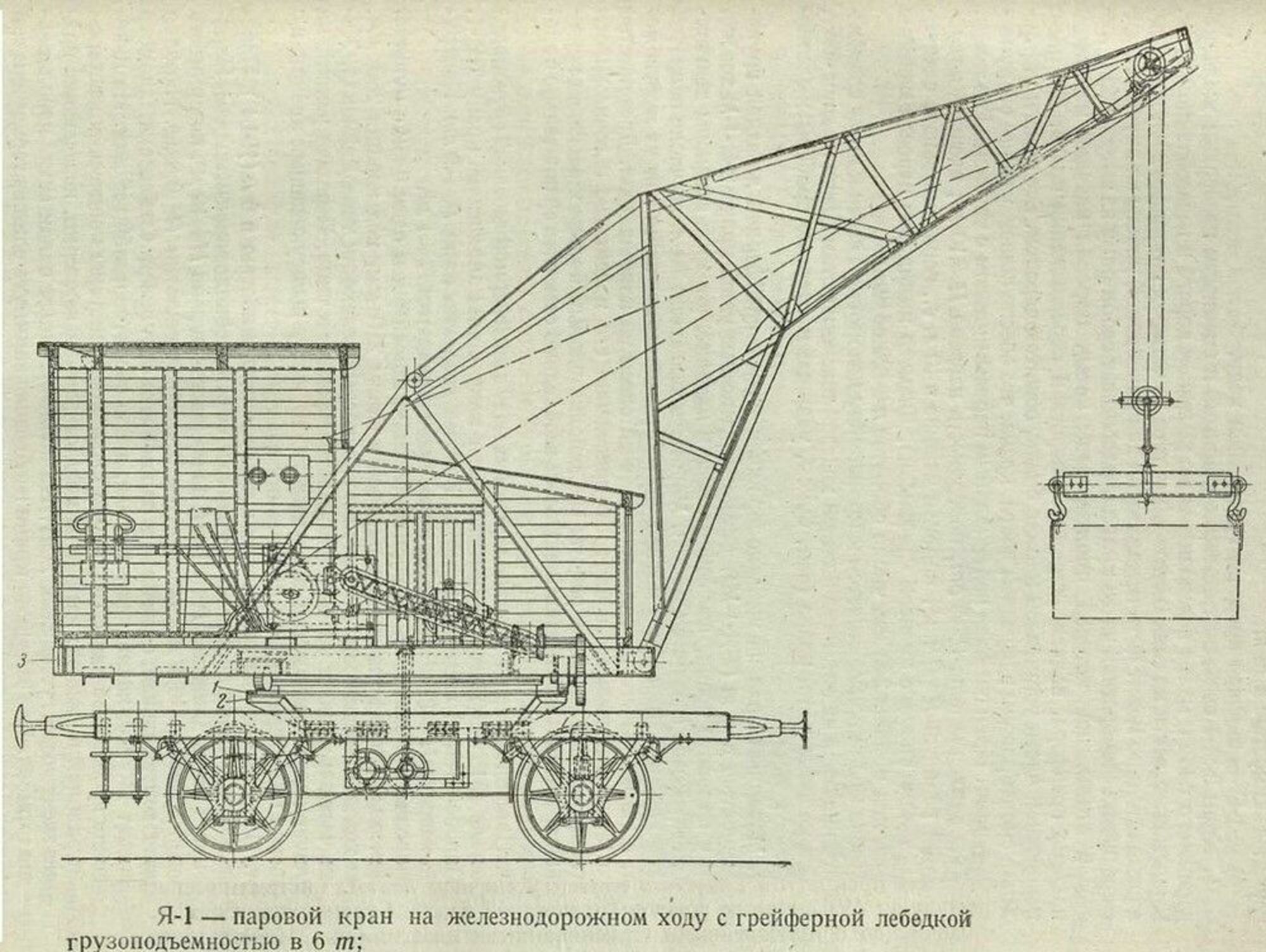
  1. 1932 The design of the steam crane itself, developed at that time, turned out to be very practical and reliable. Using this design, in 1932, a six-ton self-propelled steam crane of the Ya-1 type was constructed at the January Uprising Plant in Odessa. In July 1941, the plant was evacuated, and most of the equipment was sent by echelons to the city of Kirov to the May 1 Engineering Plant.
  2. 1936 Since 1936, the construction of six-ton steam cranes began at the 1 May Machine-Building Plant in the city of Kirov (Vyatka).
  3. 1960s Since the 1960s, crane modernization began, which consisted of replacing the steam engine and boiler with Ural ZIS-355 or Ural ZIS-353A internal combustion engines. Such cranes began to be designated as MK-6 (MK - motor crane, 6 - six-ton).
  4. 1970s The crane was made so reliably that almost doubling the drive power did not affect its wear resistance, but only increased productivity. In the 1970s, some cranes were equipped with diesel engines instead of gasoline engines during modernization, changing the type to DK-6 (D - diesel). These cranes were produced at the 1 May Machine-Building Plant in Kirov from 1936 to 1956. A total of about 3,000 units were built.
  5. 1990s The Yanaul depot of the Gorky Railway carried out repairs of steam cranes until the early 1990s.