Today the museum is closed

Map

Exhibit description

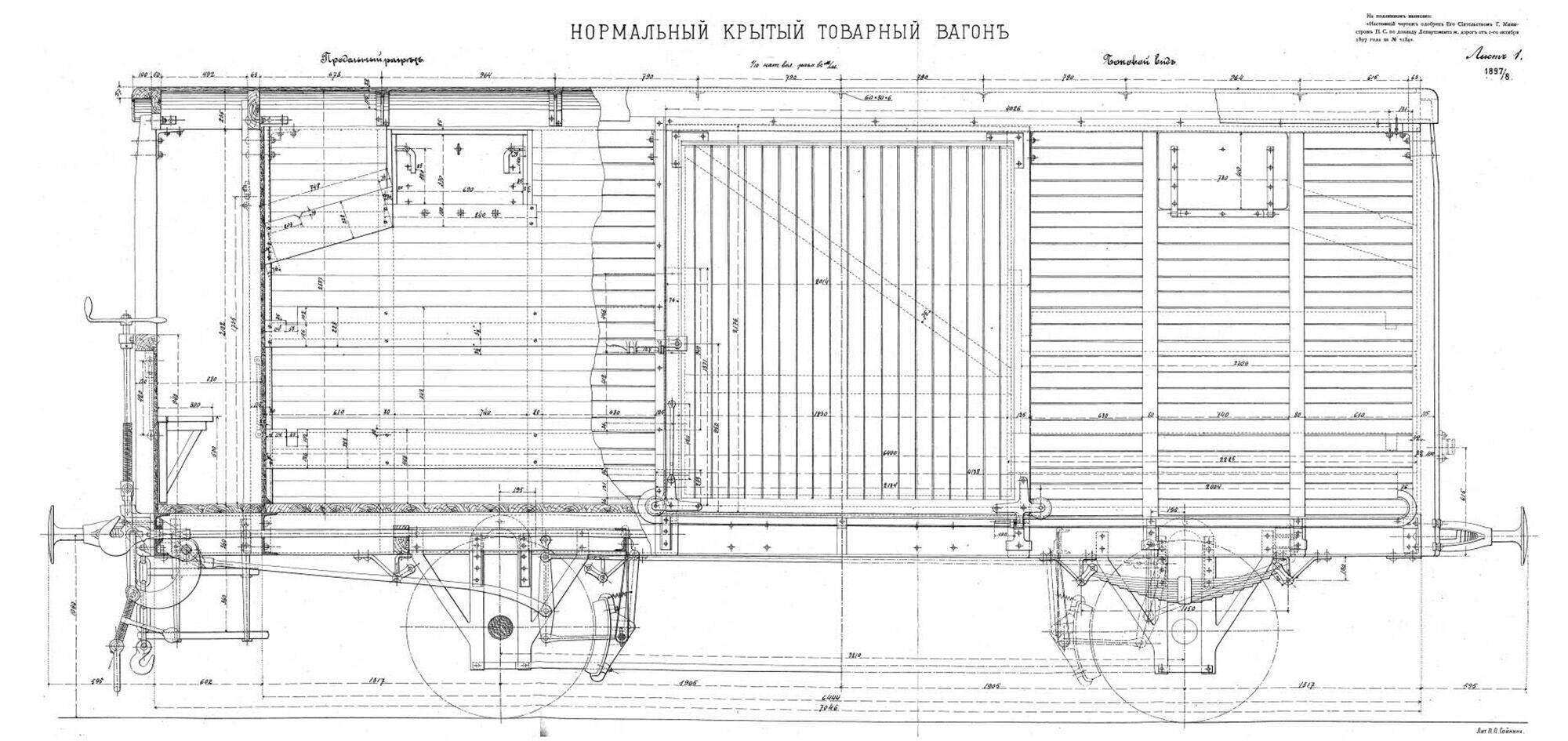
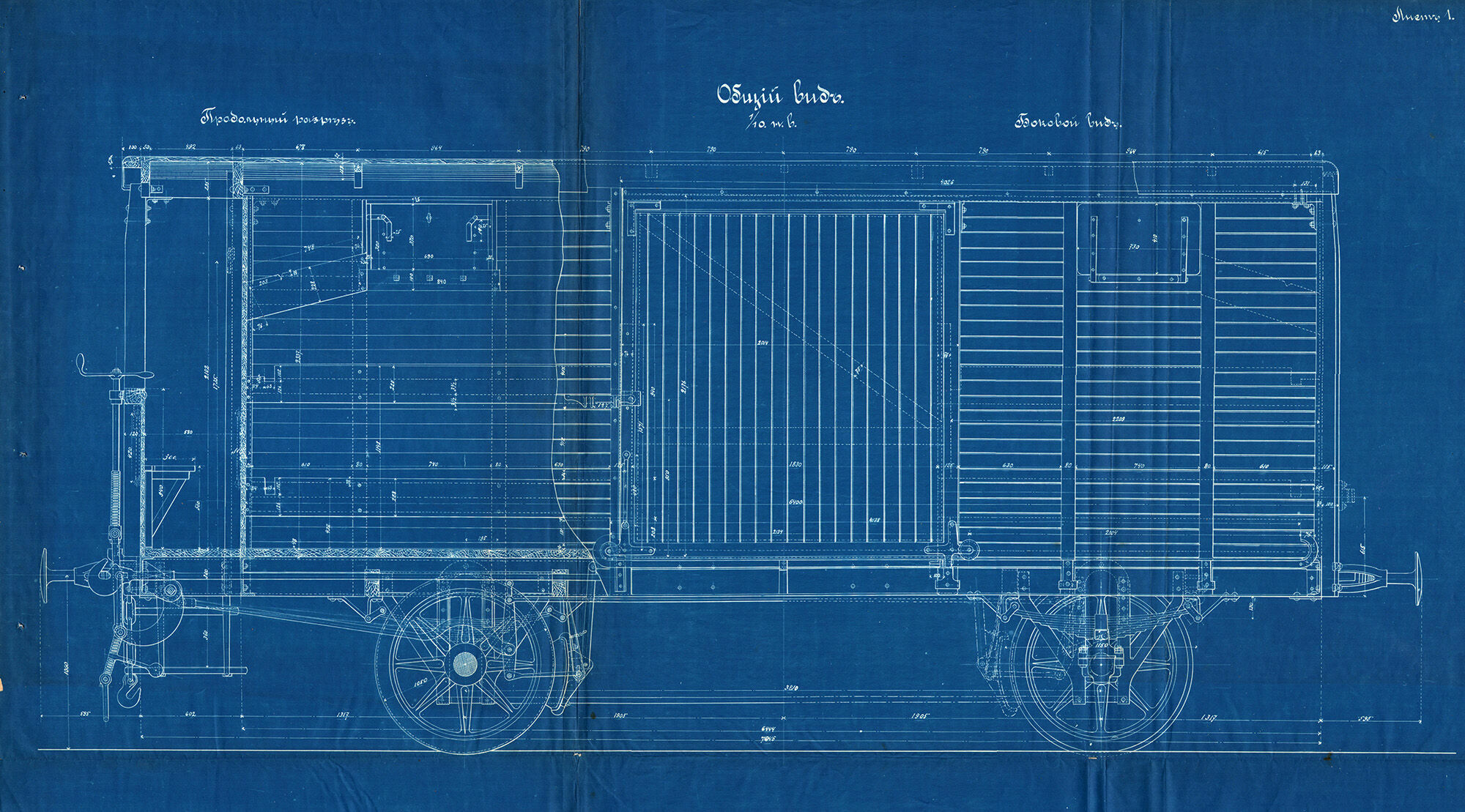
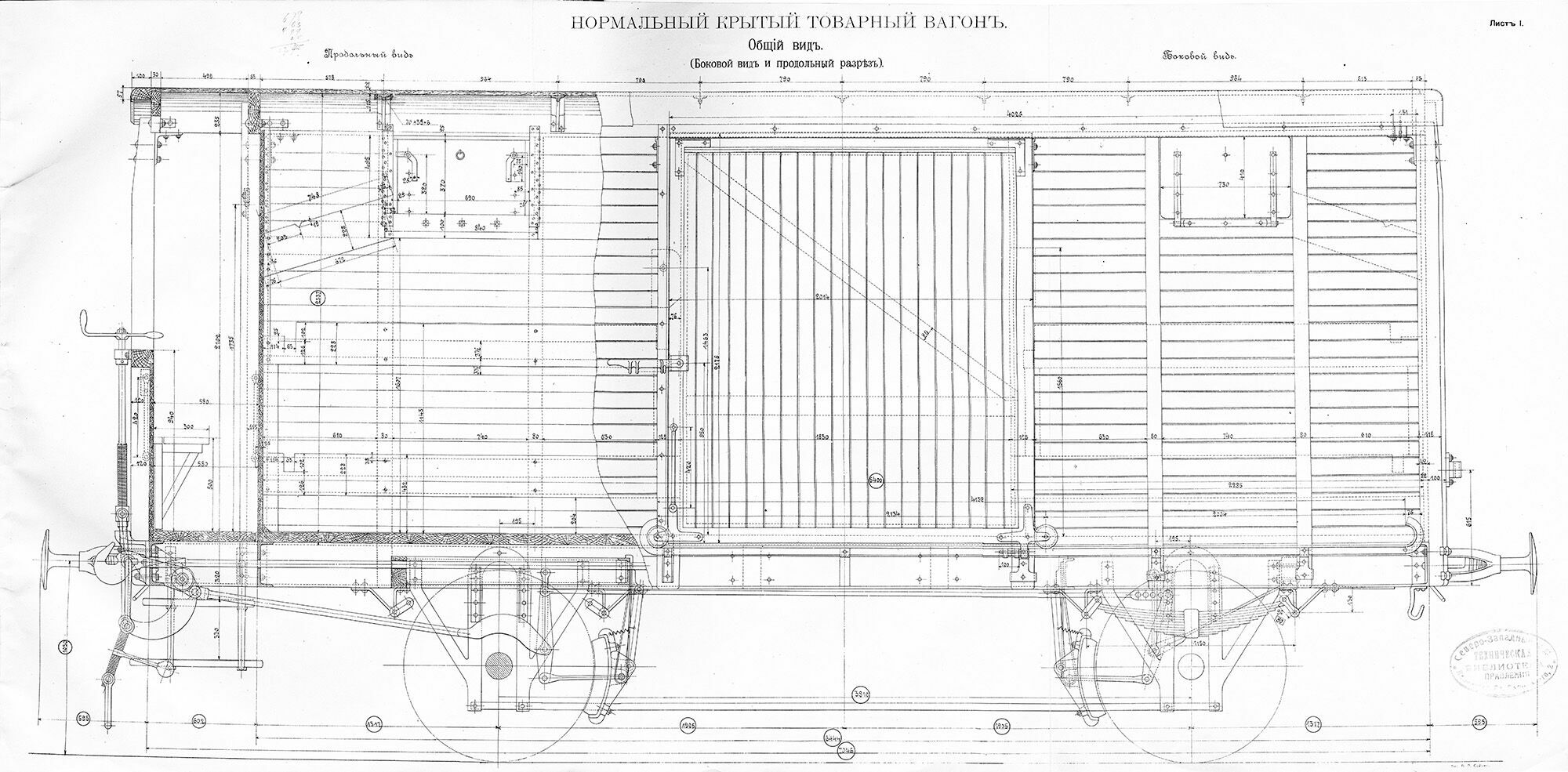
Standard Covered Goods Wagon № 473 990

The transition to standard (i.e., uniform, standardised) cars at the end of the 19th century was driven by two factors: the need to establish a unloading-free connection between Russian railways and the desire to facilitate the movement of troops in case of war.

In 1892, the Ministry of Railways approved the characteristics of a standard covered wagon, which was later called normal.

Decades of Service

During the gradual standardisation of boxcars in Russia, the concepts of “state type”, “normal dimensions”, and “standard drawings” were introduced. Resolution of the Ministry of Railways No. 1101 dated 23rd May 1892 established the characteristics of a standard covered wagon with a carrying capacity of 12.5 t (750 poods — an old Russian unit of measure). The safety margin of the body of this design allowed the cars to be consistently reinforced: up to 15 t (900 poods) in 1909 (as a temporary measure this was allowed starting from 1905), up to 16.5 t (1,000 poods) in 1911, and up to 18 t in 1933.

The design of the standard cars was so successful that their production continued until the 1930s.

The type was chosen so successfully that the production of standard goods wagons continued until the early 1930s, making them the most common type of cars. Additionally, the frame and undercarriage design was used in the development of various specialised cars.

The car with factory number 14688 was produced in 1912 by the Dvigatel Carriage Works in Reval (now Tallinn). Its fate is unknown, but it survived until the 1990s, avoiding both modernisation with the installation of a centre sill and metal posts, as well as conversion into a platform or gondola car.

Parameters

Technical
specifications

Axle distance, mm
3 810
Frame length, mm
6 440
Length by buffers, mm
7 630
Spring length, mm
1 400
Door width, mm
1 830
Body width inside, mm
2 743
Body length inside, mm
6 400
Load capacity, poods, t
1000 (16)
Tara, poods, t
515 (8,2)
Wheel diameter, mm
1 050
Spring suspension
One-time
Brake
No

Drawings
and diagrams

History

Chronology

  1. 1892 Standardisation of Russian railways.
  2. 1912 The standard goods wagon, now displayed in the museum, is built.
  3. 1930 Completion of production of standard goods wagons.
  4. 1993 The exhibit is brought to the Russian Railway Museum.