Today the museum is closed

Map

Exhibit description

Shunting diesel locomotive TEM1-0026

Engineering thought

The first type of shunting locomotive was built on the proven diesel locomotive type 30-30 of the TE1-20 series and new developments implemented on the mainline diesel locomotives TE-3.

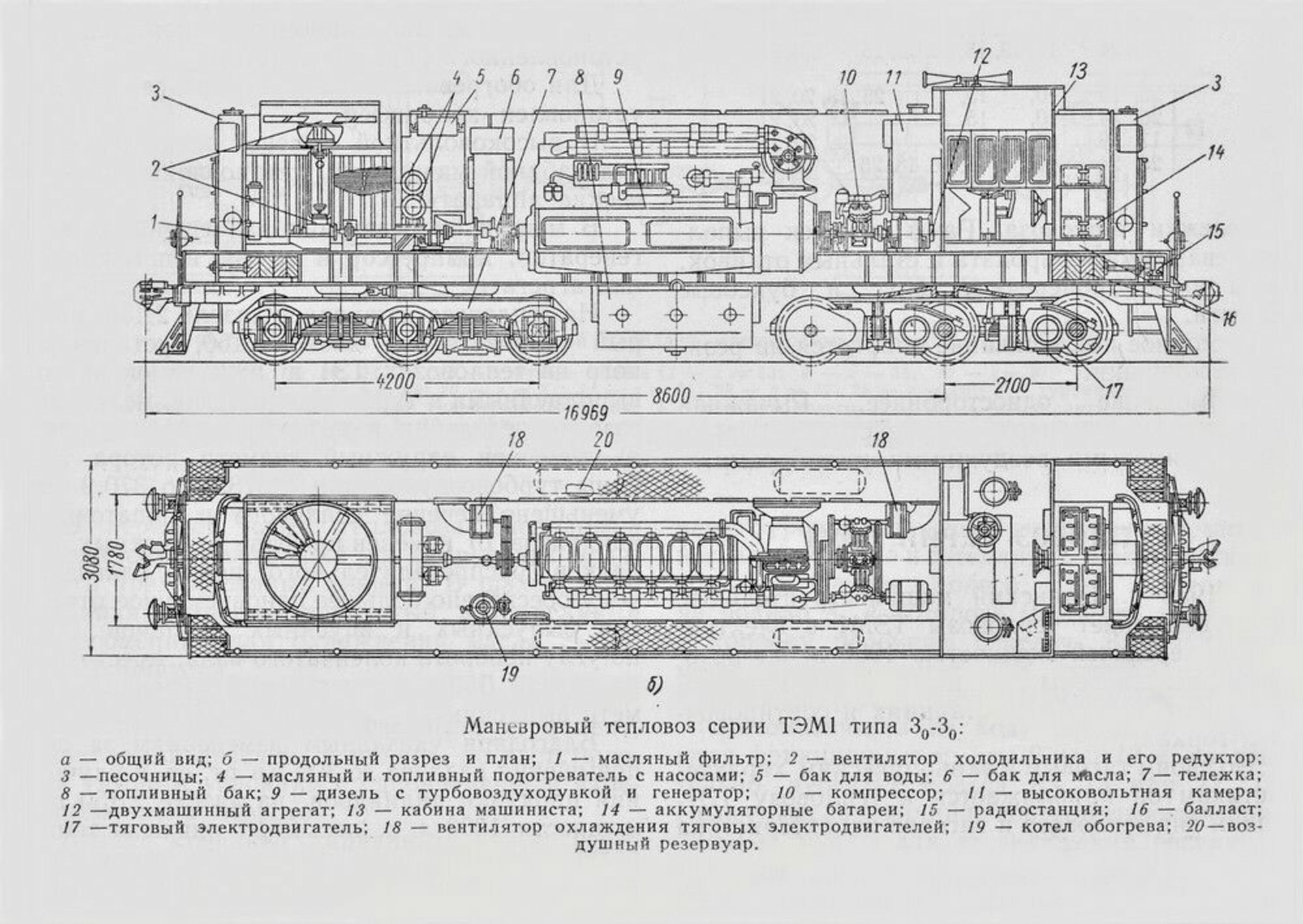
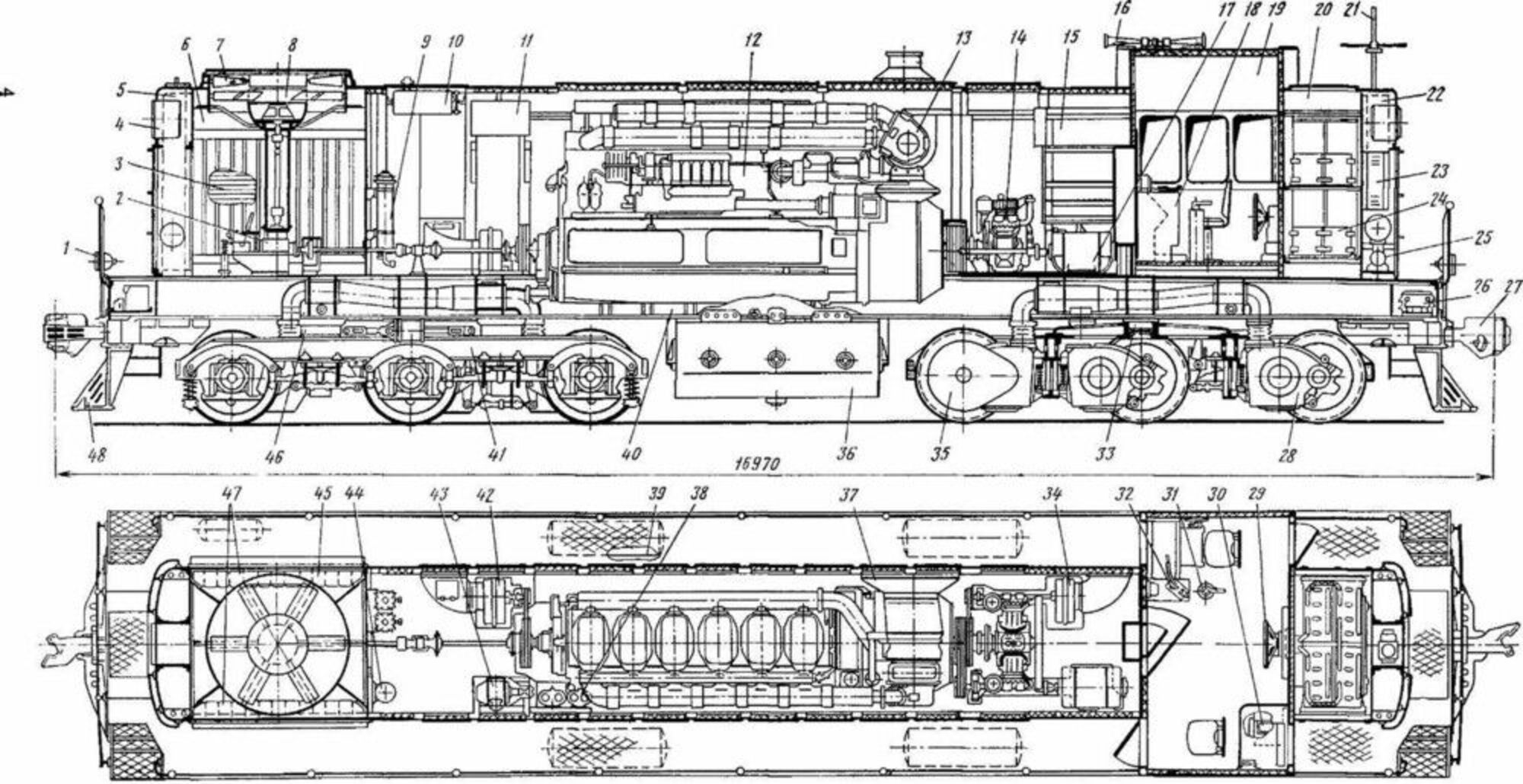
The TEM-1 diesel locomotives used a bonnet-type body and three-axle bogies of the TEZ diesel locomotives. The body rested on each bogie through four side supports, and the traction and braking force from the bogie to the body was transmitted through the central kingpins. The locomotives were equipped with a four-stroke, six-cylinder 2D50 diesel engine with a gas turbine supercharger. This diesel engine developed a power of 1,000 hp.

The diesel locomotive consisted of a main generator, traction electric motors, a two-machine unit and electrical devices. It also had a fuel tank, a fan reducer, refrigerators and a cooling fan for the traction electric motors.

The service weight of the locomotive was 126 tons. The reserves of fuel (5,500 kg), oil (400 kg), water (950 kg) and sand (2,000 kg) allowed the locomotive not to go into equipment for ten days. Which is extremely important for a shunting locomotive, most often tied to work at the station. The design speed of the locomotive was 90 km/h.

The bonnet locomotives had only one control cabin, which simplified and reduced the cost of the design, and provided easy access from the driver's platform to the locomotive units. The driver in the locomotive cabin always sat on the right side in the direction of travel, so he could see the signals standing to the right of the tracks.

In 1958 the plant produced the first diesel locomotive TEM1-0001. TEM1 locomotives were built throughout the period from 1958 to 1968. A total of 1,946 units of this series were produced. In June 1964 the Bryansk Machine-Building Plant produced the thousandth diesel locomotive of this series.

TEM1 diesel locomotives were used for shunting work at many stations, and also replaced steam locomotives on some industrial and sidings.

In the museum

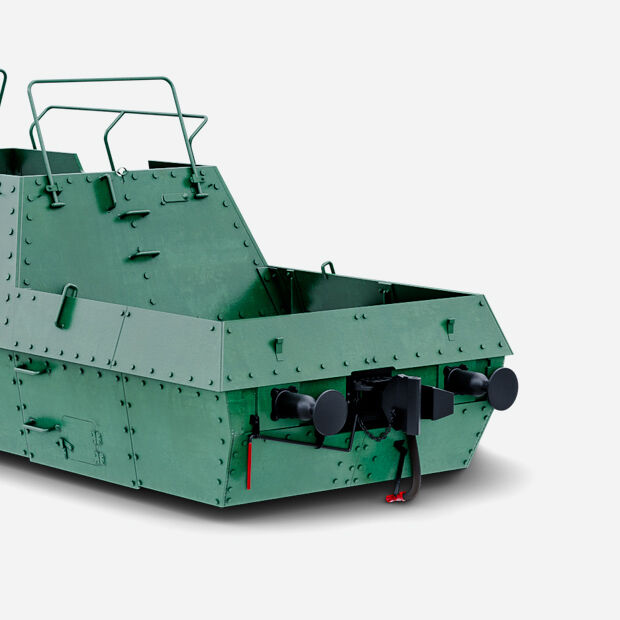
The Russian Railway Museum displays the diesel locomotive TEM1-0026, one of the first shunting diesel locomotives on the October Railway. It was built in 1959 and had a driver's cab with slanted walls. Later, diesel locomotives were built with vertical straight walls.

After the war, the development of diesel locomotive production followed the path of creating bonnet locomotives. They had only one control cabin - this simplified and reduced the cost of the design, and also provided easy access from the driver's platform to the locomotive units. Most often, the cabin was shifted from the center of the locomotive to one of the ends. This was due to the fact that under the longer hood there was equipment for cooling water and oil, and then there was a diesel generator unit. Under the small hood were batteries. There were two control posts in the cabin (on the left and right sides), and the driver used them depending on the direction of travel. The driver in the locomotive cabin always sits on the right side in the direction of travel - this way he sees the signals standing to the right of the tracks.

A similar scheme took root on all shunting diesel locomotives from DA and TE1-20 to modern machines.

TEM1 locomotives were used for shunting work at many stations, and also replaced steam locomotives on some industrial and sidings.

Starting with locomotive #0390, the driver's cab was made without beveled side walls, as was previously done on TEM2 locomotives. And starting with locomotive #0950, they stopped installing buffers.

Parameters

Technical
specifications

Number of locomotive sections
1
Axle arrangement
3o-3o
Length, mm
16,969
Full wheelbase, mm
12,800
Service weight, t
123.5
Load from moving axle on rails, t
20.6
Fuel capacity, kg
5,440
Diameter of moving wheels, mm
1,050
Design speed, km/h
90
MAIN DIESEL Brand
2D50
Number of strokes
4
Rated power, hp (diesel engine)
1,000
Nominal speed per minute (diesel engine)
740
CYLINDERS Arrangement
In-line
Quantity (cylinders)
6
Diameter, mm (cylinders)
318
Piston stroke, mm
330
Weight of dry diesel, kg
17,100
MAIN GENERATOR Type
МПТ84/39
Nominal power, kW (main generator)
700
Maximum voltage, V (main generator)
900
Continuous current, A (main generator)
1,200
Short-term current, A (main generator)
1,800
TRACTION MOTOR Type
ЭДТ200В
Quantity (traction motor)
6
Nominal power, kW (traction motor)
87
Current, A (traction motor)
820
Maximum speed per minute (traction motor)
2,200

Drawings
and diagrams

History

Chronology

  1. 1950 In 1950, the Bryansk plant stopped building steam locomotives and reoriented itself to producing refrigerated cars, diesel engines, and shunting locomotives with electric transmission. The first type of shunting locomotive was built by the design bureau under the supervision of chief designer P. I. Aronov. They took as a basis the well-proven 3₀-3₀ type diesel locomotive (two three-axle bogies) of the TE1-20 series and new developments implemented on the TE3 mainline diesel locomotives.
  2. 1958 In 1958, the plant produced the first TEM1-0001 diesel locomotive (shunting diesel locomotive with electric transmission, type 1).
  3. 1958 TEM1 diesel locomotives were built throughout the period from 1958 to 1968. A total of 1,946 locomotives of this series were produced. In June 1964, the Bryansk Machine-Building Plant produced the thousandth locomotive of this series.
  4. 1959 The museum displays a TEM1 locomotive of the first release with beveled walls of the driver's cab. Built by the Bryansk plant in 1959. Later, locomotives were built with vertical straight walls. Locomotive TEM1-0026 is one of the first shunting locomotives on the October Railway.
  5. 1999 Acquired by the museum from the pulp and paper mill in the city of Okulovka in 1999.