Today the museum is open from 10:00 to 18:00

Map

Exhibit description

Combat railway missile system «Molodets» 15P961

Rocket Train

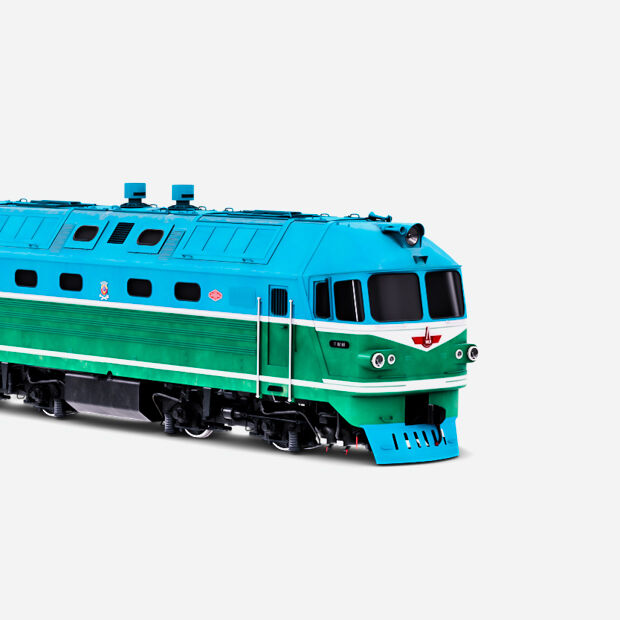
The combat railway missile system was created in the USSR in the early 1980s. In 1982, a single-section diesel locomotive based on the M62 was created specifically for operation as part of the missile system at the Voroshilovgrad plant. It received the factory designation DM62, but on the locomotives themselves, the letter "D" was not put on the license plate.

The unique missile system and the 15ZH61 intercontinental ballistic missile were developed by Yuzhnoye Design Bureau in Dnepropetrovsk, the General designer of the project is V. F. Tolstoy.Utkin. The train and launcher were designed by the Leningrad Special Machine Building Design Bureau. The entire service life of the rocket was in a sealed transport and launch container.

The maximum firing range is 10,400 km, the starting mass is 104.5 t, the missile length in the container is 22.4 m, the maximum diameter of the hull is 2.4 m, the mass of the payload 4 t. The split warhead has ten individual targeting warheads. The rocket's warranty period is ten years.

The combat railway missile system consists of three DM62 diesel locomotives, a command post consisting of seven wagons, a tank car with fuel and lubricants reserves,and three rocket launchers.

Diesel locomotive DM62-1731 was built at the Voroshilovgrad diesel Locomotive Plant . October Revolution in 1983 The locomotive's serial number is 4891.

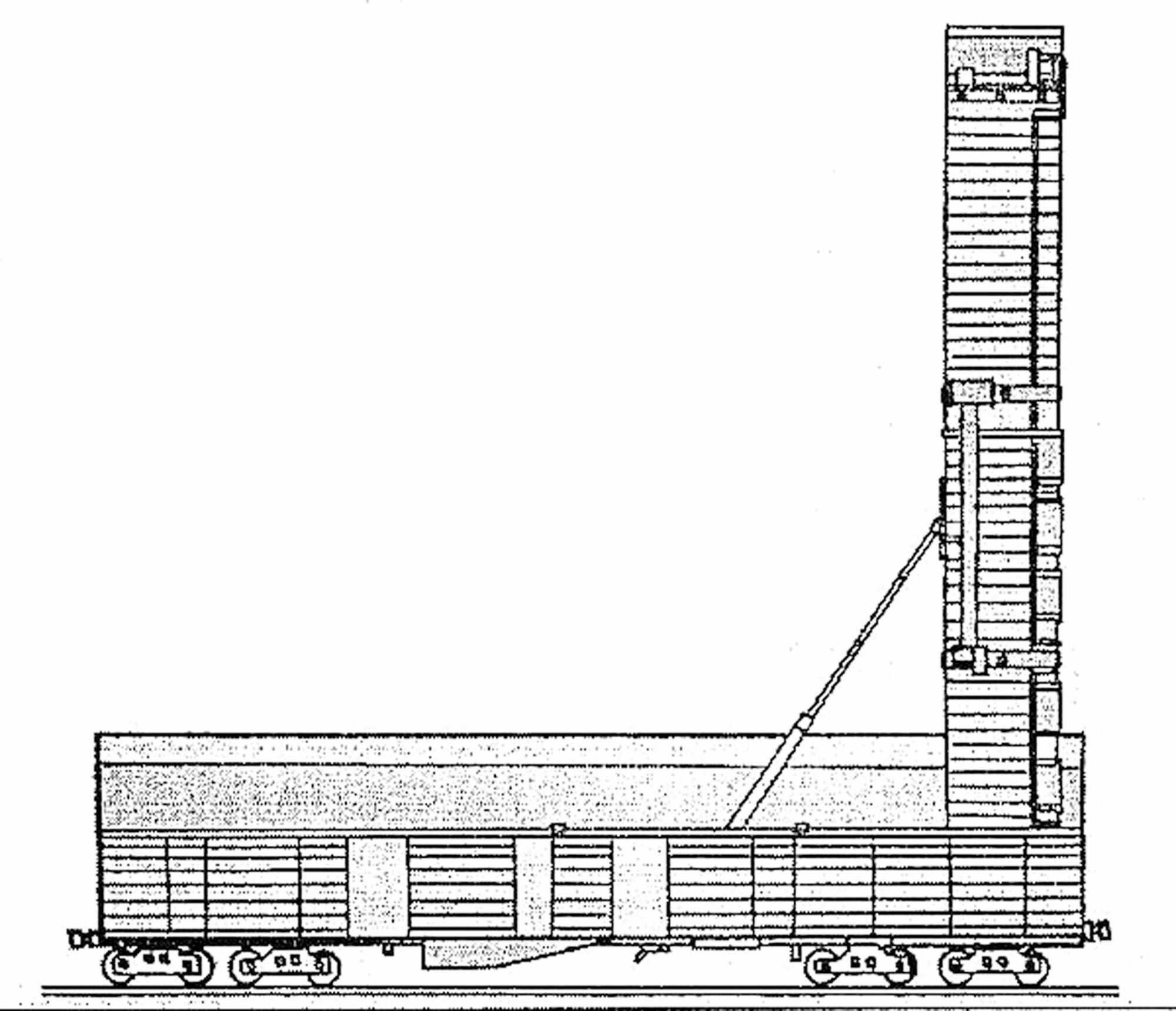
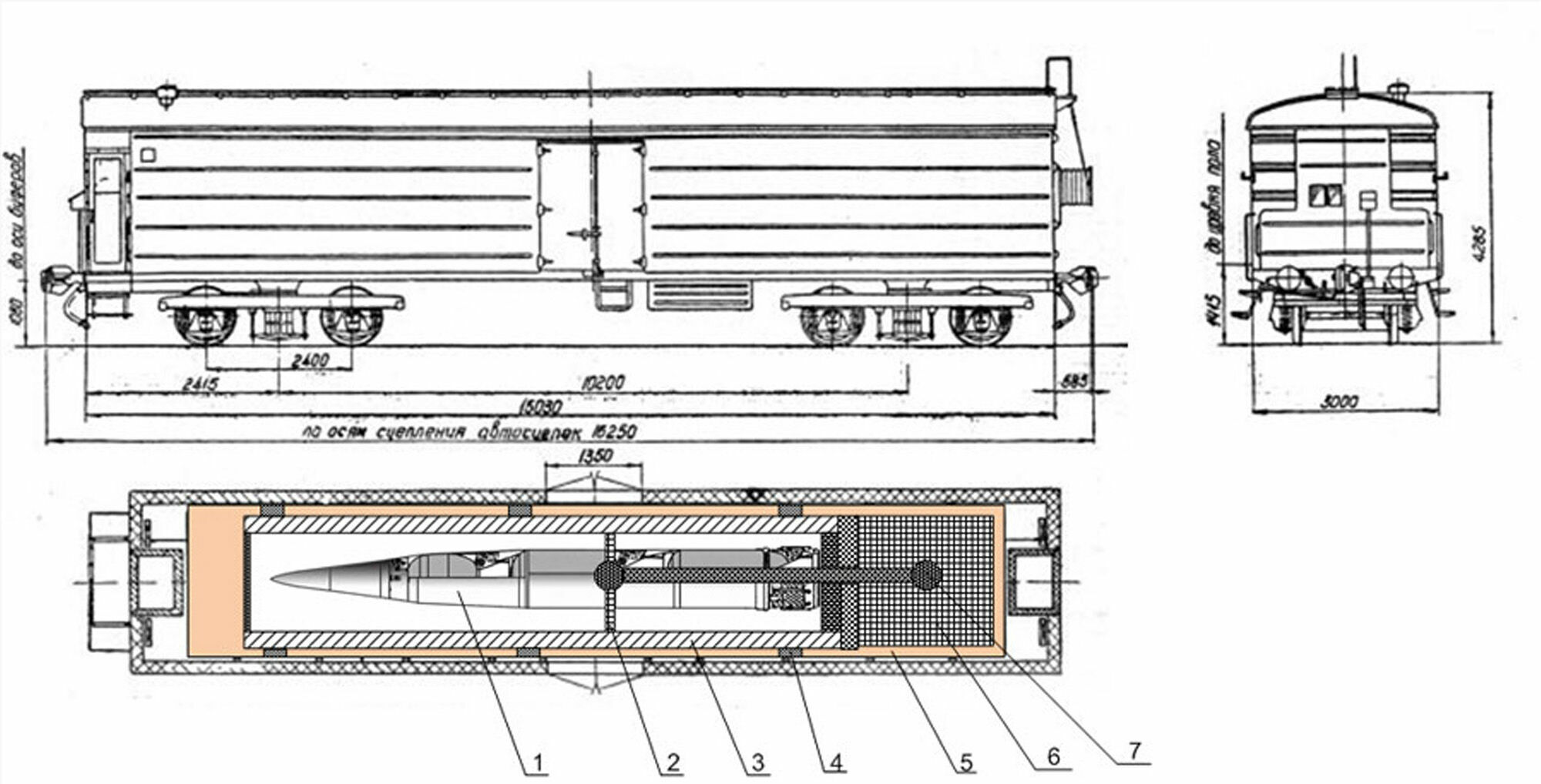
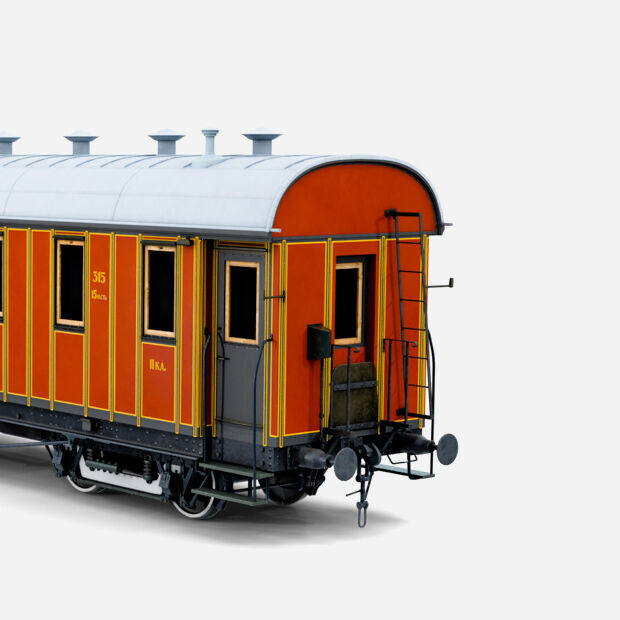
The combat railway missile system looks like an ordinary train consisting of refrigerated, mail-luggage and passenger cars. Eight cars have eight wheelsets each, and three have four wheelsets each. Three of the cars are disguised as a passenger fleet, and thanks to the available supplies on board, the complex could operate independently for up to 28 days. The launch vehicle is equipped with an opening roof.

The combat railway missile system (BZhRK) is a mobile missile system armed with the RT-23UTTH Molodets intercontinental ballistic missile (RS-22, 15Zh61, NATO classification - SS-24 "SCALPEL"). All the main combat and technical means in the system, which provide an autonomous launch of the missile, are located in railway cars.

Each regiment had a clearly developed route and movement schedule. And when on combat duty, the BZhRK moved in accordance with them along the public railway network of the USSR Ministry of Railways. In a day, the complex could move a distance of up to 1,500 km.

The BZhRK included three launch modules that directly carried out the launch and consisted of three cars each, a regiment command post and various support cars. Externally, all of them, including a 125-ton tank with a supply of diesel fuel, were disguised as refrigerated and passenger cars.

Parameters

Technical
specifications

Diesel power, hp
2,000
Power transmission type
Electric
Axial characteristic
3о-3о
Design speed, km/h
100
Service weight, t
116
Index
15Ж60/15Ж61
Maximum range, m
10,450/10,110
Launch weight, t
104.8/104.5
Throw weight of warhead, kg
4,050/4,050
Missile length (in TPK/in flight), m
21.9–23/22.6–23.3
Maximum missile body length, m
2.4/2.4
Fuel
Mixed solid (OPAL on the 1st stage, START on the 2nd)/mixed solid (T9-BK-8E on 1st stage, START on the 2nd, AP-65 on the 3rd)
Maximum firing range, km
10,400
Launch weight, t
104.5
Rocket length in TPK, m
22.4
Maximum body diameter, m
2.4
Payload weight, t
4
Individual target guidance warheads, pcs.
10
Rocket warranty period
10 years

Drawings
and diagrams

History

Chronology

  1. 1980s The BZhRK was created in the USSR in the early 1980s. The first missile regiment with a railway-based missile began experimental combat duty on October 20, 1987 near Kostroma. The system was finally accepted into service on November 28, 1989. In total, the USSR, and later Russia, the Strategic Missile Forces (RVSN) had 12 BZhRK trains (with three launchers each). They were organizationally combined into three missile divisions, with four BZhRK (missile regiments) in each. The divisions were stationed near Kostroma (adjacent to the MPS network - Drovinki station of the Northern Railway), in the Perm region (Yug station of the Sverdlovsk Railway) and near Krasnoyarsk (Kacha station of the Krasnoyarsk Railway).
  2. 2005 In 2005, the BZhRKs were removed from combat duty and were to be disposed of. In connection with this, JSC Russian Railways contacted the Ministry of Defense of the Russian Federation with a request to transfer one of the complexes to the exhibition. It was planned to exhibit it in the museum at the former Varshavsky Station in St. Petersburg. In August 2005, the Ministry of Defense gave its consent in principle to transfer the BZhRKs to JSC Russian Railways for museum purposes.
  3. 2016 The museum at Varshavsky Station closed in 2016, but before that, the complex was very popular with visitors. In the summer of the same year, the complex was put into transport mode, the missile silo was lowered and it was relocated to the site of the Museum of Russian Railways, which was being created at the St. Petersburg-Baltiysky station. On August 17, 2017, the BZhRK was put on display in the new Museum: the missile silo was raised to combat position and fixed in place.