Today the museum is closed

Map

Exhibit description

Direct Current Passenger Electric Locomotive CHS200 002

The Leningrad-Moscow line has always held a unique position within the domestic railway network. On the one hand, as a connection between two of the most important cities in the country, it has always been a flagship route for the Oktyabrskaya Railway, handling large volumes of passenger traffic. It is no coincidence that in 1931, the first named train in the USSR, the “Red Arrow”, began operating between Leningrad and Moscow.

The straight and gentle gradient
Leningrad-Moscow line was ideal for the introduction of high-speed trains.

On the other hand, with its relatively gentle gradient (no steep climbs or descents) and almost perfectly straight alignment, this line seems as if it were purposefully designed to accommodate high train speeds, making it a natural testing ground
for high-speed operations.

In the post-war period, with the introduction of diesel and later electric traction, the maximum allowable speeds for passenger trains on the Leningrad-Moscow line gradually increased, reaching 120 km/h, by the late 1950s, then 140 km/h, and eventually 160 km/h in the early 1960s. At that time, passenger services on the route were operated by six-axle ChS2 and ChS2T electric locomotives of Czechoslovakian manufacture. To further increase travel speeds to 200 km/h and beyond, the development of new, more powerful locomotives became essential.

New Class

Such locomotives were created in the mid-1970s. In 1975, the Czechoslovakian Škoda Plant, then a traditional supplier of passenger electric locomotives for domestic railways, built two ChS200 locomotives (Nos. 001 and 002, factory type 66E0). These powerful two-section high-speed locomotives had no equivalents in either Soviet electric locomotive engineering or in the Czechoslovak Socialist Republic.

The new electric locomotive was designated as the ChS200, with the number in its name representing its maximum speed.

The ChS200s were eight-axle electric locomotives consisting of two four-axle sections. The number 200 in the class designation indicated the maximum permissible speed of the locomotive in operation.

The two sections of this electric locomotive were equipped with separate power circuits, and the design did not include an operating mode where all eight traction electric motors were connected in series into one circuit. This was completely atypical for domestically produced DC electric locomotives with rheostat starting.

Other notable design features of the ChS200 electric locomotive included the use of four current collectors (two per section), a push-button controller on the control panel instead of the traditional drum controller with a steering wheel, and the ALSN-200 multi-digit high-speed locomotive signalling system.

After testing prototypes and making several design adjustments, the Škoda Plant manufactured a batch of ten ChS200 electric locomotives (Nos. 003–012, factory type 66Em) between 1979 and 1980. In terms of design, these locomotives differed somewhat from the first two machines in the class: the body was redesigned (with changes to the shape of the front section and a reduction in the overall length of the two-section locomotive by more than a meter), new current collectors (TSP-6M, similar to those used on the ER200) were installed, and modifications were made to the electrical circuits, among other changes. All of these locomotives were delivered to the Leningrad-Passazhirsky-Moskovsky Depot of the Oktyabrskaya Railway.

Ten of the 12 electric locomotives produced are still in operation with passenger trains.

The ChS200 electric locomotives Nos. 001 and 002, which were essentially experimental models, were decommissioned in 1987. However, the ChS200 electric locomotives Nos. 003–012 remain in service today, still part of the inventory of the Oktyabrskaya Railway. These locomotives are assigned to the TChE-8 Saint Petersburg-Passazhirsky-Moskovsky Depot and primarily serve passenger trains on the Saint Petersburg-Moscow line.

The ChS200 002 electric locomotive displayed in the museum arrived in 1991 from the Leningrad-Passazhirsky-Moskovsky Depot of the Oktyabrskaya Railway.

Parameters

Technical
specifications

Years of production
1974–1979
Number built, units
12
Axle characteristic
2 (2О–2О)
Current type
DC
Electric brake
Rheostat
Traction motor type, T
1AL-4741FL
Traction motor suspension type on axle
Support-frame
Axle gear ratio
1.72
Pantograph type
TSP-6M
Wheel diameter, mm
1,250
Axle load on rails, tf
19.5
Hourly mode parameters
Power, kW
8,400
Speed, km/h
135.9
Tractive force, kgf
22,130
Continuous speed, km/h
137.8
Continuous power, kW
8,000
Continuous traction force, kgf
20,800
Length over coupler axles, mm
32,000
Body width, mm
3,000
Body height, mm
4,450
Bogie wheelbase, mm
3,200
Design speed, km/h
220
Service weight, t
156
Smallest radius of passable curves, m
100
Voltage, V
3000

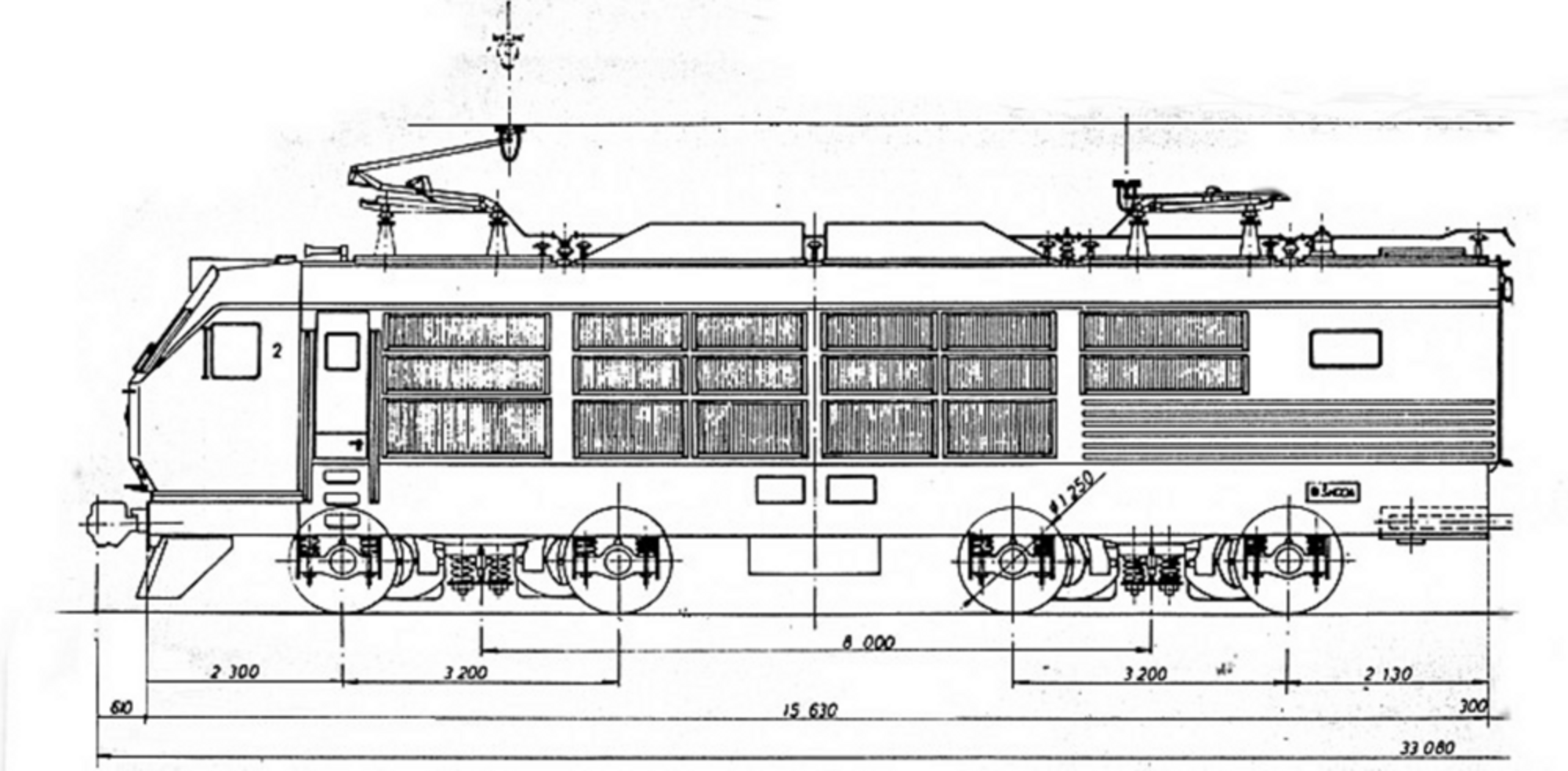
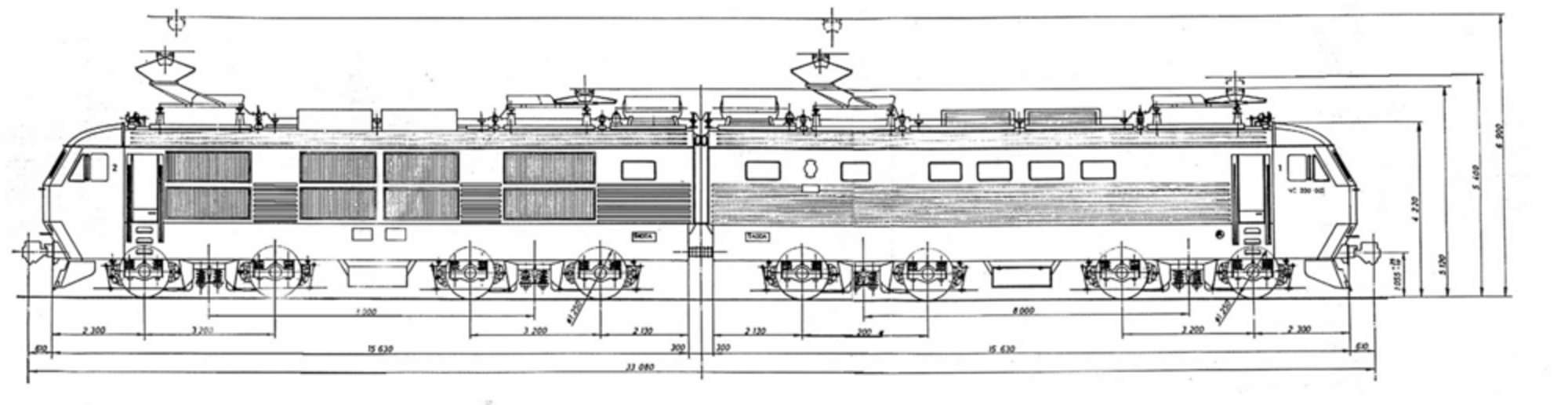
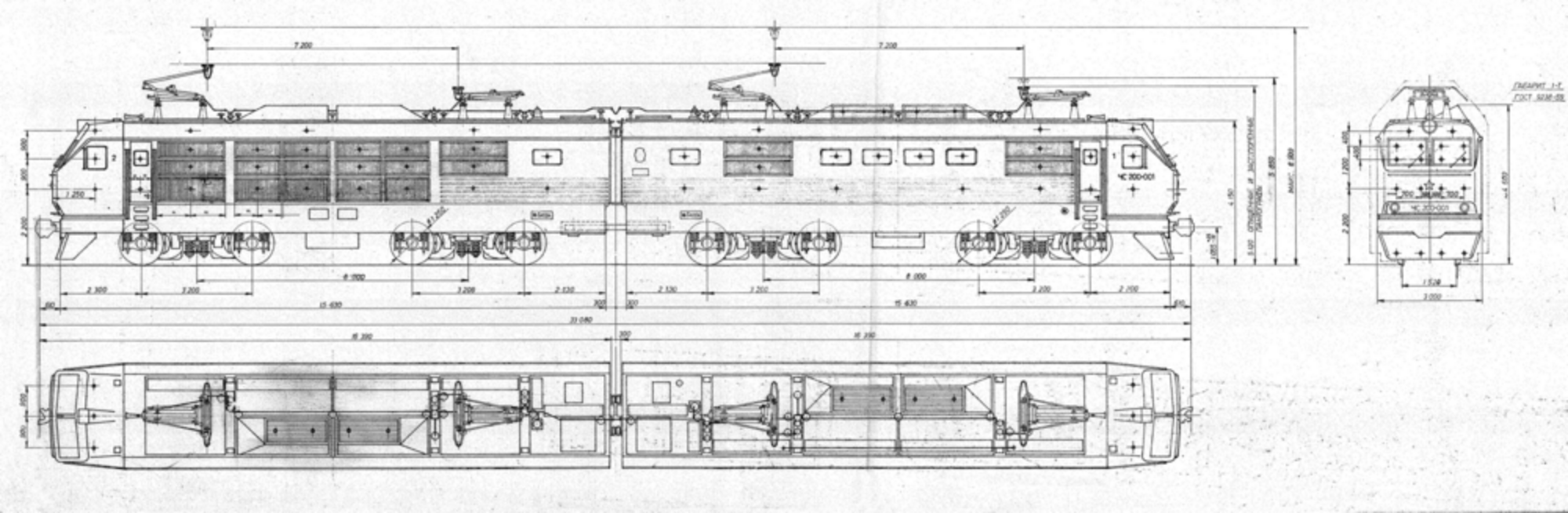
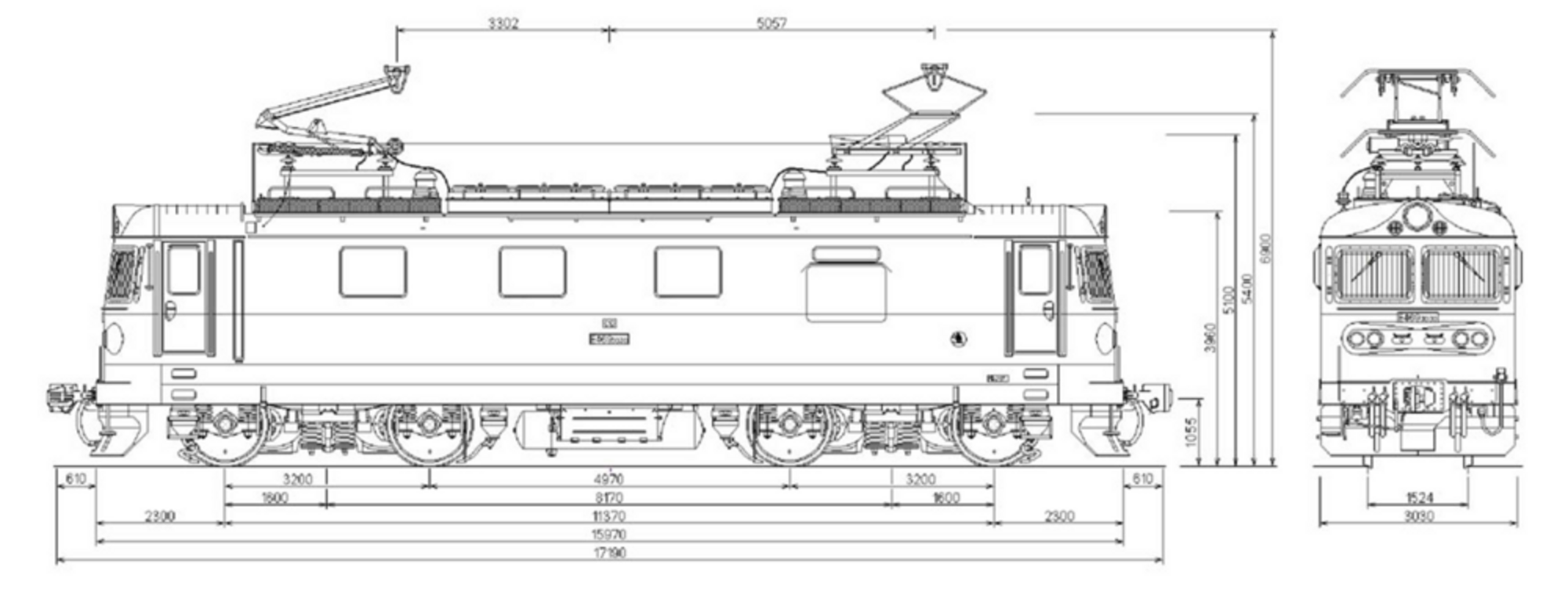
Drawings
and diagrams

History

Chronology

  1. 1971 The Czechoslovakian Škoda Plant manufactured the E469.3 locomotive.
  2. September 1972 On the test loop in Velim, the E469.3 locomotive reached a speed of 219 km/h.
  3. June 1973 The E469.3 locomotive was transferred to the USSR for testing.
  4. 1975 Two ChS200 locomotives were built with numbers 001 and 002.
  5. 1979–1980 The Škoda Plant manufactured a batch of ten electric locomotives of the ChS200 class with numbers 003–012.
  6. 1987 ChS200 electric locomotives with numbers 001 and 002 were decommissioned.
  7. 1991 The ChS200 002 electric locomotive displayed in the museum arrived from the Leningrad-Passazhirsky-Moskovsky Depot of the Oktyabrskaya Railway.