Today the museum is open from 10:00 to 18:00

Map

Exhibit description

Freight electric locomotive FK-07

Passenger FP

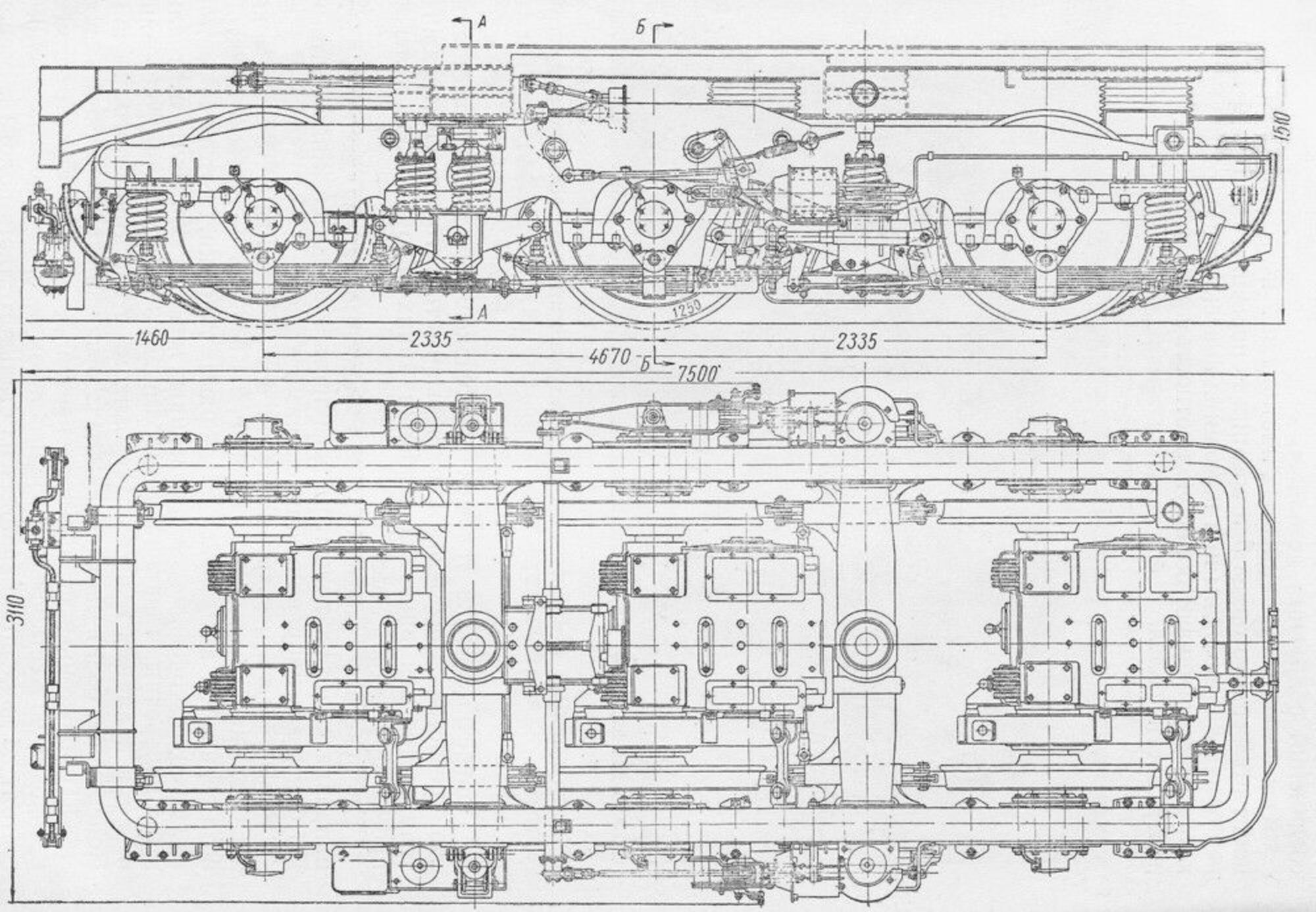
The passenger version of the FP differed from the main one in the design of the bogies and the suspension system of the electric motor in the bogie. On freight electric locomotives, the suspension was classic — support-axial, which is sometimes called tram. With this system, the engine was suspended on the frame and rested on the axle of the locomotive. The torque was transmitted from the engine to the wheelset by gears with constant engagement.

The system is simple, but has one big disadvantage. The weight of the engine can reach 5 tons, plus the weight of the gearbox. All this mass falls on the spring suspension of the wheelset itself. At low speeds, this is not of great importance, but with increasing speed, it has a huge impact on the dynamic forces that arise when the locomotive is moving, which entails increased impact on the track, upsetting it.

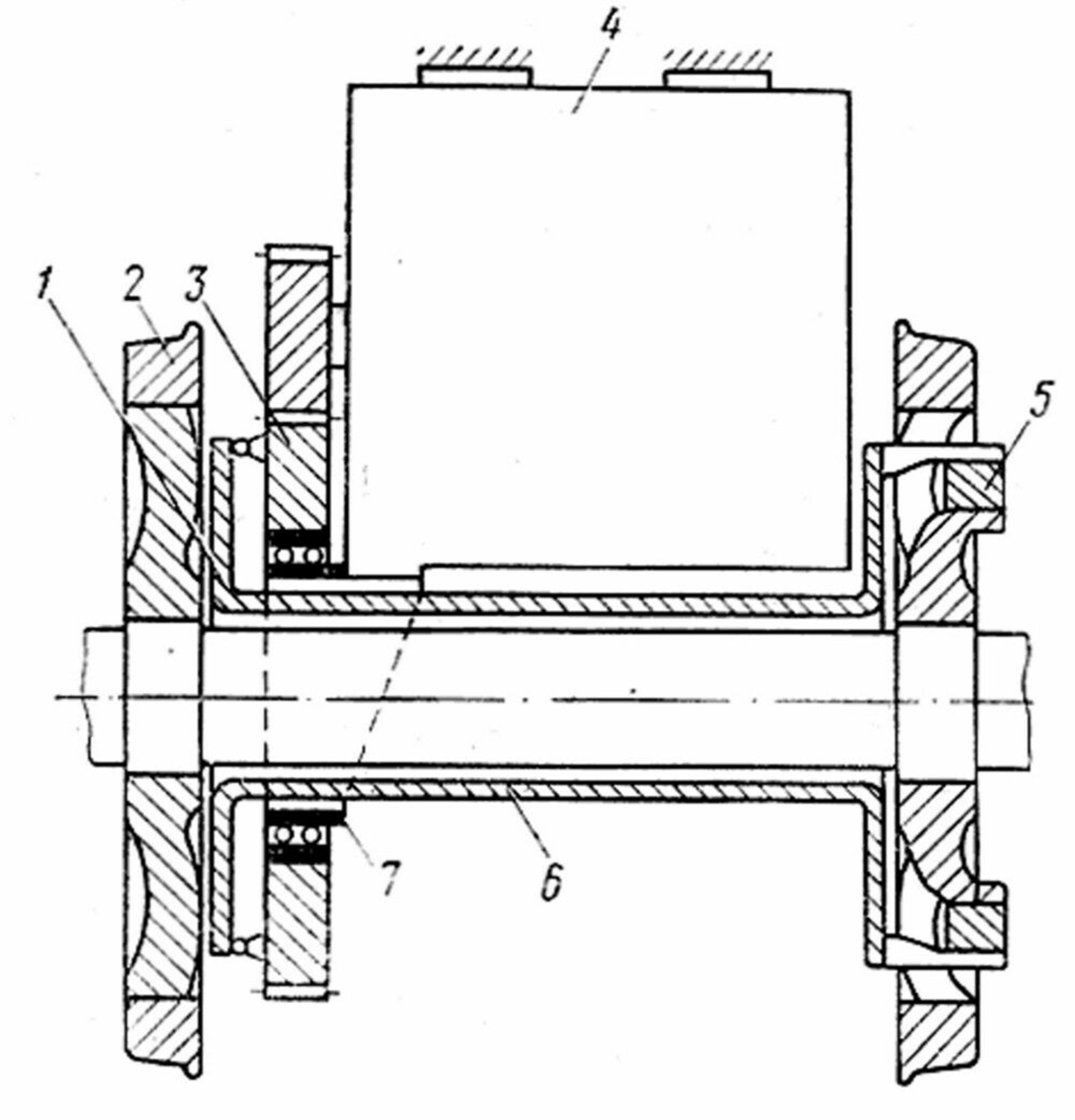
For passenger electric locomotives with higher speeds, a support-frame design with an Alstom drive was selected. In it, the electric motor is rigidly attached to the bogie frame. With such a suspension, torque is transmitted from the engine gear to the gear fixed on the hollow shaft, inside which the axle of the wheel pair passes.

In this case, the axle of the wheel pair can move inside the hollow shaft. Torque is transmitted from the hollow shaft directly to the wheel disks through elastic couplings that compensate for the displacement of the wheel pair. Such an arrangement reduces the weight of the sprung parts and improves driving performance. This type of suspension is used on all new locomotives, the difference being the design of the non-rigid connection of the engine and the wheelset.

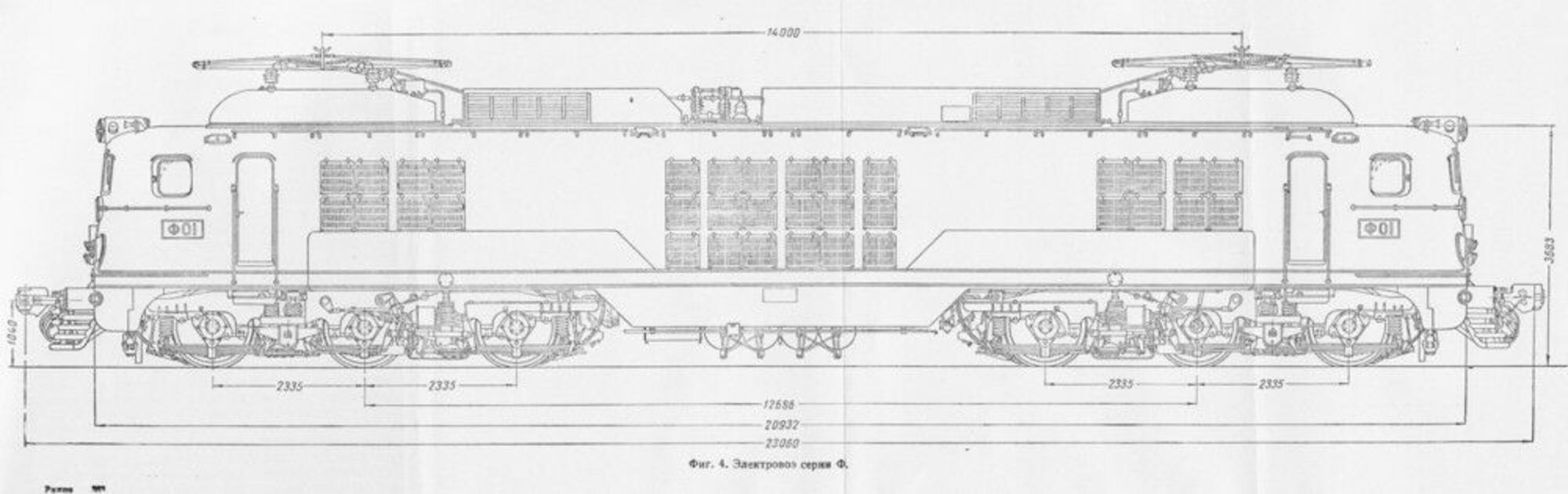
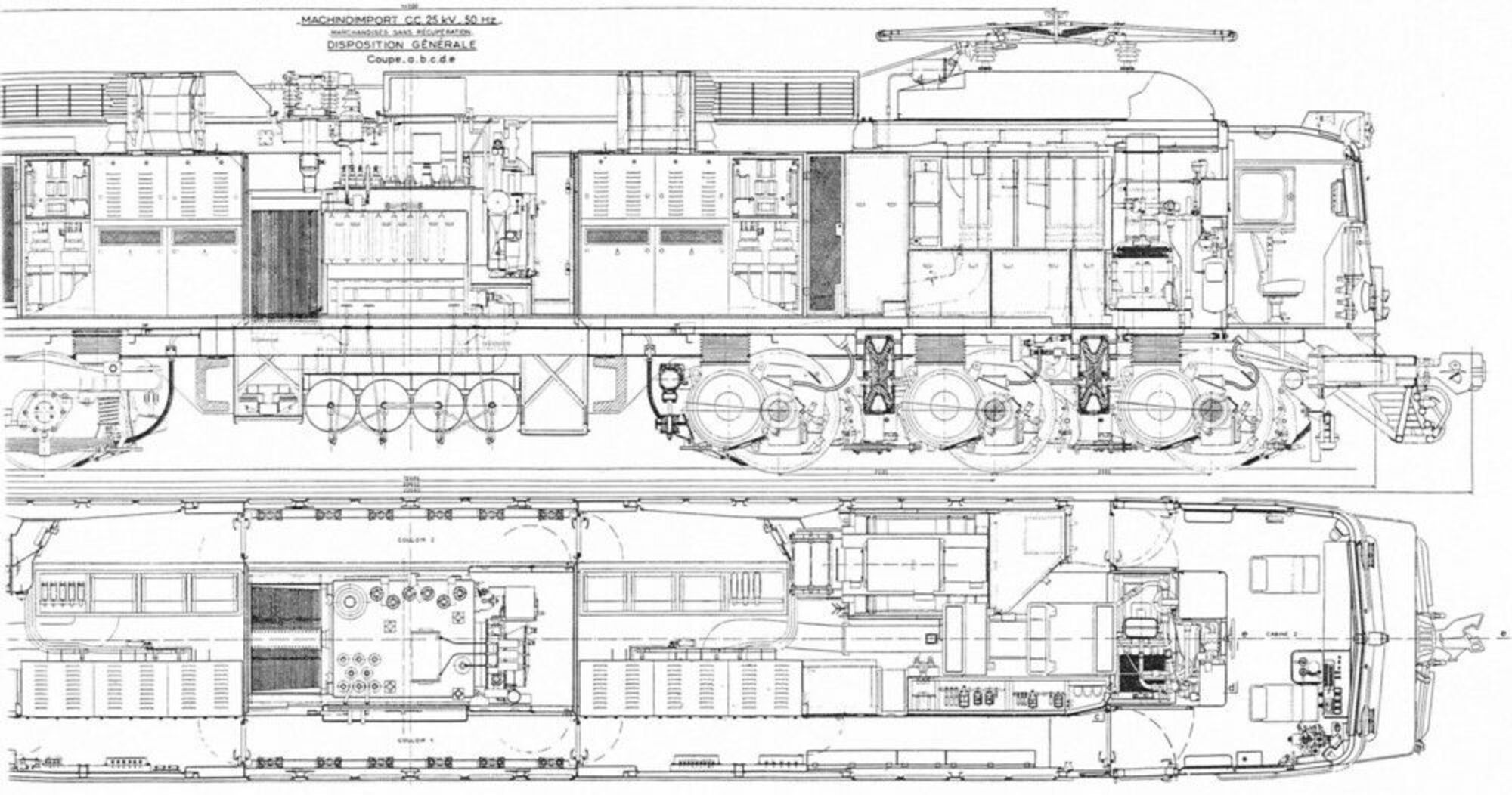
The electric locomotive frame is extended at the ends to install an automatic coupling on it. Step-down transformers with a capacity of 635 kW for electric heating of passenger train cars were specially designed for the FP. Traction electric motors with a capacity of 790 kW in hourly mode and 760 kW in continuous mode were used. The F series locomotives had a tractive force of 35,800 kgf at a speed of 47.3 km/h, and the FP series electric locomotives had a tractive force of 22,900 kgf at a speed of 74.1 km/h. The design speeds were set at 100 and 160 km/h, respectively.

The mechanical part was manufactured by Alstom and Schneider (in Creusot), the traction motors by Alstom and Genon, the transformers by Genon, the ignitrons (rectifier units) and control systems by Schneider-Westinghouse.

Parameters

Technical
specifications

Current type
Alternating
Supply voltage
25 kV/50 Hz
Traction transformer, kW
7,320
Traction electric motor
ТАО-649В1
Electric motor voltage, V (traction motor)
750
Electric motor power, kW
790
Rated current, A
1,135
Anchor speed, rpm
890
Electric motor weight without gear, kg
3,270
Number of electric motors (traction motor)
6
Rectifier unit
ВУК-Ф
Hourly mode traction force, kgf
35,800
Continuous mode traction force, kgf
34,000
Hourly mode speed, km/h
47.3
Continuous mode speed, km/h
48.3
Maximum speed, km/h
100
Length along coupler axes, mm
23,060
Height with lowered pantograph, mm
5,100
Width, mm
2,850
Wheel diameter, mm (traction motor)
1,220
Minimum radius of passable curves, m
125
Electric locomotive weight, t
138

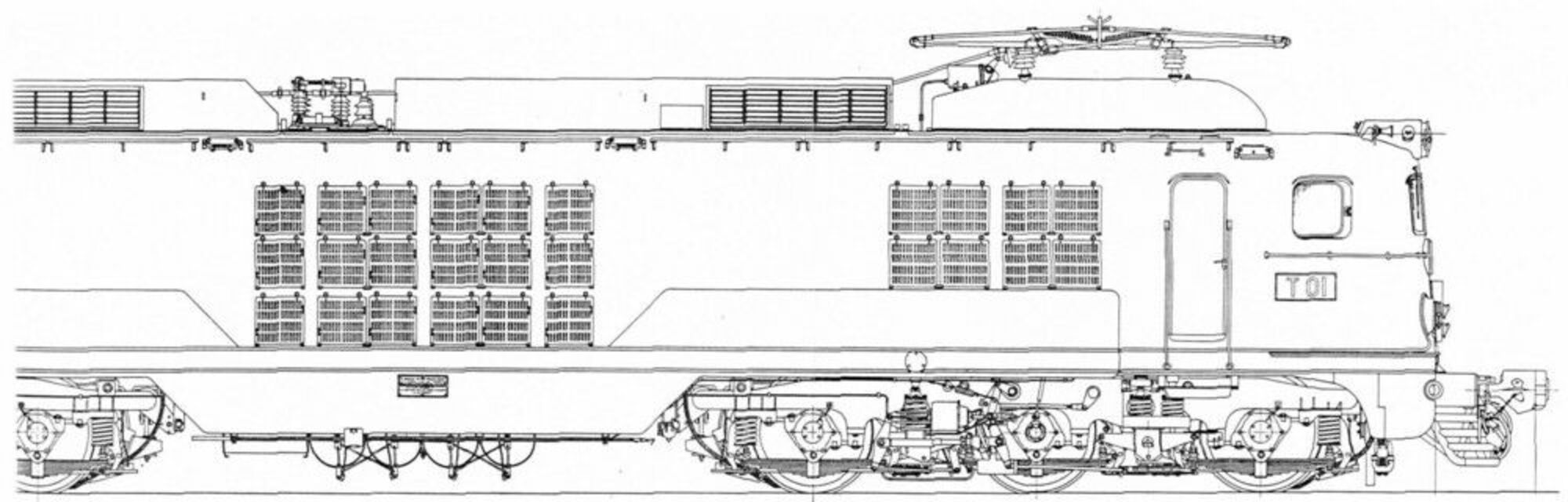
Drawings
and diagrams

History

Chronology

  1. 1949 The design of the electric locomotive for the USSR was based on the best in Europe at the time. It was the CC 7100 series electric locomotive, built by Alstom for SNCF (French Railways). Its prototype CC 7000 (7001 and 7002) was built in 1949. The CC 7101–CC 7158 series locomotives were produced between 1952 and 1955. Two representatives of this locomotive type are notable for having set world railway speed records. CC 7121 reached 243 km/h on 21 February 1954, and CC 7107 reached 331 km/h on 28–29 March 1955. The CC abbreviation comes from the locomotive’s axle formula C₀-C₀, which denotes that the locomotive has two three-axle bogies.
  2. 1953 In 1953, the first bogie (with two-axle bogies) electric locomotives of the E499.0 type were built at the Škoda plants in Czechoslovakia; according to this system, they were designated as B₀-B₀. The abbreviation was eventually pronounced as "bobbin". Later, in the USSR version, the series was designated as ChS-1.
  3. 1959–1960 In 1959–1960, French companies built 50 AC electric locomotives to order. The order was made to speed up the design process and accumulation of operating experience of AC electric locomotives, as well as to compare different designs.
  4. 1959 The assembly of F series electric locomotives No. 01-22 and FP No. 41-50 (later No. 1-10) was carried out in 1959 and 1960, respectively, at the Alstom plant in Belfort. Electric locomotives of the F series No. 23–30 and FR No. 31–40 — in 1960 at the Schneider plant in Creusot.
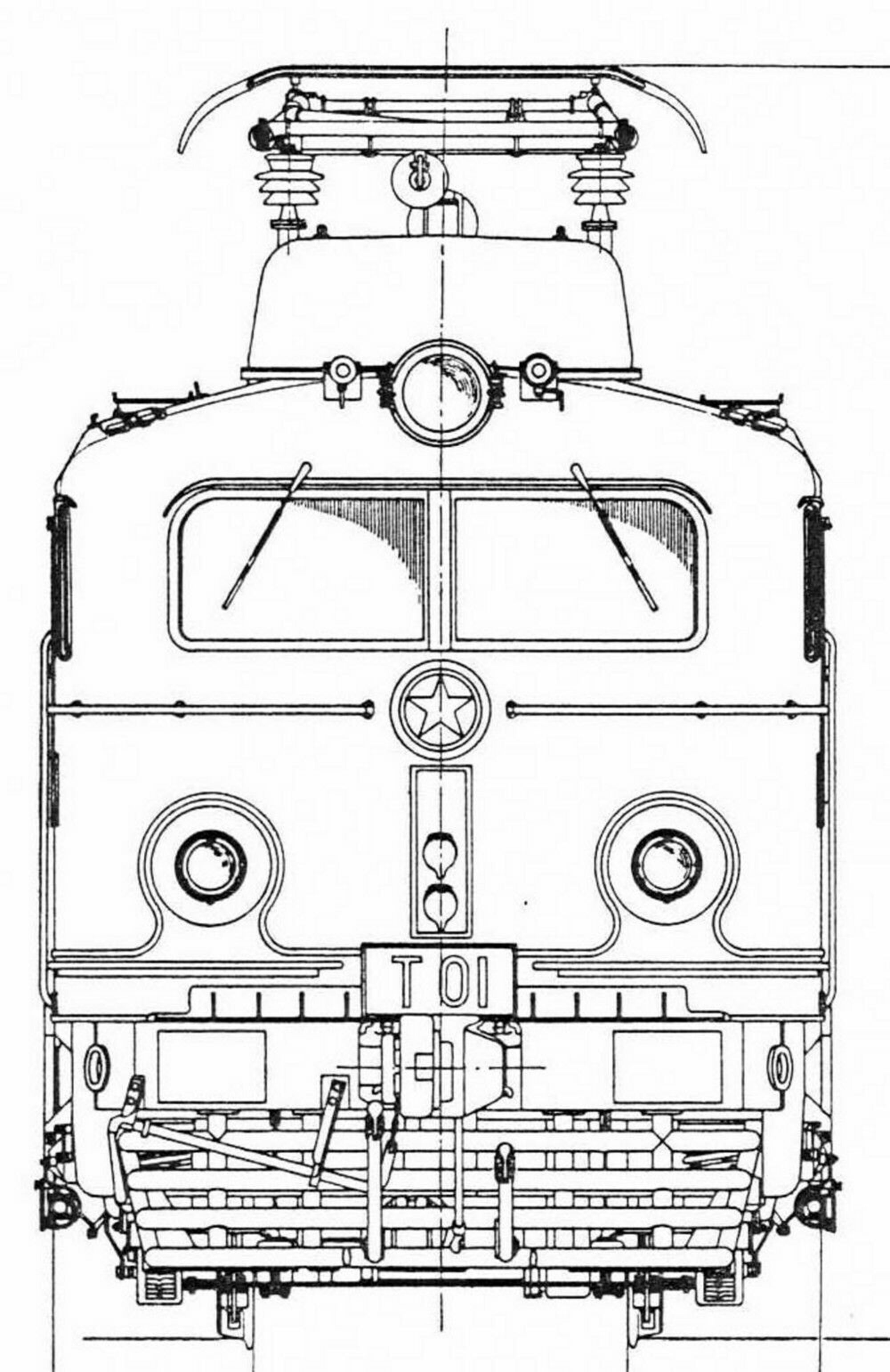
  5. 1959 The first of the built freight electric locomotives, the F-01 (originally the T-01 series), was tested in France in April 1959 with trains of varying weights from 1,100 to 2,500 tons. The finished electric locomotives were delivered to the USSR by sea. After a test run on the Ozherelye-Pavelets section of the Moscow Railway, they were sent to the Krasnoyarsk Railway, where they began working with freight and passenger trains.
  6. 1959 The electric locomotive on display was built at the Alstom plant in 1959. Belongs to the Central Museum of Railway Transport (CMZhT).
  7. 1966 The first serial freight electric locomotive NO6 was manufactured in 1966. NO6 — Novocherkassk, single-phase, six-axle. It was later renamed VL60: Vladimir Lenin, type 60.
  8. 1970s In the early 1970s, due to equipment deterioration, electric locomotives were taken out of service and replaced with VL60K and VL60PK electric locomotives. During repairs, ignitron rectifiers were replaced on 8 locomotives with silicon type VUK-F. Electric locomotives that underwent modernization received an additional index in their series designation — K (silicon).
  9. 1987 The last electric locomotives were removed from the inventory in 1987.