Today the museum is closed

Map

Exhibit description

Experimental Passenger Diesel Locomotive TEP80 0002

During the 1970s and 1980s, passenger traffic on the USSR Ministry of Railways network grew steadily, leading to a gradual but consistent increase in the number of cars in many passenger trains.

The country needed diesel locomotives that could exceed the traction capabilities of the existing ones.

Given these circumstances, passenger diesel locomotives were needed for operation on several railway sections — mainlines with particularly high traffic served by diesel traction, routes with steep gradients, and so on. These locomotives had to exceed the traction capabilities of the TEP70 class, which had a 4,000 hp capacity and was mass-produced at the Kolomna Locomotive Works at the time. As a result, work began in Kolomna to develop a new passenger diesel locomotive powered by a 6,000 hp diesel engine.

New Project

In 1976, two diesel locomotives — TEP75 Nos. 0001 and 0002 — were built at the Kolomna Locomotive Works. They were equipped with 1D49 diesel engines with a capacity of 6,000 hp, but otherwise, the design had much in common with the TEP70. However, during the subsequent experimental operation of the TEP75, several design flaws emerged, causing these locomotives to remain experimental models and preventing them from entering mass production.

It turned out that achieving acceptable weight and size characteristics for such powerful locomotives with a six-axle underframe, like the TEP70, proved extremely difficult. The mass of the diesel locomotives was 147 t, exceeding the 138 t permitted by the technical specifications. As a result, Kolomna began developing a new model of passenger diesel locomotive, now with an eight-axle underframe.

Later, two TEP80 diesel locomotives were built at the Kolomna Locomotive Works: No. 0001 in 1988 and No. 0002 in 1989. In addition to using a 1D49 diesel engine with a capacity of 6,000 hp, the main feature of these locomotives was their newly designed eight-axle underframe.

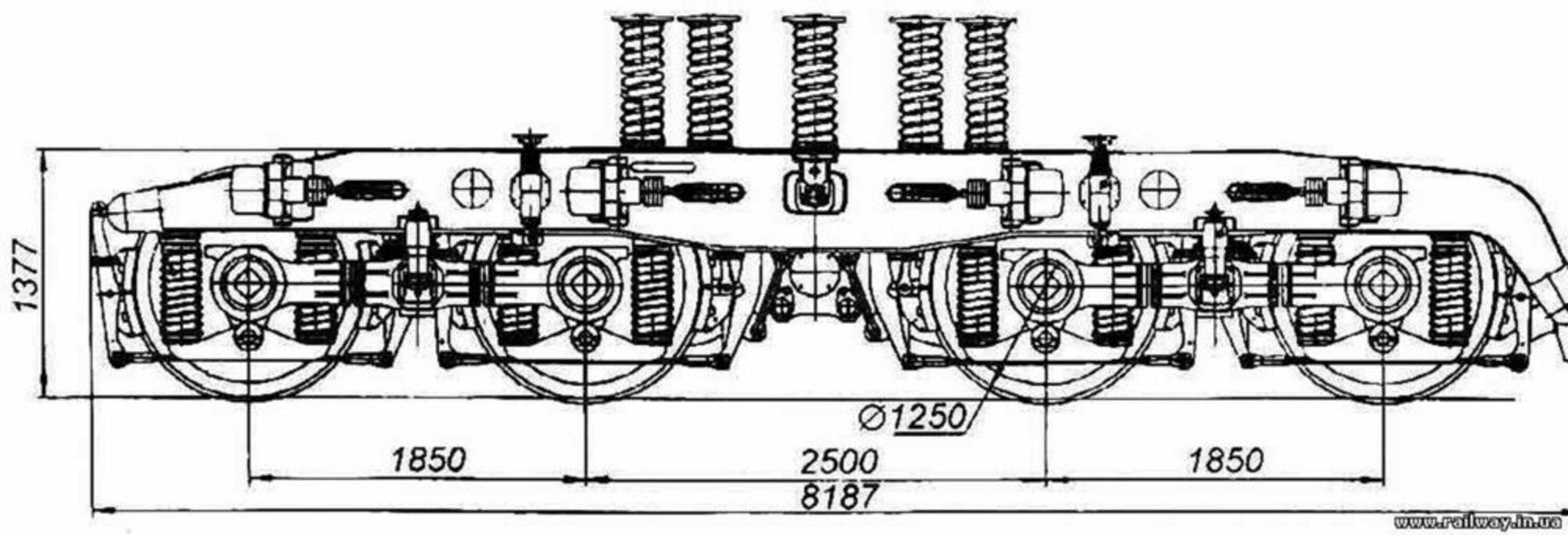
It consisted of two four-axle trucks of an original design. The wheelsets of each unit were connected by longitudinal balancers in the axle box assemblies. These balancers were connected by chairs of spring to the sides of the truck frame. Transverse and longitudinal forces were transmitted from the wheelset through the balancer beams and elastic rubber-metal hinges to the chairs of spring.

This design significantly reduced the lateral impact on the rail and improved the locomotive’s horizontal dynamics by redistributing the horizontal forces between the wheels and the rails. A similar underframe design was later used on the experimental passenger electric locomotive EP200.

Initially, the technical specifications for the TEP80 diesel locomotives set a design speed of 160 km/h. Between 1989 and 1991, both locomotives successfully passed acceptance tests, during which a maximum speed of 196 km/h was achieved.

Given the good dynamic qualities demonstrated by the experimental machines and the satisfactory impact on the track, it was decided to conduct tests at speeds of up to 250 km/h to assess the underframe’s performance at higher speeds. To achieve this, the manufacturer replaced the axle gearboxes with a gear ratio of 3.12 on the TEP80 0002 diesel locomotive with gearboxes with a ratio of 2.03, which increased the design speed of the locomotive from 160 to 250 km/h.

Tests of the TEP80 0002 diesel locomotive were carried out in 1992–1993 on the Leningrad-Moscow mainline of the Oktyabrskaya Railway. During one of these test runs on 5th October 1993, the locomotive reached a speed of 271 km/h on the Shlyuz-Doroshikha section, a world record for diesel locomotives that still stands today.

The TEP80 diesel locomotive set a world record and reached a speed of 271 km/h.

Did Not Enter Production

However, the fate of the TEP80 diesel locomotives was shaped by the difficult circumstances in the country at the time of their creation. The severe economic crisis in Russia during the early 1990s, coupled with a sharp decline in freight and passenger transportation, led to a surplus of locomotives. As a result, the introduction of fundamentally new passenger diesel locomotives was not considered a priority for an extended period.

Unfortunately, the economic crisis of the early 1990s prevented the TEP80 from entering mass production.

As a result, despite their outstanding speed and traction characteristics, the TEP80 diesel locomotives were never mass-produced. Today, they stand as a testament to one of the most remarkable achievements in Soviet-era diesel locomotive engineering.

The TEP80 0002 diesel locomotive displayed in the museum (the very machine on which the speed record was set) was not put into regular service after testing.

Parameters

Technical
specifications

Plant
Kolomna Diesel Locomotive
Year
1990
Serial number of the diesel locomotive
2552
Diesel power, hp
6,000
Power transmission type
Electric
Electric brake power, kW
4,000
Axle characteristic
4O–4O
Design speed, km/h
160
Service weight, t
180
Continuous traction force, kgf
24,000
Diesel brand
1D49
Diesel type
V-shaped
Traction generator type
GS-519U2
Traction electric motor type
ED-121VUKHL1
Traction electric motor suspension type on axle
Support-frame
Axle reducer gear ratio
3.12
Battery type
48TN-450
Brake compressor type
PK-5.25
Wheel diameter, mm
1,220
Axle load on rails, tf
22,5
Continuous speed, km/h
50
Equipment reserves fuel, kg
6,000
Equipment sand reserves, kg
800
Length over coupler axles, mm
24,400
Body width, mm
3,080
Body height, mm
4,975
Wheel bogie base, mm
6,200
Minimum radius of passable curves, m
125
Current
AC-DC
Fuel combustion cycle
Four-stroke
Diesel characteristics
Twenty-cylinder

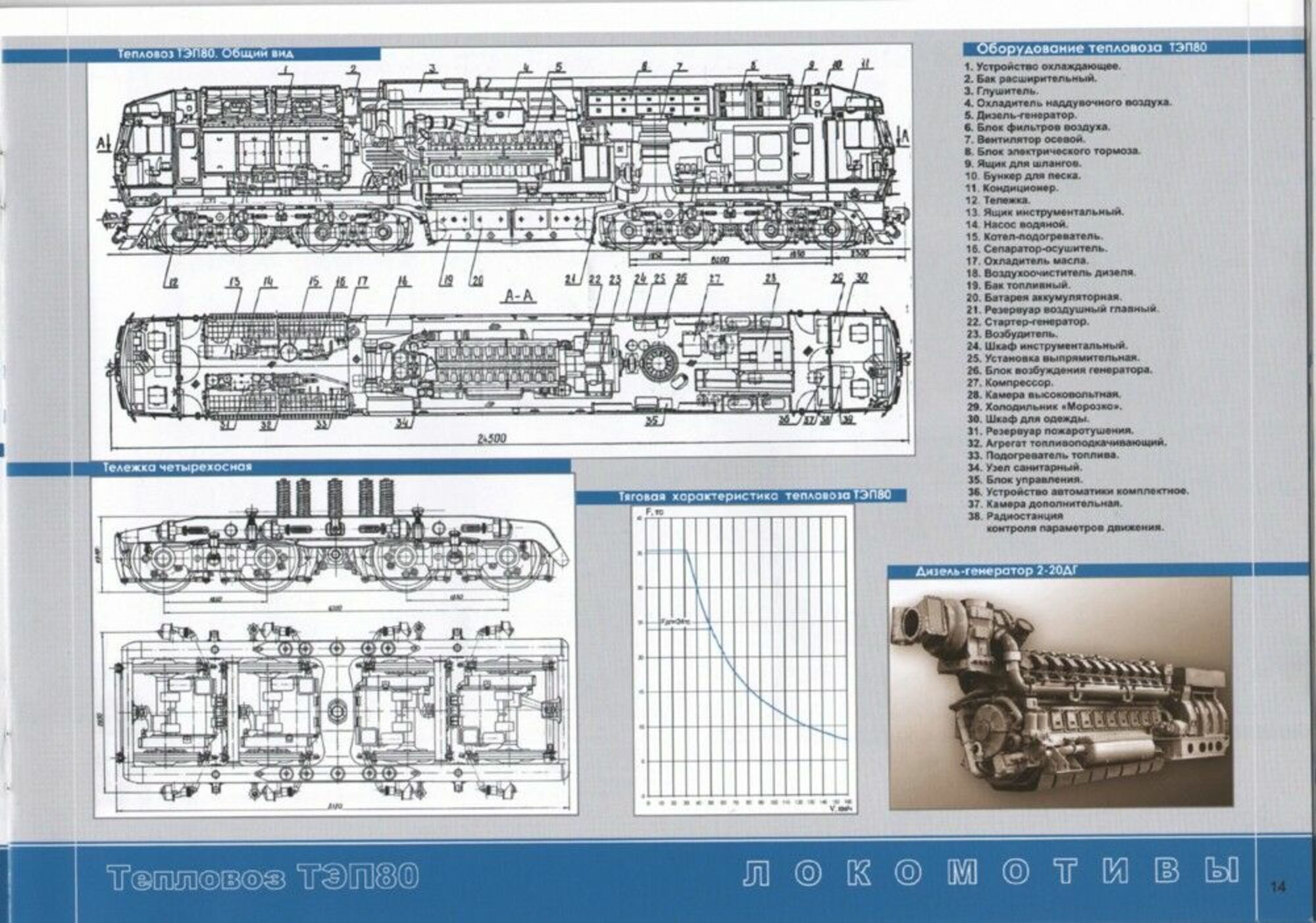
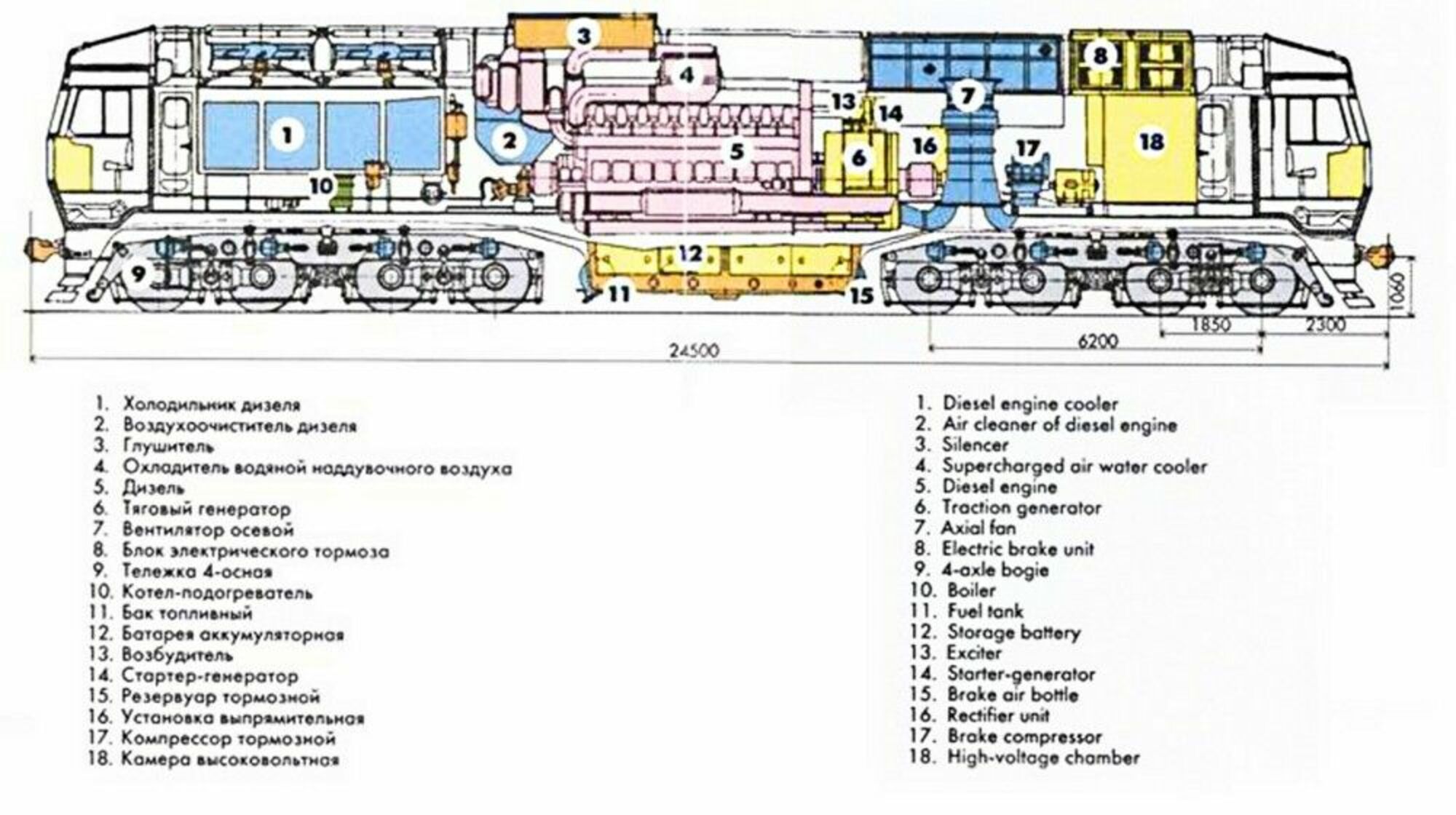
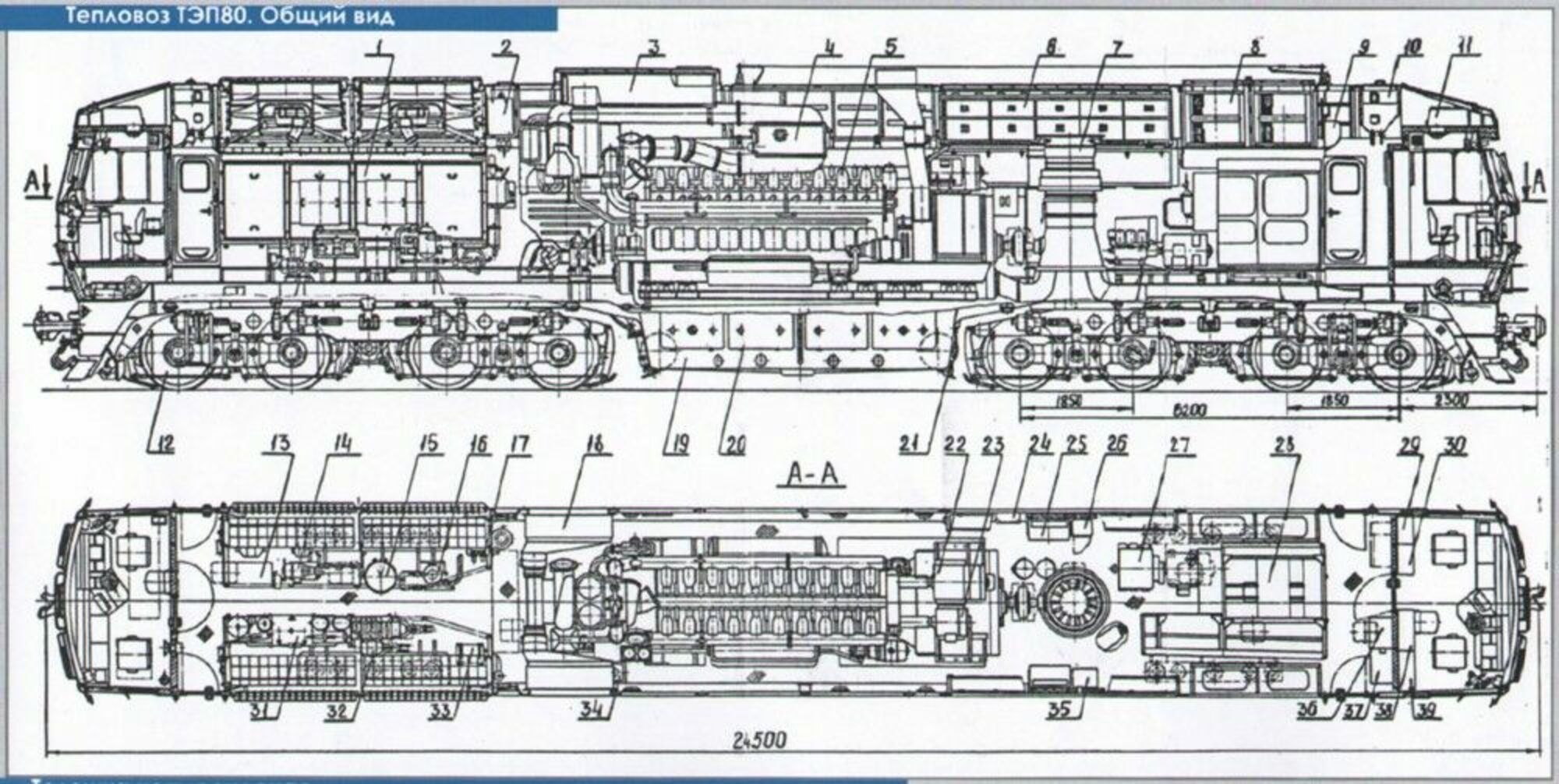
Drawings
and diagrams

History

Chronology

  1. 1988–1989 Two TEP80 diesel locomotives were built — No. 0001 and No. 0002.
  2. 1989–1991 TEP80 0001 and TEP80 0002 diesel locomotives successfully passed acceptance tests, during which a maximum speed of 196 km/h was achieved.
  3. 5th October 1993 During testing, the TEP80 0002 diesel locomotive reached a speed of 271 km/h on the Leningrad-Moscow mainline of the Oktyabrskaya Railway.
  4. 2007 The TEP80 0002 diesel locomotive was brought to the Museum of Russian Railways in Saint Petersburg.