Today the museum is closed

Map

Exhibit description

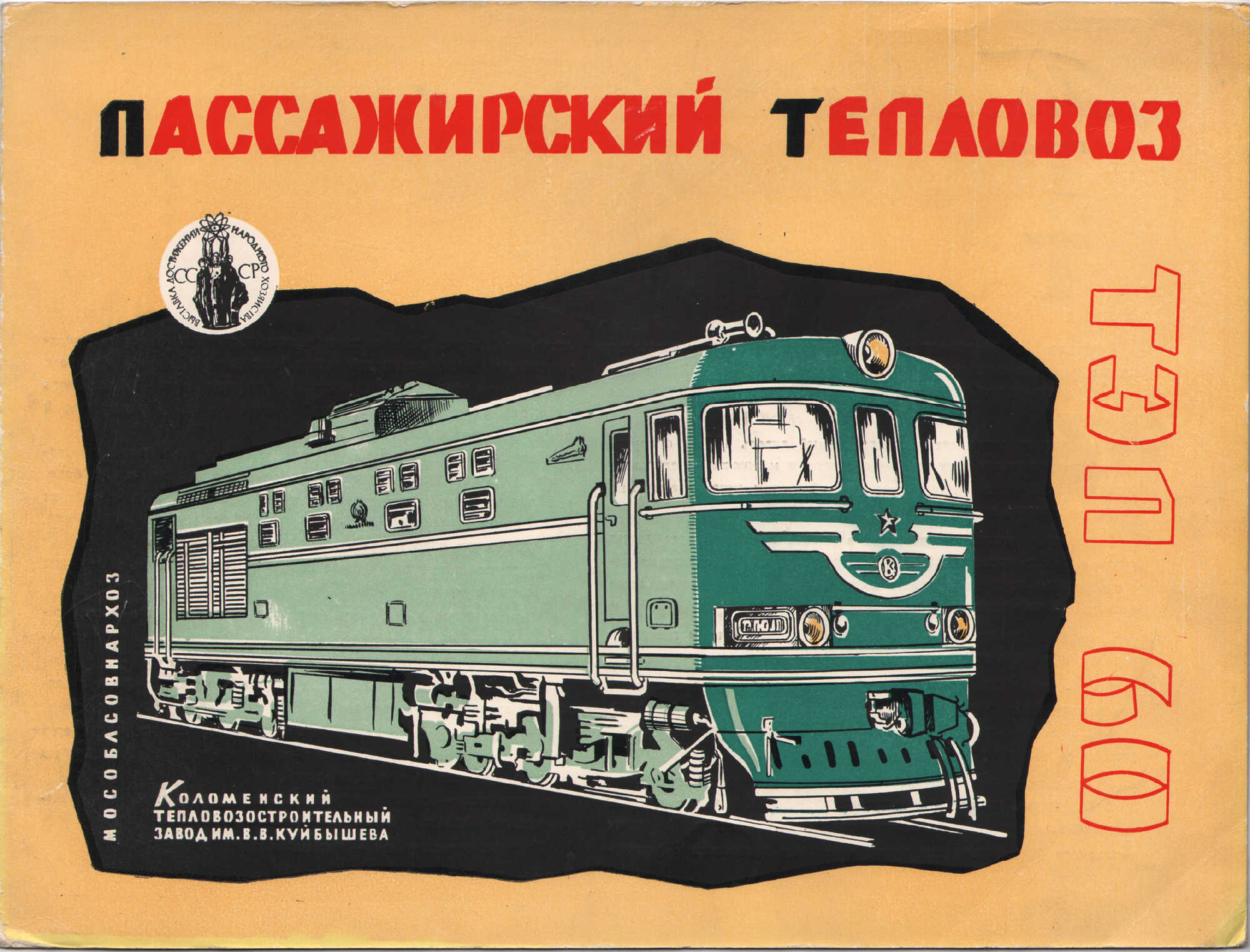
Passenger Diesel Locomotive TEP60 0190 TEP60 0190

In the 1950s, the USSR railways received a large number of TE7 and TEP10 class diesel locomotives for passenger service. While these locomotives were used quite successfully on the network, they were originally freight diesel locomotives that had been adapted for passenger train operations.

In the late 1950s, work began on a new diesel locomotive specifically designed for passenger traffic.

Considering this, the Kolomna Locomotive Works began developing a new diesel locomotive in the late 1950s, specifically designed for passenger service and fully suited to the requirements of such operations. The new locomotive was designated the TEP60 class.

Six-Axle Diesel Locomotive

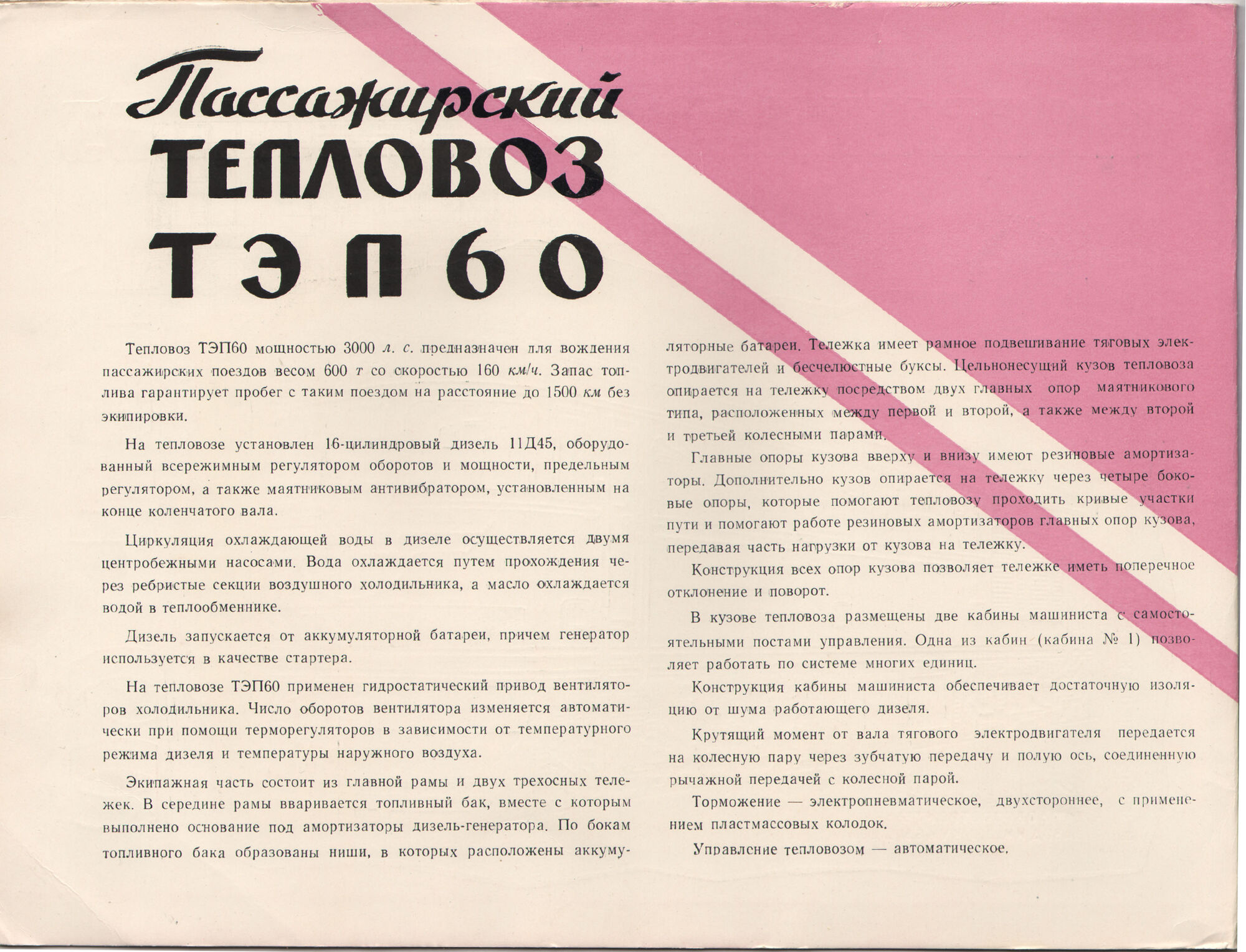
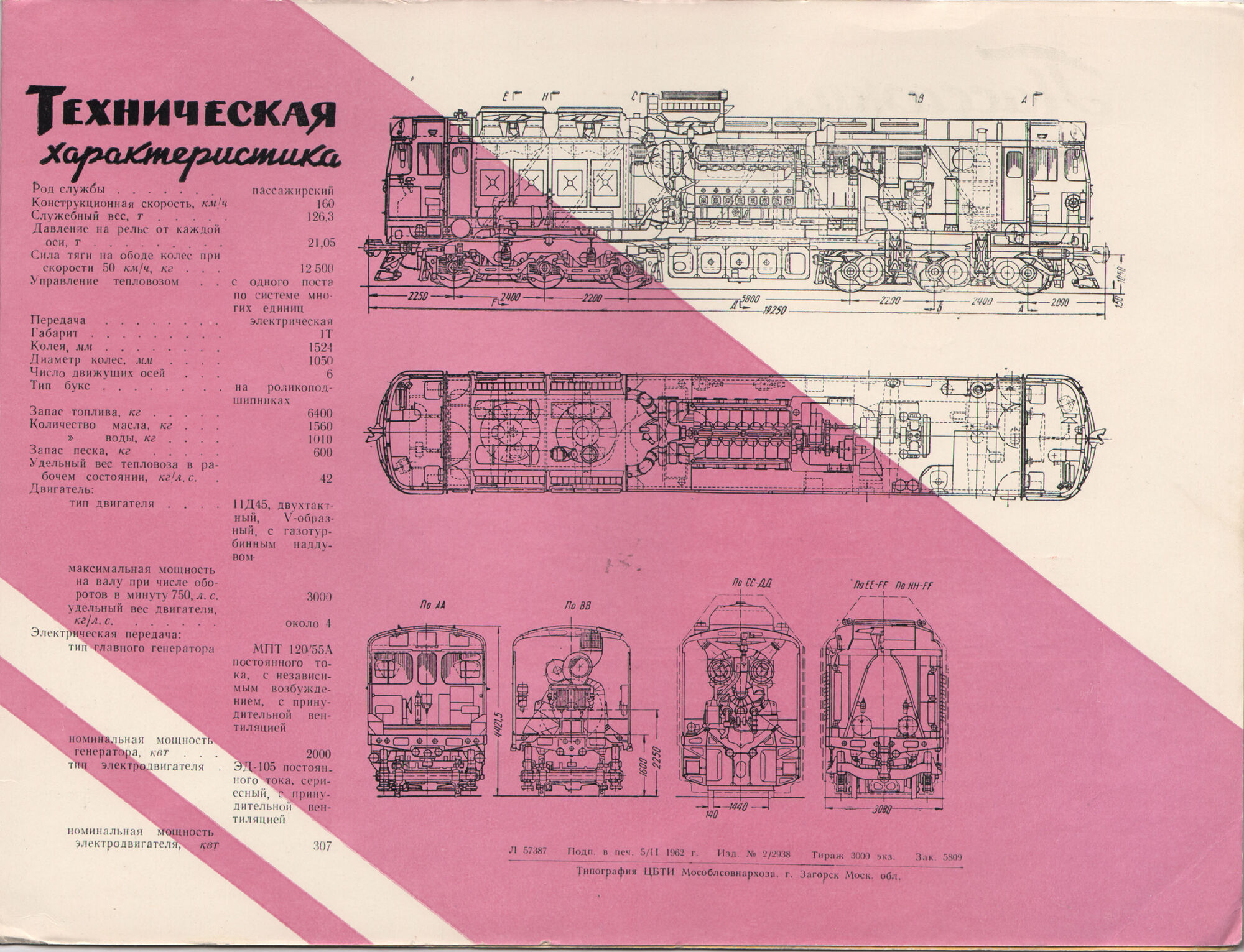
The TEP60 was a single-section six-axle passenger diesel locomotive with a design speed of 160 km/h. It was equipped with a sixteen-cylinder two-stroke 11D45 diesel engine with a capacity of 3,000 hp, a direct current traction generator MPT-120/55A (later GP-311V), and ED-105A traction electric motors (later ED-108). The power transmission system was electric, utilizing direct current.

The key design innovation of the new TEP60 locomotive was the hydrostatic drive for the cooling fan system, implemented for the first time on domestic diesel locomotives.

The main design features of the new locomotive included a load-bearing body, a support-frame suspension for the traction motors (better suited for high-speed locomotives), and a hydrostatic fan drive for the cooling system, which was implemented for the first time on domestic diesel locomotives.

Later, during mass production, various modifications and improvements were gradually introduced into the locomotive’s design. For example, units manufactured before 1966 were equipped with roof-mounted cooling system sections, a feature that was later discontinued.

The TEP60 class diesel locomotives proved to be quite successful and were manufactured at the Kolomna Locomotive Works for 25 years. A total of 1,241 locomotives of this class (Nos. 0001–1241) were produced between 1960 and 1985. Additionally, from 1964 to 1987, a two-section modification known as the 2TEP60 was produced in small batches, with 116 units built in total (Nos. 0001–0116).

Operation

TEP60 locomotives operated extensively across many railways and, from the late 1960s to the mid-1980s, became the most common passenger diesel locomotives on the USSR Ministry of Railways network.

The TEP60 diesel locomotives progressively became the primary class of passenger locomotives on all railways of the USSR.

The first TEP60 diesel locomotives were primarily delivered to the Oktyabrskaya Railway to the Leningrad-Baltiysky Depot (they were transferred to the Leningrad-Varshavsky Depot in 1970) and the Leningrad-Passazhirsky-Moskovsky Depot. In subsequent years, the Oktyabrskaya Railway received substantial batches of TEP60 diesel locomotives, which progressively became the primary class of passenger diesel locomotives on the network. These machines were primarily operated by the Leningrad-Varshavsky, Velikiye Luki, Bologoye, Volkhovstroy, and Kem Depots.

In addition to the Oktyabrskaya Railway, TEP60 diesel locomotives were used on almost all railways in the European part of the USSR: Baltic (Zasulauks Depot), Belarusian (Minsk, Orsha, Vitebsk, Brest Depots), Moscow (Smolensk Depot), Southern, Prydnipro (Melitopol, Polohy, Pyatikhatki, Kryvyi Rih, Kerch, Dnipropetrovsk Depots), South-Eastern (Yelets, Gryazi Depots), Privolzhskaya (Saratov, Volgograd Depots), North Caucasian (Salsk Depot), Sverdlovsk (Tyumen Depot), and West Siberian (Barnaul Depot).

Most locomotives of this class were retired and removed from the inventory in the late 1980s and 1990s. The last one in Russia to operate the TEP60 diesel locomotives was the Salsk Depot of the North Caucasus Railway, where they hauled passenger trains until 2009.

The diesel locomotive TEP60-00190 presented in the museum, manufactured in 1967, serial number 1083, was delivered to the Oktyabrskaya Railway after its construction, where it was used for more than two decades.

Parameters

Technical
specifications

Year of commencement of production
1960
General data
Number of locomotive sections
1
Axial formula
3о–3о
Length, mm
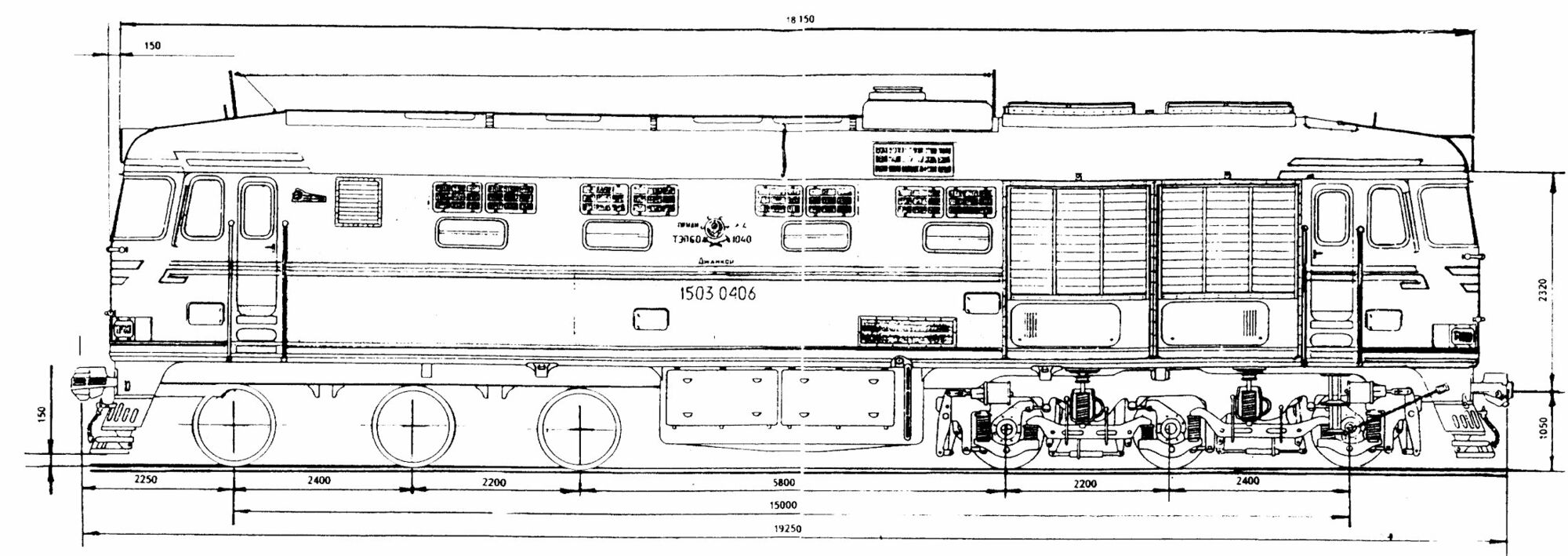
19 250
Full wheelbase, mm
15,000
Service weight, t
126,3
Load from moving axle on rails, t
21,05
Fuel reserve, t
6,4
Diameter of moving wheels, mm
1,050
Design speed, km/h
140
Power, hp
2,400
Main diesel
Brand
11D45
Number of cycles
2
Nominal power, hp
3,000
Nominal speed per minute
750
Cylinders
Location
V-shaped
Quantity
16
Diameter, mm
230
Piston stroke, mm
300
Working speed per minute
18 000
Main generator
Type
MPT120/55A
Nominal power, kW
2,000
Maximum voltage, V
650
Current long lasting, A
3 080
Short-term current, A
4 260
Auxiliary generator
Type
VGT275/120
Nominal power, kW
12
Voltage, V
75
Current, A
160
Maximum RPM
2,000
Traction electric motor
Type (on first-issue diesel locomotives)
EDT101
Quantity
6
Nominal power, kW
307
Current, A
710
Maximum voltage, V
650
Maximum RPM
2 230
Battery
Type
Acidic
Brands
32TN450, alkaline TPZHN450
Number of elements
32
Capacity
450
Discharge time, h
10
Voltage, V
64
Maximum discharge current, A
1 700
Air compressor
Type
KT6
Performance, m3/min
4.,8
Number of revolutions per minute
750
Pressure, kg/cm2
8
Number of steps
2
Number of cylinders
4
Fridge
Cooling surface in m2, water / oil
504, 432
Number of sections, water / oil
24 / 48
Pump flow in m3/hour, water / oil
100 / 80
Maximum air flow by fan, m3/hour
240,000
Highest RPM
1 000
Fan drive
Hydrostatic

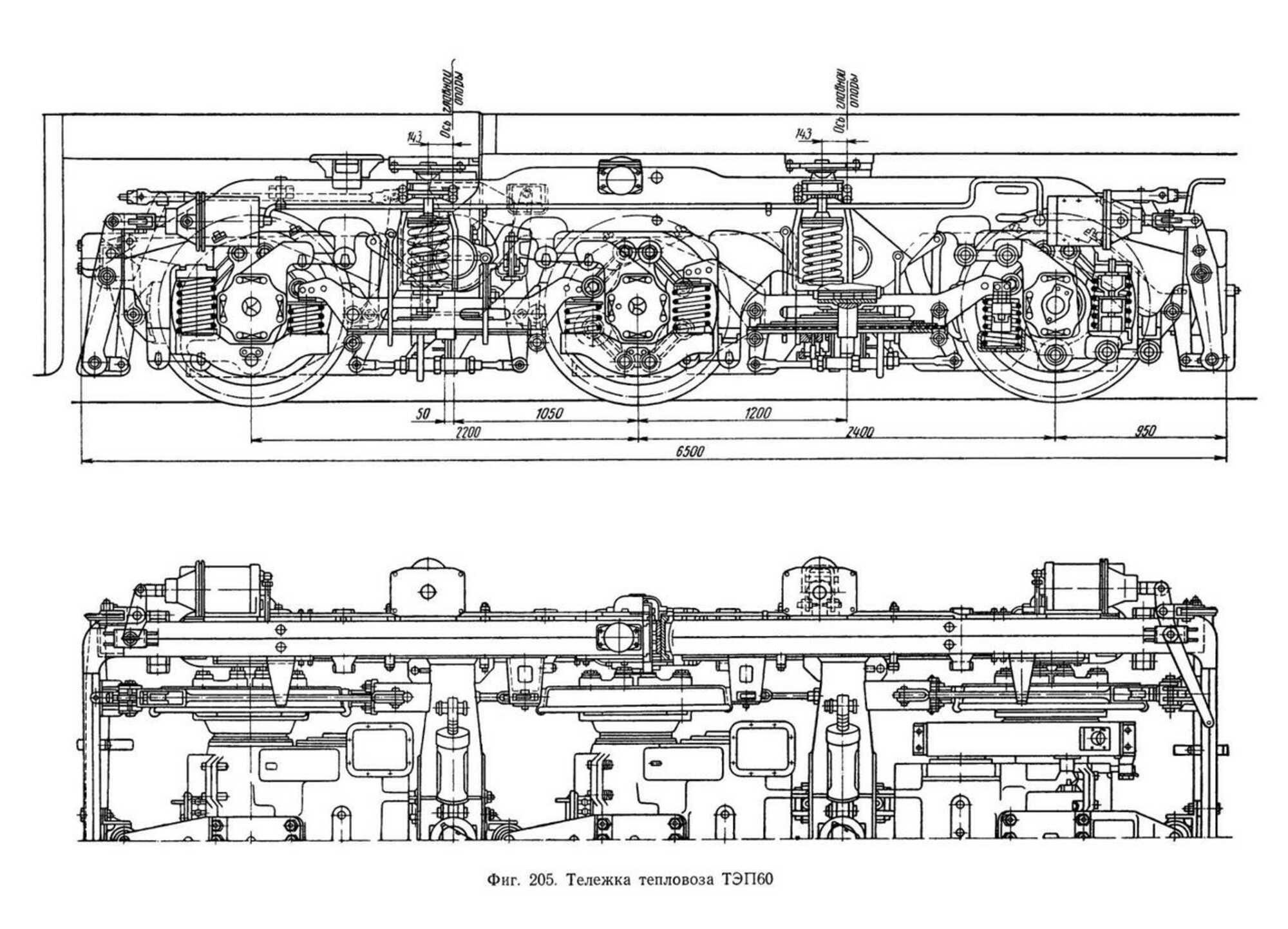
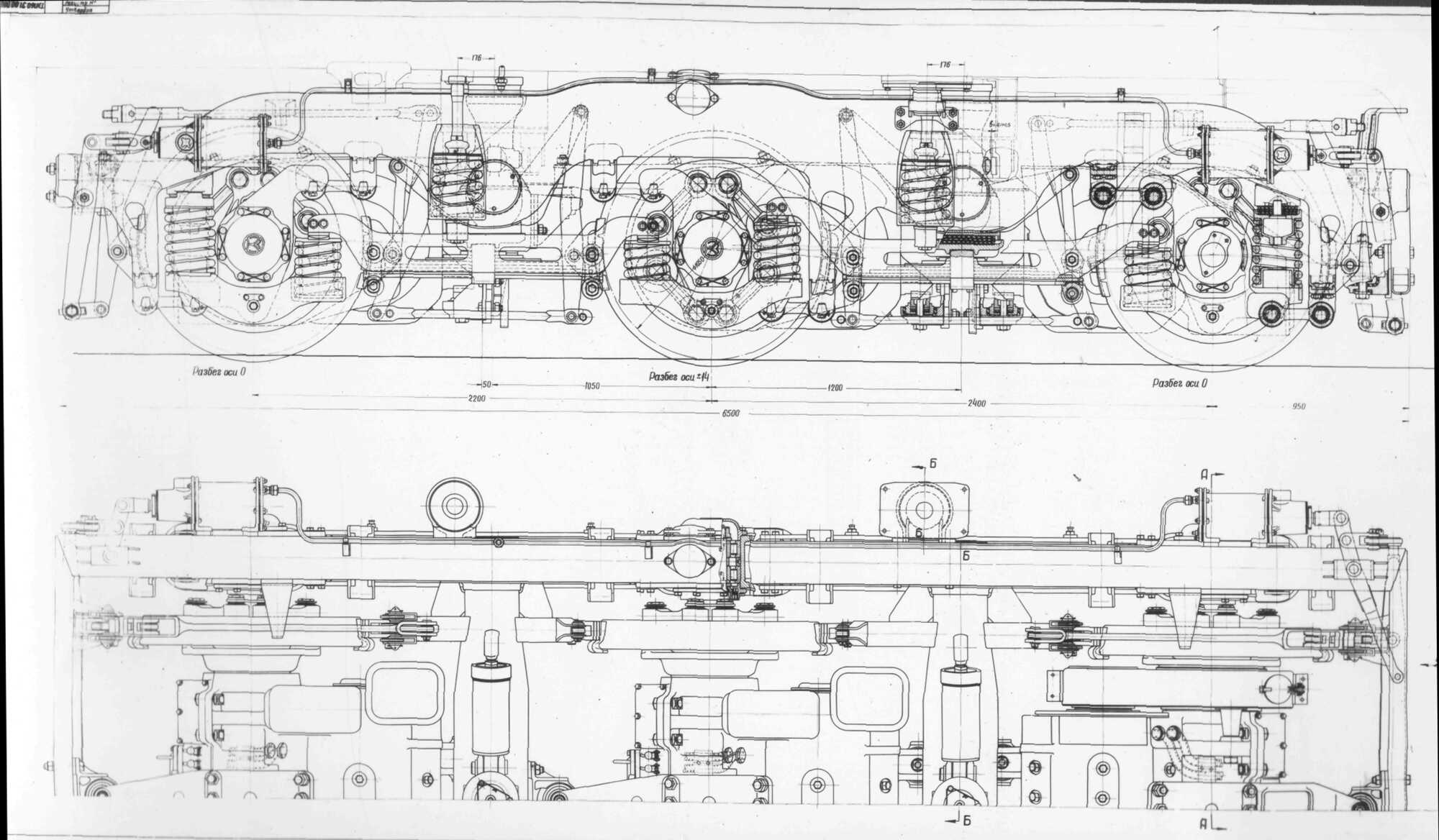
Drawings
and diagrams

History

Chronology

  1. 1967 The Kolomna Locomotive Works built the TEP60 00190 diesel locomotive, designed for passenger transportation.
  2. 1960–1980 TEP60 diesel locomotives were widely used for hauling passenger trains on many railways of the USSR.
  3. 1960–1985 1,241 locomotives of the TEP60 class were built. They were the most common passenger diesel locomotives on the USSR Ministry of Railways network.
  4. 1990 The diesel locomotive TEP60 00190 was brought to the Russian Railway Museum in Saint Petersburg.