Today the museum is closed

Map

Exhibit description

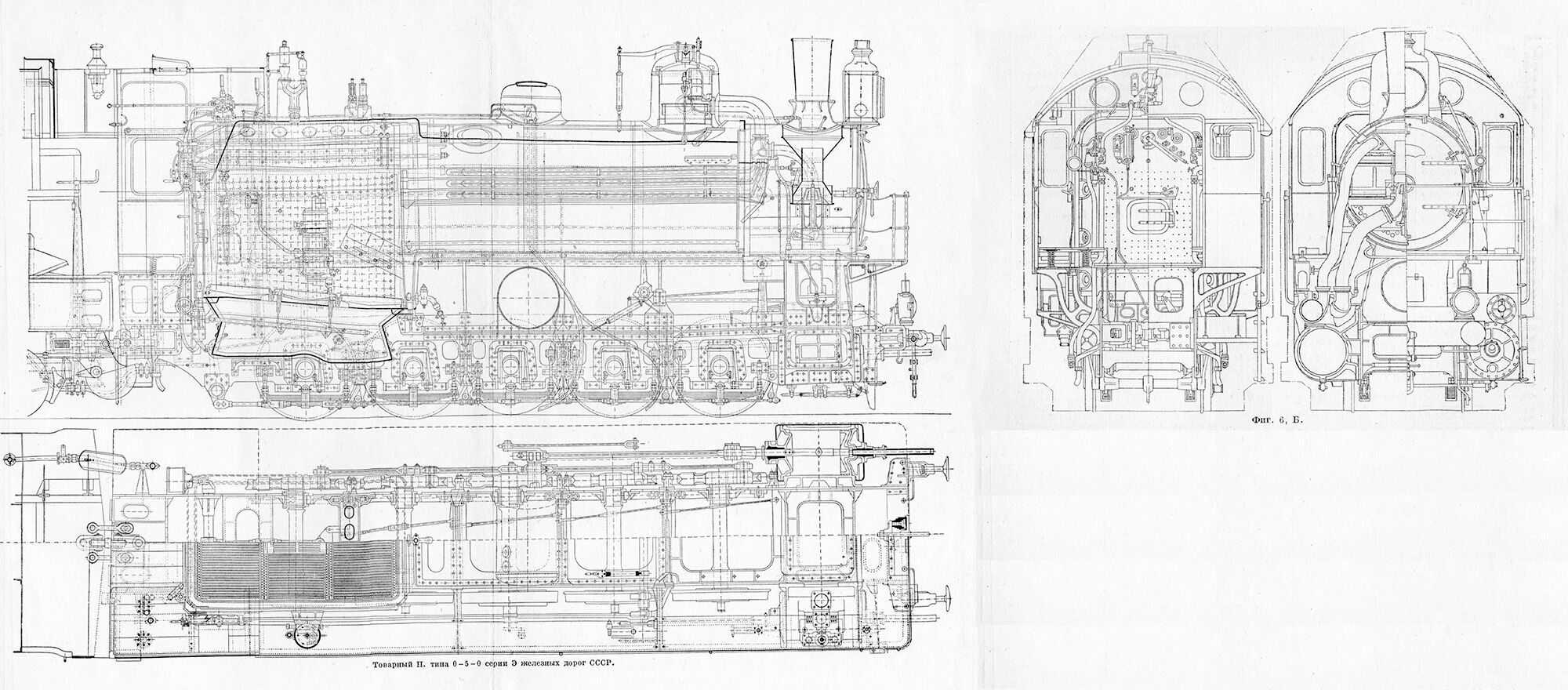
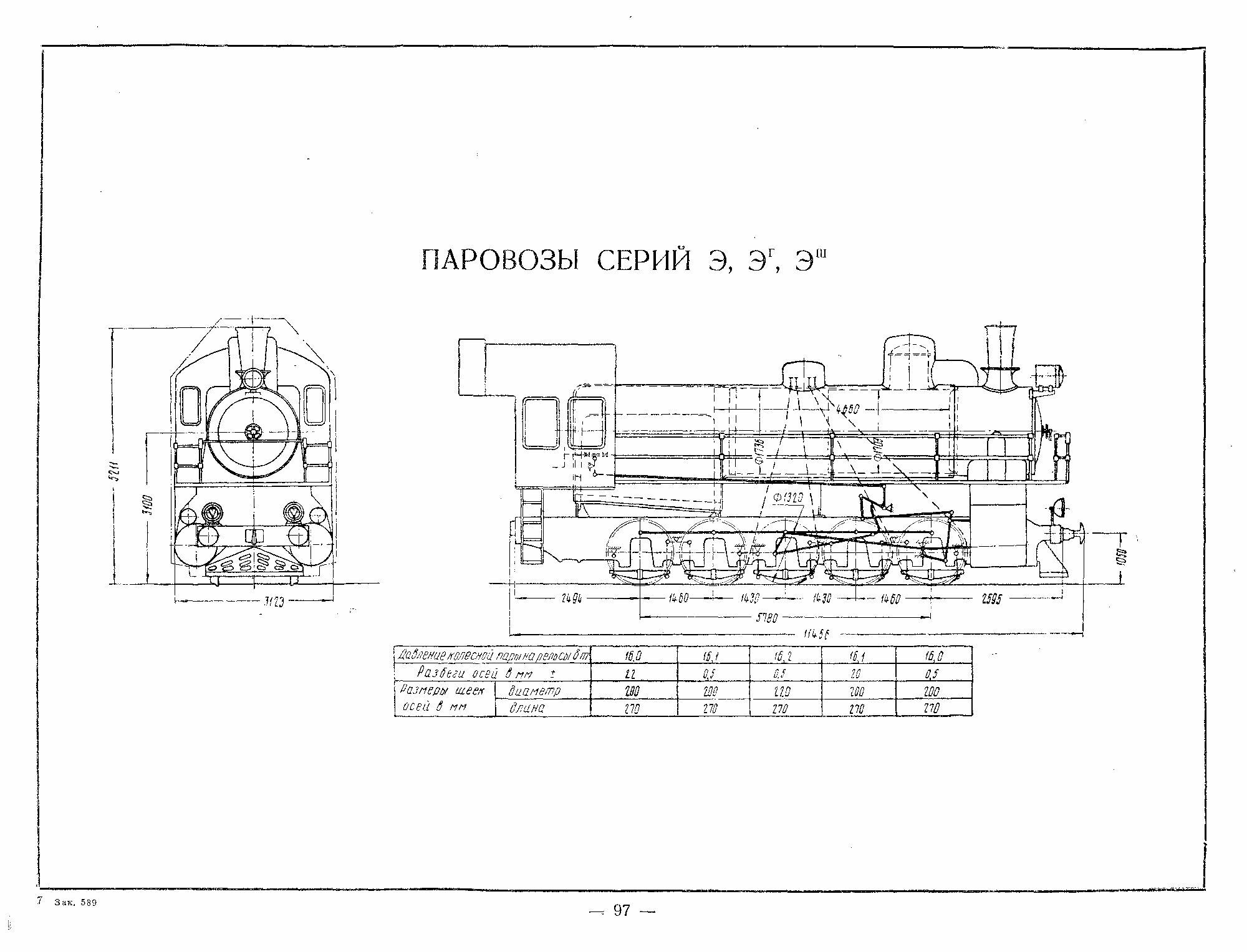
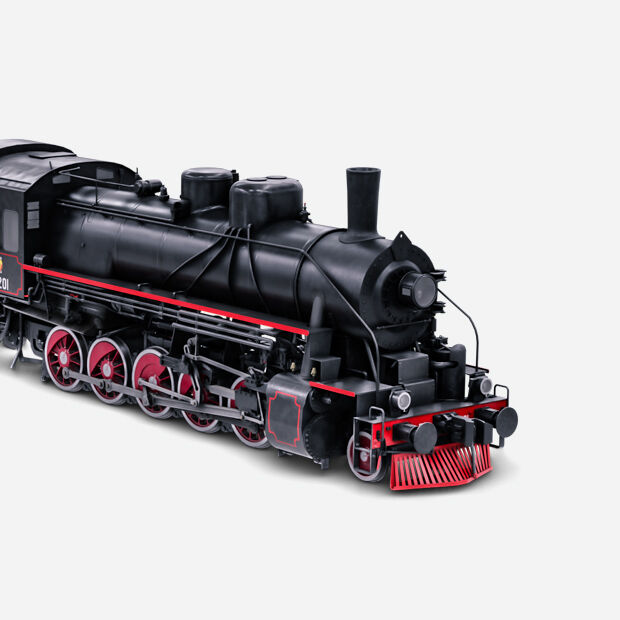
Freight Steam Locomotive ESh 4444

The first class E steam locomotives with a 0-5-0 wheel arrangement were built in 1912 by the Luhansk Locomotive Works for the privately owned Vladikavkaz Railway. These new steam locomotives quickly proved to be a successful model, offering greater capacity and traction than the mass-produced class Shch locomotives of the time. The E steam locomotives were also ordered from the Luhansk Locomotive Works for the privately owned Severo–Donetsk Railway, with the cylinder diameter increased to 630 mm for this order.

World War I and the subsequent revolution and civil war caused serious damage to domestic railways. Transportation and industry was nearly closed down.

In September 1914, a decision was made to change the cylinder diameter of the E steam locomotives to 650 mm. Several machines were built in 1914 for the state-owned Yekaterininsky Railway. Beginning in 1915, E steam locomotives became the primary class ordered by the Ministry of Railways for the state-owned rail network. Between 1915 and 1917, numerous steam locomotive-building plants across the country began producing this class, including Luhansk, Kharkiv, Sormovo, Kolomna, Nevsky, and Bryansk Works.


By 1917, Russia developed a steam locomotive model that met the needs of most railways in terms of performance and were fully mastered by domestic steam locomotive plants.


However, the events of World War I, followed by the revolution and civil war, led to the decline of the nation’s railways and industry. Steam locomotive production dropped from 763 units in 1914 to just 96 in 1919. The existing locomotive fleet was in disrepair—60% of the machines were out of service and collected dust in steam locomotive graveyards, awaiting major overhauls. Replenishing the locomotive fleet with newly-built locomotives was the optimal solution for quickly restoring it to working order.

Order abroad

Despite having its own locomotive-building plants, the country decided to order new steam locomotives from abroad, specifically from Sweden and Germany. This decision was likely driven by the inability of domestic plants—already struggling in difficult conditions—to produce steam locomotives in sufficient numbers. The E steam locomotive was chosen for foreign production. Those built in Sweden were designated class ESh , while those built in Germany were classified as class EG .


The production of Soviet steam locomotives commissioned in Sweden at the Nydqvist & Holm AB Plant (NOHAB) continued from 1921 to 1924. The first steam locomotive—ESh 4001—was delivered on 15 th August 1921, and the last—ESh 4000—on 15th December 1924. 50 machines were manufactured with boilers produced by the Armstrong Whitworth British company.

In Sweden, the NOHAB Plant carried out the order from 1921 to 1924, building 500 units. Some of the locomotives were fitted with Armstrong Whitworth boiler, manufactured in Britain.

Swedish steam locomotives can be divided into three design groups. The first 15 locomotives (numbers 4001–4015) were built based on the Luhansk Locomotive Works’ designs, incorporating some modifications approved on 9th August 1920. Steam locomotives numbered 4016–4115 largely followed the designs of the Henschel Works. The remaining locomotives were built based on Henschel Works’ designs with some adjustments to accommodate for the transportation of the steam locomotives on 1,435 mm gauge railways.


The ESh 4493 and 4494 steam locomotives were equipped with a Worthington feedwater heater, and ESh 4495—with a Knorr feedwater heater. The ESh 4498 and 4499 locomotives were produced with a Stumpf uniflow steam engine. In total, the NOHAB Plant built 500 steam locomotives (4000–4499). Thanks to the Russian order, NOHAB evolved from a semi-artisanal operation into a fairly modern locomotive manufacturing plant.

Delivery to Russia

The first 18 Swedish-built machines were sent to Russia by railway via Finland, in joins of three locomotives. The steam locomotives were partially dismantled for transportation. Cabs, tender vestibules, and boilers were removed. They travelled to the border between Sweden and Finland on 1,435 mm gauge transport trucks. In Finnish territory, transport trucks were replaced by steam locomotive trucks. In Vyborg, dismantled boilers were installed on frames.

The next 87 steam locomotives were transported using a different method. Although the NOHAB Plant was located near the water, next to the Trollhätte Canal, there were no piers in place. As a result, the steam locomotives were initially sent on 1,435 mm gauge transport wheelsets to Landskrona (338 km away), where they were refitted with 1,524 mm gauge wheelsets and loaded onto ships at the Öresundsvarvet shipyard.


Using a Soviet loan, NOHAB later equipped a port in Trollhättan and installed a crane for loading steam locomotives directly onto ships. The harbour was built in Åkerssjö Bay, where the seabed was deepened to 5.5 m, a 130 m long mooring berth was constructed, and a passage was cut through the rocks to lay a 1,524 mm gauge railway line connecting the NOHAB Plant with the port. Construction of the port began in December 1921 and continued until the summer of 1922.


For loading the steam locomotives, Gäta-Werke company in Gothenburg manufactured a crane with a carrying capacity of 80 t, which was installed and tested in Trollhättan at the end of June 1922. However, the width of the Trollhätte Canal locks remained unchanged, meaning that not all ships capable of transporting steam locomotives could pass through them.

The Neebing steamship was purchased to transport locomotives. When passing through the locks of the Trollhätte Canal, the distance from the sides of the steamship to the walls of the lock was only 20 cm.

To solve this problem, on advice of Academician Alexey Krylov the Neebing steamship was purchased. On 30th July 1922, it made its first voyage along the Trollhättan–Landskrona route. When passing through the canal locks, the distance from the sides of the ship to the walls of the lock was only 20 cm.


In Landskrona, the locomotives brought by Neebing were transferred to other ships that cruised about the Baltic Sea using a 75 t portal crane manufactured by Demag. Starting on 16th November 1922, Neebing began sailing with Swedish steam locomotives directly from Trollhättan to Petrograd.


Upon arriving at the port of destination, the locomotives travelled on their axles to the Leningrad–Baltiysky and Velikiye Luki Depots, where piston rods and eccentric rods were installed. After this, the locomotives were subjected to initial service tested and finally accepted.

Operation

An undeniable advantage of building new steam locomotives at foreign factories—despite the ongoing debate over the rationality of investing significant funds in the foreign industry—was the delivery of 1,200 high-quality high-capacity machines only within three years. These locomotives revitalised the domestic railway system and helped it recover from the crisis more quickly. The total number of E steam locomotives in the railway fleet grew from 1,500 to 2,700 units. This also led to a significant increase in the proportion of high-capacity steam locomotives operating on the country’s railways.

The purchase of 1,200 high-quality high-capacity steam locomotives from abroad over three years revitalised the domestic railways, enabling them to recover from the crisis more quickly.

Although the transfer of E steam locomotives to industrial enterprises and construction sites began even before the Great Patriotic War, the ESh locomotives, along with Russian-built EG and E models, remained in intensive use until the 1960s. In their later years, due to natural wear and tear, they were primarily employed in shunting and auxiliary roles. Some of these locomotives continued to operate on the railway network until the late 1970s. Around the same time, their use by industrial enterprises largely came to an end.

During the Great Patriotic War, more than 100 ESh steam locomotives operated near the front-line areas and in the immediate rear within the locomotive columns of special reserve that belonged to the People’s Commissariat of Communication Routes. Some ESh locomotives remained in the inventory of the Ministry of Railways until the late 1980s. Today, seven ESh steam locomotives are preserved across the former Soviet Union, four of which are displayed as monuments on pedestals.


The ESh 4444 steam locomotive was built by the NOHAB Plant, Sweden, in September 1924, factory number 1629. From the time it entered service in the Soviet Union until the Great Patriotic War, the ESh 4444 locomotive operated at various depots over the years, including Leningrad–Sortirovochny–Vitebsky, Dno, Leningrad–Varshavsky, and Leningrad–Sortirovochny–Moskovsky Depots.

During the siege of Leningrad, the steam locomotive was stationed at the Leningrad railway hub. In 1942, after navigation resumed, it was evacuated to the mainland on a barge.

By the time the German troops laid siege to Leningrad, the steam locomotive was located at the Leningrad railway hub. During the 1942 navigation season, it was evacuated to the mainland by barge. It was then assigned to the Ilyich Depot in Moscow and later became part of the SRC-3 steam locomotive column of special reserve. From 1942 to 1946, the locomotive operated on near front-line railways as part of the column. After the column was disbanded, it served on the Western and Prydnipro Railways at the Polack, Dnipropetrovsk, and Apostolove Depots.

In the 1960s, the steam locomotive was taken out of service and placed at the reserve base. In 1990, it was transferred from the Apostolove reserve base to Moscow and it was sent to the test loop of the Railway Research Institute at Shcherbinka Station, where the collection for the future Museum of the Moscow Railway was being assembled. However, for various reasons, the museum was never created, and the collected equipment was party looted. As a result, valuable samples of historical rolling stock faced the threat of destruction.


Under these circumstances, the Central Museum of the Oktyabrskaya Railway appealed to Railway Research Institute, requesting the transfer of several steam locomotives from the test loop for permanent preservation and display at the Museum of Steamers at Shushary Station. The museum’s request was granted, and museum specialists prepared the ESh 4444 steam locomotive for transportation. It was relocated to Shushary in August 1997.

Between 2001 and 2016, the steam locomotive was on display at the Central Museum of the Oktyabrskaya Railway at the former Varshavsky Station in Saint Petersburg.

Electric token system and Treger's electric staff instruments.

The electric token system is a method of railway signaling primarily used on single-track sections. It ensures safe operation by preventing more than one train from being on the line at the same time.

The electric token system guarantees that only one train will be present on a section and does not require the operator on duty to have precise knowledge of the schedule. However, both drivers and operators were required to strictly adhere to safety precautions. Electrical interlocking systems were invented in England in 1886. The first was the Webb–Thompson electric staff instrument, named after its creators—engineers at the London and North Western Railway.

These bulky instruments, connected by wire, were installed one at each station delimiting the section. The instruments’ design prevented extraction of the staff, which gave the driver the right to enter the section, without permission from the duty officer at the adjacent station.

The staff itself was a metal cylinder with ring-shaped protrusions. These rings prevented its removal from the train staff instrument.

In Russia, railway traffic was regulated by schedules and telegraphs until 1883 . This method had serious drawbacks. Firstly, exchanging telegrams took several minutes during which train was waiting for departure at the station. Secondly, human error played a significant role. Trans often departed towards each other due to a mistake by the station duty officer.

The electric token system started to be implemented on Russian railways in the late 19th century. Until 1917, the English Webb-Thompson system was primarily used in Russia, but it frequently malfunctioned. For example, its imperfections led in 1912 to collision occurred near Novonikolaevsk (now Novosibirsk), between two trains moving towards each other at the high speed. Both locomotive crews were killed. During the investigation, tokens were found in the cabs of both crippled locomotives, thus both trains had entered the section with completely official permission. It turned out, that British equipment had malfunctioned, but nothing indicated to the stations’ duty officers that there was a malfunction.

Before the train’s departure, the station duty officer telephones the duty officer at the adjacent station to request the train's approval. After receiving the approval, duty officer then turns the indicator handle to remove the station staff (the possibility of staff removal is verified by the deflection of instrument’s microammeter needle). The staff’s number is recorded in the train traffic log and the staff itself is handed to the driver.

The locomotive driver receives the staff from the departure station duty officer and ought to hand it over to the duty officer at the arrival station, ensuring first that the staff belongs to the section to which the train is departing(for each staff is marked with progressive number, series and the names of the stations delimiting the section ). The arrival station duty officer, after receiving the staff, turns the inductor handle to send electric current to the departure station instrument authorizing the next train to occupy the section.

A staff dispenser is a very simple device that allows trains to move through a station without stopping. It consists of a wire ring with a diameter of 30-50 cm on a long handle with a holder for the staff. The assistant driver would drop his staff dispenser onto the platform, then grab another one from the duty officer.

Service vehicles (bank locomotives, repair trains, etc.) that must return to the departure station are issued a so-called pusher staff. The pusher staff can only be removed when the section is occupied using regular staff as a key. If the pusher staff is inserted on one side, issuance of staffs is blocked, so using staffs without passing them through the staff instrument is prohibited ( that is, the staff handed over by the driver must be inserted into the staff instrument at the arrival station, and only then is a new staff removed for another train). Pusher staff are also used on sections with automatic block signal system to send service trains onto the line. However, the pusher staff can only be retrieved when the section is empty.

This method is still in use at some low-traffic lines.
Parameters

Technical
specifications

Year
1924
Locomotive weight in working condition without tender, t
80,4
Weight of the locomotive in working order with tender, t
125
Design speed, km/h
65
Maximum power at the wheel rim, l. s.
1 300
Locomotive empty weight, t
72
Locomotive coupling weight, t
80,4
Tender type
Four-axle
Full wheelbase steam locomotive with tender, mm
15 824
Length of locomotive with tender by buffers, mm
20 475
Diameter of driving wheels, mm
1 320
Smallest radius of a traversable curve, m
93
Steam pressure, kg/cm2
12
Firebox type
Belpera
Grate area, m2
4.2
Full evaporative heating surface of the boiler (water), m2
194.4
Heating surface of steam superheating tubes (gas), m2
52
Number of smoke pipes, pcs.
188
Diameter of smoke pipes (outer), mm
51
Number of flame tubes, pcs.
25
Diameter of flame tubes (outer), mm
133
Diameter of steam superheating pipes (outer), mm
35
Superheater type
Double turn

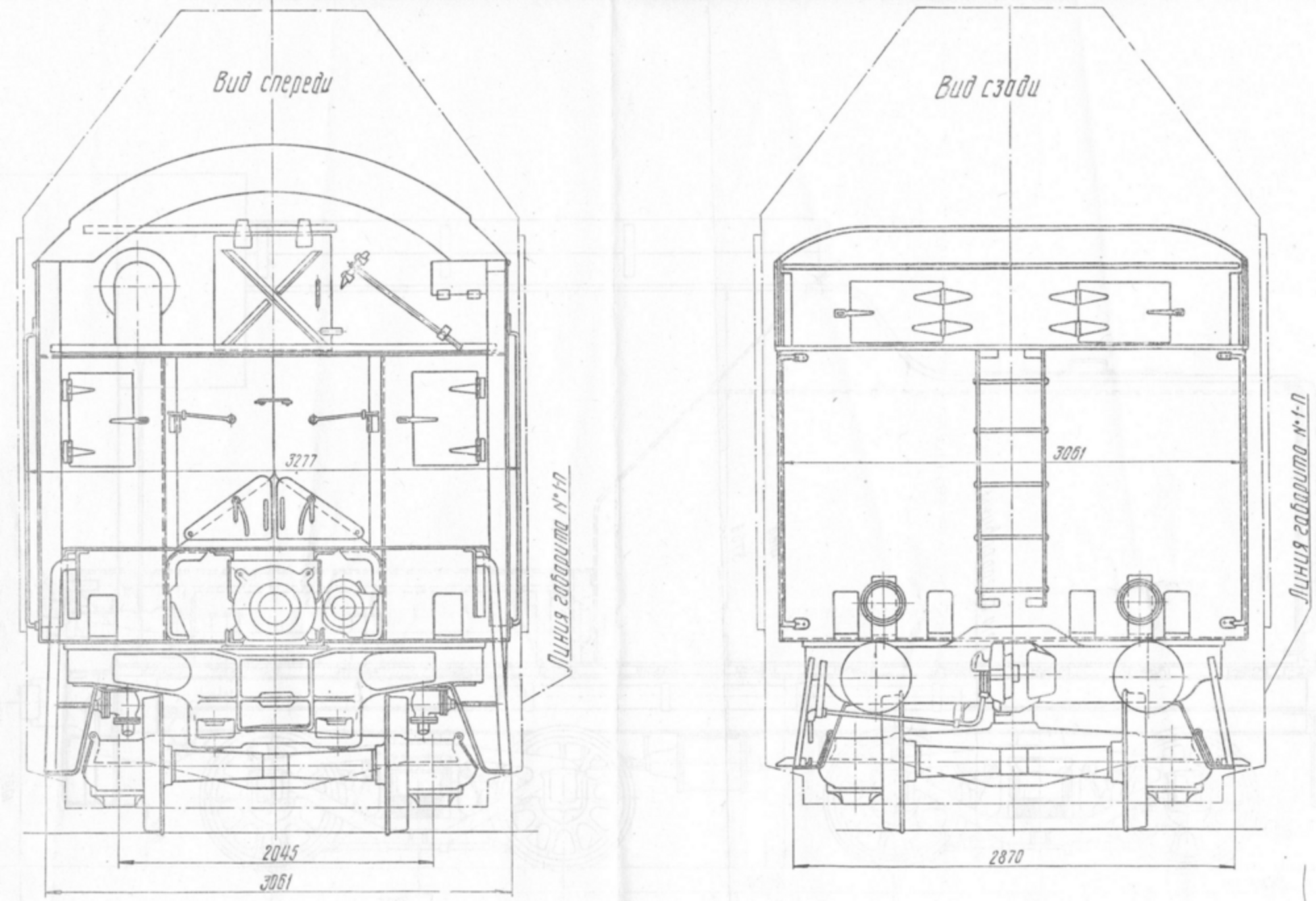
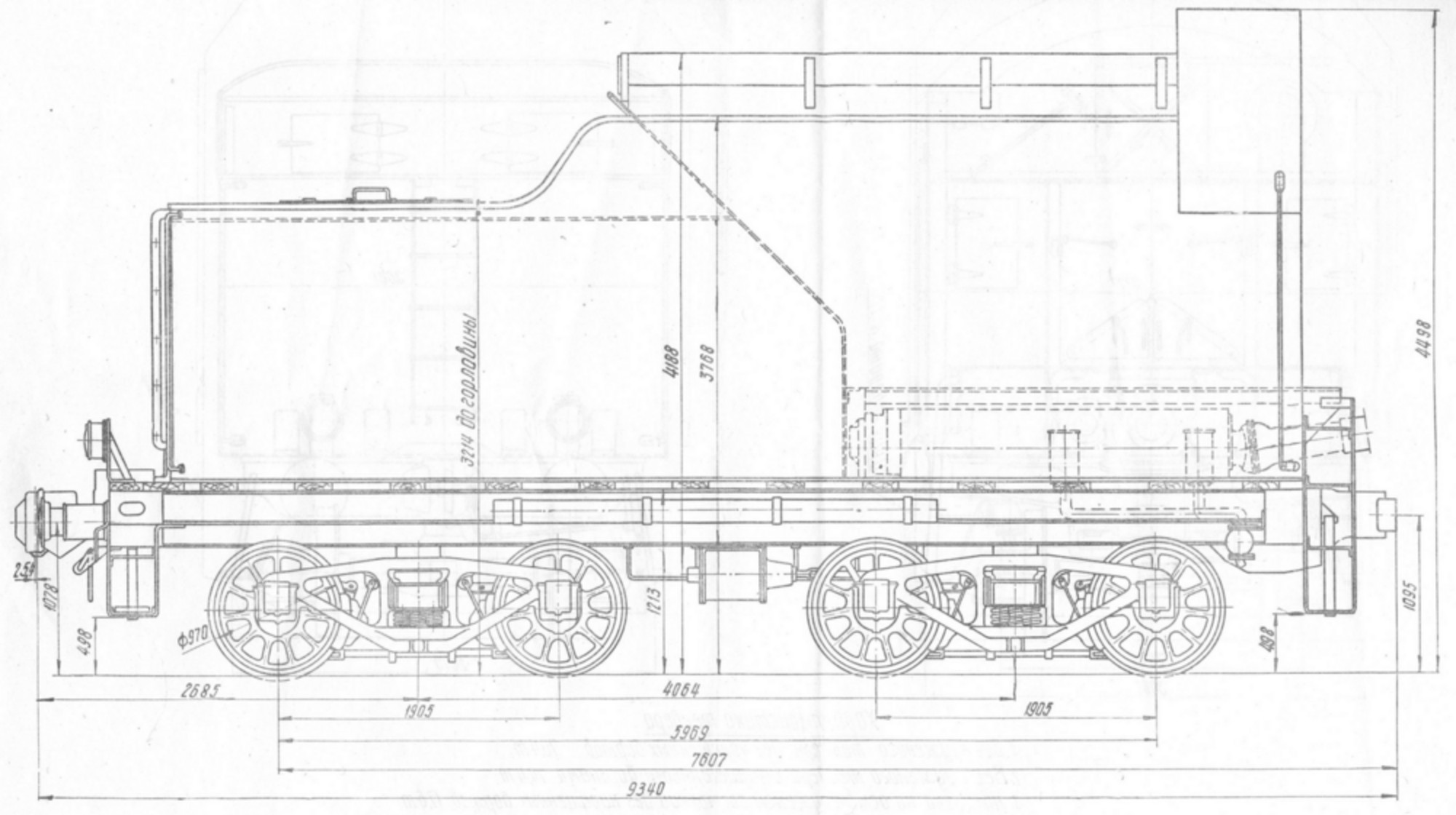
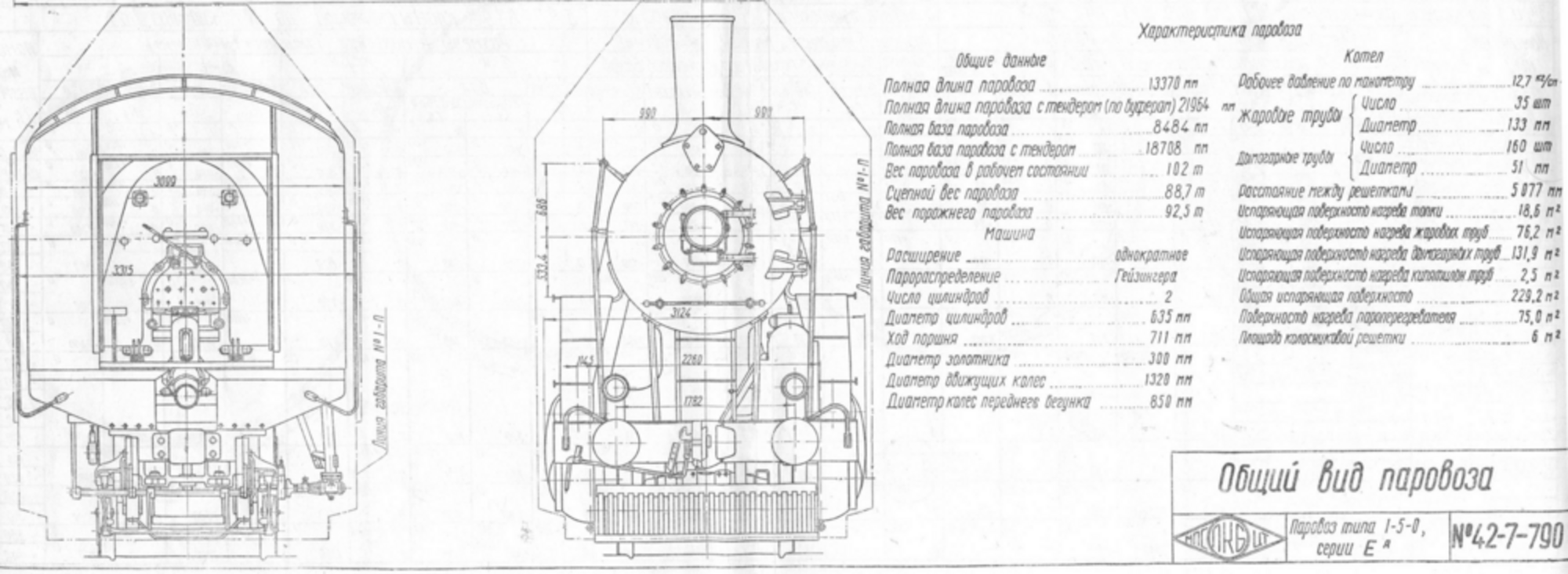
Drawings
and diagrams

History

Chronology

  1. 1912 The first E steam locomotives with the 0-5-0 wheel arrangement were built.
  2. 1921–1924 In Sweden and Germany, new E steam locomotives were built, commissioned by the Soviet government.
  3. 1924 The ESh 4444 steam locomotive was built in Sweden at the NOHAB Plant.
  4. 1942 The ESh 4444 steam locomotive was evacuated from Leningrad to the mainland on a barge when navigation was opened.
  5. Till 1946 As part of a special column, the locomotive operated on near front-line railways.
  6. After 1960 The steam locomotive was taken out of service and placed in the Apostolove reserve base.
  7. 1990 The locomotive was sent to the test loop of the Railway Research Institute at Shcherbinka Station as an exhibit for the future Museum of the Moscow Railway.
  8. 1997 The ESh 4444 steam locomotive at the initiative of museum workers, was relocated to Shushary.
  9. 2001–2016 The steam locomotive was on display at the Central Museum of the Oktyabrskaya Railway at the former Varshavsky Station in Saint Petersburg.