Today the museum is closed

Map

Exhibit description

Railway car Official salon-wagon №3

Exhibit description

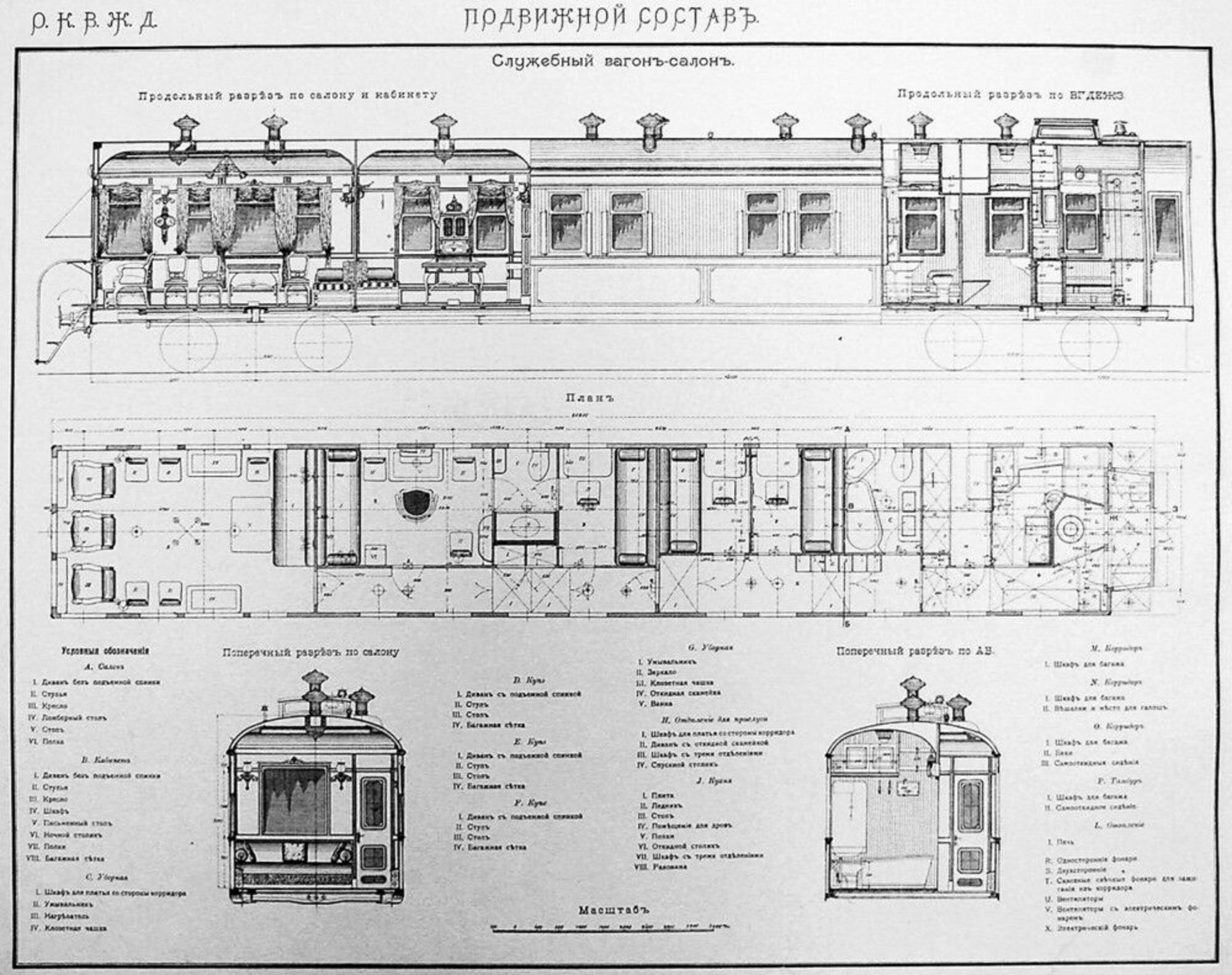
The design of these cars was simple and lightweight. It was able to withstand impact loads and was not subject to natural warping (twisting, bending) during operation. The car had a spatial frame without a center beam. The side wall consisted of a solid rolled sheet 1,200 mm high and 5 mm thick. A U-shaped profile was riveted to the sheet from the inside along the entire length at the top and bottom, and sheets of strip iron were riveted on the outside to give the structure rigidity.

There is a legend that these cars were specially made armored to protect them from rifle fire. But there is no evidence in the archival materials. Rather, this turned out to be very useful, since the road was often raided for robbery by Chinese bandits - the Honghuzi. This is reflected in the description of the construction and operation of the CER.

The saloon car presented in the museum requires detailed study for complete identification.

The cars of this system of different classes (mainly I and II classes) were built by the Kolomensky, Russo-Baltic, Putilovsky and Dvigatel plants in Revel, as well as the workshops of the Vladikavkaz Railway.

Thanks to the "virtual section" - a screen in the entire height of the car, one can see the historical interiors and the work of the Minister of Foreign Affairs of the USSR Vyacheslav Mikhailovich Molotov during his trip to a conference in Europe.

Parameters

Technical
specifications

Body length, mm
18,250
Body width, mm
2,900
Number of axles, pcs.
6
Maximum wagon width, mm
3,150
Type of bogies
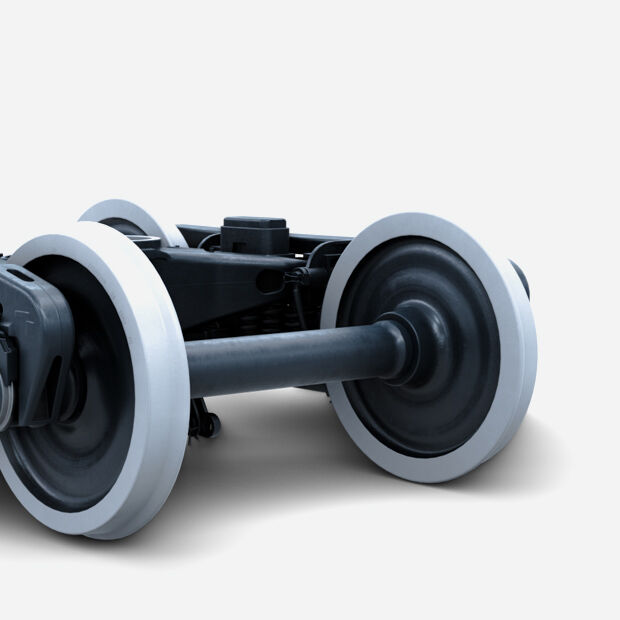
Three-axle triple suspension, axle boxes on roller bearings
Cargo tare, t
86
Number of berths
24
Diameter of wheel pair rolling circle, mm
1,050

Drawings
and diagrams

History

Chronology

  1. 1898 In 1898, the design invented by the French engineer Ernest Gustave Polonceau was used by the Kolomna Plant to build the first four-axle passenger car for a private Vladikavkaz railway. This is where such cars are still nicknamed ‘Vladikavkaztsy’ from.
  2. 1914 The design of the cars was lightweight, simple, able to withstand shock loads and was not subject to natural warping (twisting, bending) during operation. The side wall consisted of a one-piece 1 200 mm high and 5 mm thick rolled sheet. From the inside along the entire length, a U-shaped profile is riveted to the top and bottom of the sheet to give the structure rigidity. On top of the iron belt, the body was built on with a wooden crate, which was then sheathed from the outside with thin iron sheets. From the inside, the entire body was lined with wood. The car had a spatial frame with no center sill. For the most part, these cars already had electric lighting from storage batteries, which were recharged from a generator mounted on a bogie and driven from the car's axis by a flat belt. Ventilation is natural supply with use of Korshunov deflectors. Hot water heating from its own boiler.

    The construction of such cars was primarily initiated by Stanislav Ippolitovich Kerbedz, the Chairman of the Management Board of the Vladikavkaz Railway (1886-1906). During the same period, he was also the vice-chairman of the Chinese Eastern Railway.

    Moscow-Ryazan-Kazan, Vladikavkaz and Chinese Eastern (controlled by Vladikavkaz) private railways of the Russian Empire ordered these cars at the beginning of the 20th century. The presented six-axle car was built between 1912 and 1914 by the Rostov workshops of the Vladikavkaz railway as a class 1 passenger car, in the 1940s-1950s it was converted into a palace-car. Before the revolution, this type of car was intended for the travel of high-ranking officials, including royal persons, as well as the highest railway leadership, and later they were used by Soviet party and state leaders. Unofficially, such cars were also called "armored" because of the sheathing of the lower half-walls with thick iron sheets.

    After the reconstruction, the car was used by the management of the Sverdlovsk Railway for inspection trips. In the last years of operation, it had the number 076 75002.

    The cars of this system of different class (1, 2 classes and palace-cars) were built by Kolomna, Russian-Baltic, Putilovsky plants, the Dvigatel plant in Revel, as well as by the workshops of the Vladikavkaz Railway located in Rostov-on-Don.
  3. 1989 The car entered the museum from the Sverdlovsk railway in 1989.