Today the museum is closed

Map

Exhibit description

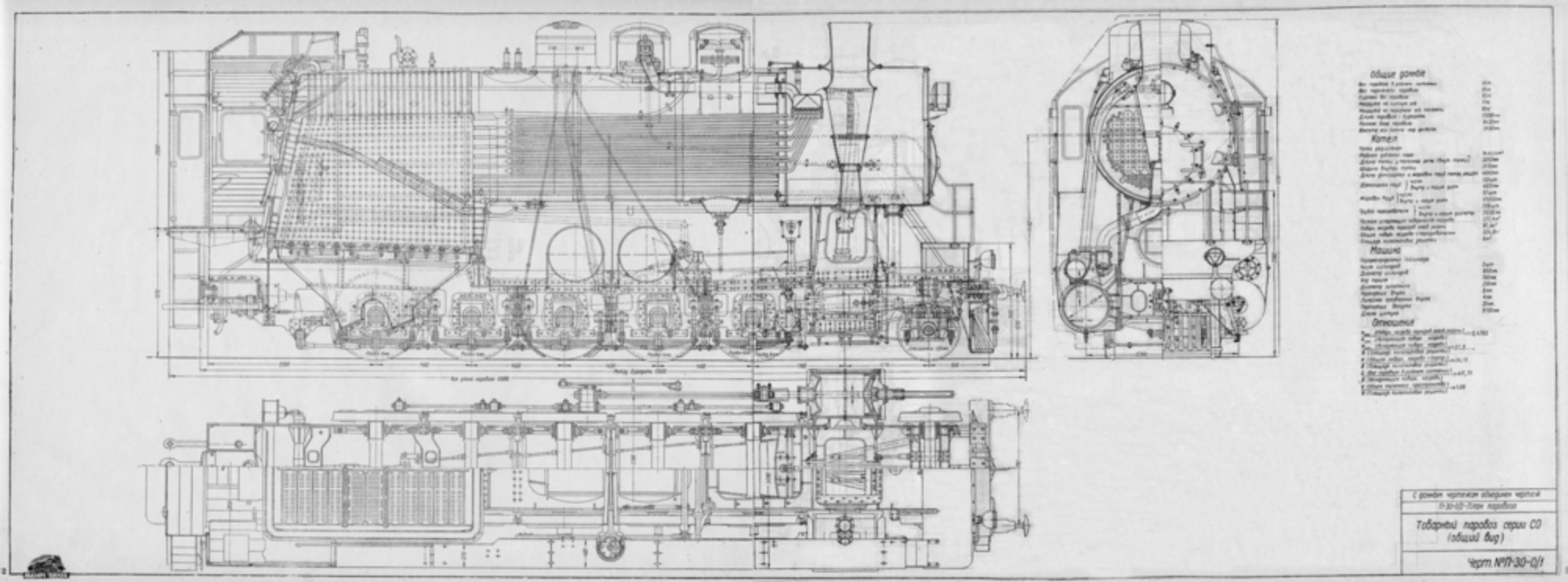
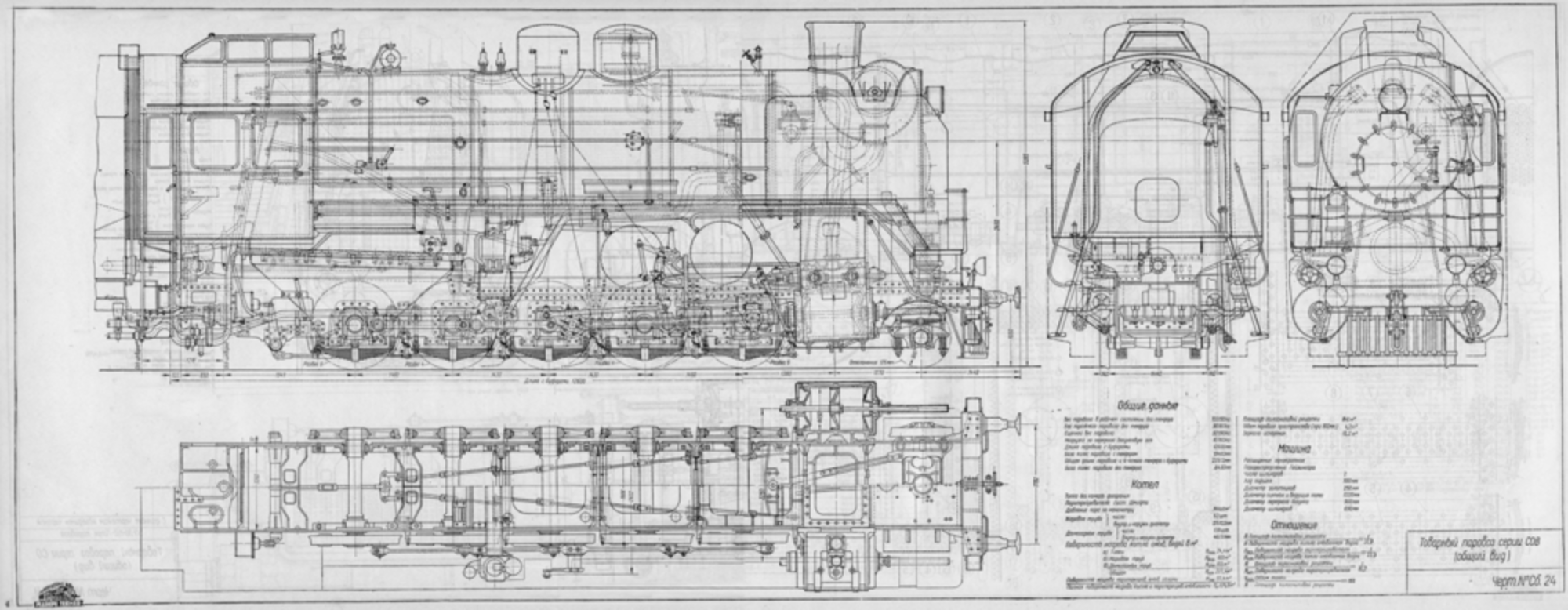
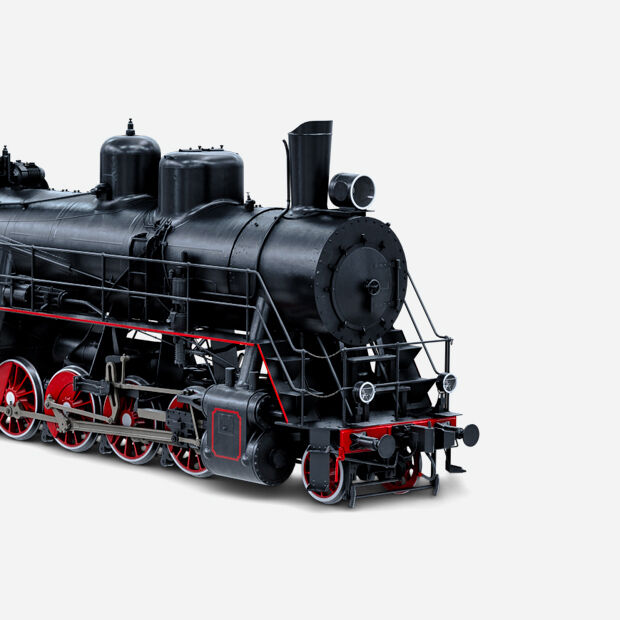
Freight Steam Locomotive SO17 2413

In the early 1930s, the Soviet Union’s industry experienced rapid growth. Naturally, railway transport, the USSR’s primary mode of transportation, played a key role in this process. Major repairs were performed on railway tracks, leading to increased freight train speeds and weights.


On reconstructed lines, FD steam locomotives with a 20 t axial load began operation, with serial production starting in 1933 at the Luhansk Locomotive Works. However, on unreconstructed main lines, the class E steam locomotives with axial load of 16–17 t remained the primary traction units, despite no longer meeting the required tractive force. Repeated attempts to modernise the E steam locomotives failed to achieve the desired results.


The solution laid in designing a new locomotive type with a 17.5 t axial load, capable of increasing train speed and weight, thus enhancing the capacity of unreconstructed railway sections. At the same time, the steam locomotive had to fit into existing depots and turntables and be buildable in old steam locomotive plants.

New Design

A draft design for a steam locomotive with a 1-5-0 wheel arrangement meeting these requirements, was developed in 1933 at the Institute for Traction Reconstruction of the People’s Commissariat of Communication Routes. The project was authored by the Institute Engineer I. E. German. Detailed development of the design and production drawings were completed at the Kharkiv Locomotive Works under the supervision of Engineer Pavel Sharoiko.


The steam locomotive used the undercarriage of the class EM almost unchanged, with the addition of a lead truck, identical to the one used on the FD locomotive. This allowed the installation of a new boiler of much higher capacity, significantly improving the traction characteristics of the new steam locomotive.

The first steam locomotive of the new type was built in November 1934 at the Kharkiv Locomotive Works. By the end of the year, two more locomotives of the same type were produced there.

In the 1930s, cities, factories, and airplanes were named after Communist Party figures as a way to honour them. The class was named SO17 in honour of Sergo Ordzhonikidze, the People’s Commissar of Heavy Industry.

In keeping with the 1930s tradition, the new steam locomotive was designated as the class SO17 in honour of the People’s Commissar of Heavy Industry, Sergo Ordzhonikidze. The number 17 indicated the axial load.


During testing, it was proved that the locomotive, at high impulse excitation, performed at maximum capacity of 2,000 hp, compared to the EM s ’ 1,300 hp. In other words, the SO17 was more than one and a half times more powerful than the EM.

Mass Production

In 1935, the SO steam locomotives completely replaced the class EM in the production plan of the Kharkiv Locomotive Works. Starting in 1936, the SO17 locomotives began to be produced at the Bryansk Locomotive Works. In 1938, one SO17 steam locomotive was produced at the newly established Ulan-Ude Steam Locomotive and Carriage Works.


A total of 334 SO17 steam locomotives were produced by the Kharkiv, Bryansk, and Ulan-Ude Works between 1934 and 1938. Their production was discontinued with the shift to the class SO locomotives equipped with steam condensation—the SO19s.


The new locomotives were delivered to the Western, Moscow–Kiyv, Southern, East Siberian, and other railways.

A variation of the SO17 series steam locomotives is the SO18, which was produced from 1939 to 1941 at the Kharkiv, Bryansk, and Voroshilovgrad Works. These steam locomotives were equipped with a fan-driven exhaust system instead of a blast pipe exhaust system, with water heating of a tender with exhaust steam. The first such locomotive was converted from SO17 1 at the Bryansk Locomotive Works in March 1939.


The addition of water heating and a fan-driven exhaust system was intended to increase the steam locomotive’s efficiency and improve the combustion of low-grade brown coal in the firebox. However, the downside was the increased complexity of these machines and issues with the smoke exhauster system that arose under certain operating conditions.


Since 1955, the fan-driven exhaust system on the SO18 was replaced with a conventional blast pipe exhaust system. Thus this steam locomotive was transformed into CO17.


A total of about 420 class SO18 steam locomotives were built.

A new round of SO17 production took place in 1943 when the Ulan-Ude Works began producing them instead of the condensation-type SO19s. At the same time, the Bryansk Machine-Building Plant (“Krasny Profintern” at the given time), which had been relocated to Krasnoyarsk, started producing SO17 locomotives at a newly-built facility, essentially constructed from the ground up. Due to the limited production capacity at these plants, the steam locomotive production remained very low until 1946.


It is important to note that the continuation of SO17 production after the Great Patriotic War was primarily due to the dire situation at domestic steam locomotive plants, which were unable to produce newer models.


In 1945, the restored Voroshilovgrad Locomotive Works produced their first post-war SO. The production of the class SO continued there until 1950. Afterwards, the plant transitioned to producing the more advanced class L locomotives. The Ulan-Ude and Krasnoyarsk Plants, after producing the last SO in 1951, completed their steam locomotive production programs.


In total, approximately 2,270 SO17 steam locomotives were built between 1943 and 1951.

Operation

Steam locomotives SO17 and SO18 became some of the most widely-used locomotives on domestic railways. Several machines were also built at steam locomotive plants for large industrial enterprises.


The SO steam locomotives operated on nearly all railways across the Soviet Union. On certain sections with steep gradients, SOs hauled passenger and express trains. During the Great Patriotic War, the SO17 locomotives were part of the special reserve steam locomotive column No. 7 of the People’s Commissariat of Communication Routes, whose locomotives were among the first to haul trains to defeated Berlin. The widespread use of SO locomotives ended in the 1960s, as railways began to receive sufficient number of diesel and electric locomotives. However, in some regions, SO locomotives continued to operate in train service into the 1970s, with a few machines remaining in commercial use until the early 1990s.

Despite the inherent shortcomings of the class SO, such as a relatively weak undercarriage, an operationally inconvenient spring suspension, and the lack of a stoker—these locomotives, with a firebox grate area of 6 m², were highly appreciated by drivers for near-inexhaustible boiler and strong traction characteristics. On plain sections, leading drivers often hauled heavy trains weighing 4,000–5,000 t with the SO steam locomotives. The SO locomotives were affectionately nicknamed “Sergo” by locomotive crews.

Starting in the 1950s, many SO steam locomotives were transferred to various industrial enterprises, ranging from sugar factories to metallurgical plants. A considerable number were also conserved at the Ministry of Railways’ reserve bases. Their mass decommission from the active use began in the 1980s. However, as of 1st January 1992, the inventory fleet of the USSR Ministry of Railways still included 117 SO locomotives.

Retirement

Currently, in the post-Soviet space, approximately 20 SO17 and SO18 steam locomotives are preserved in museums, displayed on pedestals, or maintained in working condition.


The SO17 2413 steam locomotive was built by the Krasnoyarsk Locomotive Plant in October 1948, with the factory number 5017. Upon its release, this steam locomotive was adorned with decorations commemorating the 30th anniversary of the Komsomol youth organisation. Unfortunately, some of these decorations were lost during its operation. Some of them were dismantled for political reasons during the campaign against Stalin’s cult of personality. Due to the absence of reliable archival information, it is currently impossible to restore these lost decorations.


After production, the locomotive was assigned to the Perm Railway, where it served in the Chusovskaya and Usolskaya Depots. In August 1955, it was transferred to the Kirov Railway (in 1959, it was merged with the Oktyabrskaya Railway) as part of the Volkhovstroy Depot. In August 1959, the steam locomotive was equipped with oil heating. Starting in October 1961, it operated at the Pskov Depot. In March 1965, it was put into reserve, first stored at the depot and later, from 1967 onward, kept at the Unduksa reserve base. The total mileage of the steam locomotive was 1,110,886 km.

Exhibit SO17 2413 was spared from being scrapped due to the commemorative Komsomol symbols that adorned it. A decision was made to preserve the locomotive and place it on a pedestal at the Malaya Vishera Depot.

The locomotive was removed from the inventory of the Ministry of Railways by Order 16/TSTZHL dated 22th August 1986. After decommissioning, it was transferred to the Malaya Vishera Locomotive Depot for scrapping. However, local veterans decided to place it on a pedestal at their depot, and the steam locomotive was spared from being scrapped. The Komsomol symbols likely influenced the veterans’ decision to honour this locomotive. Nevertheless, the steam locomotive remained at the Malaya Vishera Depot until the early 1990s, slowly losing parts and spare components over time.

Parameters

Technical
specifications

Serial number of the locomotive (continuation of the numbering of the Bryansk plant)
5017
Locomotive empty weight, t
85
Locomotive coupling weight, t
87,5
Tender type
Four-axle
Full wheelbase steam locomotive with tender, mm
18 688
Length of the locomotive with tender along the axes of the automatic coupler, mm
21 591
Diameter of driving wheels, mm
1 320
Smallest radius of a traversable curve, m
85
Boiler
Steam pressure, kg/cm2
14
Firebox type
Radial
Grate area, m2
6,0
Full evaporative heating surface of the boiler (water), m2
229,67
Heating surface of steam superheating tubes (gas), m2
93,6
Number of smoke pipes, pcs.
147
Diameter of smoke pipes (outer), mm
51
Number of flame tubes, pcs.
52
Diameter of flame tubes (outer), mm
133
Superheater type
Double-turn
Diameter of steam superheating pipes (outer), mm
35
Type of heating
Coal, manual
Car and crew
Number of cylinders, pcs.
2
Cylinder diameter, mm
650
Piston stroke, mm
700
Spool diameter, mm
250
Frame thickness, mm
32
Frame type
Sheet
Steam distribution system
Valsharta
Tender
Empty weight, t
35
Weight with full supply of water and coal, t
82
Water supply, m3
27
Coal reserve, t
20
Trolley type
Waist
Suspension
Single spring

Drawings
and diagrams

History

Chronology

  1. 1934 The first SO17 steam locomotive was built in Kharkiv.
  2. 1948 The SO17 2413 steam locomotive was built by the Krasnoyarsk Locomotive Plant.
  3. 1955 The SO17 2413 steam locomotive was transferred to the Kirov Railway to the Volkhovstroy Depot.
  4. 1959 The steam locomotive was equipped with oil heating.
  5. 1961 The SO17 2413 steam locomotive operated at the Pskov Depot.
  6. 1965–1967 The SО17 2413 was put into reserve and stored first on the territory of the depot, then at the Unduksa reserve base.
  7. 1992 The SO17 2413 was transferred to the Central Museum of the Oktyabrskaya Railway and was exhibited at the museum site at Shushary Station.
  8. 2001–2016 The SO17 2413 was displayed in the museum at the former Varshavsky Station in Saint Petersburg.