Today the museum is closed

Map

Exhibit description

Freight train EA 2201

After the first year and a half of the war, which was extremely difficult for the Soviet Union, with vast territories lost, a turning point occurred in the military operations on the Soviet–German front. In the winter and spring of 1943, following the victory at Stalingrad, the Red Army began its advance to the west. Although the German troops were still strong and capable of delivering severe blows, the overall course of the war had completely shifted. The Germans began to retreat, and the Red Army, gradually breaking through the German defences, liberated the occupied territories. In these liberated territories, the railways were restored in the wake of the advancing troops, and peaceful life slowly returned.

When faced with the need to replenish the railway locomotive fleet, due to both the large losses of steam locomotives and the inability to quickly resume steam locomotive production at domestic factories, the Soviet government turned to its ally in the anti-Hitler coalition—the United States—for help.

It was planned to order 1,000 locomotives in 1943 and 2,000 in 1944 in the United States.

On 10th April 1943, the Chairman of the State Defence Committee Joseph Stalin signed the Decree of the USSR GKO No.3159 C “On the Order and Delivery of Steam locomotives and Rails from the United States for the People’s Commissariat of Railways in 1943–1944”. This resolution instructed the People’s Commissariat of Foreign Trade, when negotiating the placement of orders for steam locomotives in the USA, to ensure the importation of 1,000 units to the USSR in 1943 and 2,000 in 1944.

The plan was to order either the EL locomotives, which had already been delivered from America to Russia during World War I, or the Decapod steam locomotives, which were built at the time in the USA. In case it was impossible to deliver 1,000 new machines from America in 1943, the decree stipulated the delivery of Decapod steam locomotives already in operation in the USA, with modifications to adapt them to a 1,524 mm gauge.

Following the negotiations, a different decision was made, as reflected the Decree of the USSR GKO No.3393 C, dated 19th May 1943: The People’s Commissariat of Foreign Trade was authorised to accept the American proposal to supply 500 Decapod steam locomotives in the first half of 1944 and to make sure that the additional 500 of these locomotives would be sent by the American side in the second half of 1944. Furthermore, the American side was granted permission to supply 150 1-4-0 steam locomotives to the USSR in 1943 (these locomotives were delivered to the USSR and designated as class SHA , with the order later increased to 200 units).

The Decapod steam locomotives, mentioned tin he Decree of the USSR GKO No. 3393 C, later received the class EA designation.

Class EA

To expedite the execution of the order for new machines, Soviet specialists based the design on the EL steam locomotives, which had been delivered to Russia from the USA between 1916 and 1919. Several hundred of these steam locomotives had performed well during their 25 years of service on domestic railways. The dimensions of the steam engine in the new locomotives remained unchanged, but the capacity of the superheater was increased. While the firebox grate area remained the same (6 m²), the steam locomotive was equipped with a mechanical stoker “Standard NT-1”. The thickness of the bar frame was increased from 114.3 mm to 127 mm. Other modifications were also made.

Externally, the new steam locomotives differed from their predecessors, featuring a new cab, an American-style cowcatcher, and a headlight that was moved from the top of the boiler to the smokebox door.

The American plants ALCO and Baldwin began building EA steam locomotives in early 1944. The very first steam locomotive—EA 2201, built by the Baldwin Locomotive Works—arrived in the USSR in 1944 at the Murmansk port on a ship from one of the famous Arctic convoys (presumably convoy JW-58).

The basis was the class EL, which had already been supplied from the USA during World War I. Tests showed that the upgraded class EA had 20–25% more capacity.

The locomotive was immediately sent to the Butovo loop of the Central Research Institute (now the test loop of the Railway Research Institute of JSC Russian Railways at Shcherbinka Station) for testing. The locomotive entered the test loop on 12th May 1944. Tests showed that thanks to the use of a mechanical stoker and an upgraded superheater, the capacity of the class EA steam locomotive increased by 20–25% compared to that of the EL steam locomotive.

During the construction process, modifications were made to the design of the steam locomotives. For example, initially, the EA locomotives were equipped with firebox grates having plate-type grates. Later, slotted grates (or firebars) began to be used, allowing the effective area of the grate to be adjusted by removing individual grates. At the suggestion of Engineer V. V. Ivanov, steam locomotives began to be produced with reinforced pins for the driving wheelsets, as well as reinforced guides, crossheads, and other design modifications.

Such steam locomotives produced starting in 1945 were designated as the class EM. The last 13 locomotives built by the American Locomotive Company were equipped with a feedwater heater and were designated as the class EMV Additionally, the EA and EM locomotives featured different cast frame designs and either welded or riveted tenders.

History of Deliveries

The exact number of EA and EM locomotives built and delivered to the USSR is still a matter of debate among steam locomotive historians. This is primarily due to the cooling of relations between the former allies that occurred shortly after the end of World War II, which is why some of the machines were not sent to the Soviet Union.

Twenty steam locomotives were delivered with minor design changes to the Finnish Railways, where they were designated as class Tr2. What happened to the remaining steam locomotives built in the USA is not known for certain. There are various theories about their fate: from being handed over to the government of Chiang Kai-shek to being cut up for scrap metal.

Recently, an E steam locomotive was found on the sunken Thomas Donaldson American cargo ship and raised. There may be several more on the ship.

Moreover, until recently, it was believed that all class EA and EM steam locomotives sent from the USA to the USSR had safely reached their destination. However, recent diving operations on the Thomas Donaldson American cargo ship, torpedoed in 1945 by a German U-boat at the entrance to Kola Bay, have shown that this was not the case. One EA steam locomotive has already been lifted from the wreck. There may be a few more still on board.

Legally, not all EA and EM steam locomotives were supplied to the USSR under the Lend-Lease program. Some were acquired through trade agreements. According to the USSR Ministry of Railways, a total of 2,047 EA , EM, and EMV steam locomotives were delivered to the railways from the USA between 1944 and 1947.

Deliveries of EA and EM steam locomotives were carried out from the USA to the Soviet Union via the ports of Murmansk, Molotovsk (Severodvinsk), Vladivostok, and Odesa. The steam locomotives were transported on ships both assembled and disassembled into parts: boiler, underframe, tender, etc. Final assembly was carried out in large depots, after which the locomotives were either placed in storage depots awaiting dispatch to their destination or were sent directly to their home depot.

Operation

During the initial period of operation, a significant portion of the steam locomotives operated in the European part of the country on the Moscow–Kiyv, Moscow–Donbas, Western, and some other railways. Some were used in the special reserve columns of the People’s Commissariat of Communication Routes. Later, from the 1950s onward, the vast majority of steam locomotives were deployed on the railways of Siberia and the Far East. A small part operated on the railways of Central Asia.

The operation of the EA and EM steam locomotives was largely completed in the mid-1960s with the transition to diesel and electric locomotive traction. Some machines were used for commercial work until the early 1990s. During operation, the EA and EM steam locomotives underwent modernisation on domestic railways. Since 1957, after increasing the diameter of the wheelset pins and installing an adhesive weight control unit, the steam pressure was allowed to be raised from 12.7 kg/cm2 to 14 kg/cm2. Additional sandboxes and fuel oil tanks for combined heating were installed on the steam locomotives.

According to a popular rumour, the Americans put a watch for the driver, a uniform for the crew, a box of canned meat, or a bottle of whiskey into the imported steam locomotives.

The EA and EM steam locomotives, due to their reliability and ease of operation, were very popular with locomotive crews and were nicknamed “American”. Because of the origin of these steam locomotives, many legends surrounded them: in every arriving steam locomotive, there said to be a watch for the driver and uniforms for the entire crew, and there was always a hidden box of American canned meat or a bottle of whiskey. Naturally, there is no documentary evidence to support this.

Since the 1960s, the transfer of EA and EM steam locomotives to industrial enterprises began. They were used in many factories, coal mines, and logging companies in Siberia and the Far East, mainly until the 1970s.

Another interesting chapter in the history of some of the EA steam locomotives was their conversion to a 1,435 mm gauge, which involved the installation of a lowered smokestack and Janney automatic couplers. Several dozens of these locomotives were stored on transport trucks at reserve bases near the Chinese border. A set of 1,435 mm gauge wheelsets was located on a platform attached to a steam locomotive. In the event of complications in relations with the neighbouring country, these locomotives could be quickly made operational for use on 1,435 mm gauge tracks.

Some of the class EA steam locomotives were stored at reserve bases near China and could be quickly converted to 1,435 mm gauge in case of war.

EA and EM steam locomotives were stored at the Ministry of Railways reserve bases until the 1980s, after which they were gradually removed from the inventory. As of 1st January 1992, the USSR Ministry of Railways inventory still included 286 EA and EM steam locomotives, and another 15 EA locomotives were stored with 1,435 mm gauge wheelsets.

Today, the steam locomotives of this class can be found in nearly all railway museums operated by Russian Railways JSC, including Moscow, Novosibirsk, Rostov, etc. In addition, at least 15 machines have been installed on pedestals at various stations of the Russian Railways JSC network. Several locomotives remain in the Russian Railways JSC fleet for use in retro train services and ceremonial events. Several EA steam locomotives are preserved in Ukraine, Uzbekistan, and Kyrgyzstan.

Museum exhibit

The EA 2201 steam locomotive was built by the Baldwin Steam Locomotive Plant, USA, in 1944. It received factory number 70517. This locomotive arrived in the Soviet Union on one of the ships of the regular Arctic convoy that arrived at the Murmansk port (presumably convoy JW-58).

After assembly, the steam locomotive was immediately sent to the Butovo loop of the Central Research Institute (now

the test loop of the All-Russian Research Institute of Railway Transport at Shcherbinka Station), where it arrived on 12th May 1944. On the test loop, the steam locomotive was checked for heating and running performance. Subsequently, various units of the steam locomotive sparked the interest of Soviet specialists. Standard NT-1 stoker, cross-compound steam-air pump, and other elements were studied as not typical for Soviet steam locomotive construction.

The steam locomotive remained on the loop until 1955, after which it was sent for operation on the Far Eastern Railway to the Muli Depot (since 1955 the Vysokogornoye Depot), where it arrived in June 1955. It was in train service until 1968, after which it was put into reserve at the Vyazemskaya reserve base.

The steam locomotive was stored in Vyazemskaya until 1992 when it was transferred to the Central Museum of the Oktyabrskaya Railway and sent to Saint Petersburg as part of the rafts of museum equipment.

Parameters

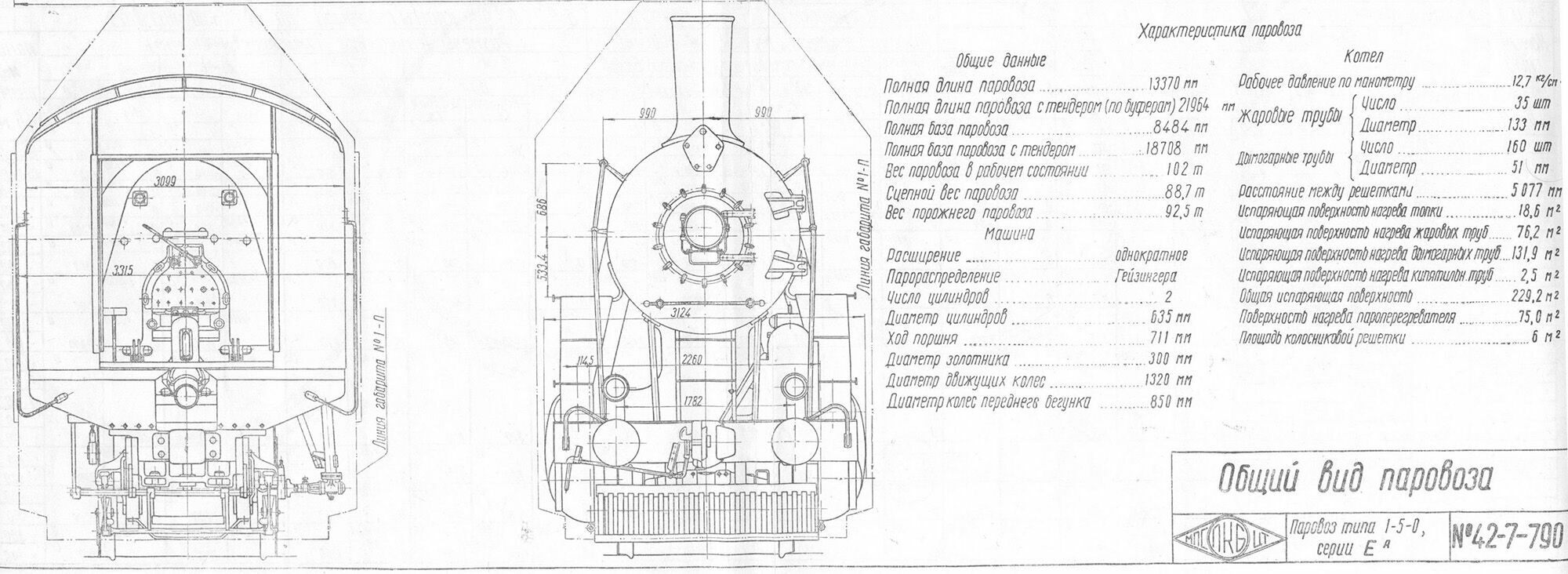
Technical
specifications

Year
1944
Weight of the locomotive in working order without tender, t
100.4
Weight of the locomotive in working order with tender, t
170
Design speed, km/h
70
Maximum power at the wheel rim, hp
2,200
Empty weight of the locomotive, t
84.8
Coupling weight of the locomotive, t
90.0
Tender type
Four-axle
Full wheelbase of the locomotive with tender, mm
18,708
Length of locomotive with tender on buffers, mm
21,964
Diameter of driving wheels, mm
1,320
Smallest radius of passable curve, m
85
Steam pressure, kg/cm2
12.7
Firebox type
Radial
Grate area, m2
6.0
Total evaporating heating surface of the boiler (water), m2
229.2
Heating surface of superheater tubes (gas), m2
75
Number of smoke tubes, pcs.
162
Smoke tube diameter (outer), mm
51
Number of flame tubes, pcs.
35
Flame tube diameter (outer), mm
136
Diameter of superheater tubes (outer), mm
38
Superheater type
Double-turn

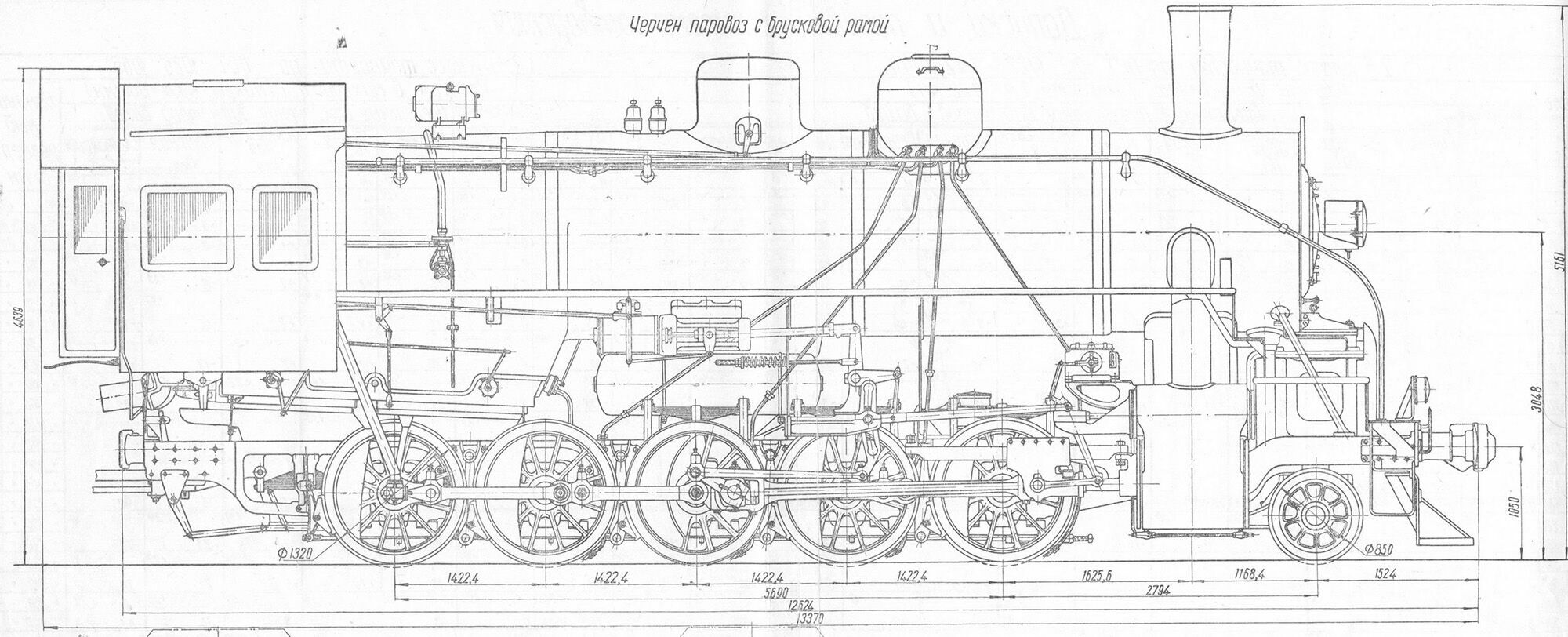
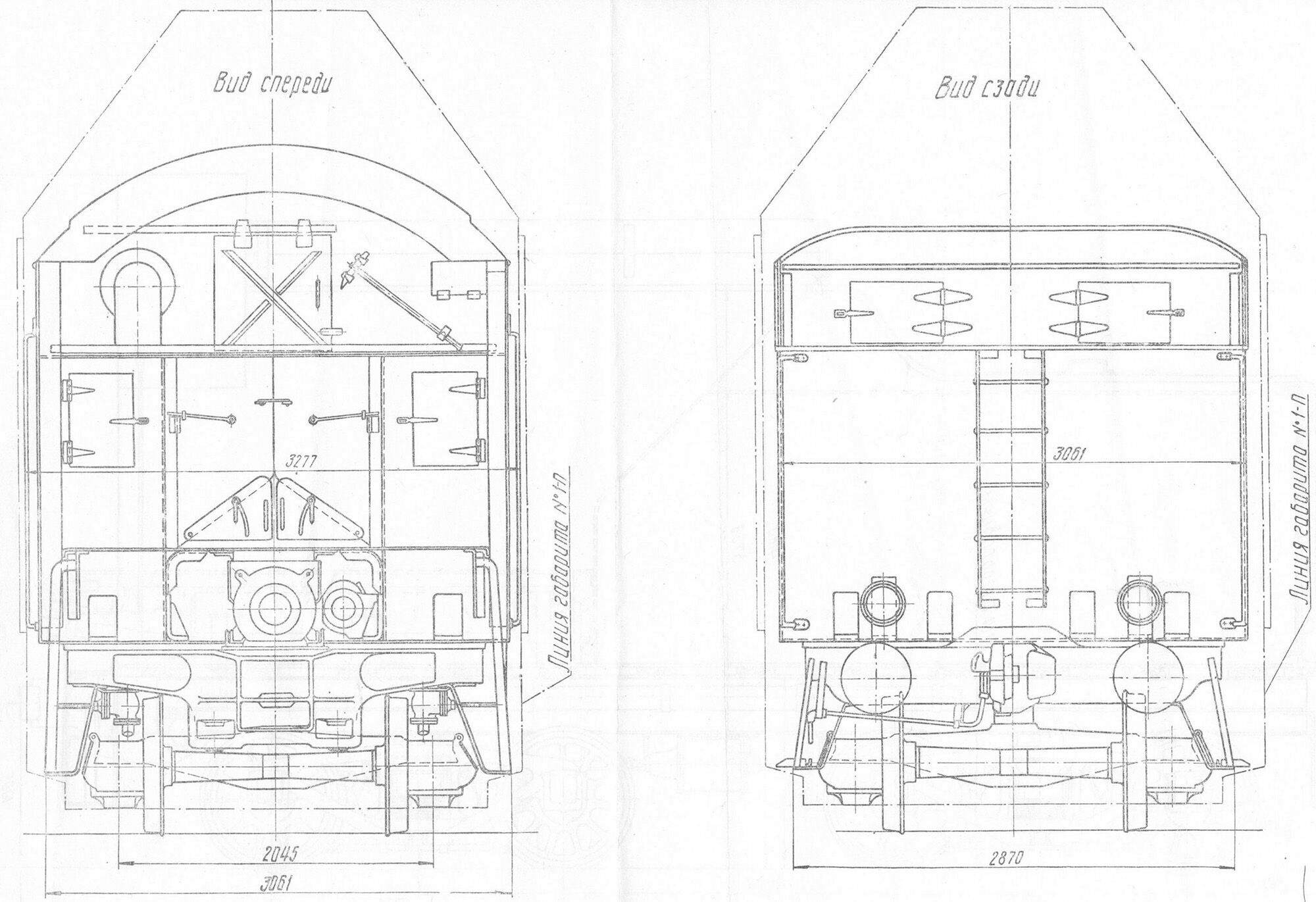
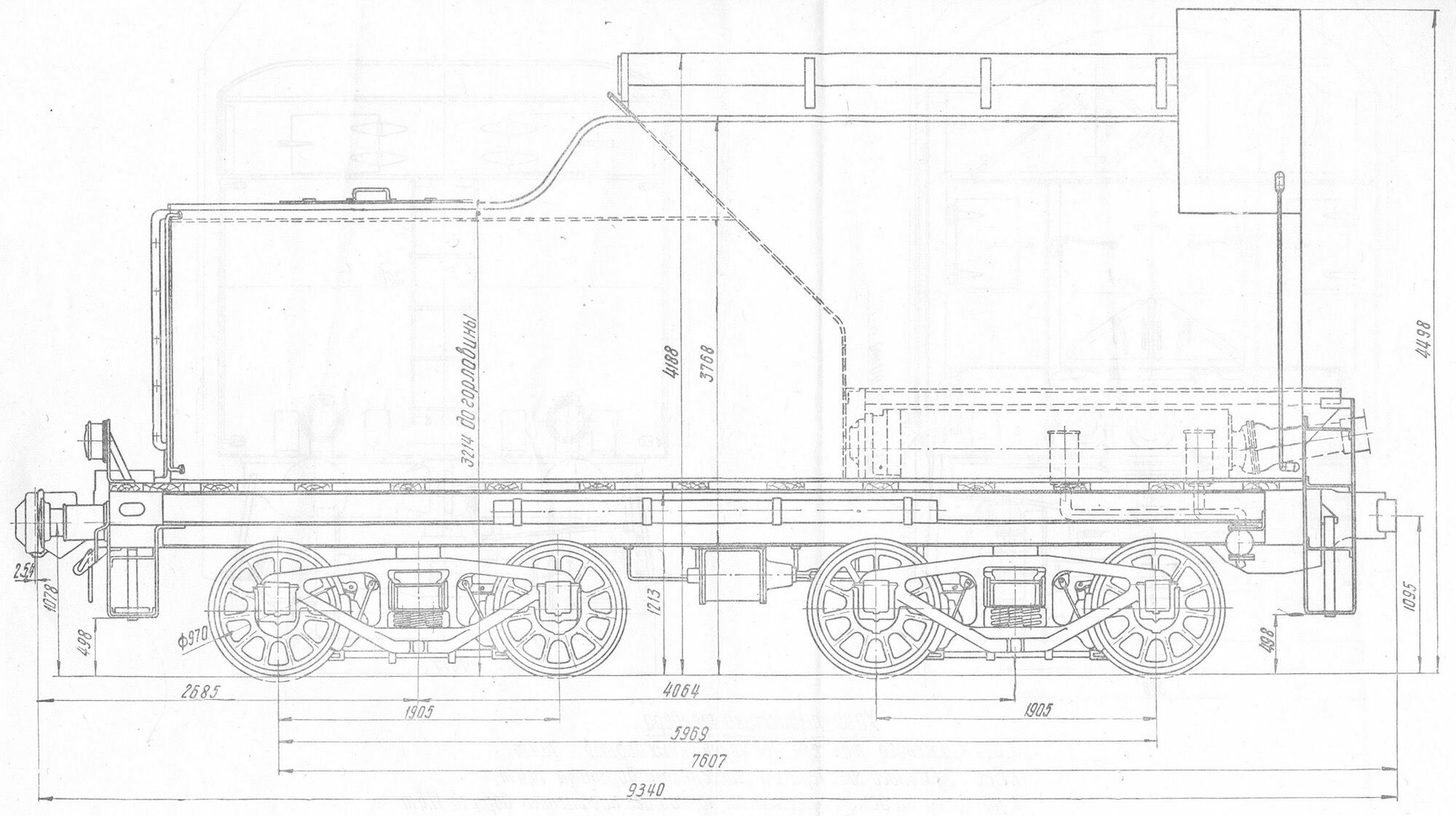
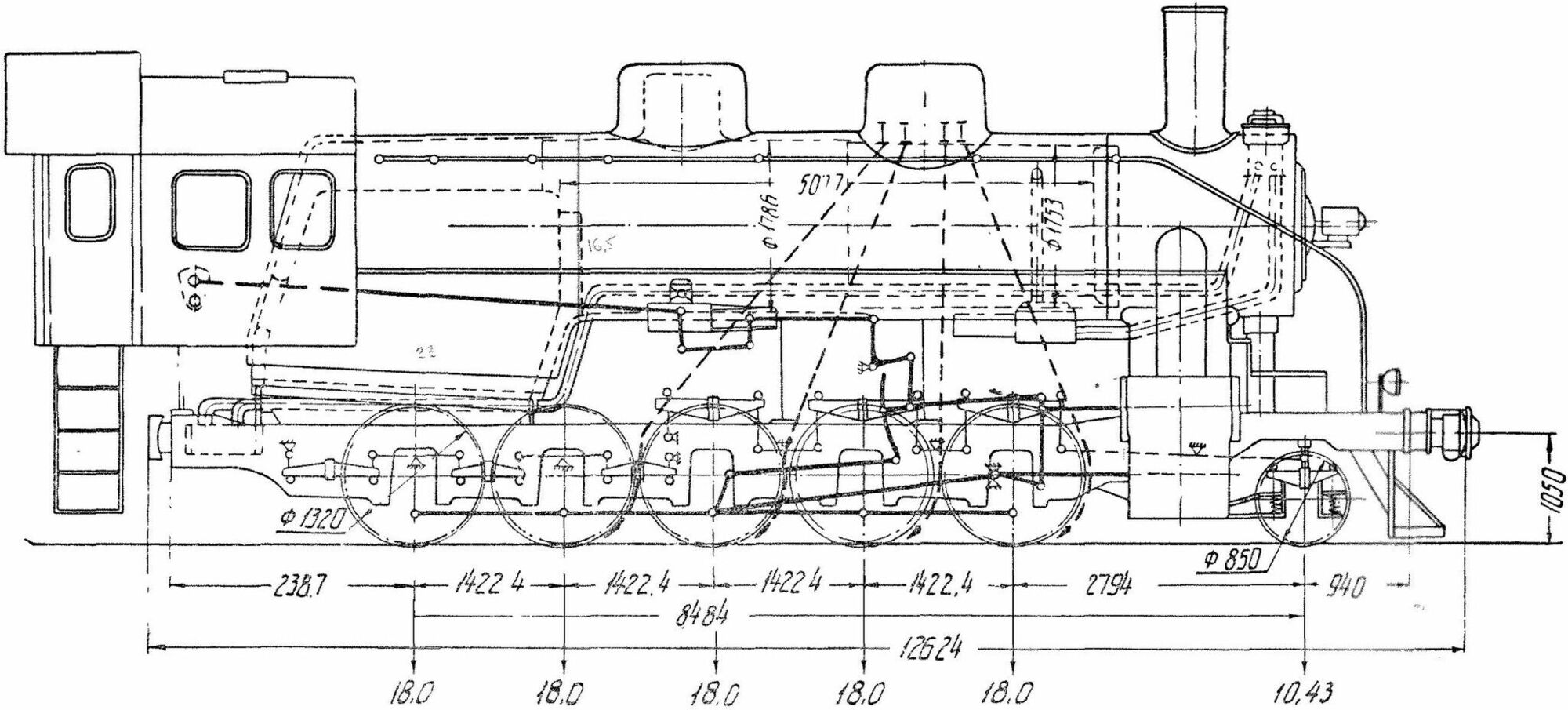
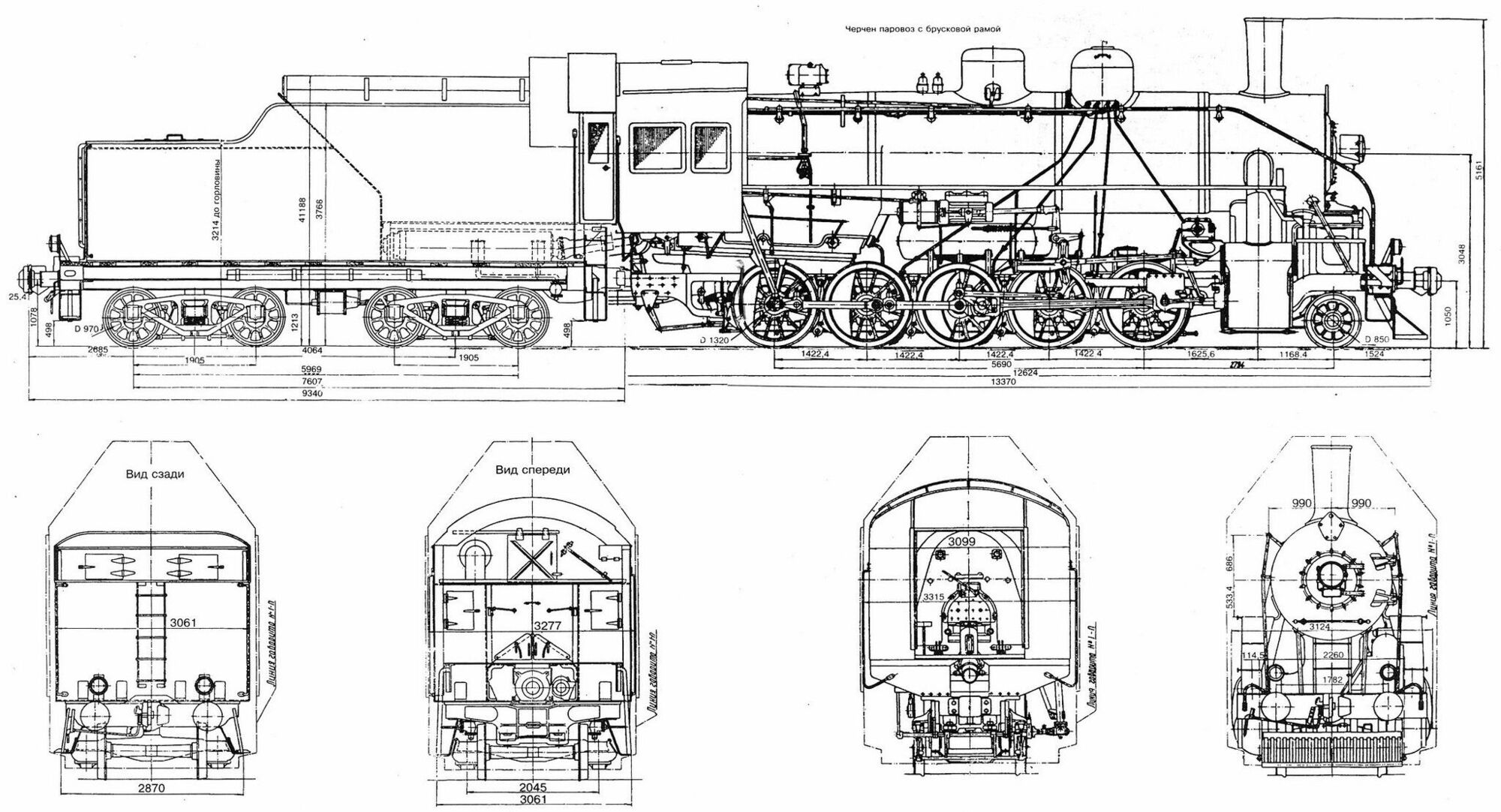
Drawings
and diagrams

History

Chronology

  1. 10th April 1943 The Chairman of the State Defence Committee Joseph Stalin signed the Decree of the USSR GKO No. 3159 C “On the Order and Delivery of Steam locomotives and Rails from the United States for the People’s Commissariat of Railways in 1943–1944”.
  2. 1944 The first American locomotives arrived in the Soviet Union.
  3. 12th May 1944 The EA 2201 steam locomotive was sent to the Butovo loop of the Central Research Institute, where it was checked for heating and running performance.
  4. 1955 The locomotive was sent for operation to the Far Eastern Railway at the Vysokogornoye Depot.
  5. 1968 The EA 2201 steam locomotive was placed in reserve at the Vyazemskaya reserve base.
  6. 1992 The locomotive was transferred to the Central Museum of the Oktyabrskaya Railway and sent to Saint Petersburg as part of joint museum equipment.
  7. 1992 The steam locomotive arrived at Shushary Station and was added to the exhibition at the Museum of Steamers.
  8. 2001–2016 The steam locomotive was exhibited in the museum at the former Varshavsky Station in Saint Petersburg.