Today the museum is closed

Map

Exhibit description

Industrial electric locomotive GET 4

A successful design

The GET electric locomotives turned out to be quite successful machines — easy to operate, reliable in operation and easy to repair. In connection with this, small-scale production of such locomotives was soon organized. At the same time, the Moscow Dynamo plant continued to manufacture electrical equipment for them, and the Podolsk cracking and electric locomotive plant (former locomotive workshops of the Moscow-Kursk Railway) began to manufacture the mechanical part instead of the Mytishchi wagon-building plant.

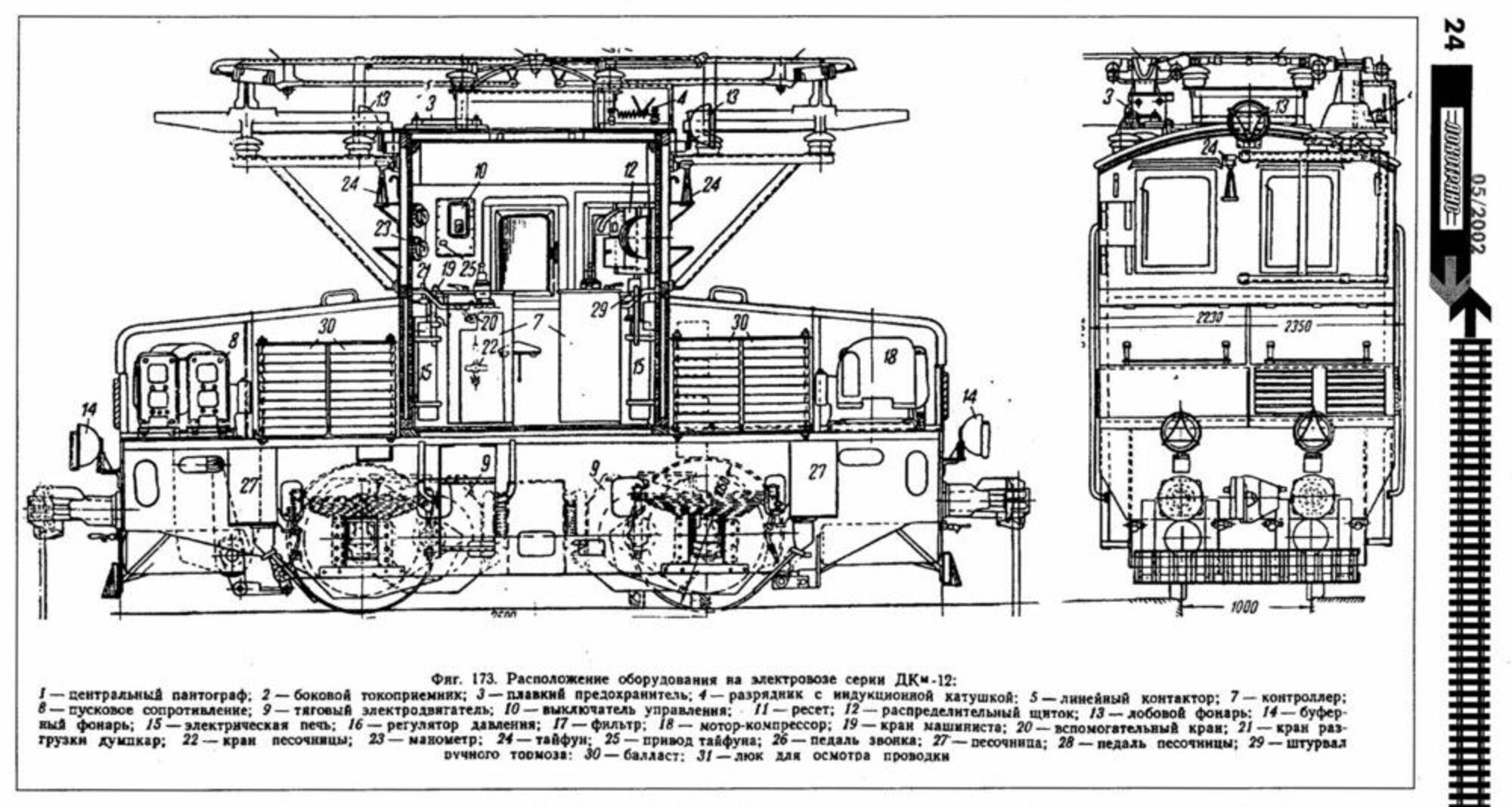
From 1931 to 1938 76 industrial GET electric locomotives were assembled. They were produced in two versions: with a narrow body 2,230 mm wide for use in tram services and a wide one 2,900 mm. These two modifications are sometimes designated EPU and EP>subШ, respectively. In addition to them, similar in design electric locomotives were also manufactured for servicing coke ovens, which had a slightly different design: a platform along the control cabin, a slightly raised body, and a side current collector.

GET electric locomotives were used in two main areas. The first is work on electrified access roads of large industrial enterprises. Electric locomotives could transfer cars between the territory of the enterprise and the nearest railway station, as well as perform internal transportation to ensure the technological process (intershop or intrashop transportation of raw materials, semi-finished products, finished products, production waste, etc.).

The second area of ​​application of GET electric locomotives was freight and utility work on the tracks of tram facilities in large Soviet cities. Due to their rather specific purpose, such locomotives were not built in large quantities. Industrial electric locomotives were never used to haul trains on railways.

During operation, the electric locomotives had their electrical equipment and pantographs replaced, and were also equipped with an automatic coupling, for which the locomotive frame was redesigned.

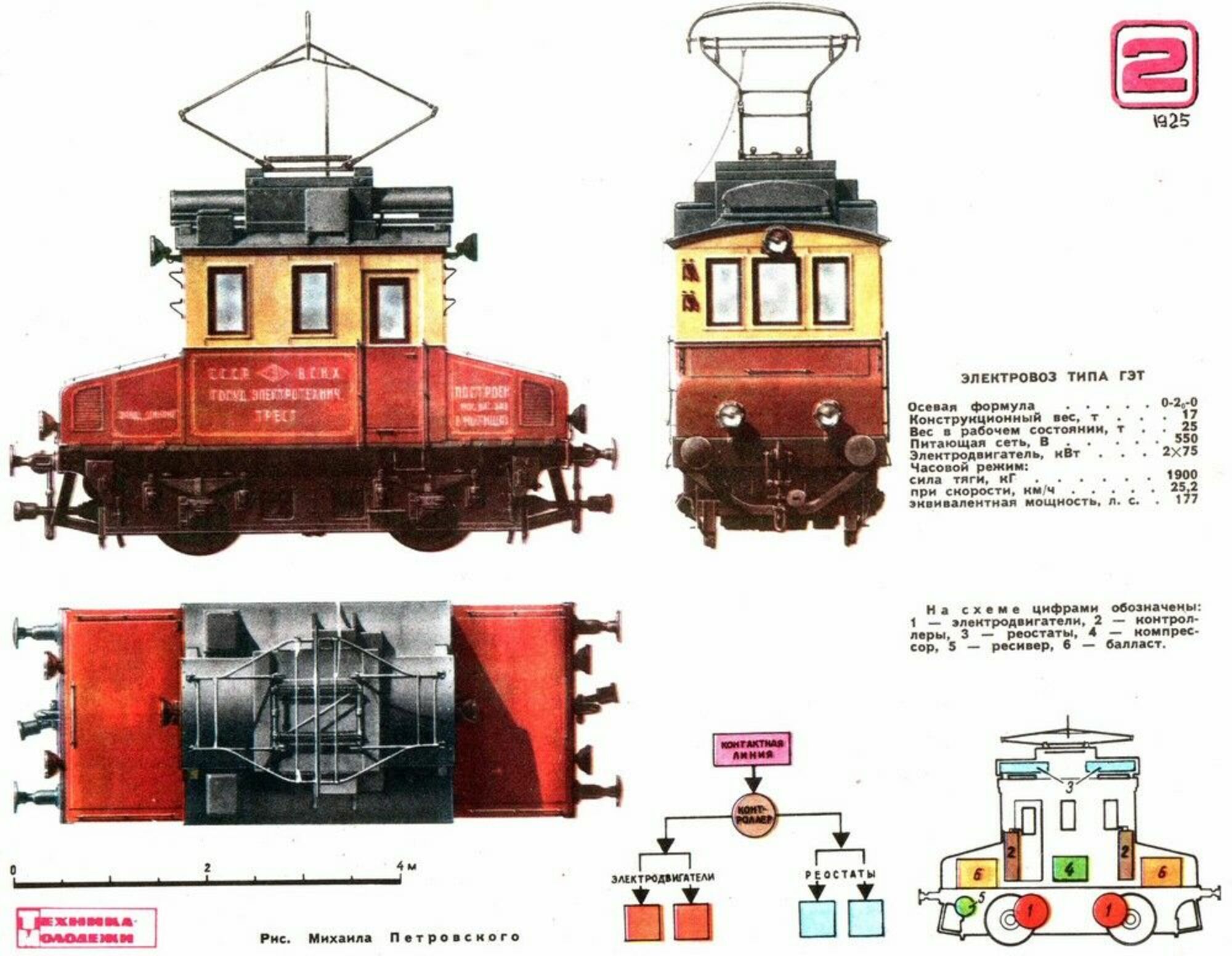
They have reached our time in a heavily rebuilt form and have lost their former charm. Initially, they were painted like tram cars: the top of the cabin was beige, the hoods, bottom of the cabin and pantograph were red, the roof was gray, and the frame was black. All surfaces were outlined with yellow lines.

Parameters

Technical
specifications

Axial formula
₀ – 2₀ – ₀
Design weight, t
17
Operating weight, t
25
Supply grid, V
550
Electric motor, kW
2×75
Buffer length, mm
6 570
Width, mm
1 000
Height, mm
3 350
Distance between axles, mm
2 500
Tractive effort, kgf
1 900
At speed, km/h
25,2
Equivalent power, hp
177

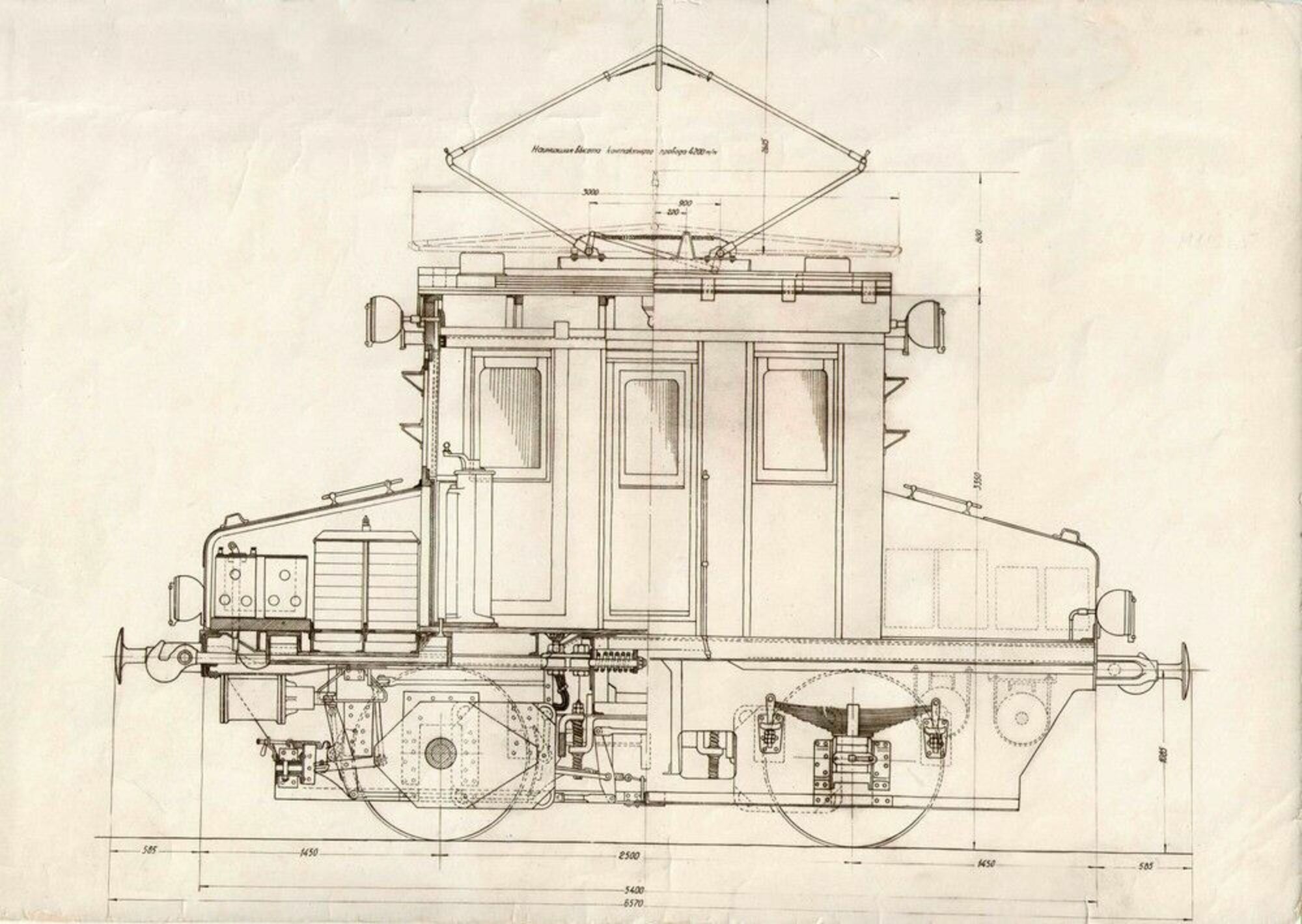
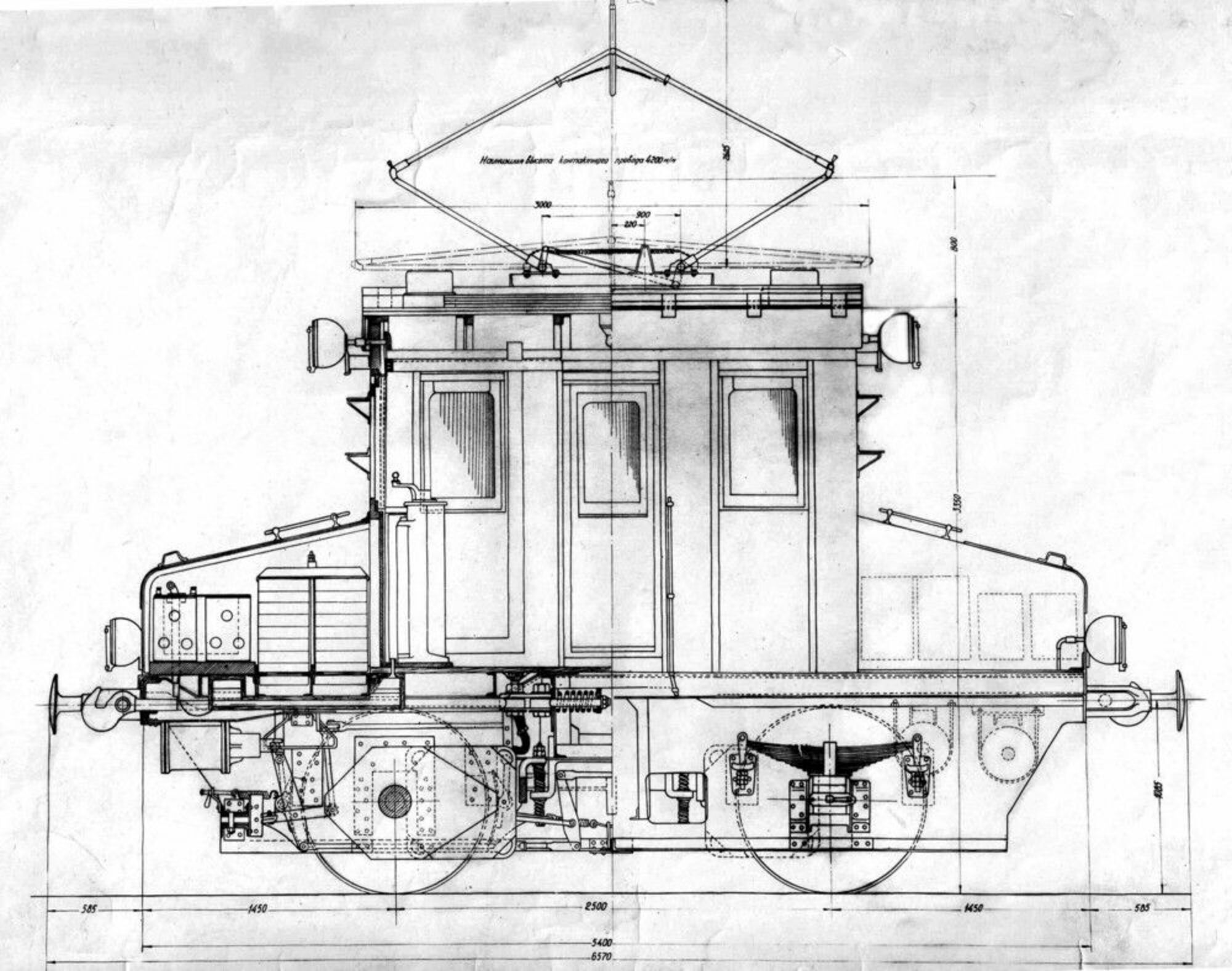
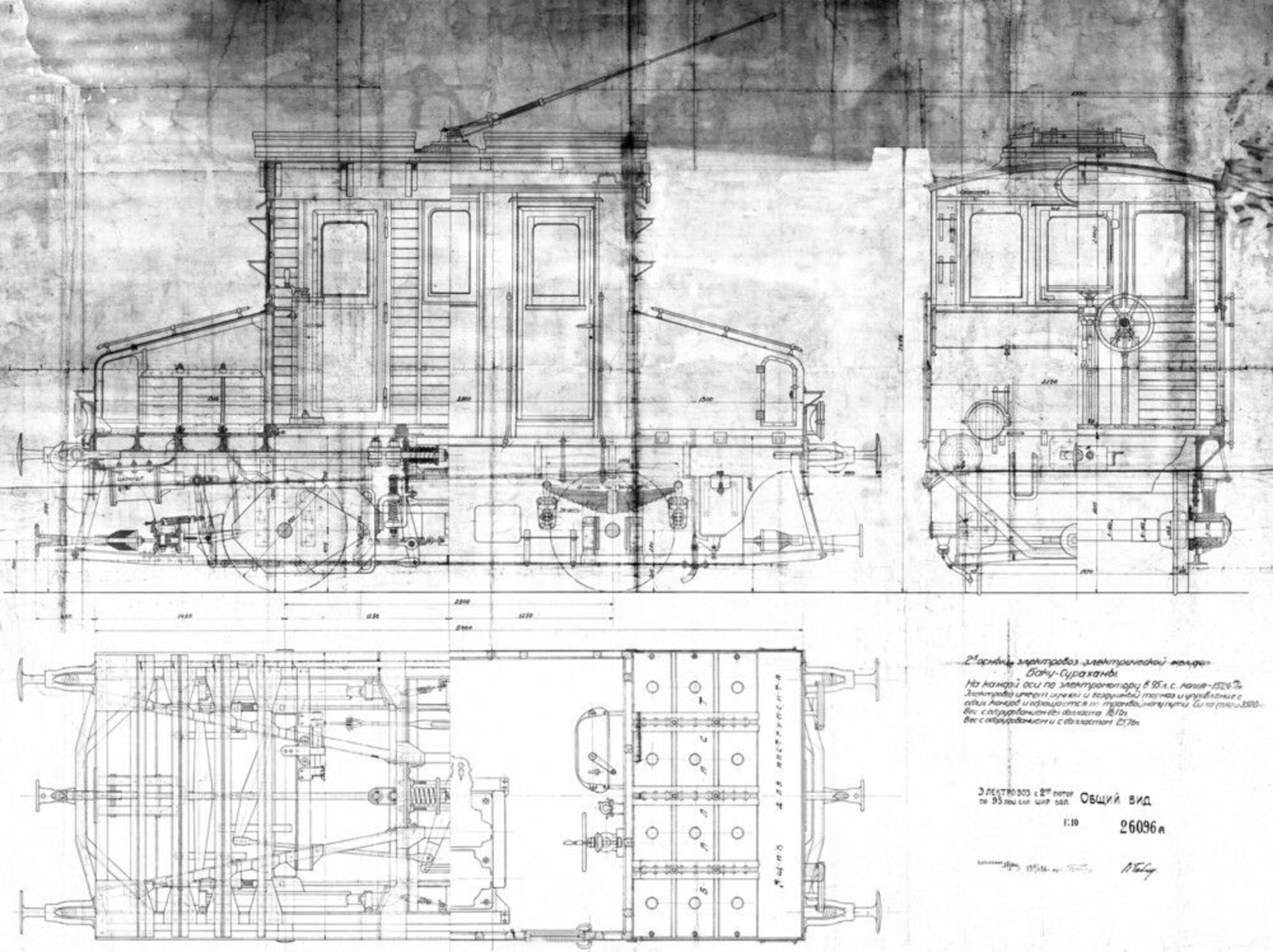
Drawings
and diagrams

History

Chronology

  1. 1926–1927 The first 7 electric locomotives of this series were built in 1926–1927. The electrical part was built at the Dynamo plant in Moscow, which was then part of the State Electrotechnical Trust (GET). The mechanical part was built at the Mytishchi Carriage Works. Hence the name of the locomotive series — GET. The design work at the Mytishchi plant was headed by engineer P. I. Travin.
  2. 1930 In 1930, production of the mechanical part of electric locomotives was resumed at the Podolsk Cracking and Electric Locomotive Plant. These were the former locomotive repair shops of the Moscow-Kursk Railway. Electric locomotives were built in two versions: with a 2,300 mm wide cabin (EPU series) and a 2,900 mm wide cabin (EPSh series). This was due to the different dimensions of the rolling stock used on the tram lines. A total of 7 electric locomotives were built at the Mytishchi plant and 76 at the Podolsk plant.
  3. 1937–1938 The GET electric locomotive presented in the museum is one of those built in 1937-1938 by the Podolsk Cracking and Electric Locomotive Plant.
  4. 1986 The last electric locomotives (numbers 3 and 4) worked on this line until the fall of 1986. The last electric locomotive, number 4, was saved from liquidation back in 1989. A group of enthusiasts from Retro Express organized its transportation from the Cherkizovo station tracks to the Moscow Tram Repair Plant (TRZ). At that time, it was not possible to restore it, but it was preserved as an exhibit for the future museum.