Today the museum is open from 10:00 to 18:00

Map

Exhibit description

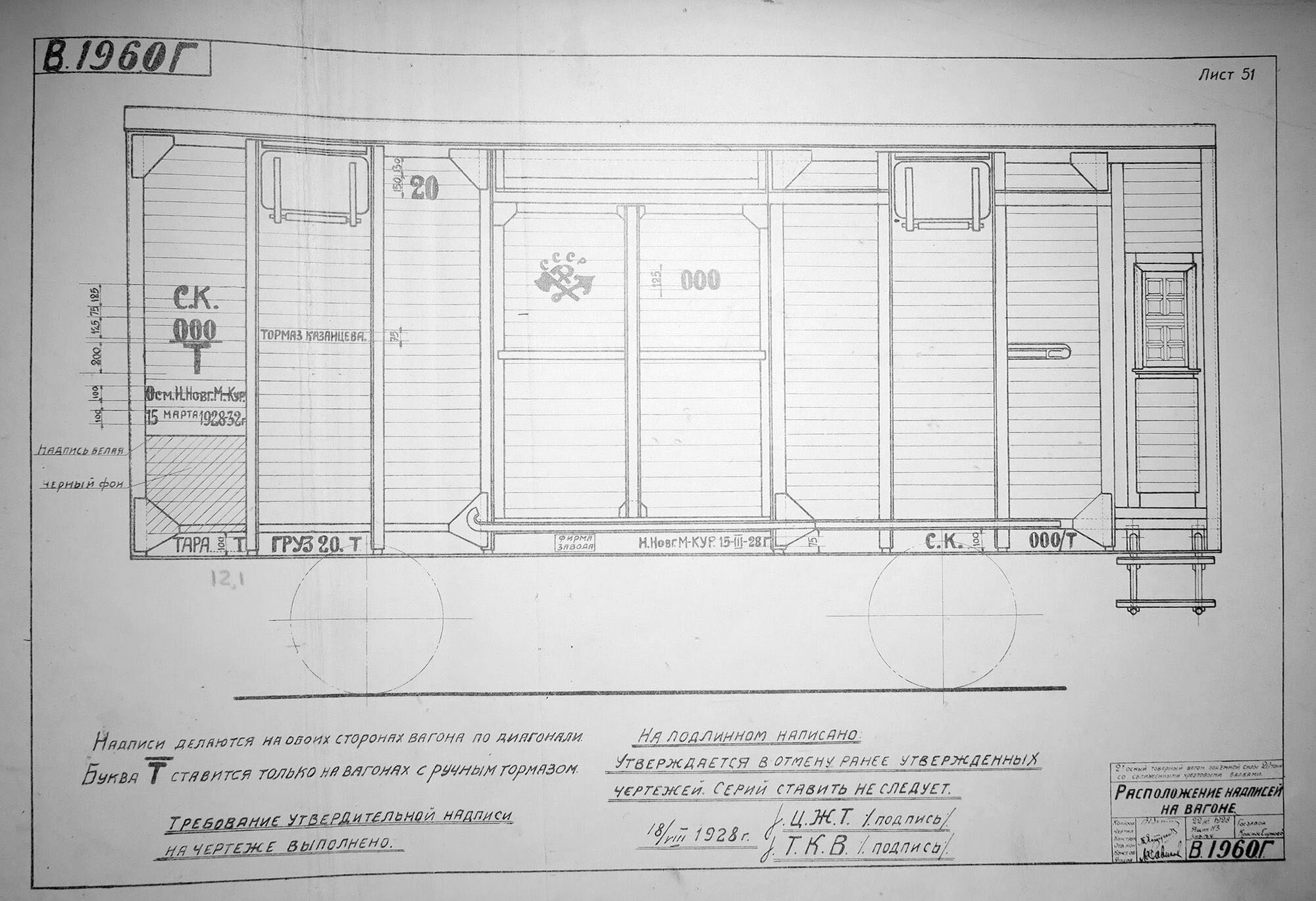
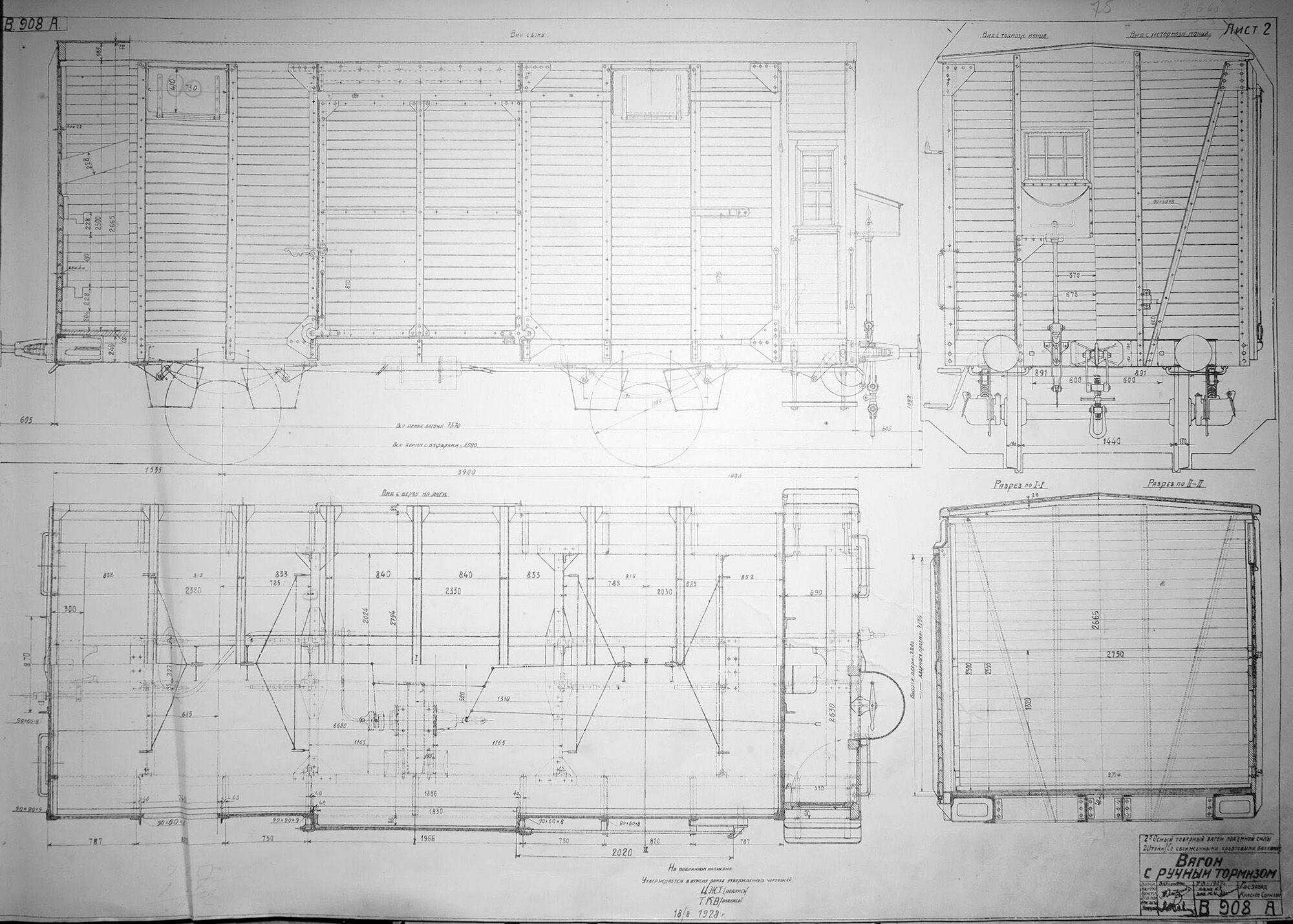
Covered Goods Wagon No. 657 582

After the Civil War, the rolling stock and carriage works of the People’s Commissariat of Communication Routes were in a deplorable state. However, freight transport increased significantly during the New Economic Policy period.

New Car

In response to orders for the recovering car-building industry, a new design for a two-axle covered wagon was developed, incorporating the latest technologies of the time and built with future developments in mind. The wall posts and roof arches were made of metal, and the frame was designed to accommodate automatic couplers.

The covered wagon incorporated the latest technologies of the time and was designed with future advancements in mind: the wall posts and roof arches were made of metal, and the frame was designed to accommodate automatic couplers.

Such cars have been produced since 1926 by the Krasnoye Sormovo Plant, the Tver Carriage Works, and the André Marti Yard in Mykolaiv. In 1927, design modifications were introduced, and similar cars continued to be built until 1931. Later, the plants fully transitioned to manufacturing high-capacity cars.

In 1927, changes were made to the design of covered goods wagons.

The brake cars had a closed brake booth, which improved the working conditions of the conductor compared to the platforms of standard goods wagons.

Car no. 657 582 was brought to the museum from the Priozersk Station of the Oktyabrskaya Railway in 2009.

Parameters

Technical
specifications

Years of release
1928–1929
Load capacity, t
20
The length of the wagon with brake buffers, mm
8 580
Body length inside, mm
6 800
Width, mm
2 750
Height, mm
2 500
The length of the iron frame of the carriage without a hand brake, mm
6 680
The length of the iron frame of the car with a hand brake, mm
7 370
Wheel diameter, mm
1 050
Wagon base (distance between axles), mm
3 900
Floor area, m2
18.1
Body volume, m3
45,3
Tara not a brake van, t
10,4
Brake van container, t
11.2
Wheel pairs with journals, mm
120–210
Wheel hub outer diameter, mm
285
Springs (grooved steel) section, mm
76 x 13
Internal distance between longitudinal channels, mm
2,024
Distance between ridge beams, mm
500
Reinforced type buffers with a rod diameter, mm
70
Cross section of a spring coil, mm
152.4
Body frame
Metal
Equal-sided iron corner posts, mm
90 x 90 x 9
Uneven-sided iron intermediate posts, mm
90 х 60 х 8
Body walls and roof
Wooden paneling
Thickness of the casing, mm
40
Width of the casing, mm
125
Color of the car frame, chassis, floor
Black
Color of interior walls
Steel
Color of external walls
Red
Color of the outer edge of the bandage
White
Brake type*
Automatic, Kazantseva
*1/5 of the cars are equipped with a hand brake

Drawings
and diagrams

History

Chronology

  1. 1926 Construction of covered goods wagons by the Krasnoye Sormovo Plant, the Tver Carriage Works, and the André Marti Yard in Mykolaiv.
  2. 1927 Changes are made to the design of the cars.
  3. 1931 Termination of construction of covered goods wagons.
  4. 2009 Covered wagon no.  657 582 was transferred to the Russian Railway Museum in St Petersburg from the Priozersk Station of the Oktyabrskaya Railway.
  5. 2010 The car was restored by the Tosno Car Repair Depot of the Oktyabrskaya Railway.