Today the museum is open from 10:00 to 18:00

Map

Exhibit description

Railway car Lat 1863682

Car parameters

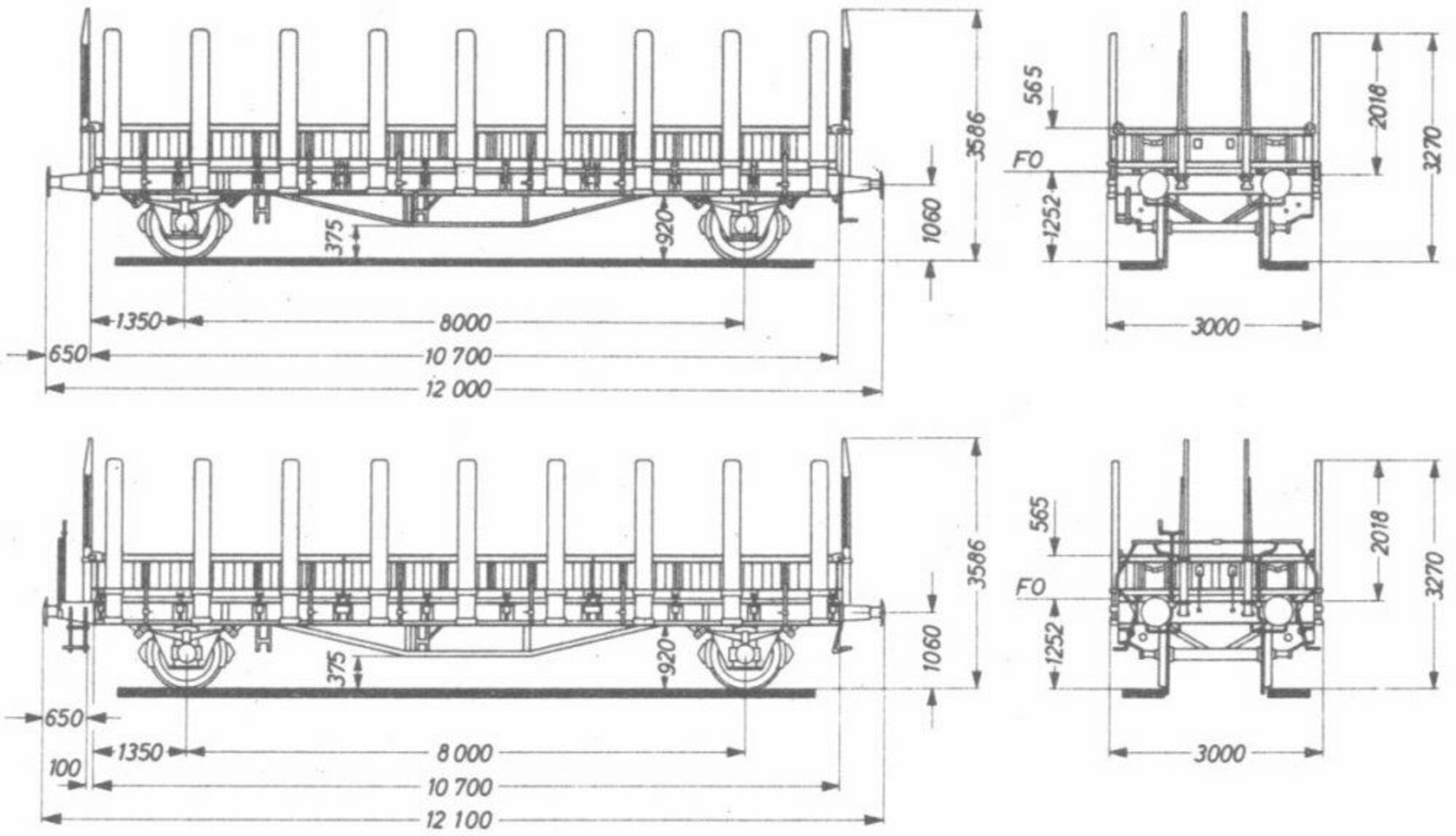
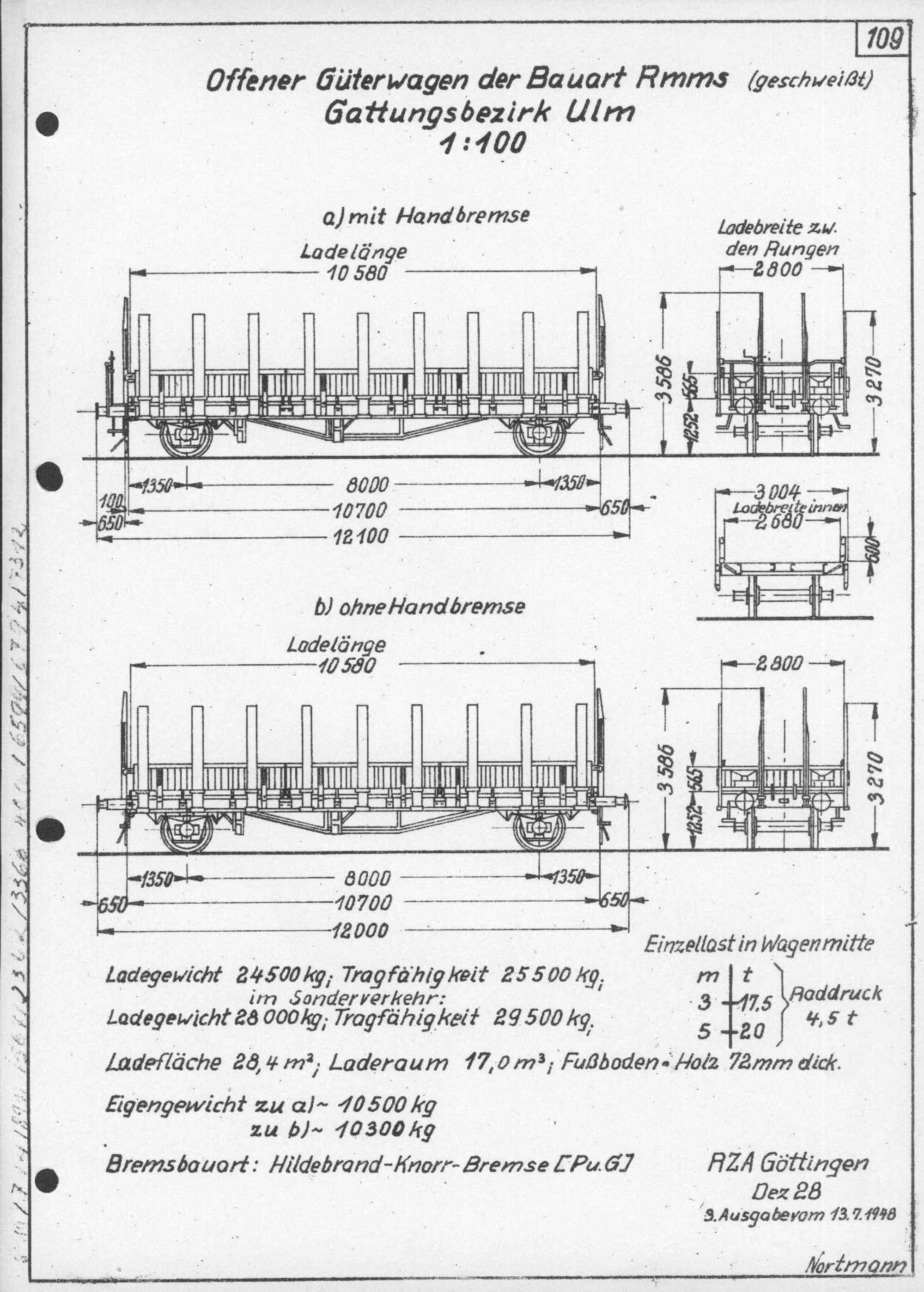
The car was developed in 1938 for use in express trains. This was facilitated by its design. It had a wide wheelbase of 8,000 mm and short frame overhangs, which had a positive effect on the dynamics of movement at high speeds of up to 90 km/h.

The wheelset had a single suspension by means of seven leaf springs on each side. The length of the spring was 1,400 mm. The entire axle box assembly is unified with a covered freight car of the Oppeln type. To protect the cargo during transportation, it was possible to install removable racks. A special undercarriage box was available for storing racks.

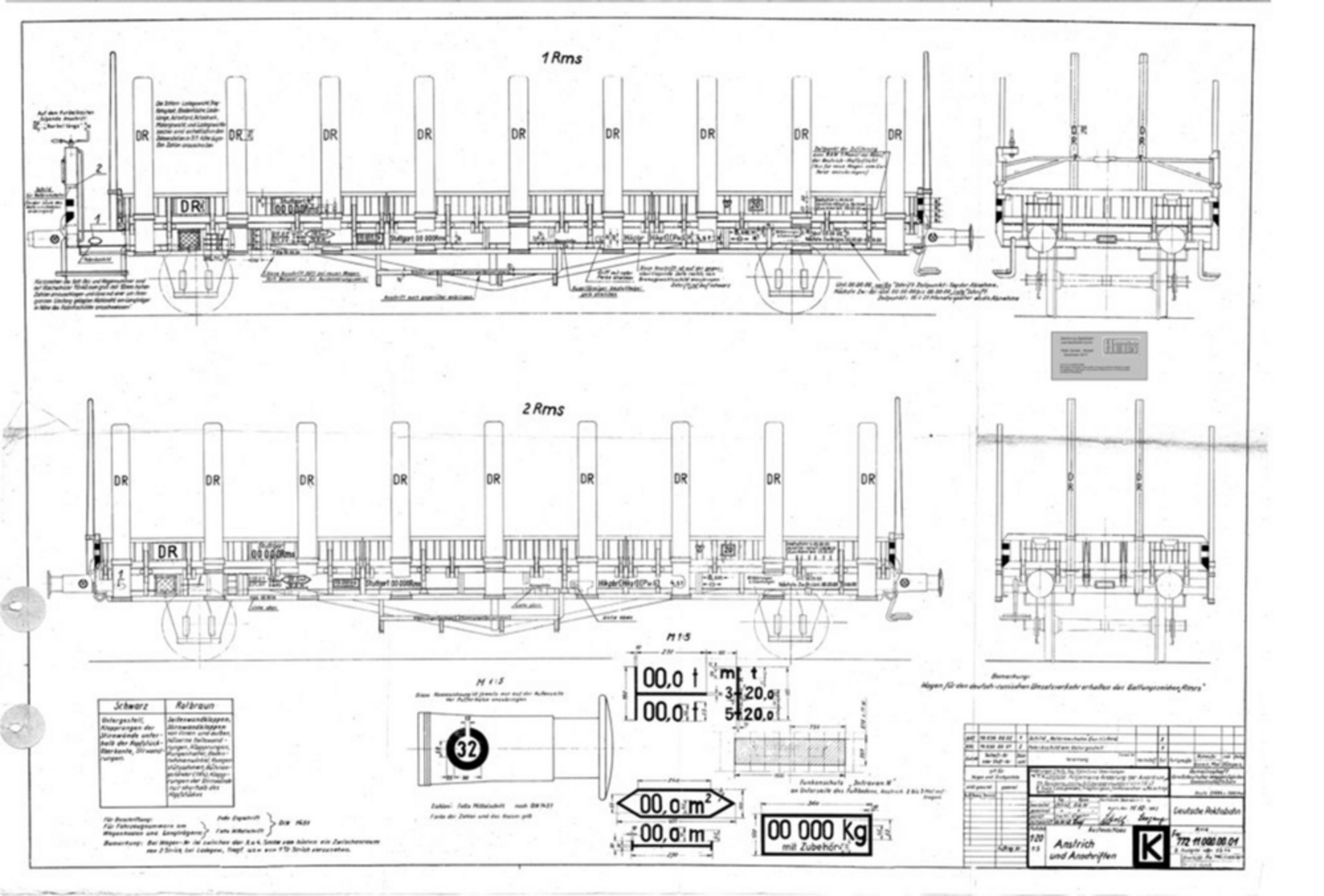
The cars were produced in two versions: with and without a brakeman's platform. The length of the car with a brakeman's platform was 12,800 mm, without it — 12,100 mm. Load capacity — 17.5 t, tare — 15 t, floor area — 28.5 m2. All cars are equipped with a Hildebrandt-Knorr pneumatic brake (Hik brake). In 1943 the carrying capacity was increased from 15 to 20 t by using rolled sections, so the type of car was changed to Rms Stuttgart.

The different track gauges did not allow the use of captured rolling stock on the general network. This problem already existed in 1940, when the territories of the Baltic republics, Bessarabia, Western Ukraine and Western Belarus were annexed to the USSR. Before the war, about 2,100 km of main highways were rebuilt in these territories. Secondary and bypass routes were not rebuilt, since rebuilding all the rolling stock was not economically feasible.

As the railway lines were rebuilt, the rolling stock was selectively converted to a wide gauge. When installing wheelsets for a wide gauge, it was necessary to redesign the axle box assembly, for which the axle box guides were changed. In this case, it was necessary to move the spring suspension mount, for which additional supports were welded to the car frame. By this feature, it is very easy to determine the origin of the car, whether it is European or not.

During and after the Great Patriotic War, many carriages that had previously been used on European railways ended up on the railways of the USSR. Some of them were war trophies, and some were rolling stock that was transferred for what was lost during the war.

Secondary and side lines were not rebuilt, since rebuilding the entire rolling stock was economically impractical. The rolling stock included dozens of types of steam locomotives, many of which were "aged". And also hundreds of different types of cars, which had different types of wheel pairs, axle boxes, etc. It was impossible to exclude this train from the inventory, transfer or sell it - there would be nowhere to get a new one to replace it. Therefore, immediately after the war, European rolling stock was used in the annexed territories. As the railway lines were rebuilt, the rolling stock was selectively converted to a wide gauge.

The track width and the type of wheel pairs determine the width of the car frame. Therefore, when installing wheel pairs for a wide gauge, it was necessary to redesign the axle box assembly. That is, the assembly in which the wheel pair rotates. To do this, the guide boxes, or more correctly, the jaws, were redesigned. They were bent so as to increase the distance between the axle boxes in which the axle is located. In this case, it was necessary to move the spring suspension mount, for which additional supports were welded to the car frame. This feature makes it very easy to determine the origin of the carriage and understand whether it is European or not.

Parameters

Technical
specifications

Wheel base, mm
8 000
Bow spring length, mm
1 400
Braked car length, mm
12 800
Non-braked car length, mm
12 100
Loading capacity, t
17,5/20
Tare, t
15
Floor area, t
28,5
Brake
Pneumatic / Hildebrandt-Knorr (Hik brake)

Drawings
and diagrams

History

Chronology

  1. 1921 The name Stuttgart was given after the city of the same name in West Germany. In Germany, since 1921, all types of freight cars were named after cities. This system of categories (Gattung) was changed in 1926, 1935 and 1942. The full designation of the carriage is Rs Stuttagrt. R denotes the type of carriage Rungenwagen (a platform carriage with posts), s — "for use in express trains".
  2. 1940 The different track gauges did not allow this rolling stock to be used on the general network, and these were thousands of locomotives and tens of thousands of carriages. This problem remained relevant in 1940, when the territories of the Baltic republics, Bessarabia, Western Ukraine and Western Belarus were annexed to the USSR. Before the war, about 2,100 km of main lines were rebuilt in these territories.
  3. 1998 The platform was transferred to the museum in 1998 by the St. Petersburg-Baltic motorcar depot of the October Railway.