Today the museum is open from 10:00 to 18:00

Map

Exhibit description

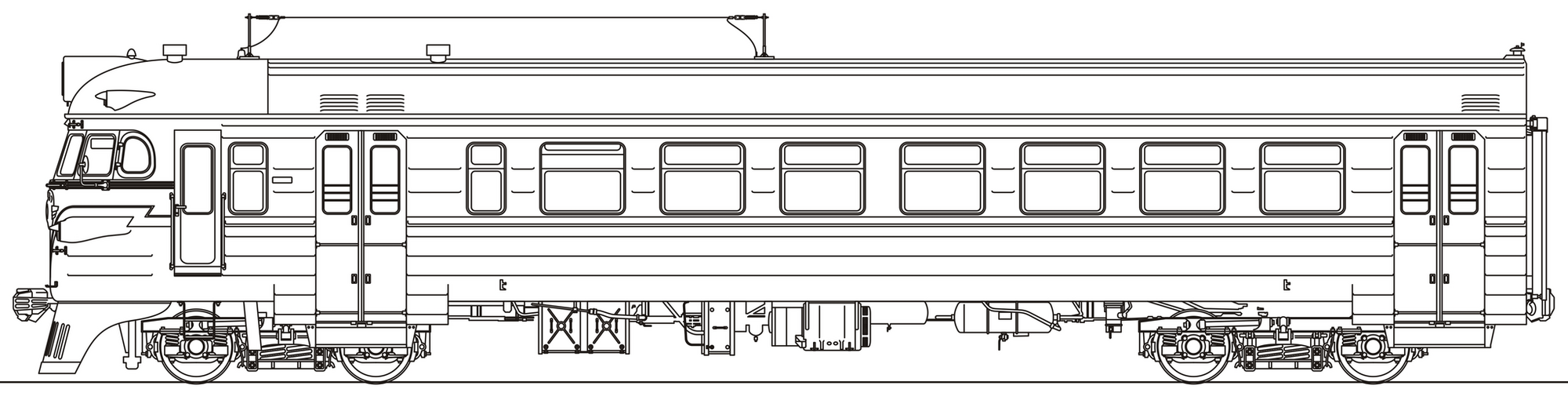
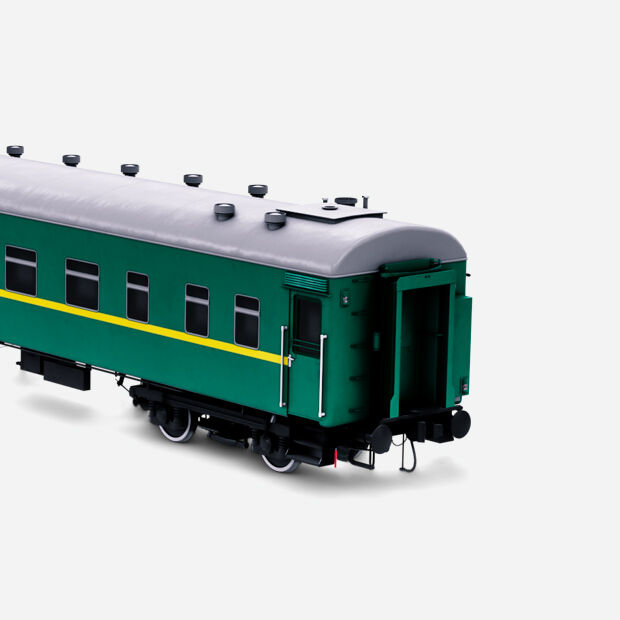
Electric train ER2-963-09

Early Electric Trains

In 1953 the Riga Carriage Works began producing SR3 electric trains. They were heavy and had low power: one motor car for two trailer cars. Due to this, by the end of the 1950s their acceleration characteristics began to restrain the growth of average technical speeds of suburban trains.

The two sections of three cars of the SN (northern, new) type electric trains built for testing in 1954–1955 had the same composition. So even with a higher design speed of 130 km/h they could not significantly speed up the movement, especially on short sections.

It was decided to create an electric train with an equal ratio of motor and trailer cars. In 1957 Riga plants produced five ten-car ER1 trains (Riga electric train, type 1). They were intended to replace old models on suburban routes of the Moscow and Leningrad hubs with a DC voltage of 3 kV. Trailer and head cars were produced by the Kalinin Carriage Works. In total, from 1957 to 1962 259 ten-car trains were produced.

After the Moscow and Leningrad suburban hubs were saturated with ER2 trains, the question of supplying similar electric trains to other regions of the country arose.

In 1962 the Riga (RVZ) and Kalinin (KVZ) wagon-building plants produced 48 electric trains of the ER2 series (No. 300–347). In September 1984 the Riga wagon-building plant assembled the last electric train ER2-1348. In total, 850 trains and 189 additional wagons were built.

The ER1 and ER2 electric trains are a whole era that will be associated with suburban trains for a long time to come for different generations.

Therefore, a decision was made to create an electric train with a ratio of motor and trailer cars of 1:1. Using the developments of the SN electric train, the Riga Carriage Works (chief designer V. O. Kolesnichenko), together with the Riga Electric Machine-Building Plant and the Moscow Dynamo Plant, designed a ten-car electric train. The train included two lead trailer cars, five motor cars and three intermediate trailer cars.

After the Moscow and Leningrad suburban hubs were saturated with ER1 trains, the question of supplying similar electric trains to other regions of the country arose.

A total of 850 trains and 189 additional carriages were built.

The ER1 and ER2 electric trains are an entire era that will long be associated with commuter trains for different generations.

Parameters

Technical
specifications

Supply voltage, V
3,000
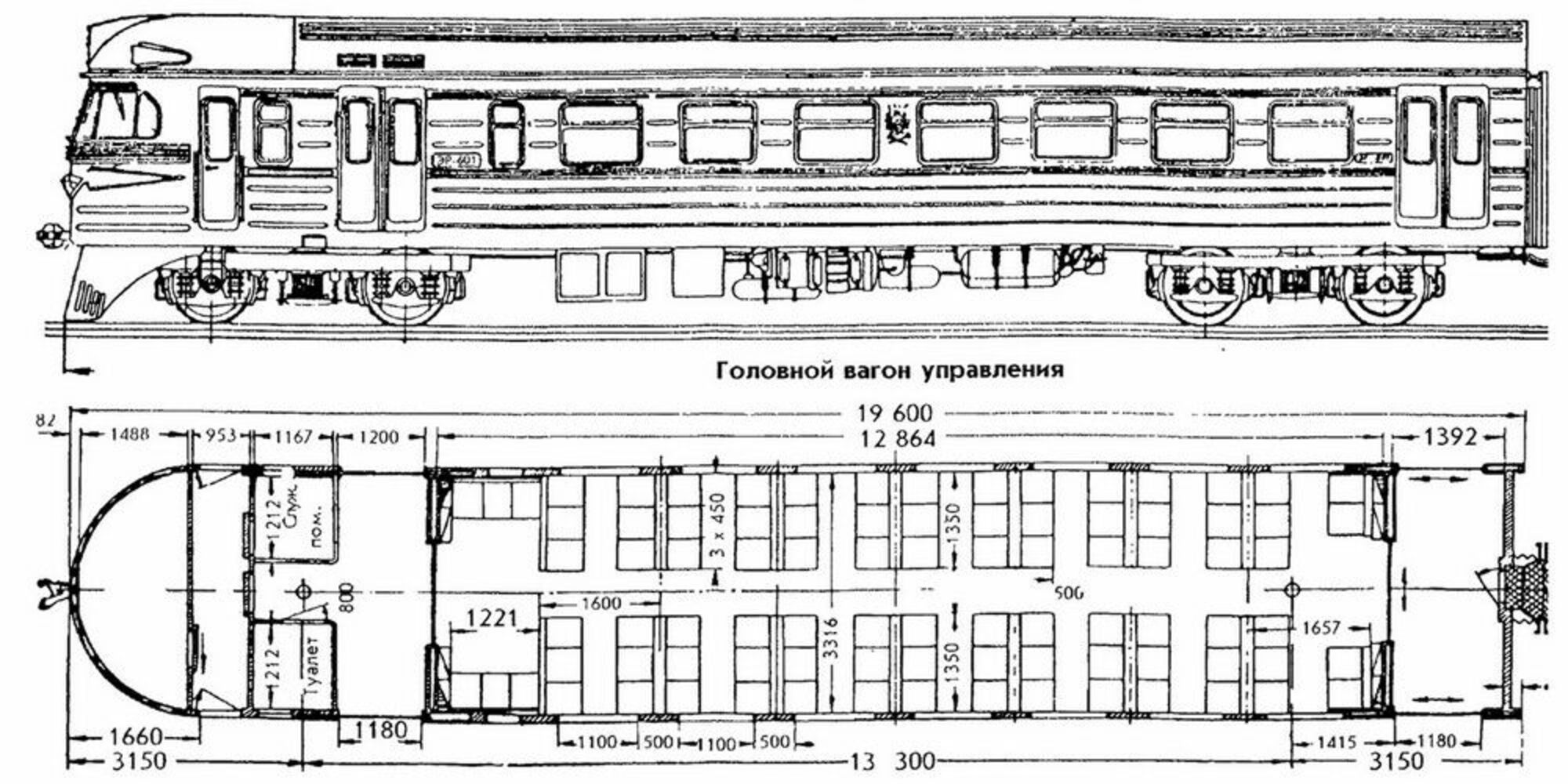
Wagon length, m
19.6
Car body width, m
3.48
Electric motor type with No. 446
URT-110A
Electric motor voltage, V
1,500
Hourly mode, kW
200
Hourly mode current, A
146
Anchor rotation speed at hourly mode, rpm
1,145
Continuous mode, kW
158
Continuous mode current, A
115
Engine weight, kg
2,150
Car kingpin base, m
13.3
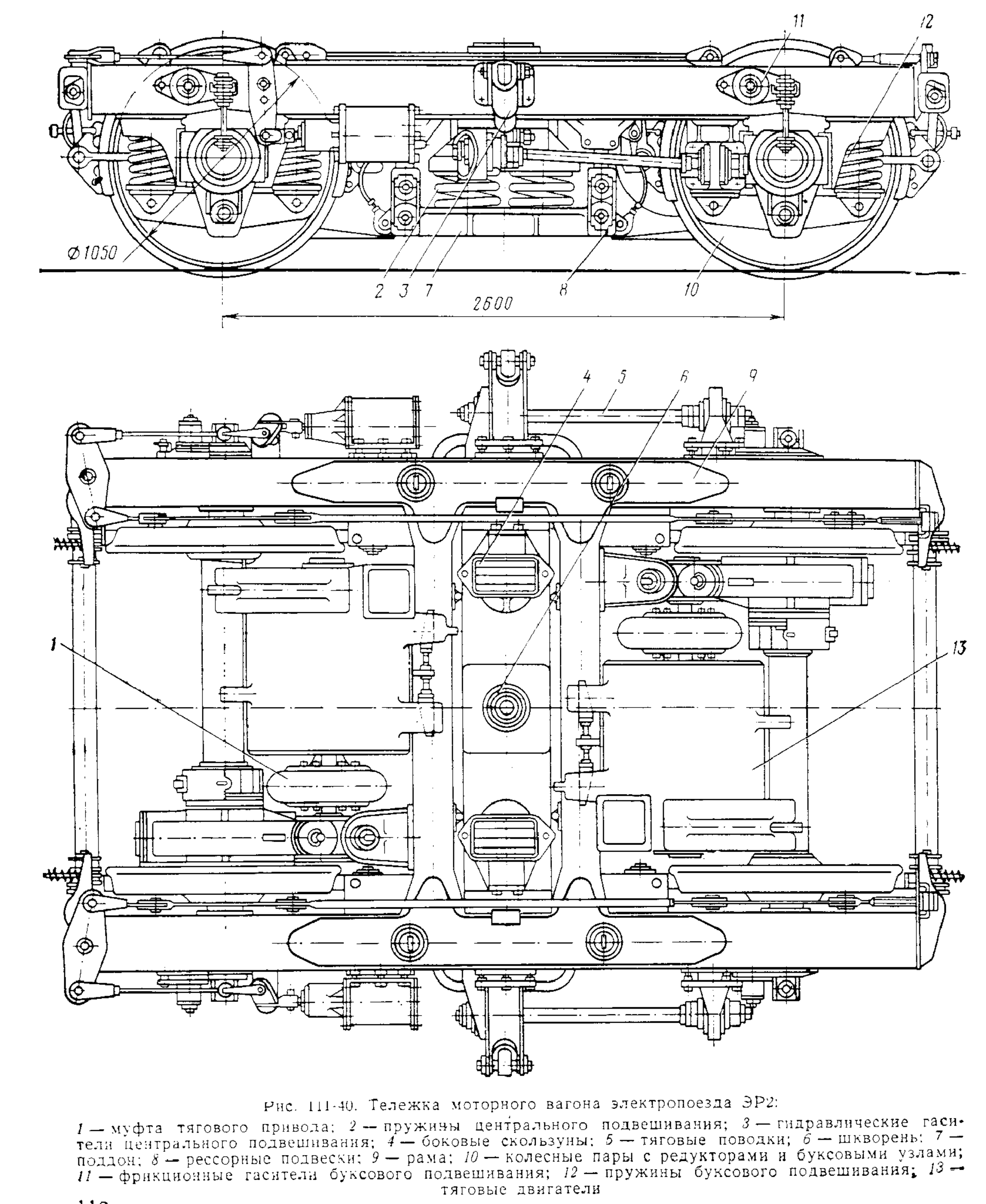
Motor bogie wheelbase, m
2.6
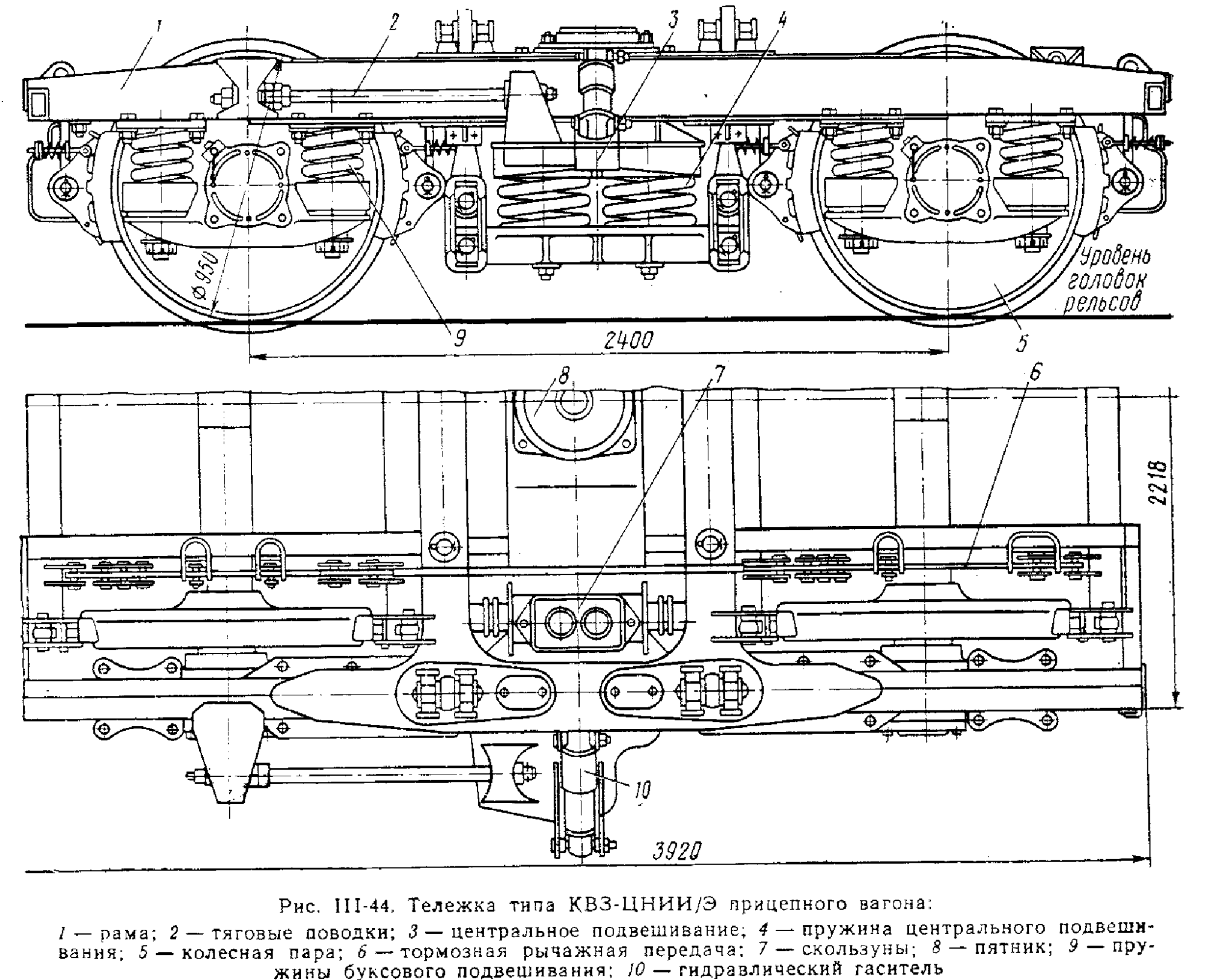
Non-motor bogie wheelbase, m
2.4
Motor car weight, t
54.6
Trailer car weight, t
38.3
Number of seats in the head carriage
88
Number of seats in the motor carriage
108
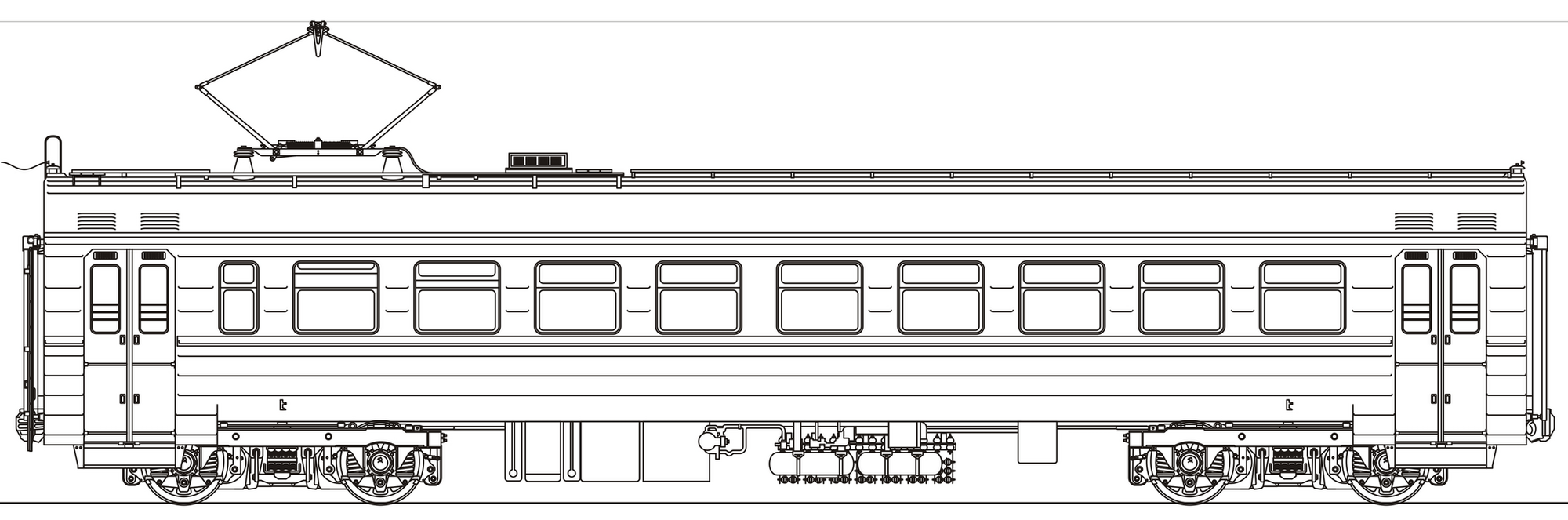
Number of seats in the trailer carriage
110
Design speed, km/h
130
Length of a 10-car train, m
201.81

Drawings
and diagrams

History

Chronology

  1. 1953 In 1953, the Riga Carriage Works began producing SP3 electric trains. They were heavy and had low power: one motor car for every two trailer cars. Due to this, by the end of the 1950s, their acceleration characteristics began to restrain the growth of average technical speeds of suburban trains.
  2. 1954–1955 The two three-car sections of the SN (Northern, new) type electric train built for testing in 1954–1955 had the same composition. So even with a higher design speed of 130 km/h, they could not significantly increase the speed of travel, especially on short sections.
  3. 1957 In 1957, the Riga plants produced five ten-car ER1 trains (Rizhsky Electric Train, Type 1). The electric train was intended to replace old electric trains on the suburban lines of the Moscow and Leningrad hubs with a DC voltage of 3 kV.
  4. 1957 The trailer and lead cars were produced by the Kalinin Carriage Works. A total of 259 ten-car trains were produced from 1957 to 1962.
  5. 1962 In 1962, the Riga (RVZ) and Kalinin (KVZ) wagon-building plants produced 48 ER2 series electric trains (No. 300–347) at once. As in the production of the ER1, the Riga Wagon-Building Plant manufactured bodies and bogies for motor cars, the Kalinin Wagon-Building Plant manufactured trailer and head cars, and the Riga Electric Machine-Building Plant (REZ) manufactured electrical equipment and traction electric motors. The final installation of electrical equipment and assembly of electric trains was performed at the Riga Wagon-Building Plant. Since 1968, KVZ stopped producing carriage bodies and only produced bogies for trailer carriages.
  6. 1972 The lead trailer carriage of the ER2-963 electric train was built at the Riga Carriage Works in 1972 as part of a ten-car train.
  7. 1984 In September 1984, the Riga Carriage Works produced the last ER2-1348 electric train.