Today the museum is open from 10:00 to 18:00

Map

Exhibit description

Museum display Factories of Russia

Beginning of History

In 1834 Efim Alekseevich and Miron Efimovich Cherepanov built the first Russian steam locomotive, but serial production of the machines at the Vyisky plant did not work out.

In the Russian Empire there were nine full-cycle steam locomotive-building plants: Lugansk, Kharkov, Sormovsky, Bryansk, Putilovsky, Nevsky, Maltsevsky, Kolomensky, Votkinsk. There was also the Aleksandrovsky plant, which was the first to start producing steam locomotives, but by the end of the 19th — beginning of the 20th century it began to produce mainly components for steam locomotives.

It is worth noting that almost all the factories in 1918 were nationalized and, having become state-owned, continued to manufacture products already in Soviet times. By 1990–2000 many factories were repurposed or closed down completely, but some of them continued their work (Bryansk, Kolomensky, Putilov factories).

Aleksandrovsky Plant

The history of the Aleksandrovsky Plant in St. Petersburg begins in 1789 with the founding of an iron foundry in Kronstadt, which specialized in the production of products for the needs of the fleet.

In March 1845 the plant built the first freight and passenger locomotives for the St. Petersburg-Moscow Railway under construction. July 23 1846 the Alexandrovsky Plant in St. Petersburg began serial production of the first Russian locomotives.

In 1922 the enterprise received a new name — Proletarsky Locomotive Repair Plant. Since 1931 the wagon workshops were separated from this enterprise and were named Oktyabrsky Wagon Repair Plant. Later, this enterprise mastered the repair of suburban electric trains, in connection with which in 1962 the name of the enterprise changed — it became known as Oktyabrsky Electric Wagon Repair Plant.

Since 1964 the plant switched to the production of unique ship mechanisms. By the 1990s it was already a large scientific and production association. Almost every ship built on the country's slipways was equipped with products from the plant.

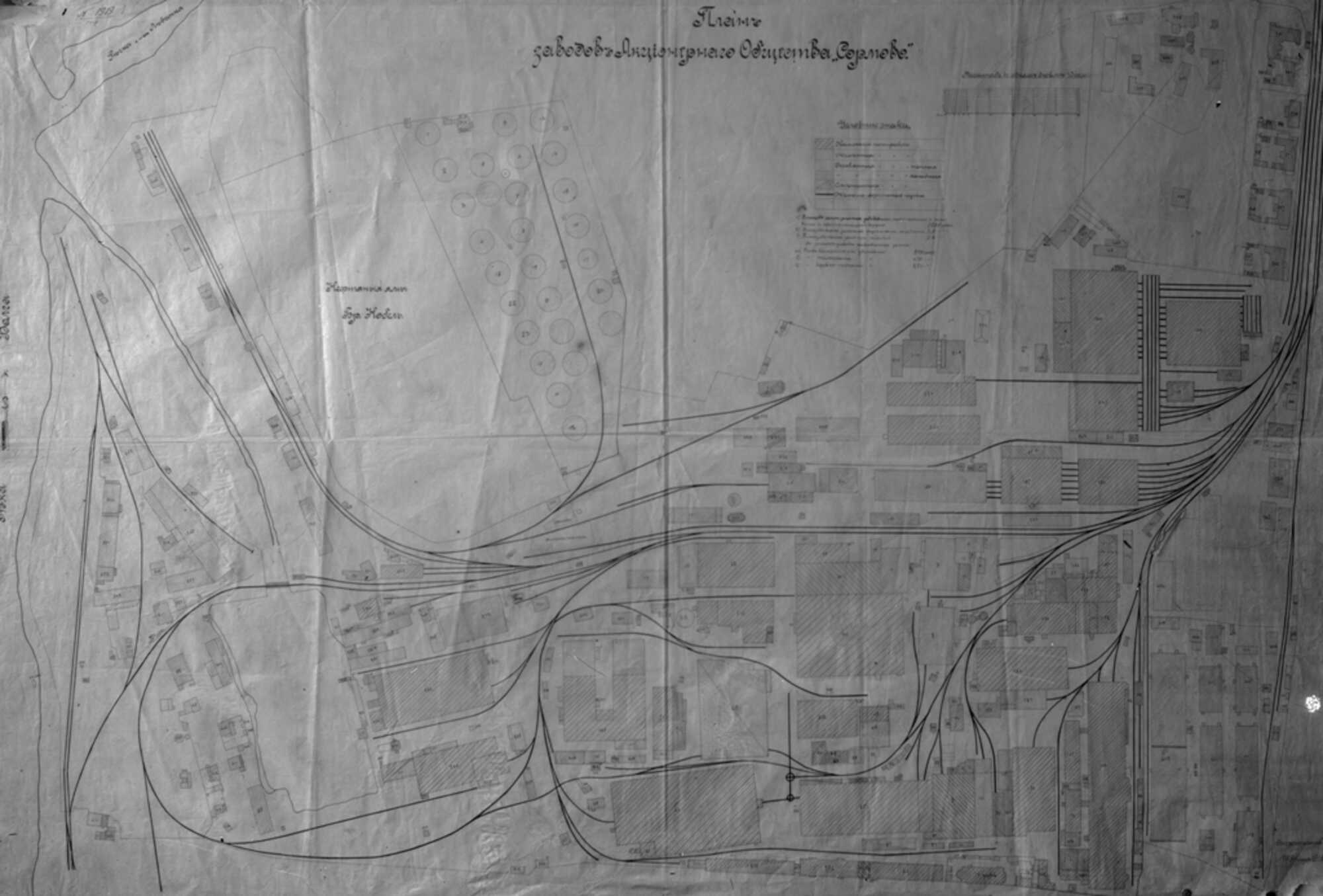
Sormovsky Plant

The Sormovsky Plant was founded in 1849 near Nizhny Novgorod. It was intended for the construction of river fleet, steam boilers and machines. The plant did not have its own cast iron and iron, but auxiliary metallurgical production was organized for the manufacture of mainly small-section iron and rolled steel.

Wagon building at the Sormovsky Plant was organized in 1874 Freight and passenger cars, tanks were built, axles, wheels and other steel parts for cars were manufactured. In 1898 the plant organized locomotive construction, which grew rapidly and put the Sormovo plant on a par with other Russian locomotive plants in terms of productivity and quality.

After nationalization in 1918 the Sormovo plant was named "Krasnoye Sormovo". The construction of the first tanks in the country began in 1920, submarines - in 1930. During the Great Patriotic War 1941-1945 the plant produced T-34 tanks and submarines. After the war, "Krasnoye Sormovo" switched to serial production of cargo-passenger ships for the Volga basin and passenger steam locomotives. In the 1950s the production of household washing machines "Volna" began. In 1955 the plant for the first time in the USSR mastered the technology of continuous steel casting.

Aleksandrovsky Mechanical Plant in Saint Petersburg

Leuchtenberg Plant in St. Petersburg

Kama-Votkinsk Plant in Votkinsk

The plant built about 3,860 locomotives in total.

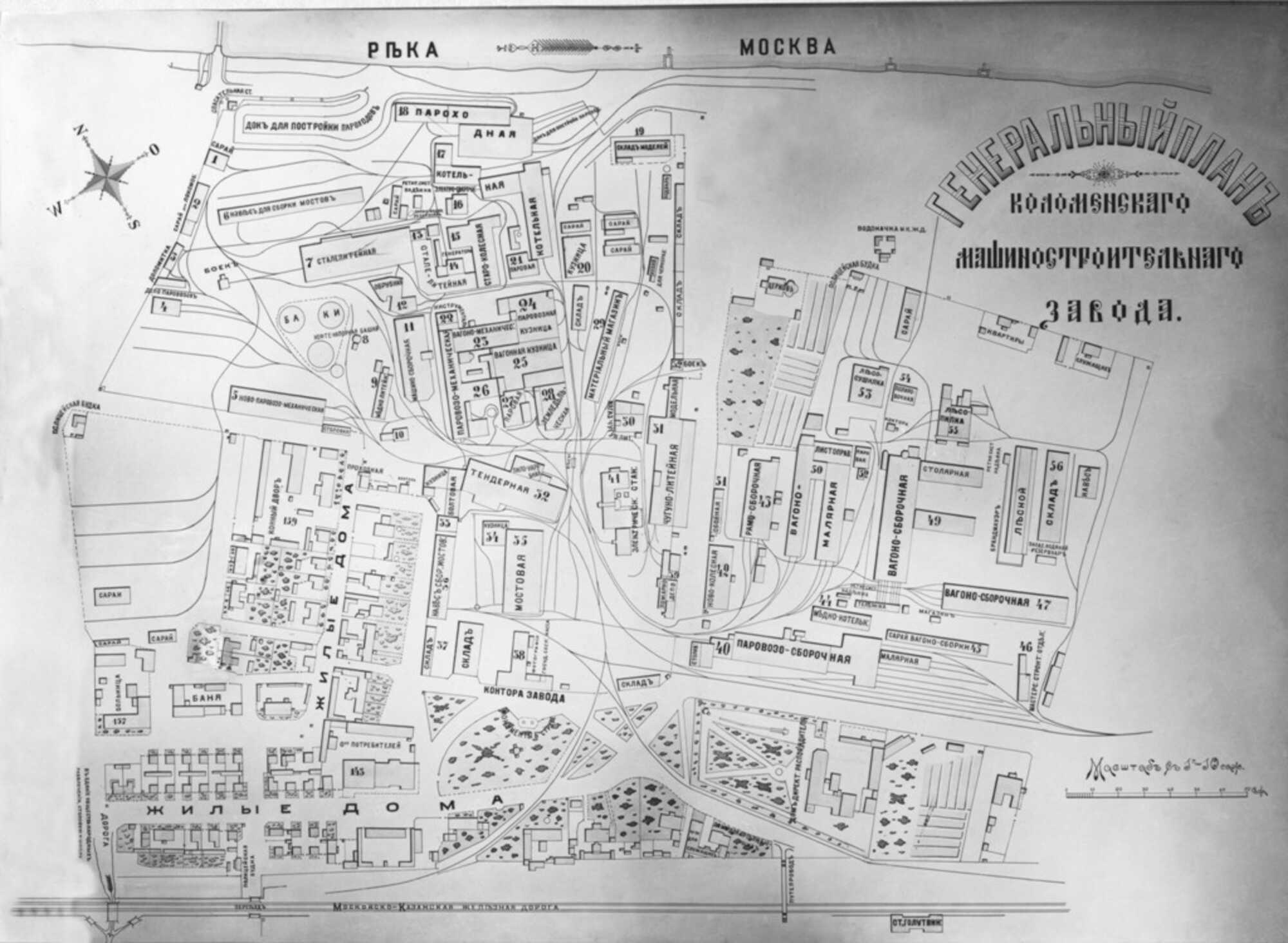
Kolomensky Machine-Building Plant

During the First World War, the plant fulfilled a huge order for the construction of steam locomotives (750 mm gauge) for military field roads (factory types 78 and 86) in the amount of 476 units.

Maltsov Plant in Lyudinovo

Bryansk Plant of the Bryansk Plants Society

In total, the plant built about 5,060 locomotives.

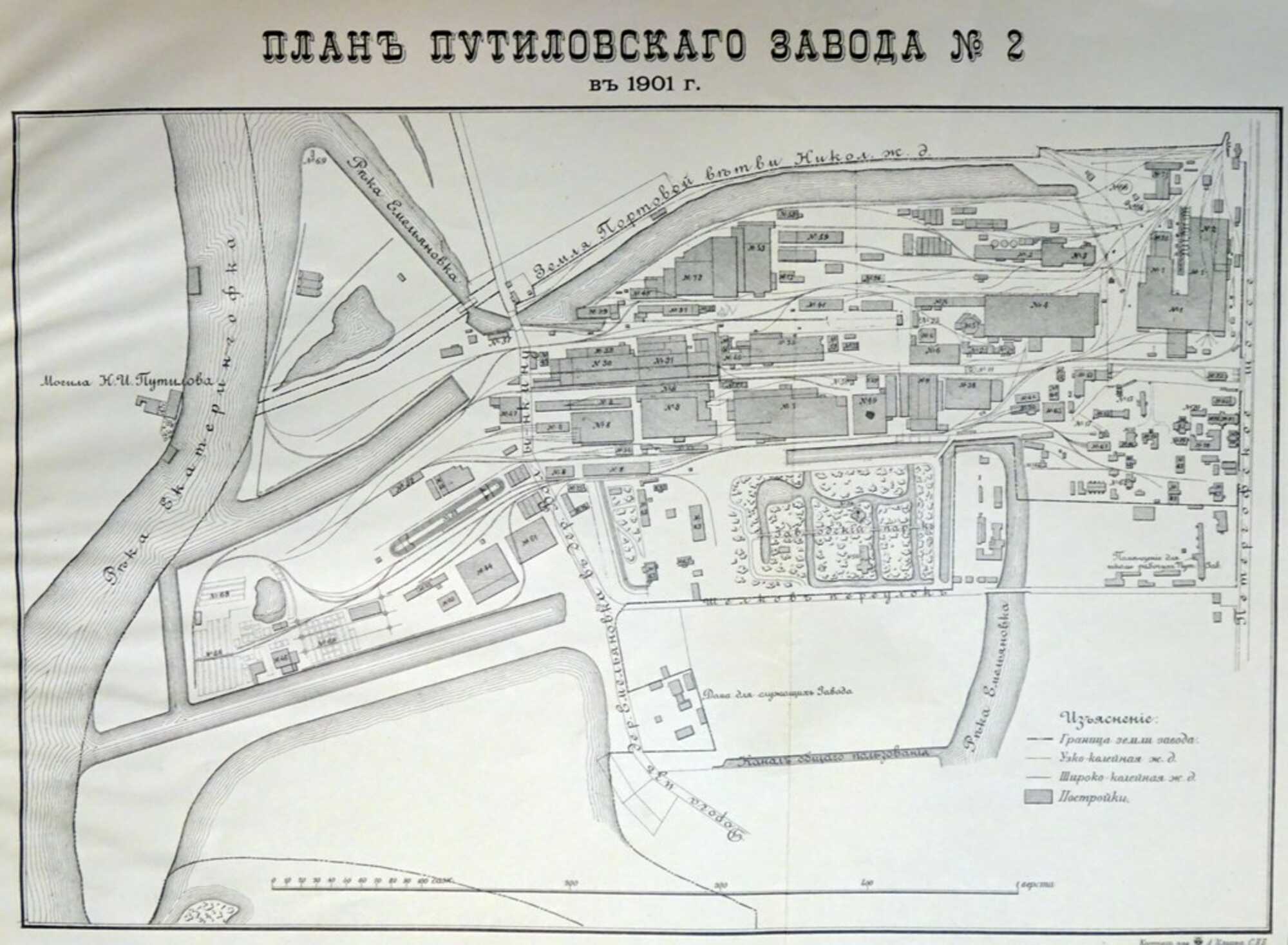
Putilov Plant in St. Petersburg

With its powerful steel foundry, the plant manufactured locomotives of complex designs. In total, the plant produced 2,593 locomotives.

Hartmann Machine-Building Plant in Lugansk

In total, the plant built 16,650 steam locomotives.

Sormovsky Plant in Nizhny Novgorod

The first independent project was the passenger locomotive of the S series (Sormovsky), which brought the plant well-deserved fame.

Steam Locomotive Building and Mechanical Plant of the Russian Locomotive Building and Mechanical Society in Kharkov

After the end of the Great Patriotic War and the restoration of the plant, it was re-profiled to produce diesel locomotives.

In total, the plant built about 5,800 locomotives.

Shipbuilding and Mechanical Plant in Nikolaev

Novocherkassk Locomotive Plant

Murom Locomotive Plant

Krasnoyarsk Locomotive Plant

Ulan-Ude Locomotive Plant

Railway Workshops

Private railways had their own policies regarding the types of rolling stock they used, which sometimes required the construction of multiple locomotives.

Parameters

Technical
specifications

Drawings
and diagrams

History

Chronology

  1. 1757 In 1757, Count P. I. Shuvalov received permission from Empress Elizabeth Petrovna to build the Votkinsk Ironworks. In 1813, the plant began industrial production of steel.
  2. 1789 The plant's history dates back to 1789, when an iron foundry was organized in Kronstadt.
  3. 1801 This plant originates from the cast iron foundry in Kronstadt, which was moved to the Peterhof highway in 1801.
  4. 1824 In 1824, after a terrible flood in Saint Petersburg, a new location was chosen for the plant. On September 7, 1826, the foundry of the plant was ceremonially launched.
  5. 1839 In 1839, Sergei Ivanovich Maltsov built a rail rolling plant in Lyudinovo and in 1841 received the first Russian rails, which were laid on the Petersburg-Moscow (later Nikolaev) railway under construction.
  6. 1843 In 1843, the plant was transferred from the Department of Mining and Salt Affairs to the Department of Communications. Due to the change in profile, the plant was renamed the Aleksandrovsky Mechanical Plant. According to the contract concluded by the government with American concessionaires for a period of 6 years and subsequently repeatedly renewed, they were obliged to manufacture locomotives and cars for the Saint Petersburg-Moscow Railway, equip the plant with all the necessary equipment and train personnel.
  7. 1844 The plant was founded by Maximilian Joseph Eugen August Napoleon Beauharnais, Duke of Leuchtenberg. The Duke became interested in the newly invented galvanoplastic technology of B.S. Jacobi and began actively experimenting in this field. In 1844, he decided to move from experiments to practice and in 1844-1846 he built the "Galvanoplastic, Foundry of Artistic Bronze Mechanical Institution", the reconstructed buildings of which stand on Staro-Petergofsky Prospekt in St. Petersburg.
  8. 1845 In March 1845, the plant built the first steam locomotive of the D series, type 0-3-0.
  9. 1853 The first steam locomotives built in 1853 were for operation on the Gatchina section of the St. Petersburg-Warsaw Railway. These were 11 freight and passenger locomotives of the 1-2-0 type.
  10. 1857 Nevsky Shipbuilding and Mechanical Plant in St. Petersburg In 1857, Major General P. F. Semyannikov and Lieutenant Colonel V. A. Politikoy bought a modest iron foundry from the Englishman L. Thomson.
  11. 1863–1869 The policy pursued by the Russian government in 1863–1869 was aimed at private railways acquiring rolling stock built by Russian factories. Despite the fact that the plant did not have its own pig iron or its own rolled metal production, it still received orders for the construction of 50 locomotives from the Kursk-Kharkov-Azov (K-Kh-A), Kozlovo-Voronezh-Rostov and Moscow-Brest Railways. The plant produced its first freight locomotive type 0-3-0 (factory type No. 1) for K-Kh-A based on drawings from the Kail (Paris) plant in 1869.
  12. 1866 In 1866, the Russian government took steps to organize new plants in Russia for the construction of locomotives and carriages, but first of all they began to re-equip existing plants.
  13. 1868 Having received an order in 1868 to build 0-3-0 type steam locomotives for state-owned railways, the plant built the first 16 locomotives (designed by the Borzig plant) for the Odessa Railway in 1870–1871.
  14. 1868 On January 12, 1868, the plant was bought by Nikolai Ivanovich Putilov. He had previously secured an order from the treasury for the supply of 2,800,000 poods of rails. From that moment on, the plant was called Putilov.
  15. 1869 The plant built its first two 1-2-0 locomotives in 1869. The total number of narrow-gauge steam locomotives built was about 2,500.
  16. 1870–1871 In 1870-1871, the plant built the first 20 freight steam locomotives of the 0-3-0 type for the Kiev-Brest railway. Until 1881, the plant built mainly locomotives of this type in various versions up to 70 units per year. In total, the plant built about 480 steam locomotives.
  17. 1872 Having slightly reworked the original design, the plant created its own project for a 0-3-0 freight locomotive. In 1872, it built 15 such locomotives for the Kozlovo-Rostov Railway.
  18. 1873 The Bryansk Rail Rolling, Ironworks, Steelmaking and Mechanical Plant Joint-Stock Company was founded in 1873 to smelt cast iron, manufacture iron and steel, and make products from them for sale.
  19. 1892 In 1892, the plant began producing steam locomotives. The plant built its first 28 four-axle freight locomotives for the Southwestern Railways. This was practically the last batch of pre-normal freight locomotives.
  20. 1893 In 1893, the plant began building steam locomotives, for which many new workshops were built: a locomotive mechanical workshop, a locomotive assembly workshop, a locomotive boiler room, a tank room, a model room, and others. The first steam locomotives built at the plant were normal-type locomotives of 1893, later designated as type Od. The plant built them for the Kharkov-Nikolaev, Samara-Zlatoust, Moscow-Kursk, Yekaterininskaya, and other railways.
  21. 1894 On July 15, 1894, the Charter of the Joint-Stock Company of Iron, Steel, and Mechanical Plants "Sormovo" was approved by the Supreme Authority. The main shareholders were large capital banks: International Commercial, Russian for Foreign Trade, and St. Petersburg Discount and Loan.
  22. 1894 In 1894, 1896 and 1897, 13 four-axle freight locomotives were built in the Odessa workshops of the Southwestern Railways, and in 1895, 6 passenger locomotives of the 2-2-0 type were built according to the design of engineer A. P. Borodin. In 1896, a passenger tank locomotive of the 1-3-1 type was built as an experiment in the Rostov workshops of the Vladikavkaz Railway.
  23. 1895 In 1895, a decision was made to organize locomotive construction production at the plant. Since 1896, construction began on a locomotive assembly shop, locomotive boiler room, half-timber shop, forge shop, and other workshops.
  24. 1897 The plant produced the first 28 "normal type 1897" steam locomotives of the OD series in 1898. Until 1908, the plant built freight locomotives of this type and, in parallel, built passenger locomotives of the 2-3-0 series AB and 1-3-0 series HB.
  25. 1897 On November 1, 1897, the plant was officially completed with construction and installation, and on December 5, the first steam locomotive of the OD series (normal type of 1897) was built at the plant. In 1899, the plant already built 191 units of this locomotive.
  26. 1899 On August 12, 1899, the foundation of the Main Building was laid, the construction of which was completed on May 28, 1901. Even before the construction was fully completed, the plant began building locomotives and in 1900 produced 48 normal type locomotives of the 1897 OD series. Until September 1907, the plant practically built only normal-type steam locomotives of the OD and OV series.
  27. 1901–1907 In 1901–1907, the plant built freight locomotives of the 1-4-0 series Ш type and passenger locomotives of the 2-3-0 series Г type, according to the design of the Bryansk plant, which had interchangeable boilers and cylinders. In parallel with the construction of steam locomotives, the plant manufactured military and civilian products.
  28. 1902 By 1902, the Bryansk Plant had become one of the plants well equipped with modern machinery and machine tools. This enabled it to produce up to 300 locomotives and 3,000 cars annually, not counting axles, switches, bridges, and artillery shells.
  29. 1905 In the field of steam locomotive construction, the plant is known for two of its developments: the 1905 normal type freight locomotive type 1-4-0 series Щ and the freight locomotive type 1-5-0 series SO (Sergo Ordzhonikidze).
  30. 1906 Until 1906, normal type O locomotives of different indices (Od, OD, OV) were its main products.
  31. 1906 The first locomotive of the Щ series was built in 1906. The plant worked on modernizing this locomotive until 1914. In total, the plant built 477 such locomotives by 1916.
  32. 1910 In 1910, the Nikolaev Shipbuilding Plant, commissioned by the Severo-Donetsk Railway and designed by the Kolomensky Plant (type 76), built a batch of 34 0-4-0 tank locomotives.
  33. 1912 In connection with the construction of the Moscow-Kazan Railway line Lyubertsy-Arzamas-Zeleny Dol, there was a need to build new railway workshops for the repair of steam locomotives. The line from Lyubertsy to Arzamas was opened for traffic in October 1912.
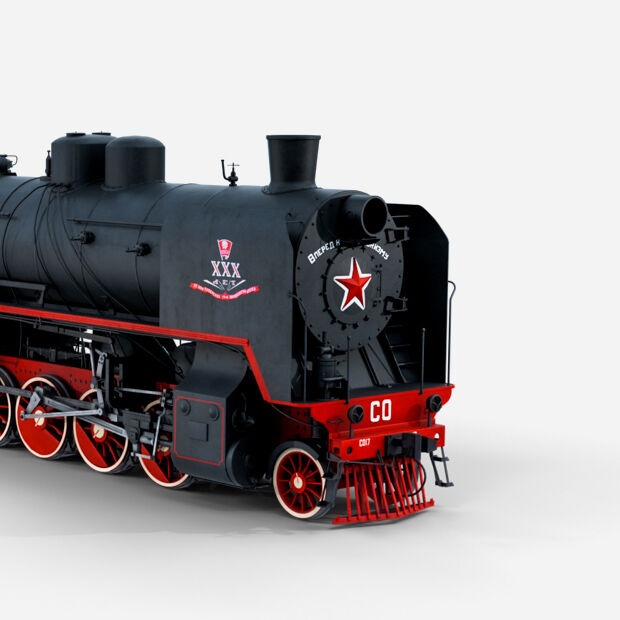
  34. 1916 From 1916 to 1935, the plant built almost exclusively freight locomotives of the E series of various indices, and from 1936 to 1941, the plant built freight locomotives of the SO17 and SO19 series.
  35. 1917 The plant gained fame at the beginning of the construction of the legendary 0-5-0 freight steam locomotives of the E series at this plant. By 1917, the plant managed to build just over 2,000 steam locomotives.
  36. 1917 The Podolsk Locomotive Plant was founded before 1917 as the main workshops of the Moscow-Kursk Railway. In 1919, it was launched as the Podolsk Locomotive Plant, which was engaged in the repair of steam locomotives. In 1933, the plant began building steam locomotives for the 750 mm gauge according to the design of the Kolomna Plant (type 159). The plant continued to manufacture these locomotives, which were so essential for construction sites and industry, until 1941. In total, it built 665 locomotives of this type, making improvements and changes to its design.
  37. 1923 In 1923, the plant was renamed the Krasny Profintern plant.
  38. 1926 In 1926, the workshops were transformed into the "F.E. Dzerzhinsky Locomotive Repair Plant". In 1930, the plant was no longer subordinate to the M-Kaz. d. and transferred to the All-Union Association of Repair Plants.
  39. 1932 The Novocherkassk Locomotive Plant was founded during the period of active industrialization of the country within the framework of the First Five-Year Plan. In 1932, by the decision of the Council of Labor and Defense dated May 5, 1932, its construction was launched. Completion of construction and release of the first locomotives was scheduled for the second five-year plan.
  40. 1932 In July 1932, construction of the Verkhneudinsk Locomotive and Carriage Repair Plant began. On June 1, 1934, the first locomotive was repaired at the plant. In the same year, due to the change of the city's name, the plant was renamed the Ulan-Ude Locomotive Repair Plant (UUPRZ).
  41. 1933 The new life of the enterprise began in 1933, when a giant plant was built on the site of the old plant for the construction of powerful freight steam locomotives of the FD series (Felix Dzerzhinsky) and passenger steam locomotives of the IS (Joseph Stalin). The production capacity was designed to produce more than 1,000 steam locomotives per year.
  42. 1934 The plant produced the first locomotive of the SO series in 1934 and built them in various modifications until 1941.
  43. 1936 On May 1, 1936, the plant released the first three narrow-gauge locomotives of type 159 designed by the Kolomensky Plant. Since the beginning of 1937, the plant switched to the production of industrial tank locomotives of the 9P type, designed by the same Kolomna plant. By 1938, the plant had produced 84 of these locomotives (No. 6-18-01–6-18-84). Work on improving these locomotives at the plant was stopped, as it was transferred to the production of defense products.
  44. 1937 In 1937, locomotive construction at the plant was interrupted. It reoriented itself to the production of tender condensers for SOK series locomotives and military products.
  45. 1941 During the Great Patriotic War in 1941, by the decision of the State Defense Committee, the Krasny Profintern Plant of N.K.T.M. was relocated from the city of Ordzhonikegrad (the city of Bezhitsa from 1936 to 1943) to the city of Krasnoyarsk. In 1943, it was possible to assemble the first nine unfinished freight locomotives of the SO series (Sergo Ordzhonikidze) from the removed unfinished freight locomotives. In 1944, eight more, and in 1945, three. In total, the plant built 323 locomotives of this type by 1951.
  46. 1941 In 1941, part of the production base and unfinished locomotives of the locomotive departments of the Voroshilovgrad (Lugansk) and Kharkov Locomotive Plants were evacuated to the plant. In 1942, the plant completed the construction of four FD21 series locomotives and one IS21, which were not completed at the Voroshilovgrad plant. Since 1943, UUPRZ, in addition to fulfilling military orders, repairing and completing locomotives, began preparing for serial production of medium-power freight locomotives of the 1-5-0 series SO (Sergo Ordzhonikidze). Serial production of these locomotives began in 1946, and by 1951, 506 locomotives of this type were built at the plant.
  47. 1946 Since 1946, the plant switched to the production of freight locomotives of the L series, which it built until 1951.
  48. 1946 In 1946, the plant received a new name - Murom Locomotive Plant. It began building a shunting locomotive 9P type 0-3-0 and with a capacity of 300 hp according to the design of the Kolomna plant. In total, the Murom plant built 2,736 locomotives of this series.
  49. 1946 In 1946, as part of the program for the development and construction of experimental freight locomotives of varying power and axle load of the wheelset on the rail, the Ulan-Ude plant was tasked with designing and building a freight locomotive with an axle load of 23 tf. The 1-5-2 locomotive was built on June 18, 1949.
  50. 1947 Since 1947, after the restoration of the plant, it switched to the production of electric locomotives.

    Podolsk Locomotive Plant
  51. 1951 The last locomotive at the Sormovsky plant - the Krasnoye Sormovo plant - was built in 1951. In total, the plant built about 3,700 locomotives.