Today the museum is open from 10:00 to 18:00

Map

Exhibit description

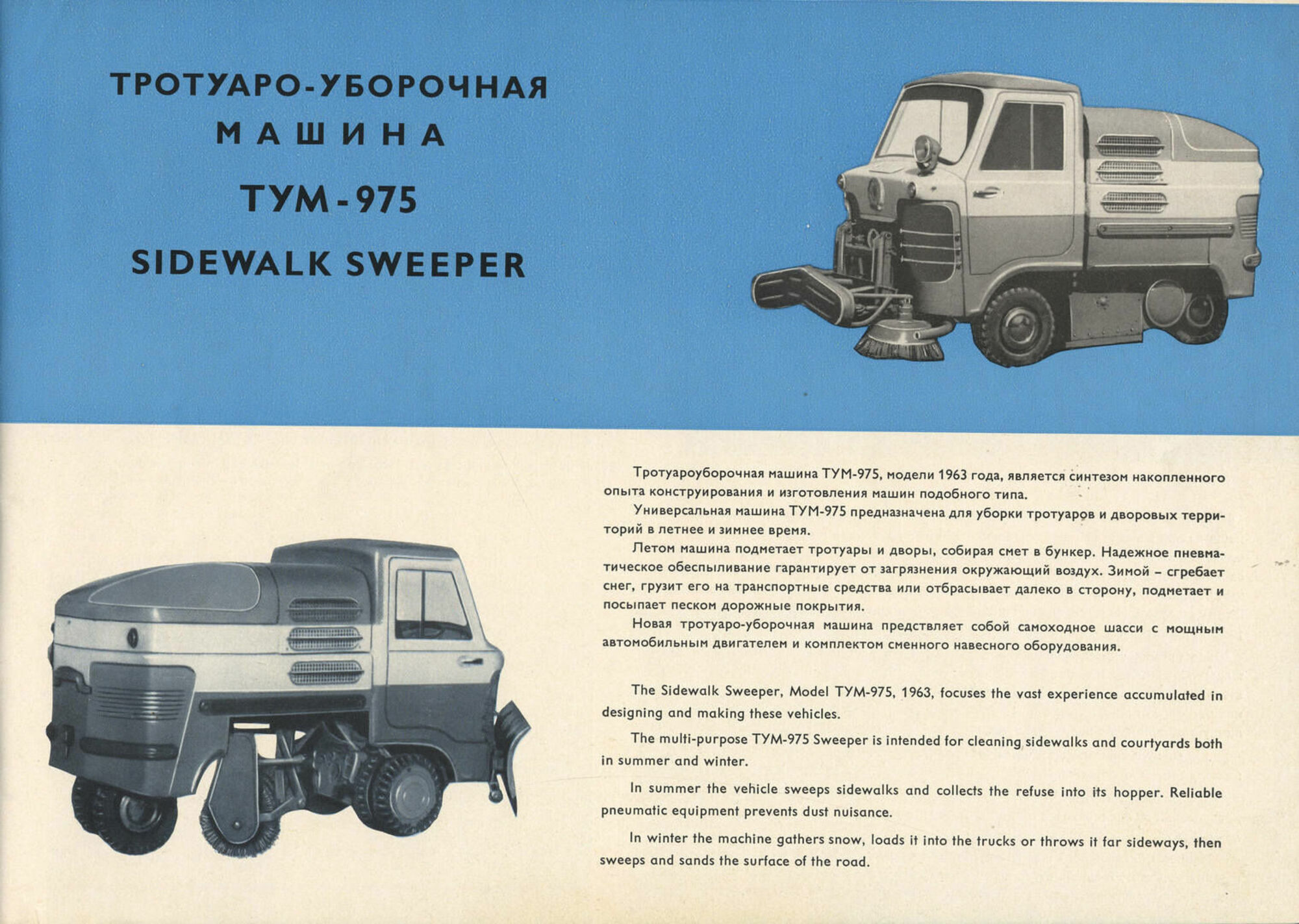
Pavement cleaning machine TUM-975

What kind of beast is this?

One of the unusual exhibits of the railway museum was a sidewalk cleaning machine TUM-975, donated for storage by a private individual. Such compact multifunctional devices could be seen on the streets in the 1970s. They were an interesting model in appearance and design.

In the 1950s the Moscow City Executive Committee intended to radically solve the issue of sidewalk cleanliness. Street and road cleaning had already been mechanized, but in courtyards and on sidewalks there was nothing to replace the manual labor of janitors. For this purpose, it was decided to create a special municipal machine: universal, multifunctional, suitable for work all year round. The development was carried out by the Experimental Mechanical Plant of the Technical Department of the Moscow City Council.

The designers took motorcycle units as a basis, in which they installed the engine of the Moskvich car, first the 407th, and then the 408th model. A comfortable heated cabin was provided for the worker operating the machine. Hydraulics were responsible for raising and lowering the working parts of the TUM-975.

The first experimental samples appeared in 1957 After testing and fine-tuning, small-lot production was established at several capital auto repair plants. The largest number of TUM-975 machines were manufactured at the Moscow Mechanical Plant "Red Route" of the Ministry of Railways. They were used not only in yards: some of the machines worked at train stations until the end of the 1980s, and the last of them worked in St. Petersburg at the Kirovets stadium in the mid-1990s.

The TUM-975 sidewalk cleaning machine is an unusual exhibit for a railway museum, where it was donated for safekeeping by a private individual.

These small, nimble machines worked on the streets and at railway stations in the seventies. The TUM-975s are curious in their design and attractive in appearance. They were produced in small batches, and at several factories.

Parameters

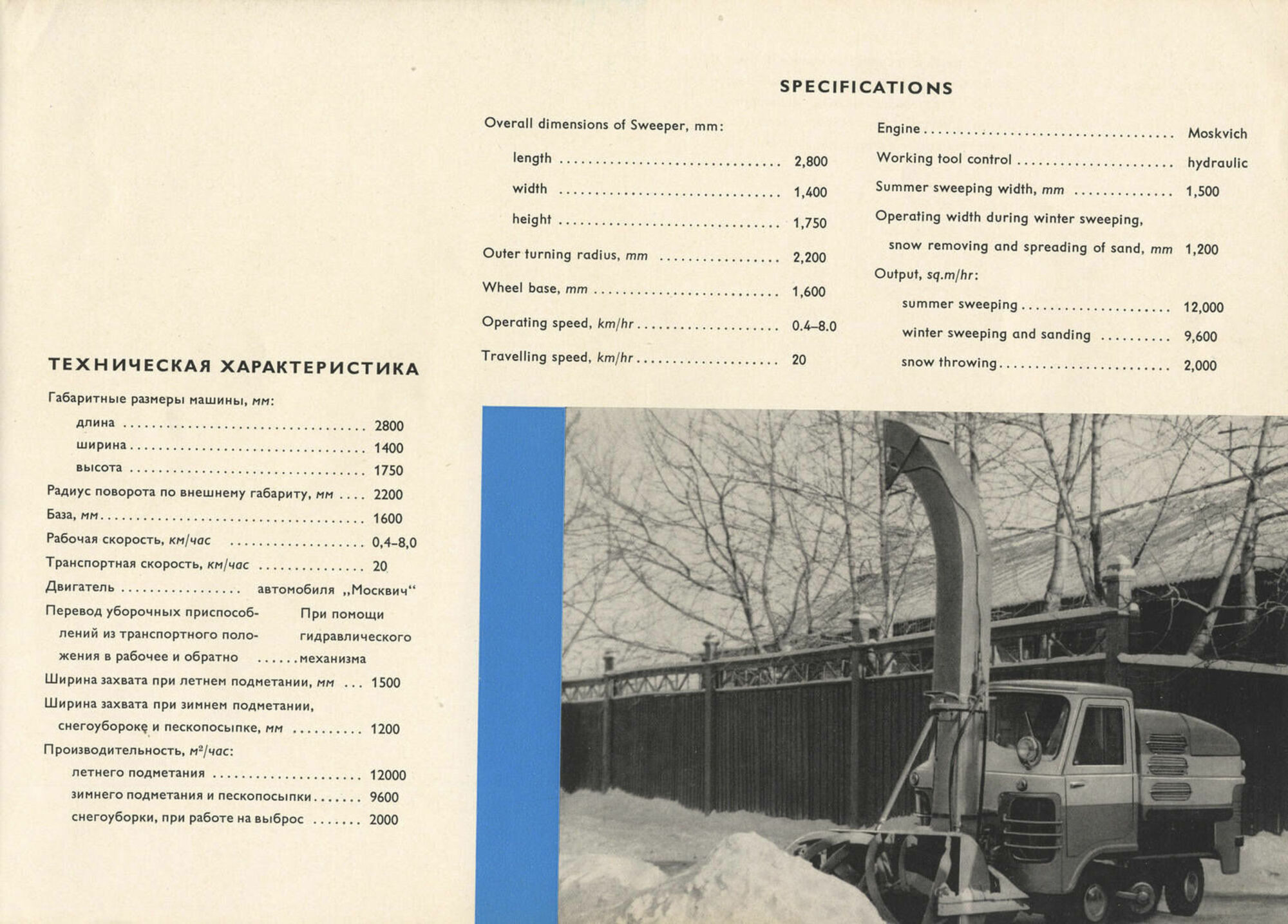
Technical
specifications

Drawings
and diagrams

History

Chronology

  1. 1950s In the 1950s, the Moscow City Executive Committee seriously considered the issue of the cleanliness of city streets and sidewalks. Street and road cleaning had already been mechanized, and there was nothing to replace the manual labor of street cleaners in courtyards and on sidewalks. For this purpose, they decided to create a special municipal machine: universal, multifunctional, suitable for work all year round.
  2. 1957 The development was carried out by the experimental mechanical plant of the technical department of the Moscow City Council. The first experimental samples appeared in 1957. Then, after testing and fine-tuning, small-lot production was set up at several Moscow auto repair plants, including the Aremkuz body plant. The largest number of TUM-975 vehicles were manufactured at the Krasny Put Moscow Mechanical Plant, which was part of the Ministry of Railways.
  3. 1980s Some of these vehicles worked at train stations until the end of the 1980s, and the last of them worked in St. Petersburg at the Kirovets stadium until the mid-1990s.