Today the museum is closed

Map

Exhibit description

Plough snowplow S.Zap 4022 Björk’s

Classic example

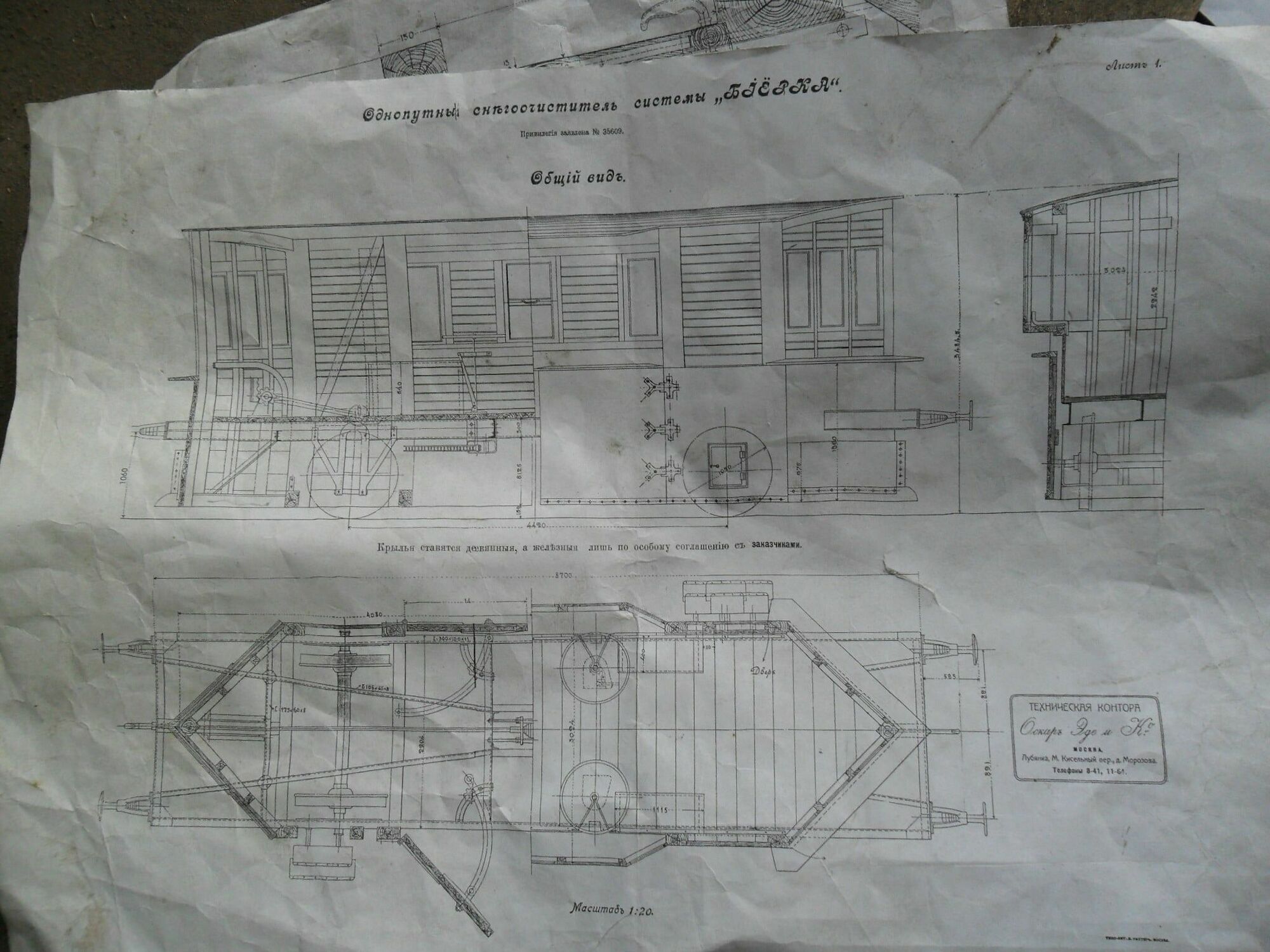
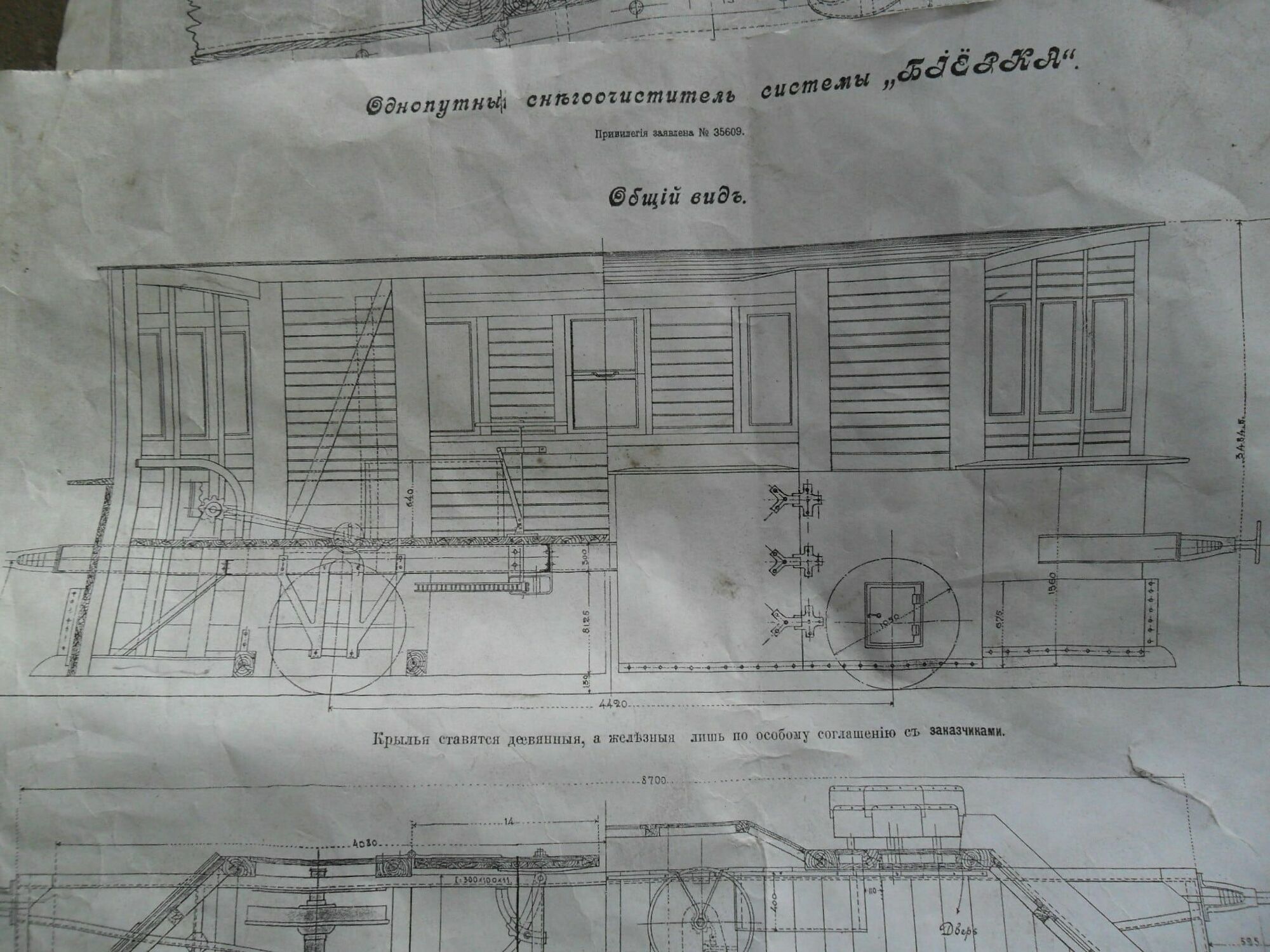
The single-track snowplow on display at the museum is one of the last orders for classic Björkö plows. It was built at the Krasnoye Sormovo plant in 1921. The snowplow was transferred to the museum from the Boksitogorsk reinforced concrete plant in 2004. and repaired in 2015–2016.

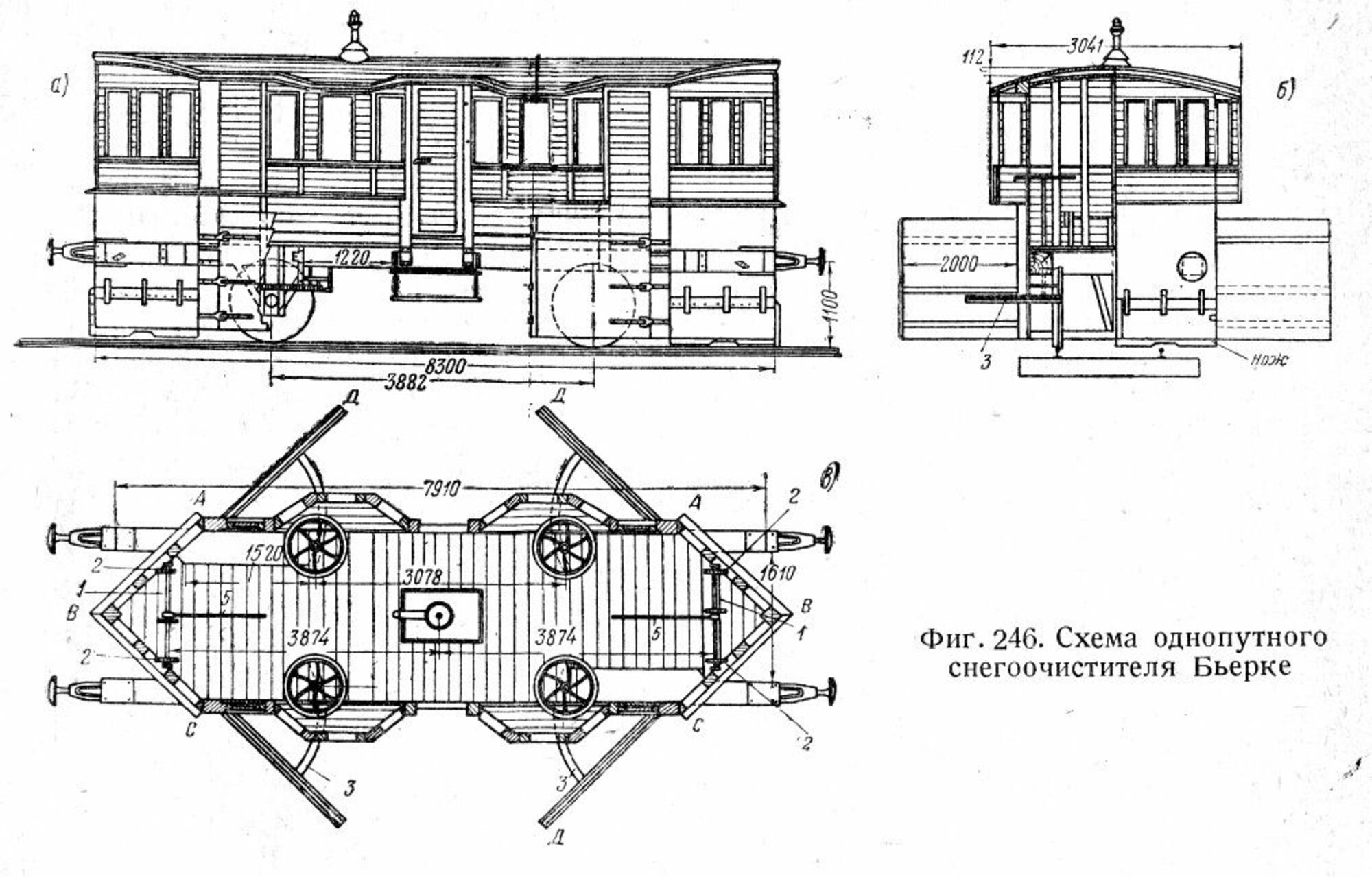
Unfortunately, history has not preserved the name of the Finnish engineer Björkö, after whom the snowplow was named. His system looked like a wagon with a pair of moldboards on each side. The plow had the ability to additionally extend (open) the wings to increase the clearing strip. There were two design options: for clearing single-track and double-track sections.

The wings were raised manually, which required a lot of attention. Special portable warning signs were installed at switches and crossings. The external windows above the wings were not for viewing: in their space there were steering wheels that spread the wings to the sides. Then the wings were raised using a lever transmission, which was located in the middle of the plough. For heating, a dry stove was installed inside the car.

And what was before?

Before the Björké plough and its modifications came to the rescue, snow removal machines based on old steam locomotives were made on the Petersburg-Moscow railway in the 1850s. On the Moskovskoe-Vindavo-Rybinskoye Railway, mounted ploughs for locomotives were used. However, they could not cope with snow drifts two metres or more high. At the end of 1885 the South-Western Railways acquired a Danish rotary snowplow of the Leslie system. Its weight in working condition reached 52 t, and the steam engine could develop a power of up to 400 hp. Since 1902 such snowplows began to be built by the Putilov Plant.

Since 1897 they began to use a wagon snowplow of the Anatoly Burkovsky system, which was considered the most advanced at that time. To ensure timely lifting of the moldboard knife, the machine was equipped with a roller. This prevented collisions with switches and crossings. As a result, the plow could work at night. However, the snowplow had its drawbacks: the moldboard blade was only suitable for clearing drifts of a small height — about 0.5 m.

In 1910 there were only 170 units of snow removal equipment on the entire Russian Railways network. Among them were 45 ploughs of the Burkovsky system, 18 ploughs of the Björké type, 58 mounted for the Moscow-Window-Rybinsk railway locomotives, 14 rotary of the Leslie system and other types.

In 1909, Anatoly Burkovsky acquired the privilege to manufacture Björké ploughs. At first, they were manufactured at the Kolomensky plant, but due to disagreements with the management, at the beginning of 1911, Burkovsky moved production to the Putilov plant.

In 1959 during the production of snow plows at the Tula plant, a pneumatic drive for controlling the wings was already used.

Parameters

Technical
specifications

Number of axles, pcs.
2
Height of cleared snow layer, m
0.5
Width of cleared snow strip, m
With open wings — 4.5; with closed wings — 2.2
Weight, t
15

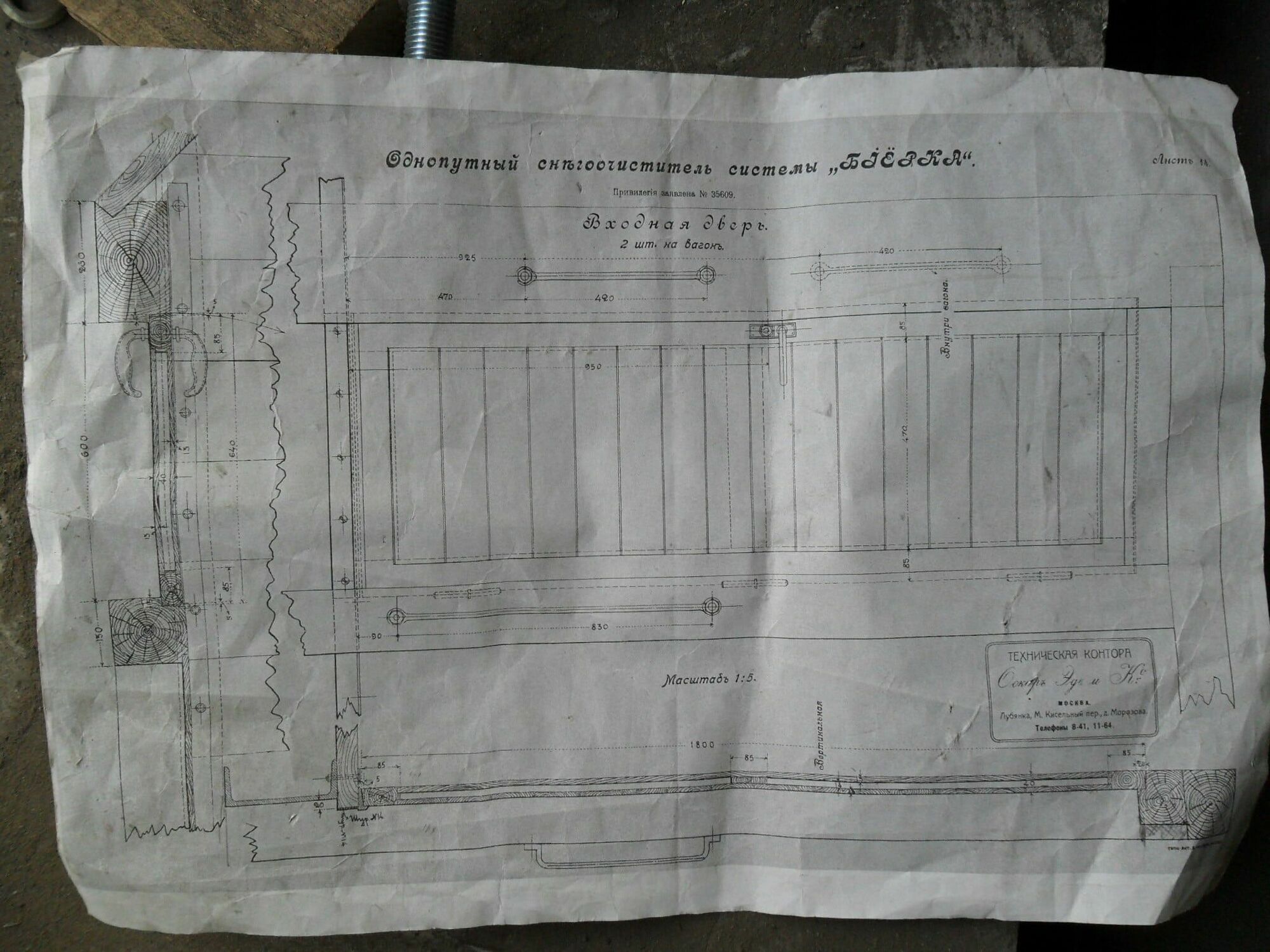
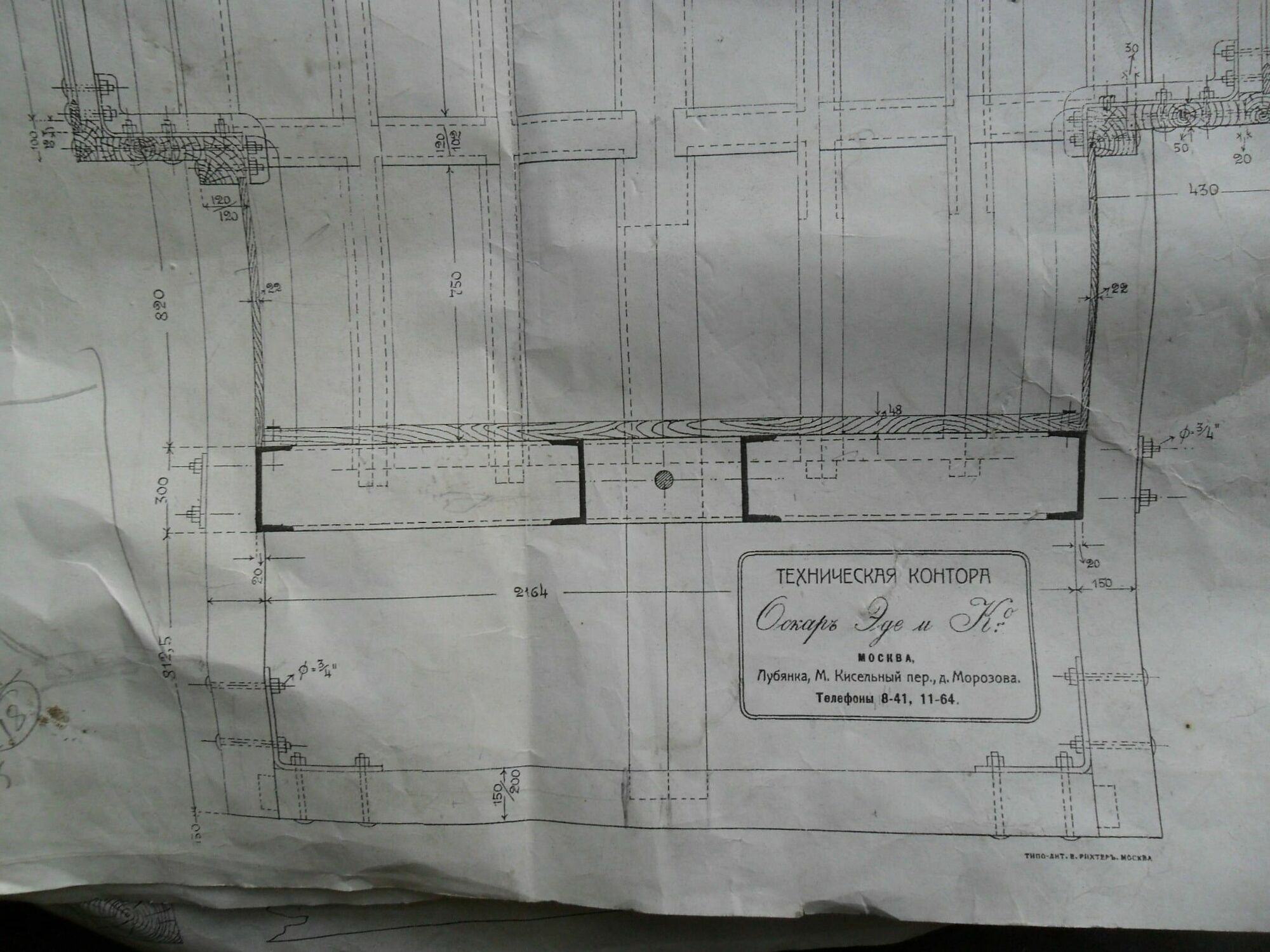
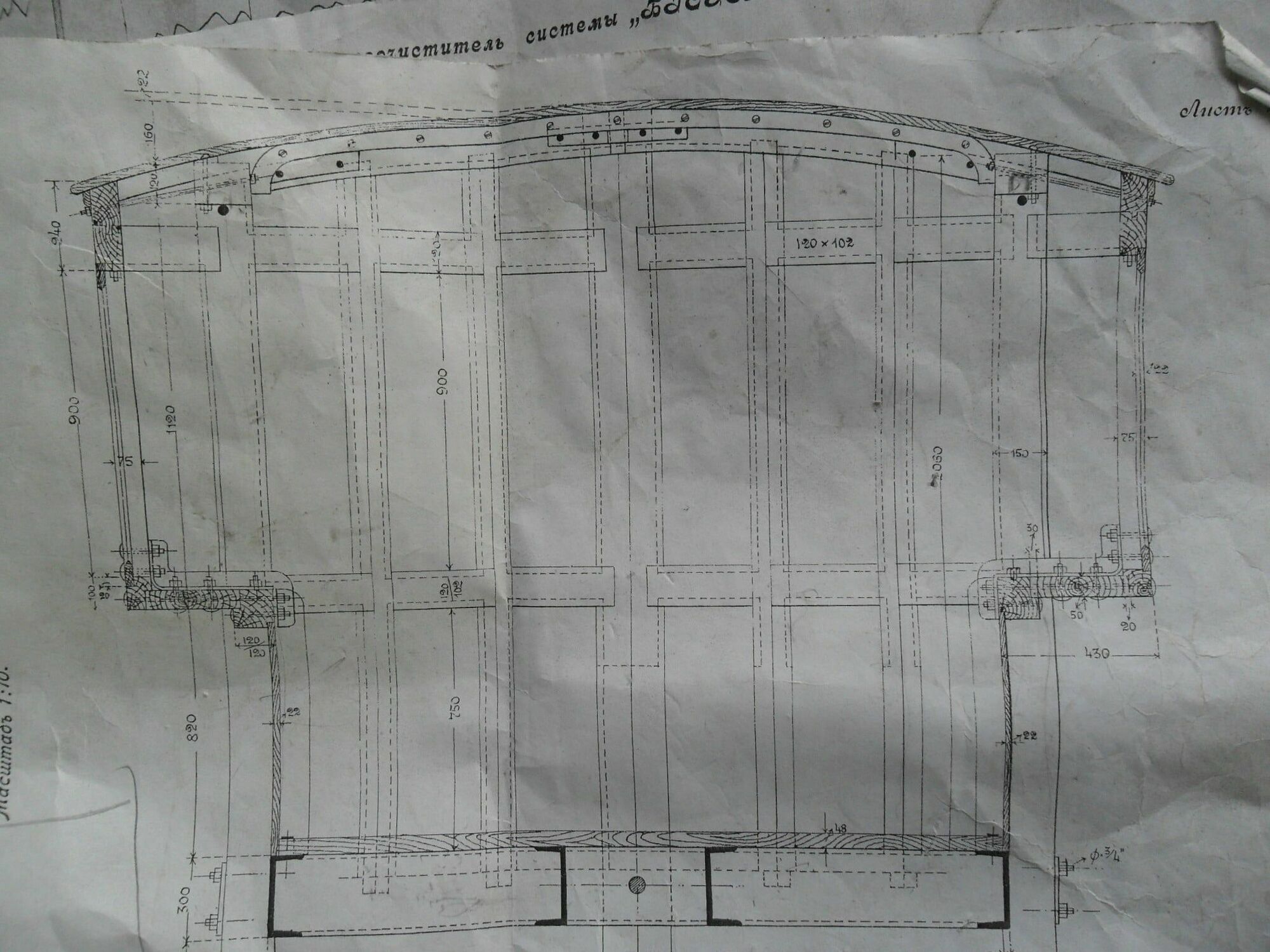
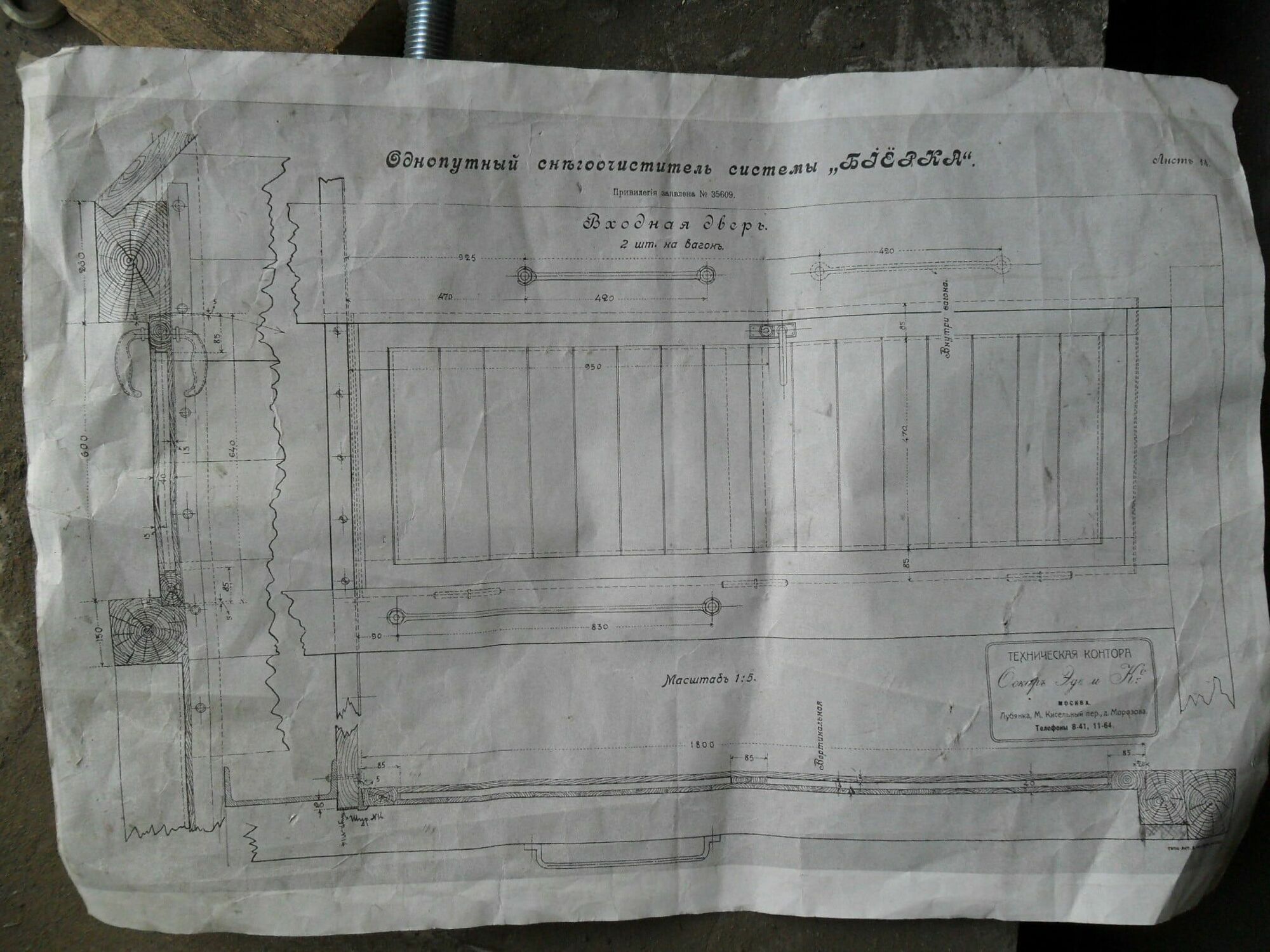
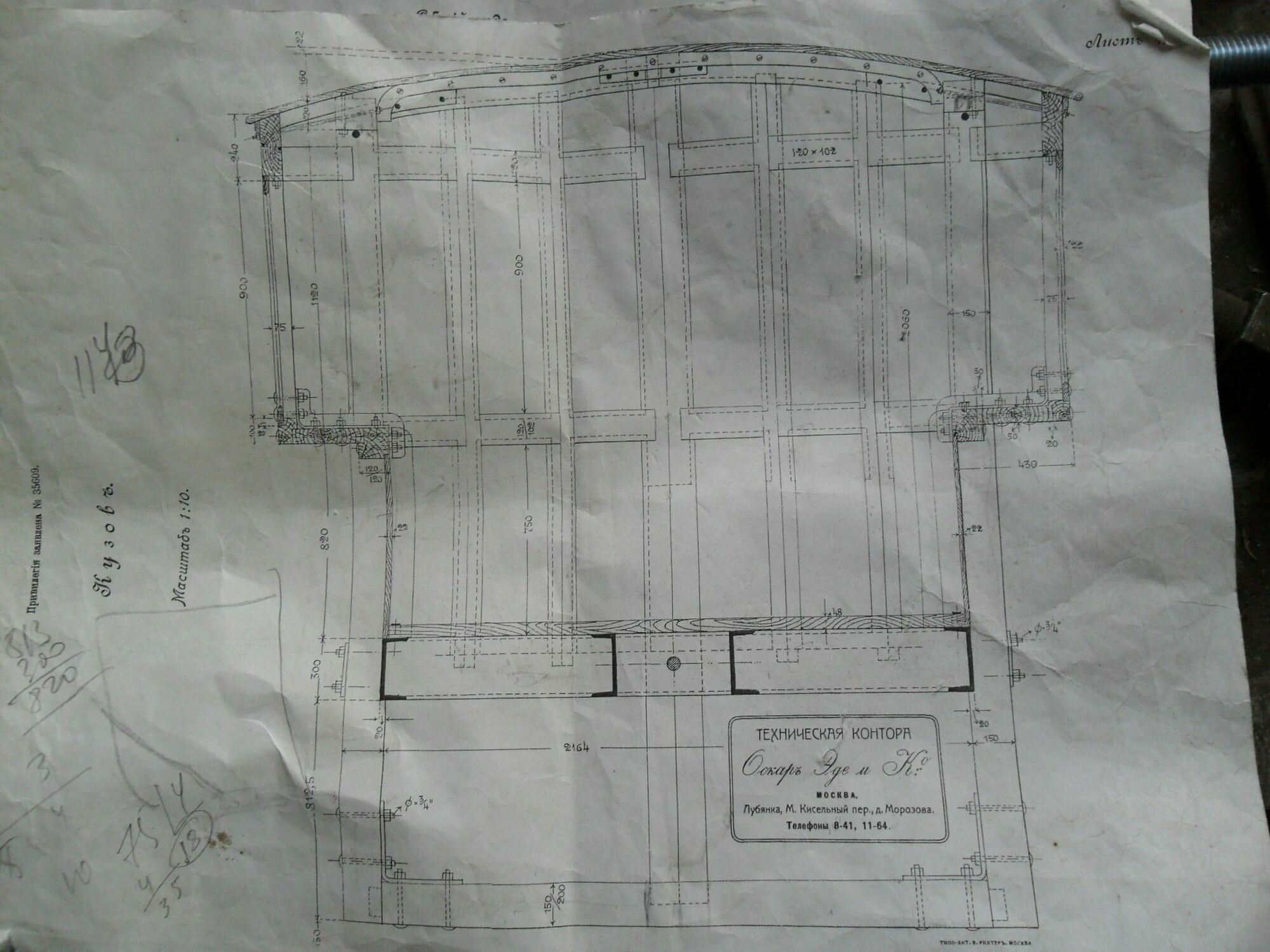
Drawings
and diagrams

History

Chronology

  1. 1850s In the 1850s, the St. Petersburg-Moscow Railway manufactured snowplows based on an old steam locomotive. The Moscow-Window-Rybinsk Railway used mounted plows for steam locomotives.
  2. 1885 A solution was needed to combat snow drifts two or more meters high. For this purpose, at the end of 1885, the South-Western Railways purchased a Leslie rotary snowplow, manufactured in Copenhagen at the Smith Mygend plant. Its working weight reached 52 tons, and the steam engine could develop up to 400 hp. Beginning in 1902, such snowplows began to be built at the Putilov Plant.
  3. 1897 Since 1897, Russian roads began to use a wagon snowplow based on the A.E. Burkovsky system. At that time, it was the most "perfect" model. The snowplow blade was located under the carriage floor, so the snowplow could clear small drifts - about 0.5 m. But it was not intended for large volumes of clearing. The snowplow was usually attached to trains as a tail car. To raise the blade in a timely manner, the snowplow was equipped with a roller, which, running over the stops in the inter-track space, raised them. This prevented the blades from running into turnouts and crossings. As a result, the snowplow worked without gaps and could clear the track at night.
  4. 1909 The snowplow of the Finnish engineer Björkö (name unknown) was patented, as was the Burkovsky snow plough. In 1909, A. E. Burkovsky acquired the privilege (patent) for the production of Björkö ploughs. Initially, their production began at the Kolomensky Plant, but due to disagreements with the plant's management, in early 1911 Burkovsky transferred production to the Putilov Plant.
  5. 1910 In 1910, there were only 170 units of snow removal equipment on the entire Russian Railways network. Among them were 45 Burkovsky ploughs, 18 Finnish Björkö ploughs, 58 mounted ploughs for the Moscow-Window-Rybinsk Railway, 14 Leslie rotary ploughs and other types.
  6. 1921 The presented single-track snowplow is one of the last orders for classic snowplows of the Björkö system. They were built by the Krasnoye Sormovo plant in 1921. The snow plough was transferred to the museum from the Boksitogorsk reinforced concrete plant in 2004 and repaired in 2015-2016.
  7. 1922–1923 In 1922–1923, 26 double-track and 5 single-track ploughs were produced at the Kolomensky Plant. In the 1930s, ploughs of this system were built in Latvia, at the Phoenix plant in Riga. They were exported to European countries and, possibly, to the USSR. That is why, for example, in Czechoslovakia these ploughs are called "Riga".