Today the museum is open from 10:00 to 18:00

Map

Exhibit description

Freight electric locomotive VL60K-065

Alternating Current

When designing the first electrified sections of railways in the USSR back in the 1920s, engineers understood that the use of direct current would not allow, even at a voltage of 3 kV to increase the carrying capacity of the lines by increasing the weight of trains and the speed of movement. Calculations showed that for a train weighing 10,000 tons on an incline at a speed of 50 km/h the traction current would be more than 6 kA, and this would lead to frequent placement of electrical substations and an increase in the cross-section of the copper contact wire.

However, there was no equipment for the transmission and use of alternating current, which could increase the voltage to 20–25 kV, and electrification began with direct current of 1.5 and 3 kV. Over time, some sections of the railways were converted to alternating current when freight turnover increased: in Kazan, Gorky (Nizhny Novgorod), Saratov, Tashkent. In 1995 the Zima - Slyudyanka section of the Trans-Siberian Railway was transferred, and in 2001 - the Murmansk - Loukhi section.

At the end of 1962 the Novocherkassk Electric Locomotive Plant (NEVZ) produced two VL60K electric locomotives with silicon rectifiers instead of mercury ignitron rectifiers. VL60K-002 was sent for testing, VL60K-001 after assembly was immediately put into operation on the North Caucasian Railway. In the second half of 1965 instead of VL60, the production of the VL60K model began with NB-412K traction electric motors with an hourly capacity of 775 kW. The total hourly capacity of the electric locomotive was 4,650 kW.

A total of 501 electric locomotives of the VL60K series were produced. All VL60s converted from ignitron rectifiers to silicon ones received the same name. Between 1962 and 1965, some VL60 electric locomotives were produced with a gear ratio of 2.73 and electropneumatic brakes for hauling passenger trains due to the lack of special AC passenger electric locomotives. They were assigned the VL60PK series. From 1957 to 1967 NEVZ manufactured more than 2,200 VL60 variants.

The VL60K-002 electric locomotive passed tests on the experimental ring of VElNII. The VL60K-001 electric locomotive, immediately after leaving the plant, was put into operation on the North Caucasian Railway.

A total of 501 VL60K series electric locomotives were produced. All previously produced VL60s received the same name. They were re-equipped from ignitron rectifier units to semiconductor (silicon) ones.

Parameters

Technical
specifications

Current type
Alternating
Supply voltage, kV/Hz
25/50
Traction transformer
OTS-5600/25
Traction electric motor
NB-412K
Electric motor voltage, V (traction motor)
1,600
Electric motor power, kW, hourly
800
Rated current, A, hourly
535
Anchor rotation speed, rpm
880
Electric motor weight, kg
4,850
Number of electric motors (traction motor)
6
Rectifier unit
VUK-60-3
Number of rectifier valves (traction motor)
1,120
Hourly mode traction force, kgf
22,800
Continuous mode traction force, kgf
16,600
Hourly mode speed, km/h
65
Continuous mode speed, km/h
71.1
Maximum speed, km/h
110
Length, mm
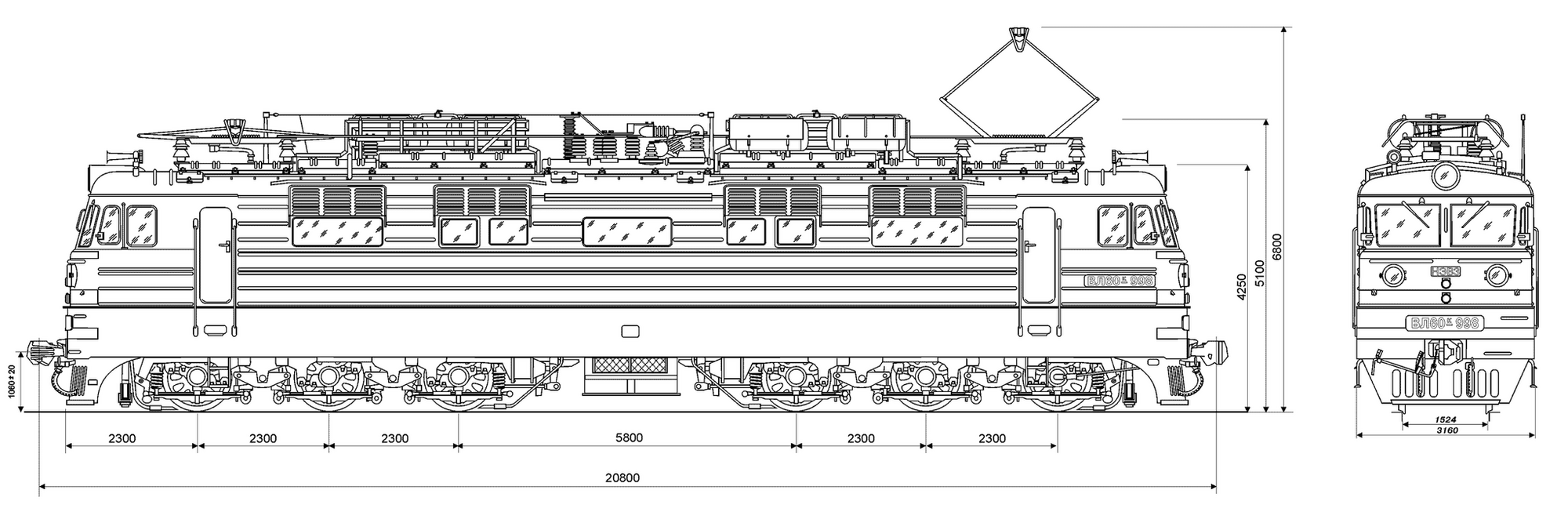
20,800
Height, mm
5,100
Width, mm
3,160
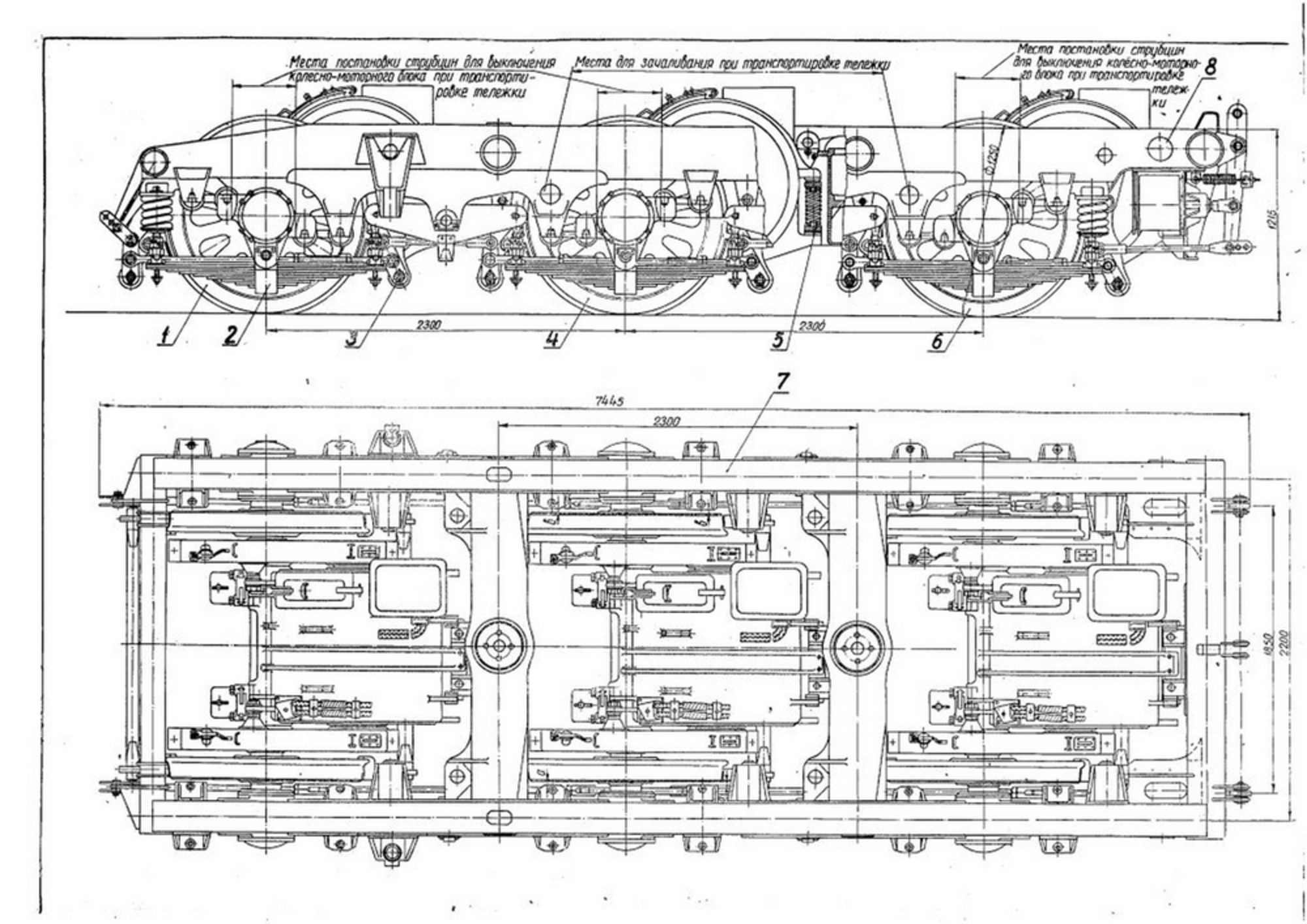
Wheel diameter, mm (traction motor)
1,250
Minimum radius of passable curves, m
125
Electric locomotive weight, t
138

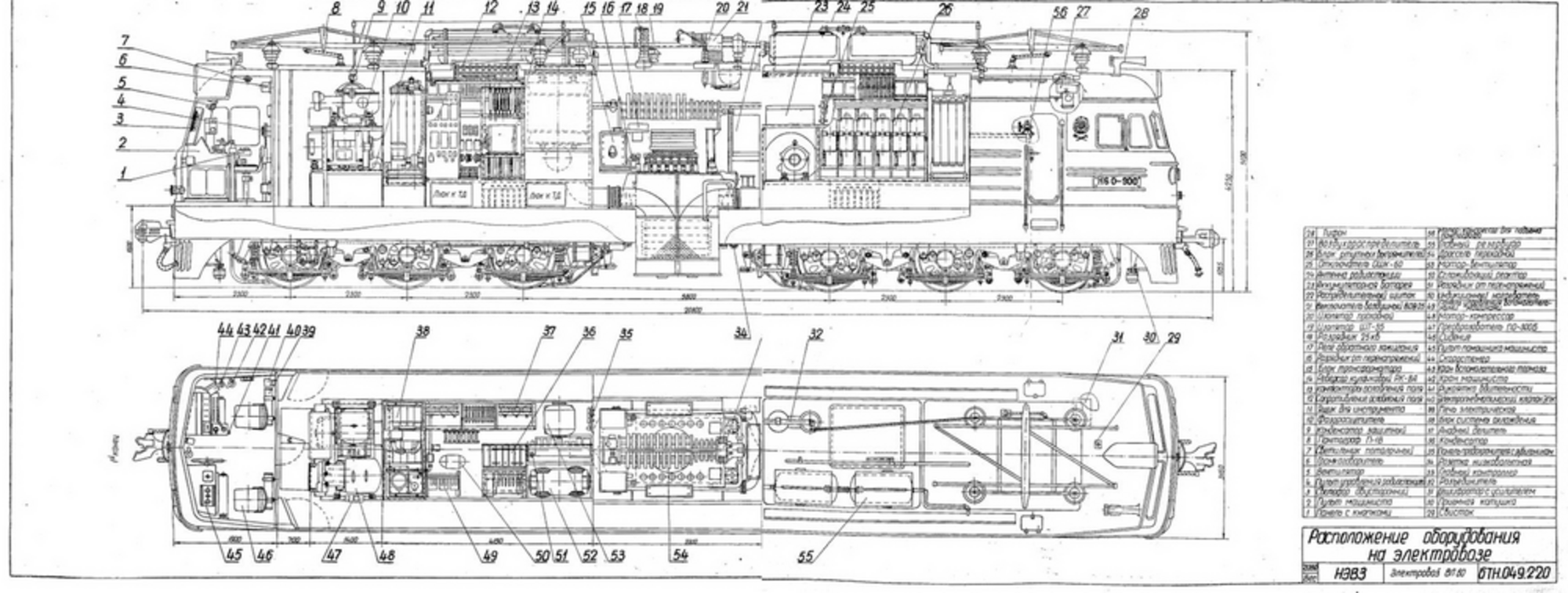
Drawings
and diagrams

History

Chronology

  1. 1952 The plant began designing them back in 1952 and in 1954 built the first two experimental electric locomotives H-O-001 and H-O-002. In total, from 1954 to 1958, the plant manufactured 12 such locomotives, which in 1963 received a new designation of the VL-61 series.
  2. 1955–1956 The development of using alternating current for locomotive traction began in 1955-1956, when the Ozherelye-Pavelets section near Moscow was electrified with 20 kV alternating current. It was soon increased to 25 kV. A small series of H-O electric locomotives was built for it - Novocherkassky, single-phase. They turned out to be quite efficient locomotives.
  3. 1956 The experience of operating the VL-61 electric locomotives was positive, and in 1956 they began developing a technical design for a new electric locomotive. The work was carried out at the Novocherkassk Electric Locomotive Plant (NEVZ) under the supervision of Chief Designer B. V. Suslov. After a broad discussion of the project, its design began in 1957.
  4. 1957 From 1957 to 1967, NEVZ manufactured more than 2,200 locomotives of this series.
  5. 1958 In December 1957 and February 1958, the plant produced the first two electric locomotives, which were assigned the H6O series, which stood for Novocherkassk, six-axle, single-phase. The letter O was perceived as zero, and in 1963 it was assigned the VL60 series - Vladimir Lenin, type 60. The first electric locomotives were built to operate at a voltage of 20 kV, since this was the voltage of the Ozherelye-Pavelets experimental section.
  6. 1960 The VL60K-065 electric locomotive was built at the Novocherkassk Electric Locomotive Plant in 1960. It worked on the Krasnoyarsk, East Siberian, Northern and Gorky railways.
  7. 1962 At the end of 1962, the plant produced two VL60K electric locomotives with silicon rectifiers instead of mercury ignitron ones.
  8. 1962 At that time, there were no special AC passenger electric locomotives. Therefore, from 1962 to 1965, some VL60 electric locomotives were produced with a gear ratio of 2.73 and electropneumatic brakes for driving passenger trains. They were assigned the VL60PK series.
  9. 1963 In 1963, NEVZ produced several more VL60K electric locomotives, and in the second half of 1965, instead of VL60 electric locomotives, the plant began producing VL60K electric locomotives. They had silicon rectifiers and NB-412K traction electric motors with an hourly capacity of 775 kW. The total hourly capacity of the electric locomotive was 4,650 kW.