Today the museum is open from 10:00 to 18:00

Map

Exhibit description

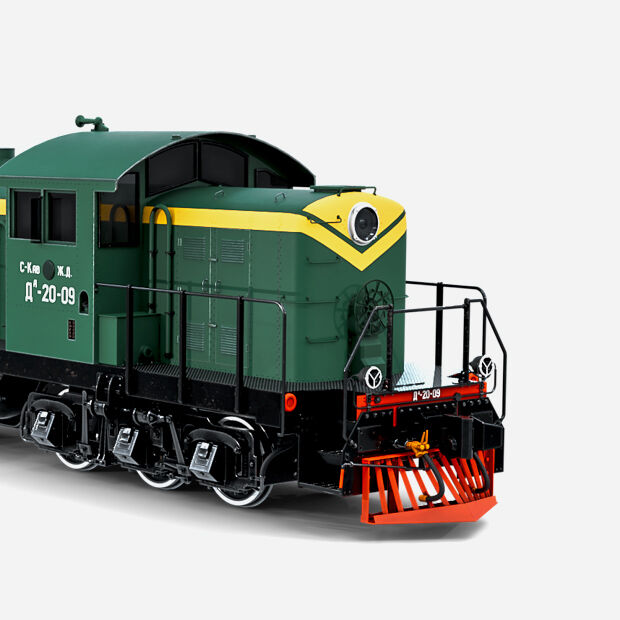
Diesel locomotive TGM1-575

With hydraulic transmission

TGM1 (diesel locomotive with hydraulic transmission, shunting, type 1) — the first serial Soviet shunting locomotive with hydraulic transmission. Initially designated as TGM. The project was carried out under the supervision of the chief designer of the Murom plant named after F.E. Dzerzhinsky A.M. Rusak. In total, from 1956 to 1972 the plant produced 3,368 diesel locomotives of the TGM1 series for industry, and from 1958 to 1963 — 36 diesel locomotives for the Ministry of Railways.

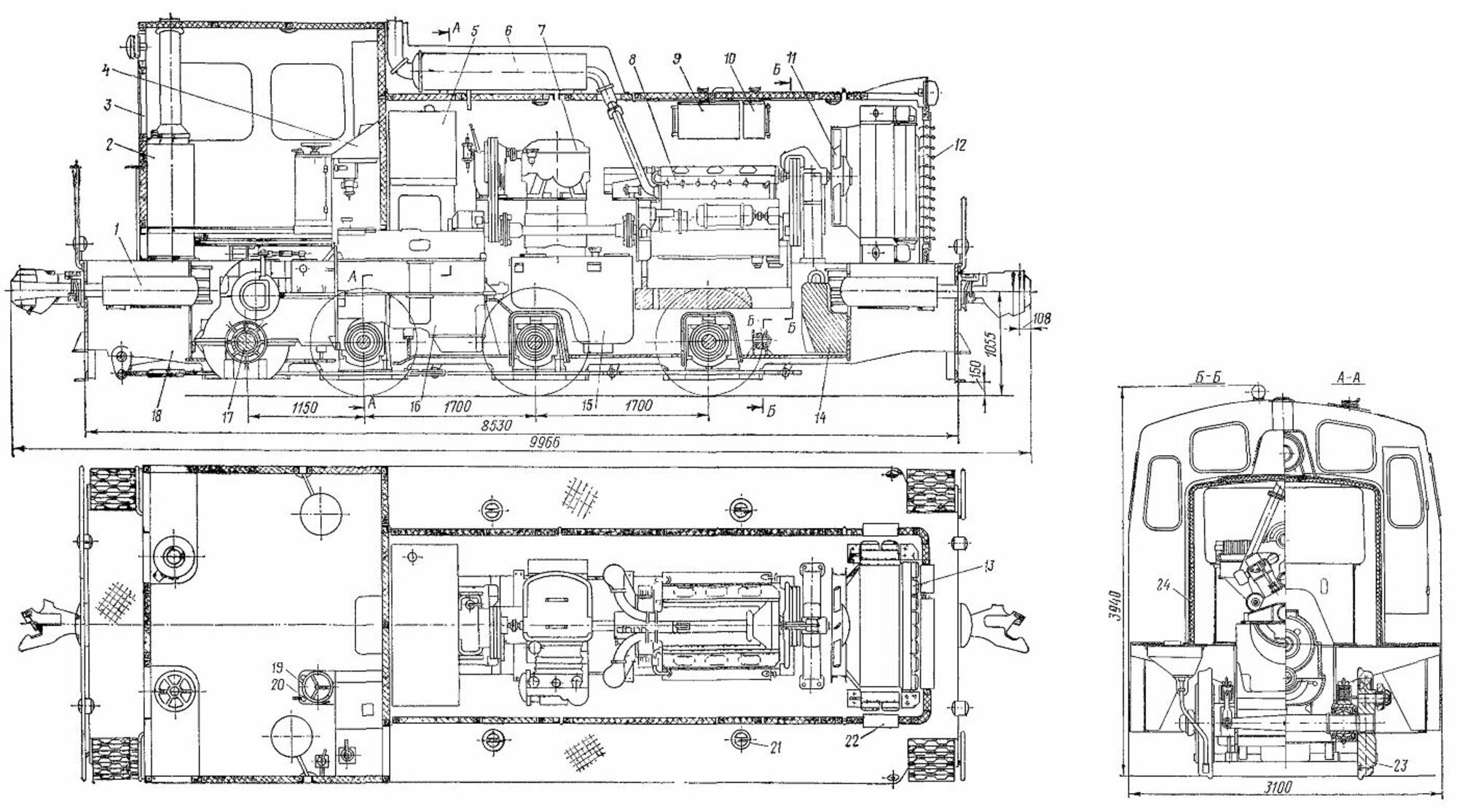
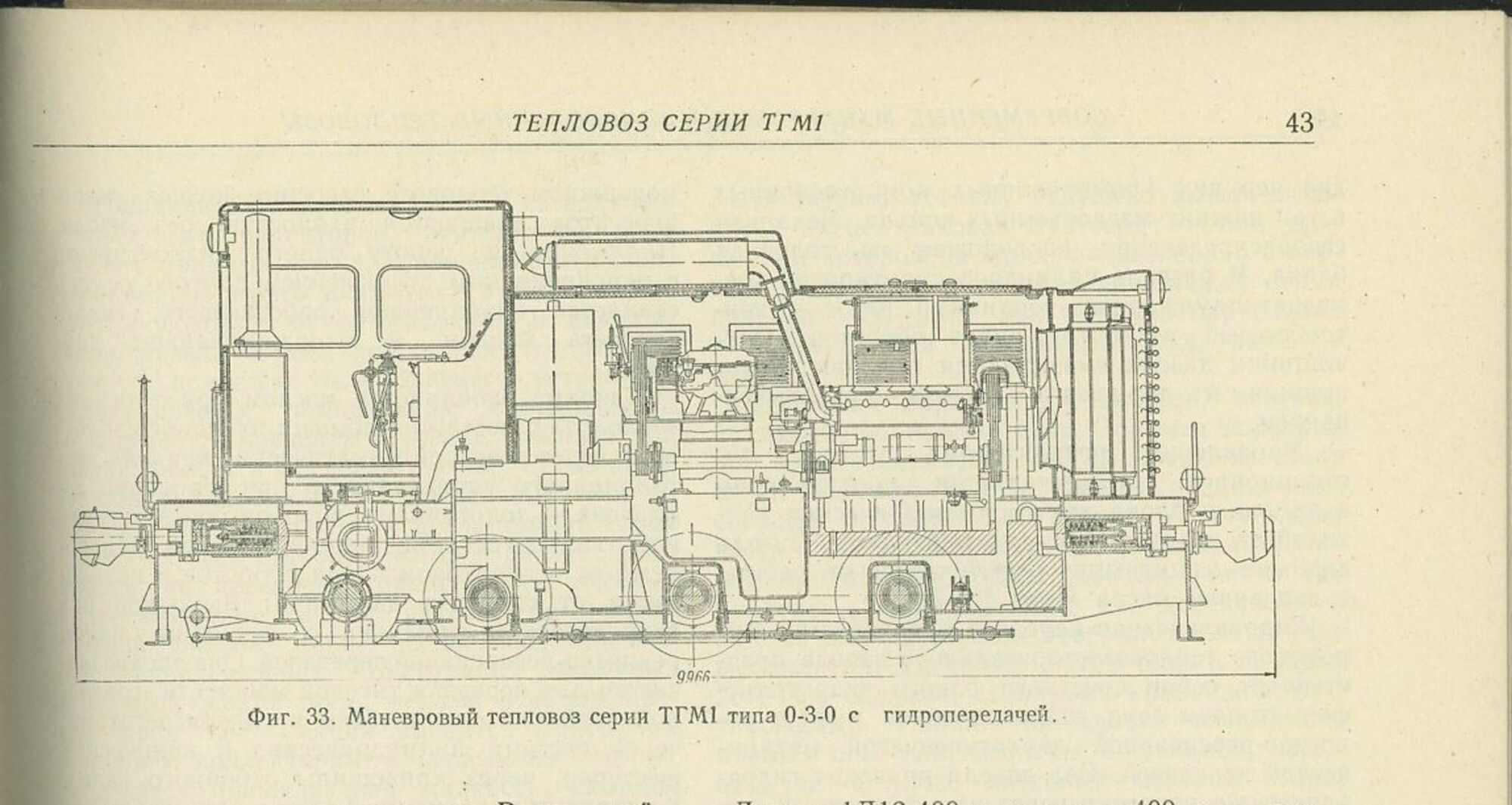
The locomotive is powered by a 1D12-400 diesel engine from the Barnaul plant with a capacity of 400 hp at 1600 rpm. Fuel consumption at full power is 170–180 g per hp per hour. The engine is started by an electric starter. The torque from the engine is transmitted to the breaker shaft via a step-up gearbox, a torque converter or one of two fluid couplings, a two-speed gearbox and a reverse gearbox. The latter is connected to the wheel pairs by means of a so-called group drive.

The 001 locomotive and some others were equipped with a Voith hydraulic transmission during the first two years of production. As the production of our own hydraulic transmission type GP-400 was mastered, it was installed on all diesel locomotives. It had the same landing places as the German one. The torque converter increased the torque when starting from a standstill by 4.8 times.

The locomotive in shunting mode developed a continuous traction force of 11,200 kgf at a speed of 5 km/h, and in train mode — 5,600 kgf at a speed of 10 km/h. Maximum speed in shunting mode is 30 km/h, in train mode 50 km/h. It was limited by the dynamic qualities of the locomotive. The locomotive could pass along curves with a radius of 60 m. The weight of the locomotive in service condition was 48 tons.

Locomotives 002 and 015 in 1957 were tested on the experimental ring of the All-Russian Research Institute of Railway Transport, where they showed the highest efficiency in train mode when operating on a hydraulic coupling - 30%. There is no comparison with a steam locomotive, where the maximum achieved efficiency was 9%.

In the museum

TGM1 575 was built by the Murom plant named after F.E. Dzerzhinsky in 1960. It was received by the museum from the Velikiye Luki locomotive depot of the October Railway in 1997.

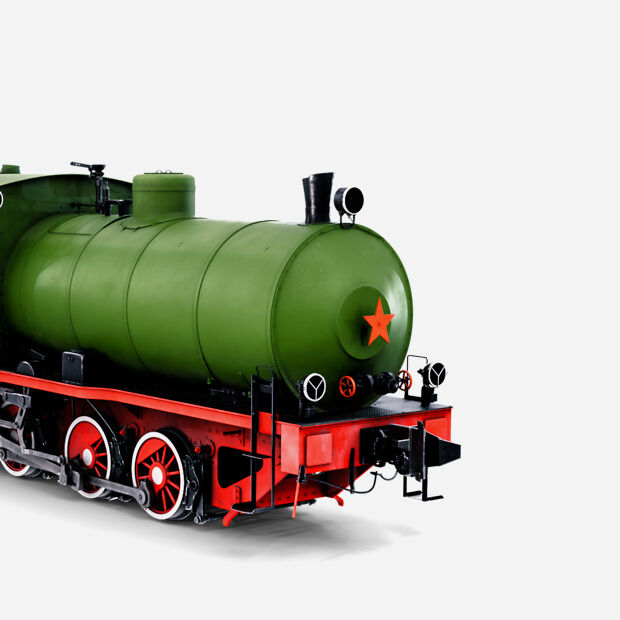
They were intended for work at explosive and fire-hazardous sites: oil depots, oil refineries, ammunition depots. Conventional steam locomotives were unsafe there due to the use of open fire and a large number of sparks. To this we can also add the unmasking factor of smoke and steam from steam locomotives.

One of these locomotives was brought to the USSR after the war, where it was given the designation DG14-1: diesel with hydraulic transmission, 14 - axle load in tons, 1st number.

It was equipped with a Voith hydraulic transmission, which consisted of a hydraulic converter, two hydraulic clutches filled with oil, and a two-speed gearbox, providing shunting and train speed modes. Traction force was transmitted to the three driving axles through a breakaway shaft and couplers, as on a steam locomotive, which did not require individual gearboxes on each wheel pair and additional cardan shafts.

The TGM1 diesel locomotive (Diesel locomotive with hydraulic transmission, shunting, type 1) is the first serial Soviet shunting diesel locomotive with hydraulic transmission. Initially, the locomotive was designated as TGM.

The TGM1 diesel locomotive project was completed under the supervision of the plant's chief designer A. M. Rusak, who had previously been involved in design work at the Sormovsky plant, in particular, in launching the production of the fourth issue of the SU series steam locomotives.

Parameters

Technical
specifications

Service type
Industrial shunting
Gauge, mm
1 524
Power, hp
400
Transmission
Hydraulic
Operation mode
Shunting and train
Axles
3
Axial formula
₀ - 3 - ₀
Weight at full stock of lube, water, 2/3 fuel, sandб t
44 +-3%
Fuel stock, kg
1400
Oil stock
120
Rail load
14,6
Min. curve radius
60
Length at automatic coupling axes, mm
9 750
Wheelset, mm
3 400
Height from crown of rail, mm
3 940
Width at protruding parts, mm
3 150
Wheel diameter, mm
1 050
Tractive effort
Shunting mode 12200/train mode 6100
Design speed
Shunting mode 30/train mode 50

Drawings
and diagrams

History

Chronology

  1. 1937 Since 1937, various factories in Germany built Wehrmachtslokomotive WR 360 C 14 shunting locomotives for military purposes, or V36 in the post-war designation.
  2. 1949 In 1949, the All-Union Scientific Research Institute of Railway Transport (VNIIZhT), together with the Department of Diesel Locomotive Construction of the Bauman Moscow Higher Technical School, tested this locomotive. The tests revealed sufficient reliability and convenience of the hydromechanical transmission for low-power diesel locomotives.
  3. 1956 In total, from 1956 to 1972, the plant produced 3,368 TGM1 series diesel locomotives for industry, and from 1958 to 1963, 36 diesel locomotives for the Ministry of Railways.
  4. 1957 Having completed production of industrial tank locomotives of the 9P series in 1957, the F.E. Dzerzhinsky Murom Plant switched to the production of diesel locomotives. At the end of 1956, he built the first two three-axle shunting diesel locomotives with hydraulic transmission of the TGM1 series.
  5. 1960 The TGM1-575 diesel locomotive was built by the F.E. Dzerzhinsky Murom Plant in 1960. It was transferred to the museum from the Velikiye Luki locomotive depot of the October Railway in 1997.