Today the museum is open from 10:00 to 18:00

Map

Exhibit description

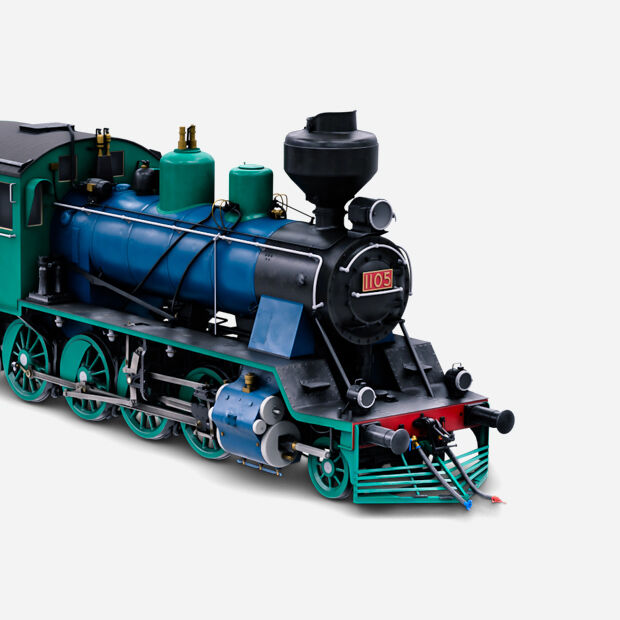
Industrial Fireless Steam Locomotive No 9305

The development of fireless steam locomotives was made possible by a discovery by American mechanical engineer Jacob Perkins. In 1823, he found that reducing the pressure in a boiler containing near-boiling water generated additional steam. This principle enabled another American, Emil Lamm, to build the first fireless steam locomotive in 1873. It was designed for the New Orleans City Railway as a replacement for horse-drawn trams.

The first fireless steam locomotive appeared in 1873. It was invented by the American engineer Emil Lamm.

The steam locomotive’s boiler was filled with steam at 200°C, and it required the next refill after 10 km of travel. Locomotives of similar design also worked on other urban railways in America. Later, such steam locomotives appeared on some city lines in Europe. However, with the beginning of the mass electrification of urban railways, the use of fireless steam locomotives on them was discontinued.

Abroad

The introduction of fireless steam locomotives to industrial enterprises in Germany, and later in England, is linked to the German company Orenstein & Koppel, which began their production in the early 20th century for use in fire-hazardous industries. Fireless steam locomotives were also employed at facilities with significant reserves of process steam, such as power plants and chemical plants. There they offered cost-effective solutions for internal transportation.

The fireless steam locomotive literally had no firebox or fire, which made it attractive for fire-hazardous enterprises.

The leading producers of fireless steam locomotives included German manufacturers such as Orenstein & Koppel, Hanomag, and Schwarzkopf, alongside British firms Andrew Barclay Sons & Co and W. G. Bagnall. Other plants also participated in the production of these locomotives. Additionally, obsolete steam locomotives of standard design were often converted into fireless models (for example, the modification of German class 89 and 91 locomotives). The last fireless steam locomotives were manufactured in the German Democratic Republic in the early 1980s.

Our Designs

In Russia, the first fireless steam locomotive was probably No. 9305 (serial number), built in 1928 by the Schwarzkopf Plant in Germany. Unfortunately, the available sources do not provide information about the customer for this locomotive or clarify whether it was delivered to the USSR as a single unit or as part of a small batch. The caption accompanying the photograph in the printed source identifies it as “a fireless locomotive for Baku”.

The first fireless steam locomotive in Russia was built in Germany and operated in Tuapse.

It is known that in 1939, locomotive No. 9305, which operated at the Tuapse Oil Refinery, was the only one without a firebox in the USSR. Throughout its continuous operation, it required no major repairs, apart from routine maintenance such as wheel trueing, drive mechanism repairs, and thermal insulation replacement.

The experience of operating the Tuapse fireless locomotive prompted the All-Union Scientific Research Institute of Industrial Transport to draft a design for a domestic fireless steam locomotive in 1939. The proposal was submitted to several people’s commissariats. The People’s Commissariat of Ferrous Metallurgy undertook the project, allocating funds for the development of a technical design and the construction of a prototype.

The design was based on the serial 9P steam locomotive of the Kolomna Locomotive Works. The boiler was produced by the Taganrog Plant “Krasny Kotelshchik”, and the locomotive was assembled at the Steam Locomotive Repair Plant “Promparovoz” in Dnipropetrovsk.

The locomotive featured: steam pressure 18 atm, boiler volume 20.6 m3, weight in working condition 54 t. Some sources suggest it was designated as BP-9P-01. Manufacturer testing was completed on 30th July 1940, and the locomotive was sent for field tests at the Dnipropetrovsk Coke and Chemical Plant named after Kalinin. Unfortunately, the subsequent fate of this locomotive remains unknown.

In 1954–1956, the Murom Steam Locomotive Plant produced three BP1 fireless steam locomotives numbered 01–03. Their underframe and steam engine were also adopted from the 9P. The adhesive weight of the locomotives was 58 tons, the boiler volume was 21 m3, and the initial steam pressure was 16 atm. In the summer of 1955, the BP1-02 steam locomotive underwent service tests, which yielded good results.

The End of an Era

The cessation of steam locomotive construction also halted all efforts to establish fireless steam locomotive production in the USSR.

While it is possible that other types of fireless steam locomotives were in operation at industrial enterprises in the Soviet Union, precise data on their operation and technical characteristics have not yet been discovered.

Fireless steam locomotive No. 9305 was built by the Schwarzkopf Steam Locomotive Plant, Germany, in 1928, under serial number 9305.

After its main duties ceased, the fireless steam locomotive in Tuapse hauled a single passenger car from the plant to the sea, allowing plant employees to swim during their lunch break.

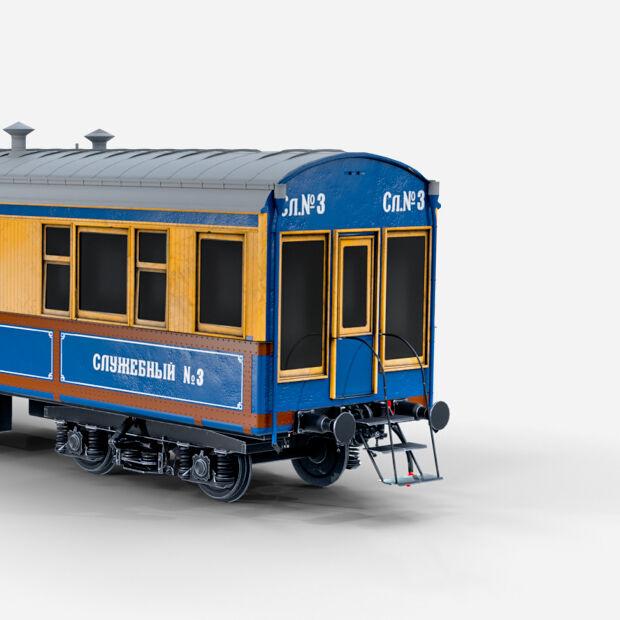
According to available records, the locomotive arrived in the USSR in 1928 and served at the Tuapse Oil Refinery until the 1970s, after which it remained unused on the plant’s premises. Veterans of the refinery recall that during the 1950s and 1960s, the locomotive hauled a  “passenger train” to the Black Sea coast, allowing workers to enjoy a swim during their lunch break. This train consisted of a single two-axle passenger car.

In 1994, the locomotive was acquired by the Central Museum of the Oktyabrskaya Railway, mounted on a railway platform, and relocated to the museum site at Shushary station.

Parameters

Technical
specifications

Plant
Schwarzkopff, Germany
Factory locomotive number
9305
Year
1928
Empty weight, t
36
Maximum steam pressure in the boiler, atm.
25
Axial formula
0–3–0
General data
Tender type
Absent
mm
3 000
Locomotive length by buffers, mm
9 080
Diameter of driving wheels, mm
950
Boiler
Steam pressure, kg/cm2
25
Firebox type
Absent
Car and crew
Number of cylinders, pcs.
2
Cylinder diameter, mm
570
Piston stroke, mm
650
Spool diameter, mm
200
Frame thickness, mm
15
Frame type
Sheet
Steam distribution system
Valsharta

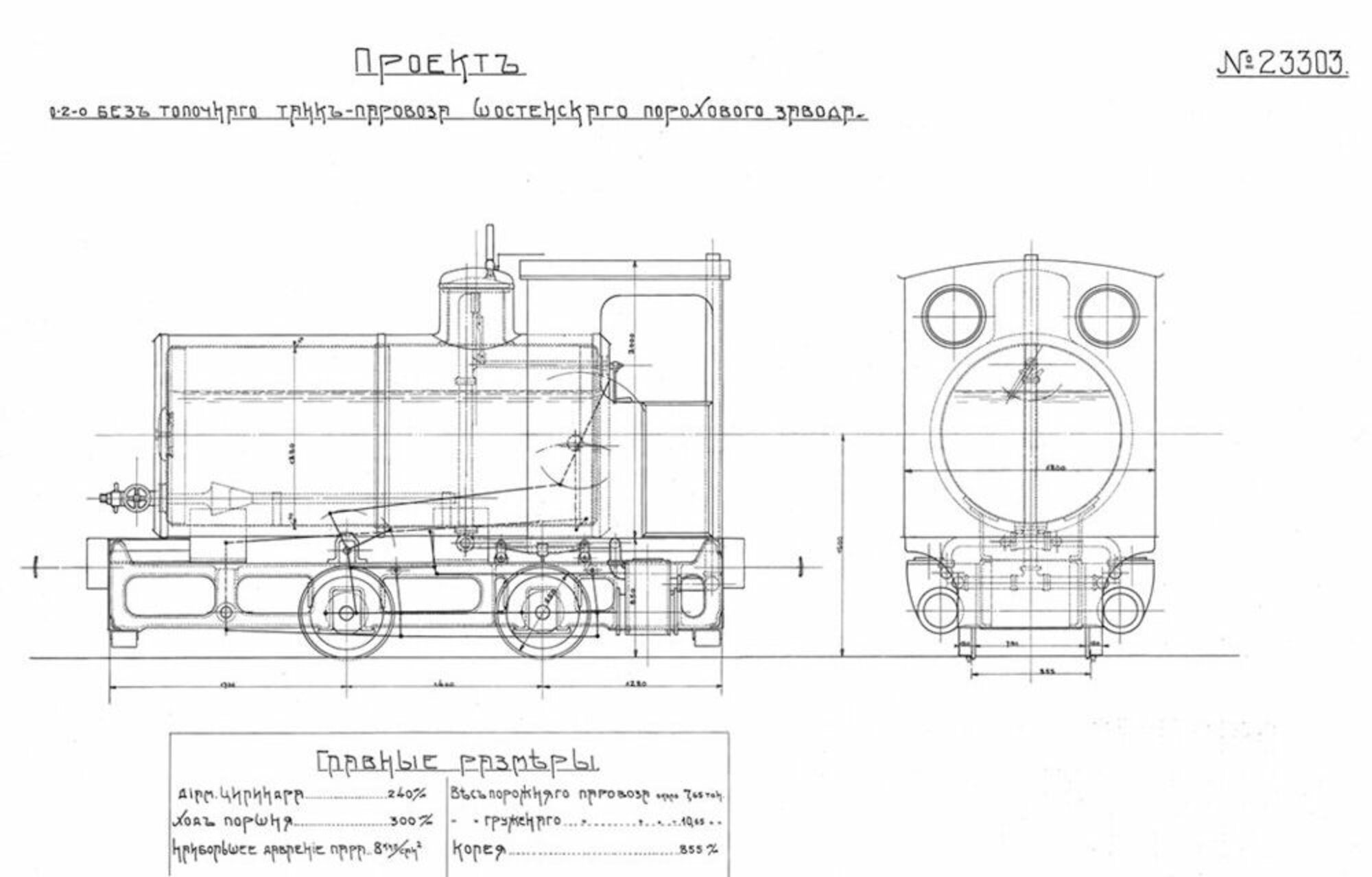
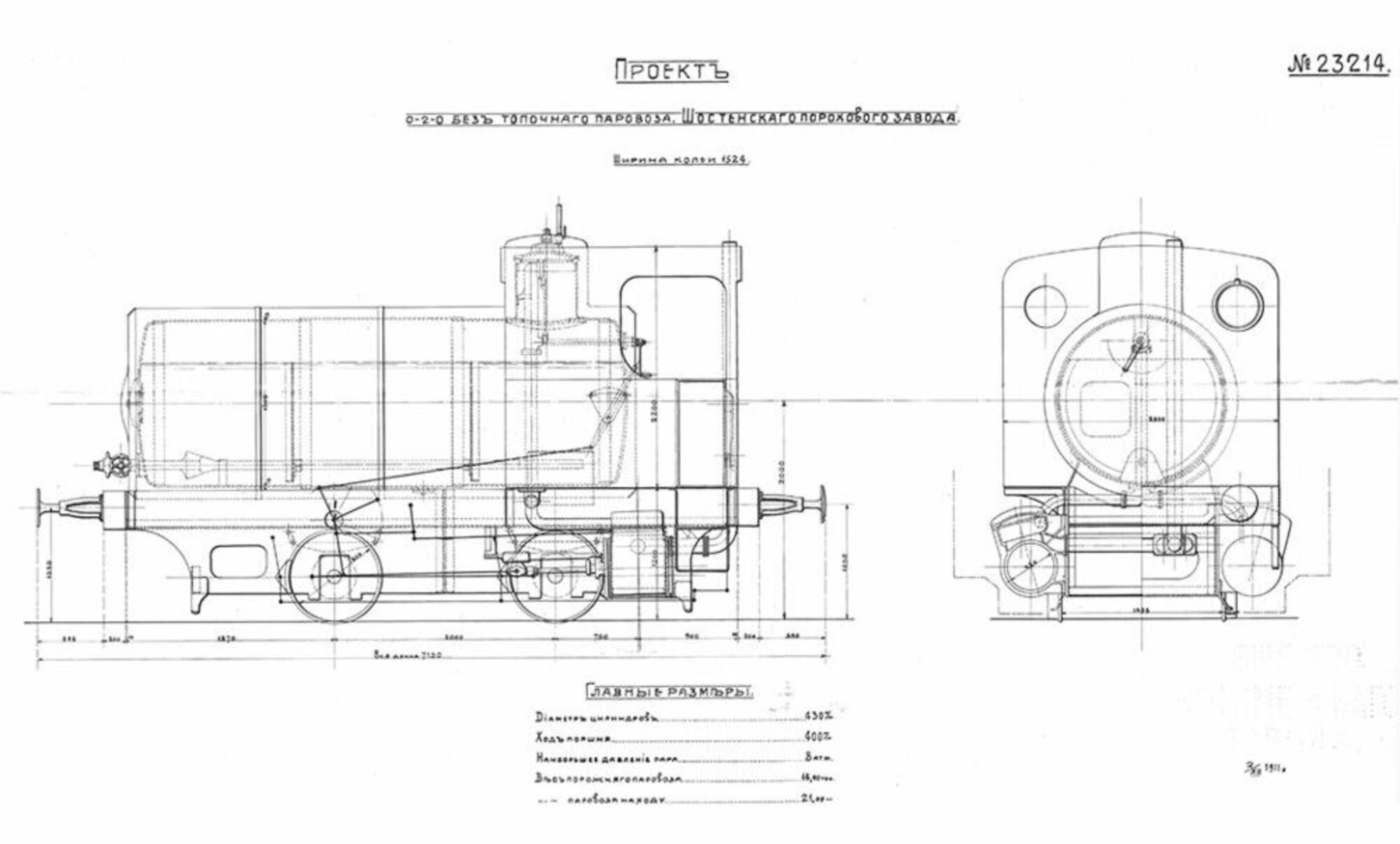
Drawings
and diagrams

History

Chronology

  1. 1823 The concept of developing a fireless steam locomotive emerged.
  2. 1873 Emil Lamm created the first fireless steam locomotive.
  3. 1928 Locomotive No. 9305 was built at the German Schwarzkopf Plant.
  4. 1939 Locomotive No. 9305 was the only fireless steam locomotive in the USSR.
  5. 1970s Locomotive No. 9305 was decommissioned at the Tuapse Oil Refinery.
  6. 1994 The Central Museum of the Oktyabrskaya Railway acquired locomotive No. 9305.
  7. Our times Locomotive No. 9305 is on display at the Russian Railway Museum in Saint Petersburg.