Today the museum is open from 10:00 to 18:00

Map

Exhibit description

Railmotor Car МZ/2 934

In the first half of the 20th century, internal combustion engines advanced rapidly and found widespread application in various fields of technology. A new type of locomotive emerged in railway transport — a low-power diesel locomotive ranging from 20 to 500 hp. At the time, it was referred to as a “railmotor car”.

These locomotives were primarily used for light shunting operations at railway stations, industrial sites (factories, warehouses, grain elevators, etc.), and large construction projects. Their main task was typically to deliver and remove cars from loading and unloading areas. Due to their limited power, railmotor cars were rarely used for hauling trains on railway lines.

A railmotor car is more cost-effective than a steam locomotive because it does not require a long start-up time and does not consume fuel while idle. It is also inexpensive and easy to operate.

The use of railmotor cars had several advantages over the steam locomotives that were the primary type of shunting locomotive at the time. A steam locomotive required several hours to be prepared for work, as it needed to be fired up. And even when parked while waiting for work, it continued to consume fuel. A railmotor car, on the other hand, could be started or stopped at any time.

With a relatively simple design, the railmotor car was inexpensive and easy to operate. Unlike the steam locomotive, it could be run by a single person. Its maintenance did not require highly skilled personnel. It consumed less water and fuel than steam locomotives, which reduced the time needed for its upkeep. The railmotor car was also safer than the steam locomotive in terms of fire safety, which was particularly important for many industrial facilities.

Disadvantages

However, the use of railmotor cars also had disadvantages. Thus, in the pre-war period in the USSR, there was a shortage of petrol and diesel fuel: they were primarily allocated to meet the needs of the armed forces. This limited the widespread use of internal combustion engines in railway transport.

The problems with the railmotor cars included a shortage of petrol and diesel fuel and a short service life.

In addition, the railmotor cars proved to be relatively short-lived — the engine life, even with not very intensive use, typically did not exceed 5 to 7 years, while other components lasted 10 to 15 years. In contrast, steam locomotives, due to their design features, could be used for 30 years or more with proper maintenance. As a result, the mass replacement of shunting steam locomotives with railmotor cars did not occur in the pre-war period. Nevertheless, railmotor cars managed to  carve out a niche for themselves in the USSR’s railway transport system.

Soviet Experience

In the 1920s and 1930s, railmotor cars of various designs, with both petrol and diesel engines, were produced in small quantities at several domestic plants. In the early 1930s, the Kaluga Engineering Plant of the People’s Commissariat of Communication Routes produced two-axle railmotor cars МG, МU, and МA, equipped with Ford-A, GAZ-A, and AMO-3 automobile engines, respectively.

In 1933, the plant developed a new type of railmotor car, the МZ/2

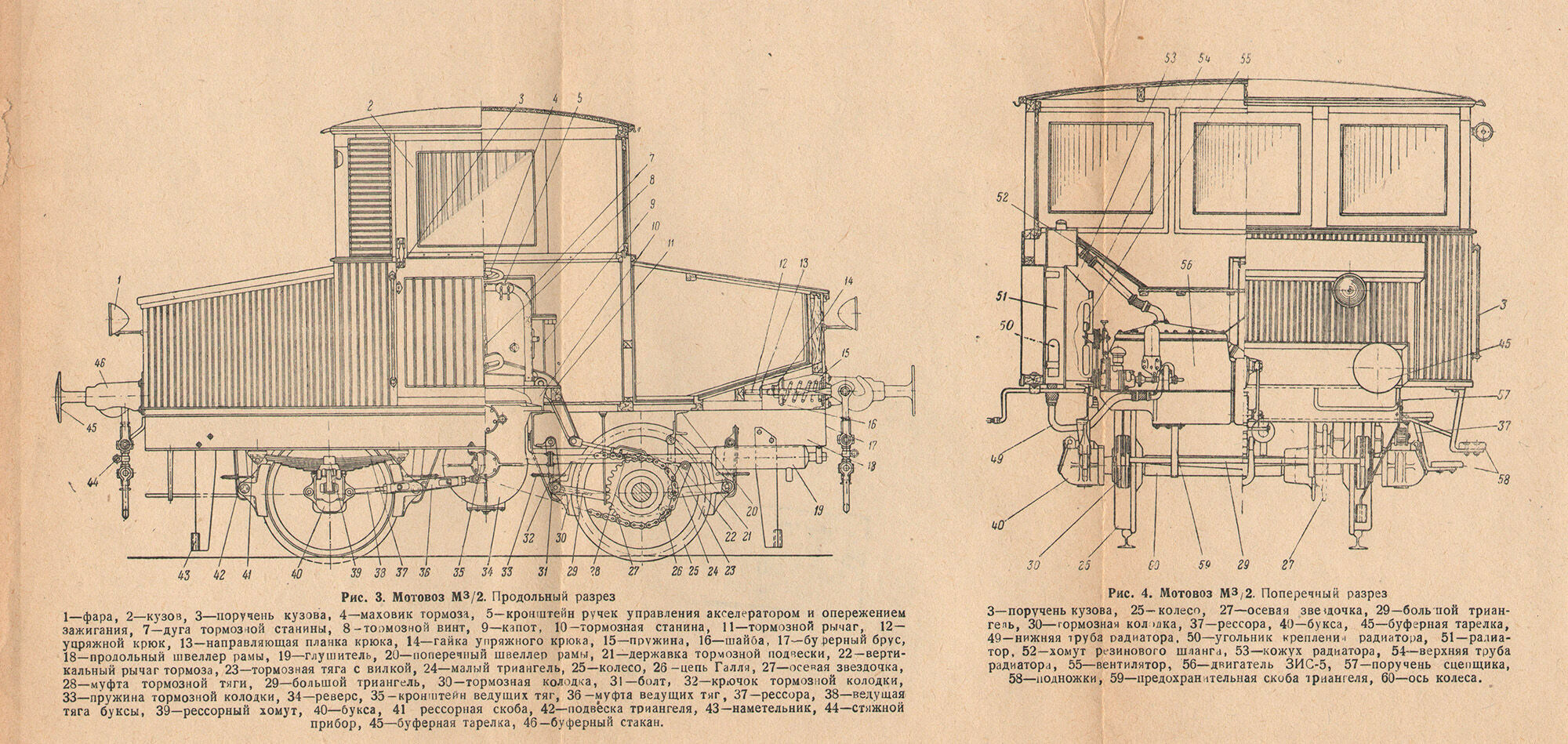
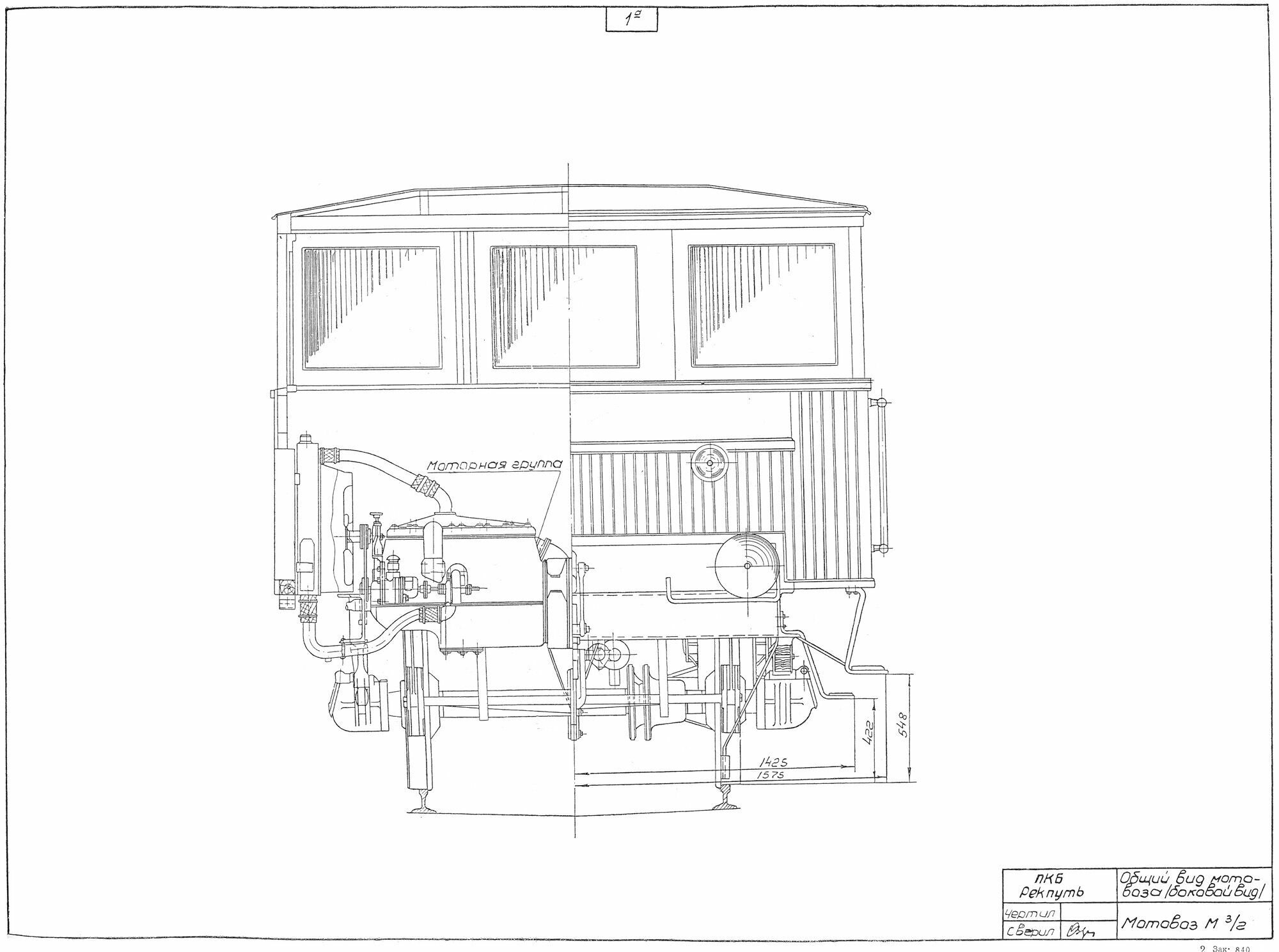
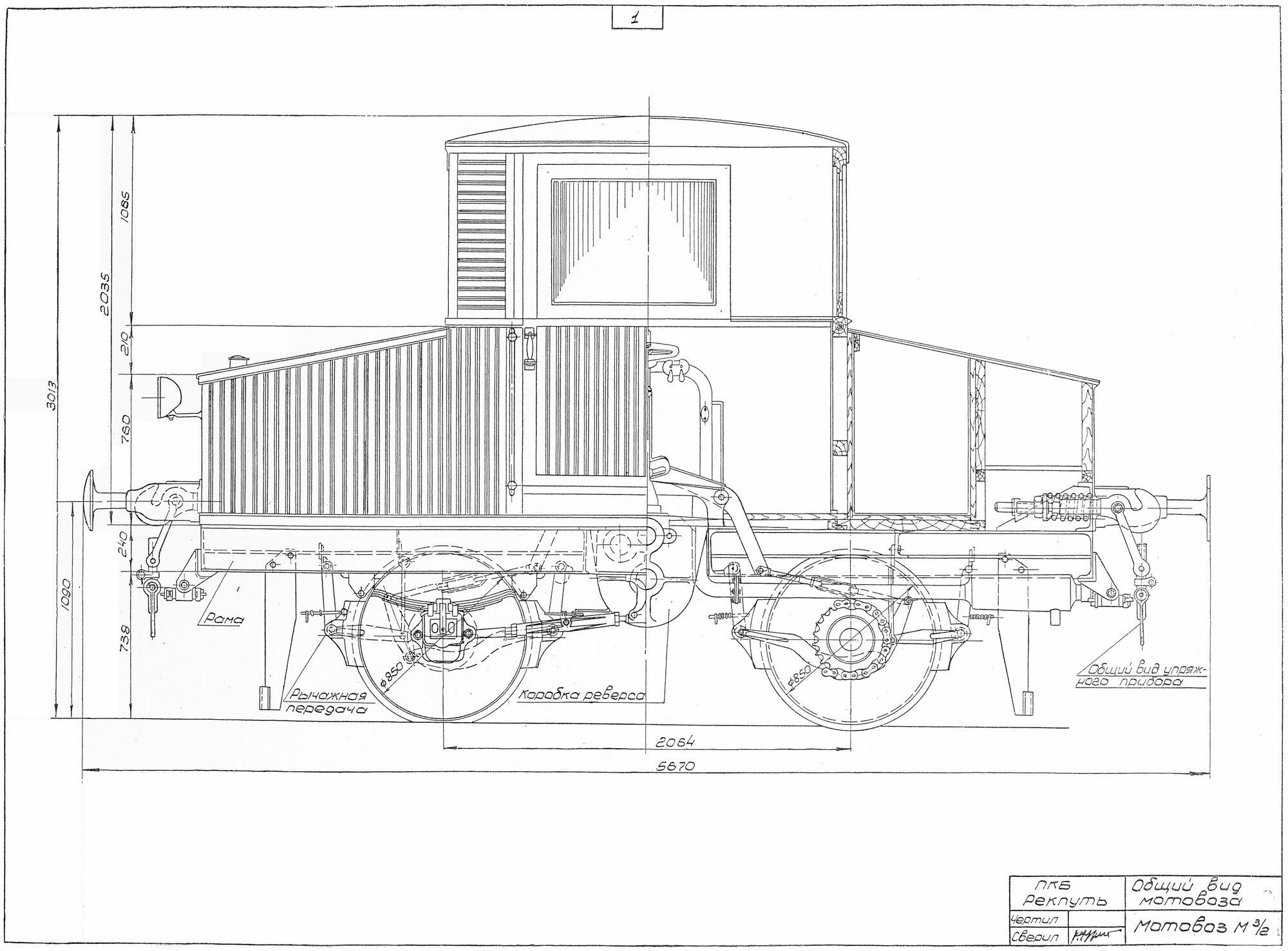
(a two-axle railmotor car with a ZIS engine). It was equipped with a ZIS-5 carburettor engine, which had a capacity of 73 hp. This engine was installed on trucks with the same name, which soon became widely used in the USSR. A four-speed gearbox supplied by the Moscow Automobile Plant named after Stalin (“Zavod imeni Stalina”, or ZIS), was also part of the setup.

Power was transmitted from the gearbox to the wheelsets using roller chains. The railmotor car had a metal frame and was equipped with a hand brake and a warning automotive siren. According to available information, some of the railmotor cars were also fitted with other engine models.

The МZ/2 railmotor cars were mass-produced at the Kaluga Engineering Plant in 1933–1941. With about 3,500 units built, they became the most widely produced design of this type of locomotive in the USSR. They were used mainly for light shunting work at various industrial enterprises.

The МZ/2 railmotor cars were produced from 1933 to 1941 and were equipped with an engine from the ZIS-5 automobile.

On the railways of the People’s Commissariat of Communication Routes, the МZ/2 railmotor cars were operated in significantly smaller numbers. They were primarily used for various maintenance and repair tasks on railway tracks, communication structures, and power supply systems, as well as for shunting in car depots, and more. Occasionally, the railmotor cars were modified to meet local needs, with additional equipment installed, while at other times, gas generator equipment was added.

Railmotor car no. 934 displayed in the museum was used for a long time in the post-war years in the track service of the Oktyabrskaya Railway.

Parameters

Technical
specifications

Number of leading axes
2
Length, mm
5 670
Width, mm
3 000
Высота, mm
3 020
Locomotive weight without ballast, t
7
Traction weight with ballast, t
12
Track, mm
1 524
Hard base, mm
2 064
Axle load, kg
6 000
Hook pull at the moment of starting, kg
2,400
Transmission to drive wheels — chain, pitch
Hall, 50.8
Reverse gear ratio for forward and reverse
3,6 : 1
Chain gear ratio
2,33 : 1
Travel speed at 2,200 rpm
I — 6,35, II — 11,2, III — 22,7, VI — 42
Brake
Screw, double-sided drive on both axes
Wheels type
Griffin
Wheel diameter, mm
850
Fuel tank capacity, l
100
Engine
Type
ZIS-5, four-stroke
Number of cylinders
6
Cylinder diameter, mm
101,6
Piston stroke, mm
114,3
Cylinder displacement, l
5,55
Compression ratio
4,8
Maximum speed, rpm
2 400
Power at 2,200 rpm, l. With.
73
Fuel
Petrol
Fuel consumption
20 g per 1 t/km
Carburetor
MAAZ-5 or MKZ-6
Ignition
Battery
Candles, mm
Thread 18x1.5
Battery
Six-volt, TPP ZTA-VII
Capacity, amp / hour
112
Lubrication system
Mixed
Radiator capacity, l
72,5
Lubrication system capacity, l
7
Cooling
Water
Number of fan blades
4 blade
Blade rotation speed, rpm
3 500
Centrifugal pump circulation
Forced
Plant
Named after Stalin
Gearbox clutch with engine
Dry, two-disc

Drawings
and diagrams

History

Chronology

  1. 1933 The МZ/2 railmotor car is designed, and its production begins at the Kaluga Engineering Plant.
  2. 1941 Production of МZ/2 is discontinued.
  3. 1991 МZ/2 934 is brought to the museum from bridge construction train no. 64, the Velikiye Luki Station.