Today the museum is open from 10:00 to 18:00

Map

Exhibit description

Fourth-Class Passenger Car Carriage No. 827

The construction of the Trans-Siberian Railway at the end of the 19th century necessitated the creation of a new type of car designed to transport passengers and large amounts of luggage over long distances while providing only a minimal level of comfort.

The problem could not be solved by simply adapting freight cars for passenger transportation. In the final years of the 19th century, the development of cars specifically designed for the transportation of troops and settlers began, and with the onset of the 20th century, mass production of these cars commenced.

Fourth-class cars saw widespread adoption because their ticket prices were significantly lower than those of third-class cars.

Despite offering a low level of comfort, fourth-class cars saw widespread adoption due to their much cheaper tickets compared to third class.

Museum Exhibit

The car was built at the Fēnikss Joint-Stock Company Plant in Riga in 1899 or 1900 and belonged to an early version of cars used for the mass transportation of settlers and military personnel. Later, it underwent significant alterations.

Till 30th August 1962 (completion of repairs at the Tbilisi Locomotive and Car Repair Works), it was in the inventory of the Kuybyshev Railway under no. 1247. Then it was transferred to the Experimental Track Laying Machine Station No. 1 (Reshetnikovo) of the Oktyabrskaya Railway.

The car exhibited at the museum took part in the celebration of the 150th anniversary of the USSR railways.

In 1987, it underwent repairs on the Oktyabrskaya Railway and was included in the train that took part in the celebration of the 150th anniversary of the USSR railways. It was used in 1989 for an exhibition at the Shcherbinka Station.

The car was brought to the museum from the passenger car storage depot at the Manushkino Station in the mid-1990s. It was restored during repair works carried out by ARS-M LLC in 2015–2016.

Parameters

Technical
specifications

Manufacturer
“Diesel”, Revel
Years of creation
1899–1900
Bodywork
Wooden
Frame
Metal, wood
Wheelbase, mm
5 500
Frame length, mm
10 370
Body width, mm
3 200
Height from floor to ceiling, mm
2 800
Type of heating
Stove
Type of illumination
Candlestick
Type of ventilation
Natural
Number of axles
2
Tare, t
15
Number of sleeping places
38

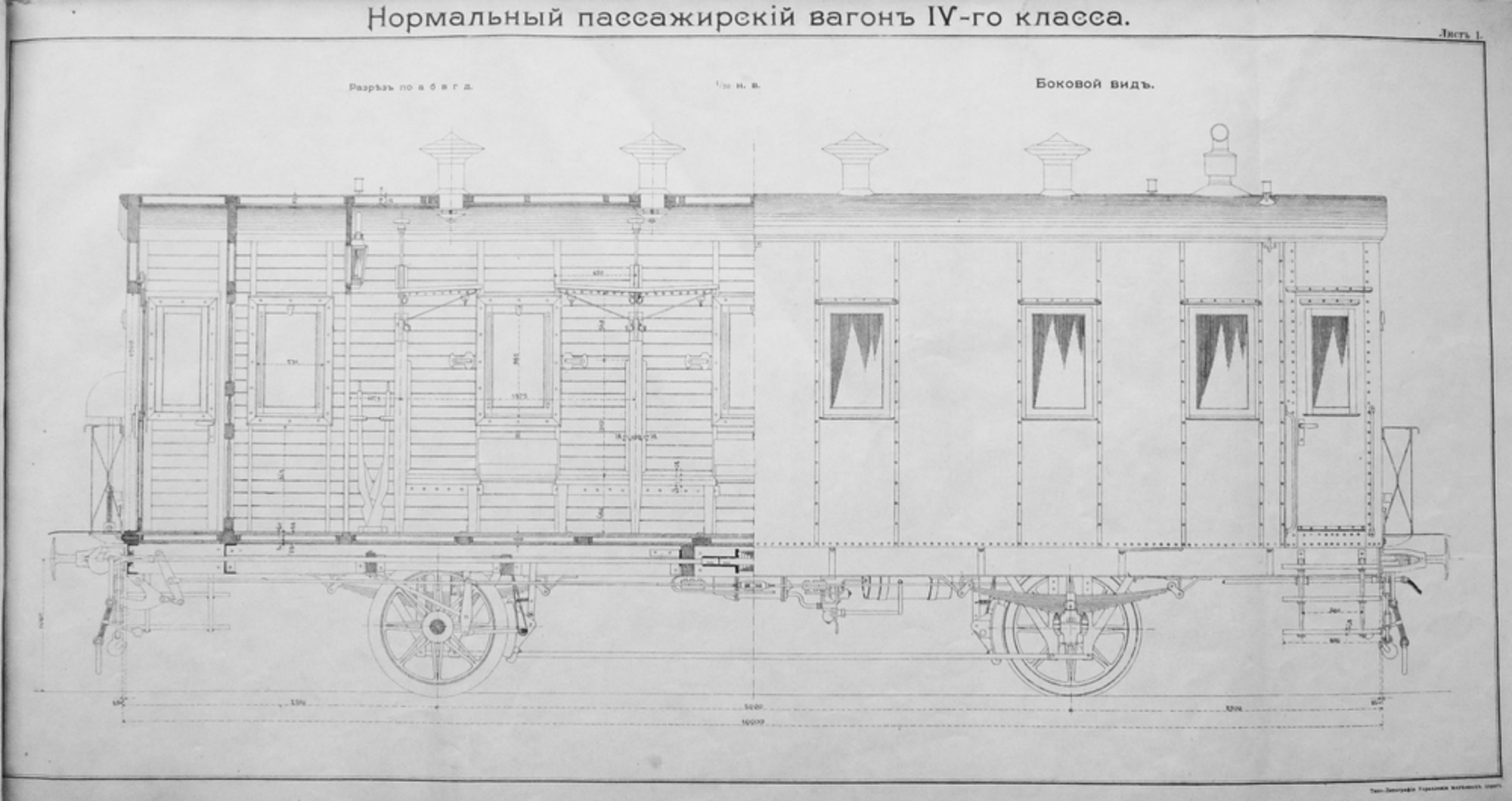
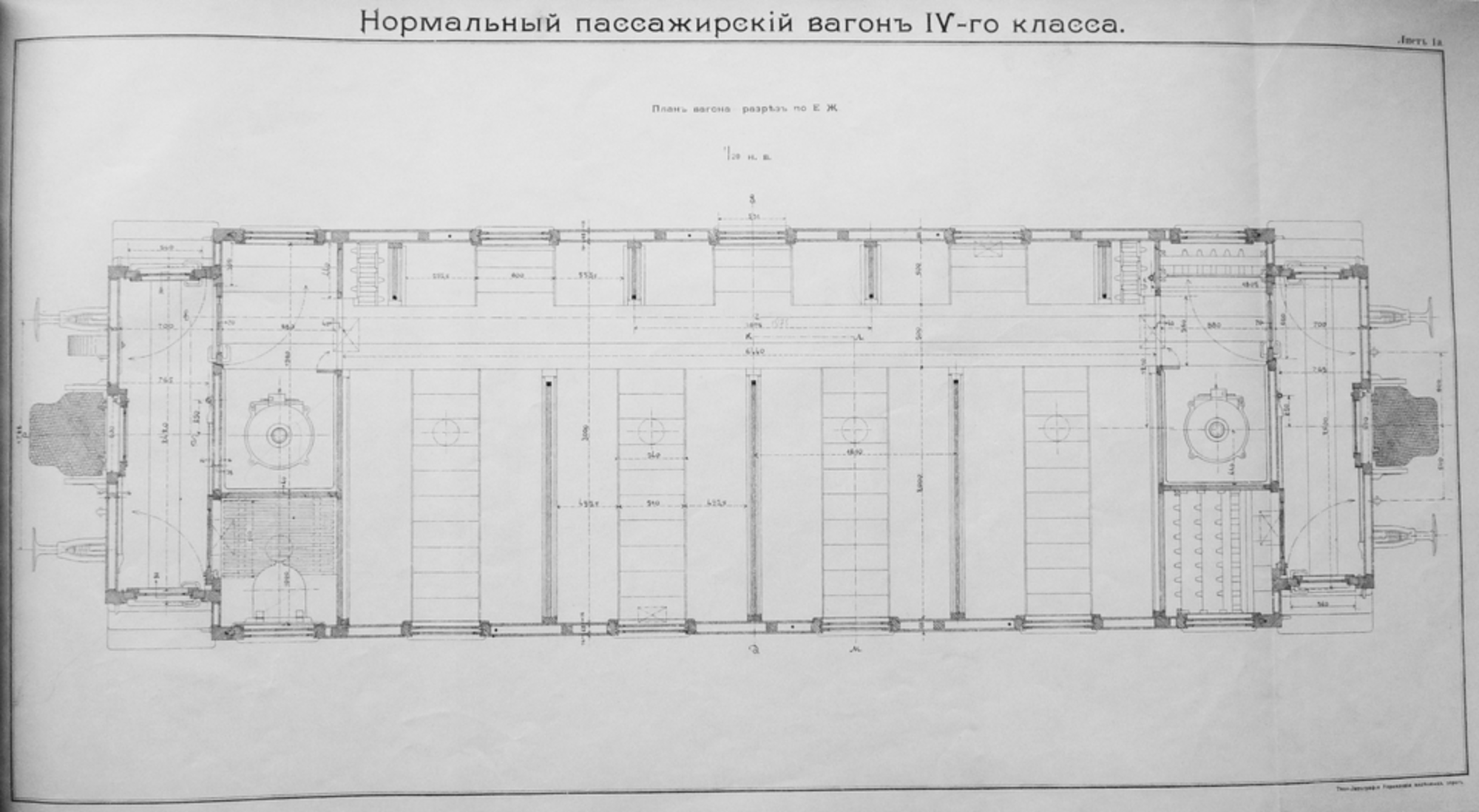
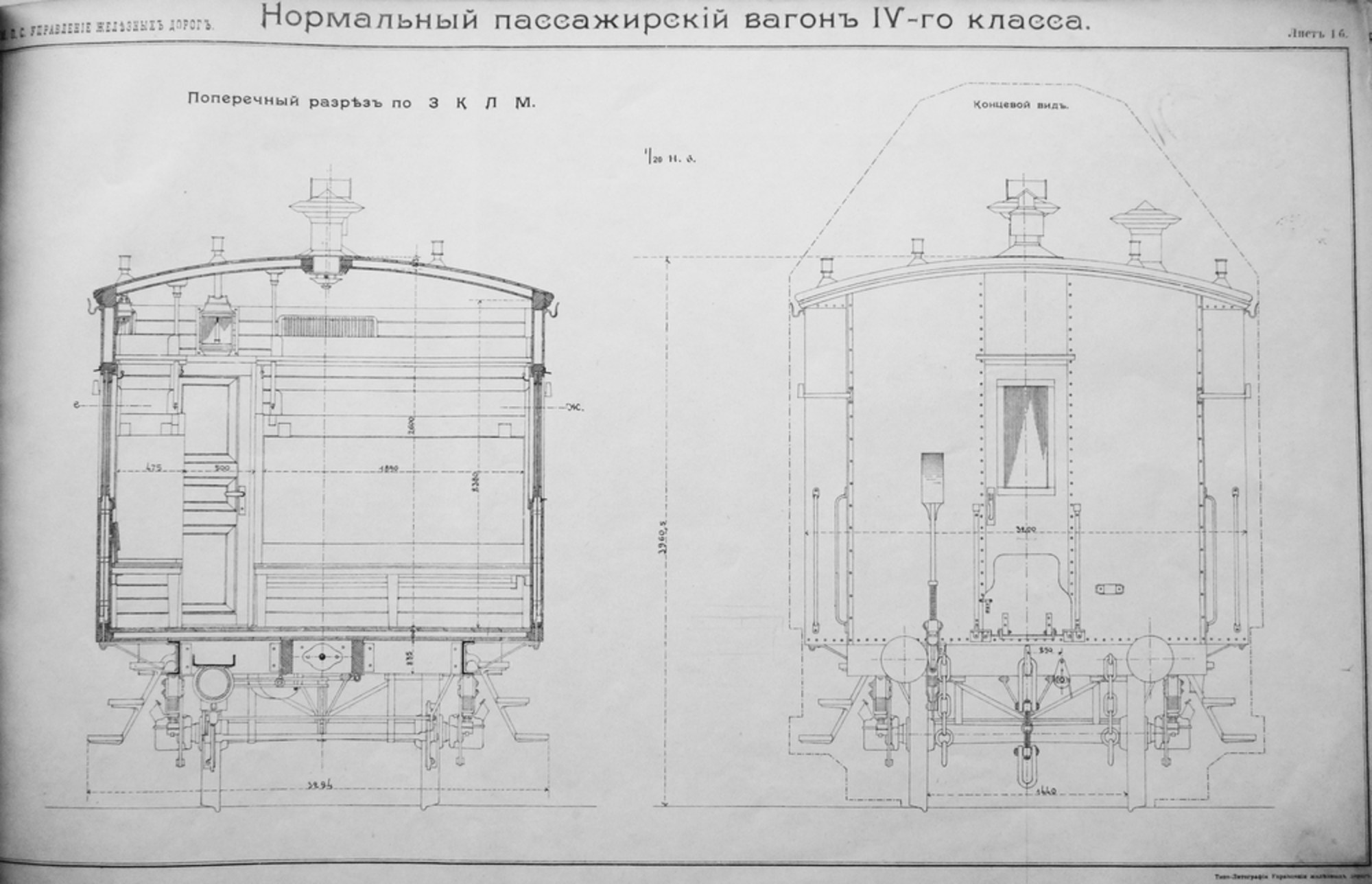
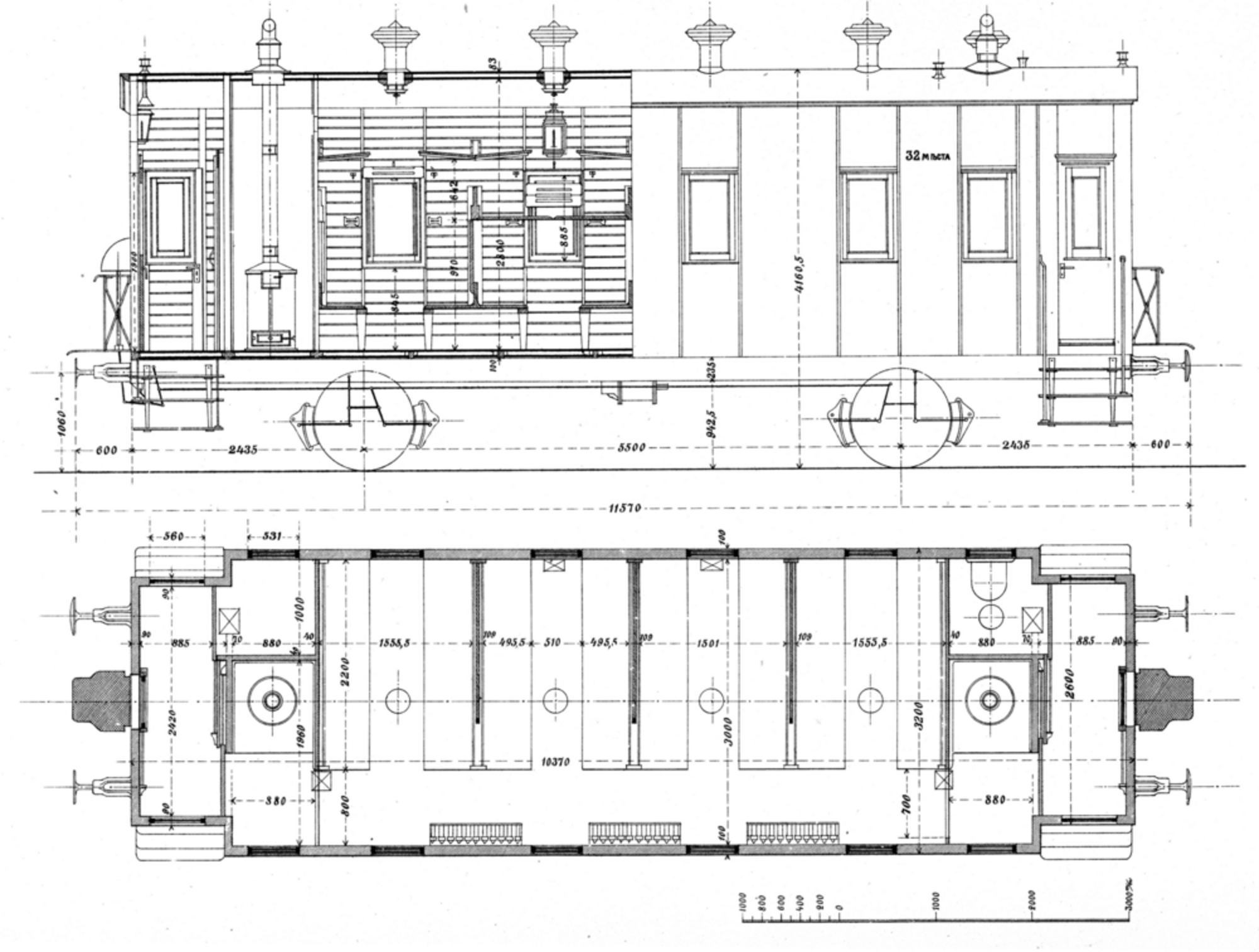
Drawings
and diagrams

History

Chronology

  1. 1899–1900 Fourthclass passenger car No. 827 is built at the Fēnikss Joint-Stock Company Plant in Riga.
  2. 1901 The production of improved cars for settlers begins: the wheelbase is increased to 5.5 m for a smoother ride, and the vestibules are widened.
  3. 1908 Completion of car construction; they are subsequently delivered for use in suburban traffic.
  4. 1987 Fourth-class car No. 827 undergoes repairs on the Oktyabrskaya Railway and is included in the train that takes part in the celebration of the 150th anniversary of the USSR railways.
  5. 1989 The car is exhibited at the railway exhibition at the Shcherbinka Station.
  6. Mid-1990s The car is brought to the museum from the passenger car storage depot at the Manushkino Station.
  7. 2015–2016 The car is restored during repair works carried out by ARS-M.