Today the museum is closed

Map

Exhibit description

Heavy-load transporter wagon № 39110341

Design versatility

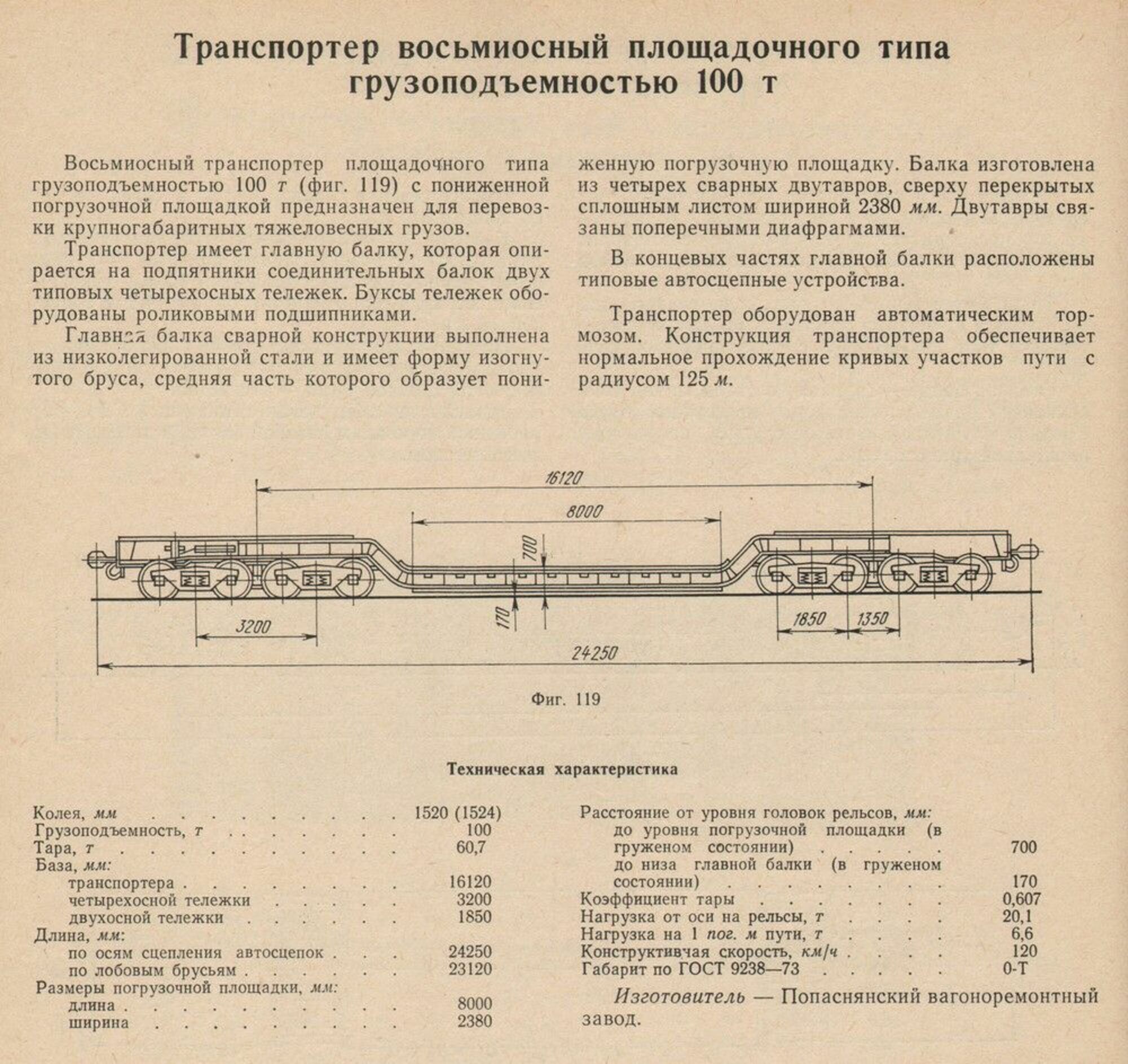
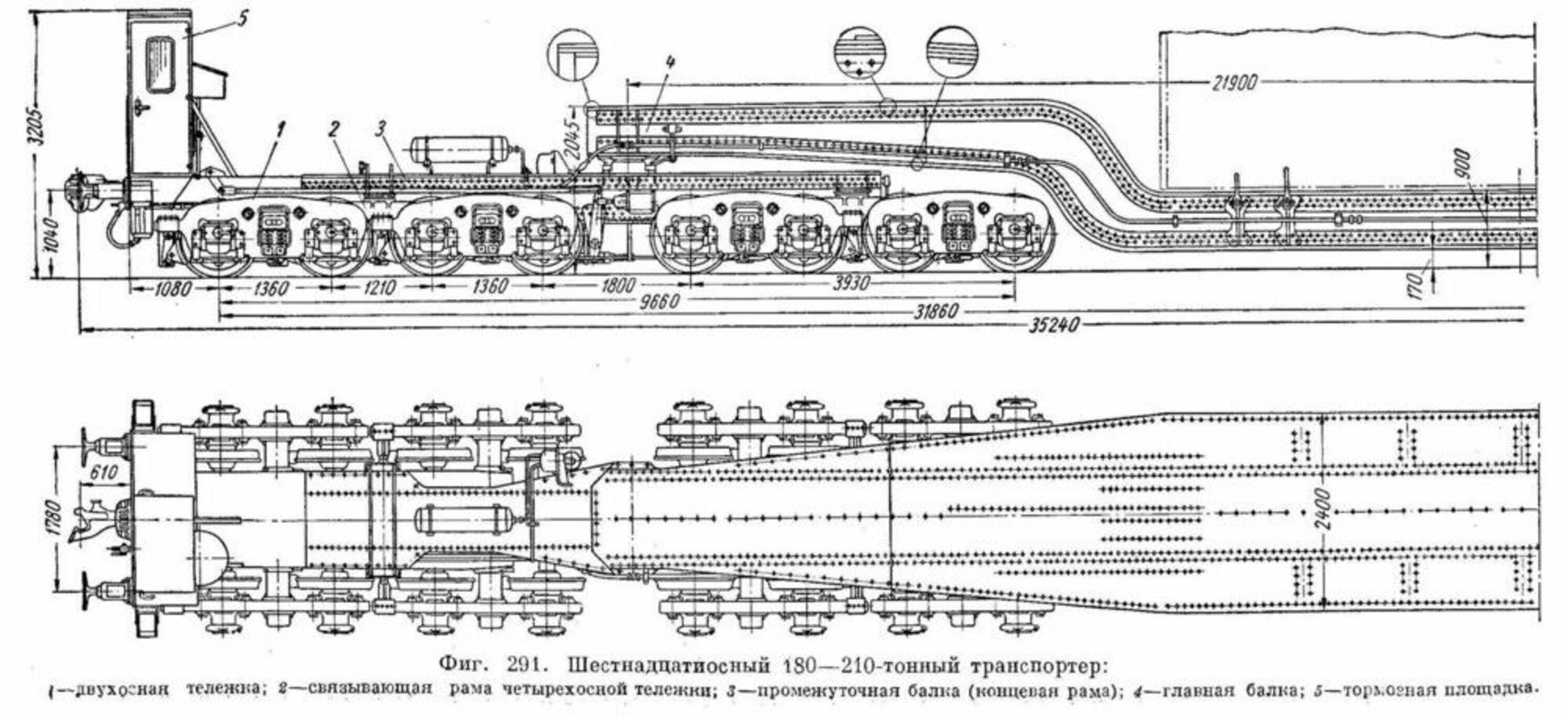
The 8-axle platform-type transporter is designed to transport powerful transformers, large-sized hydraulic turbine units, stators and rotors of high-power generators, large machine tools, flywheels, long boilers and other large-sized, heavy-weight cargo.

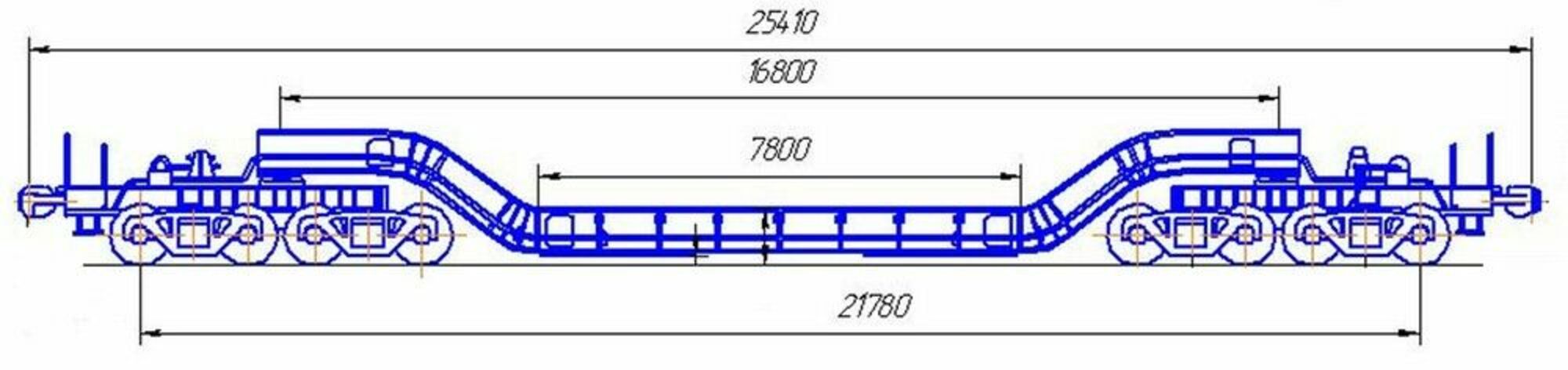
The U-shaped frame of the transporter is also a loading platform. The curvature of the frame allows you to lower the center of gravity of the cargo as low as possible for safer transportation. It is installed on two four-axle bogies, each of which is two bogies connected by a common beam. Load capacity of the transporter is 110 t, tare — 66 t. Built in 1962

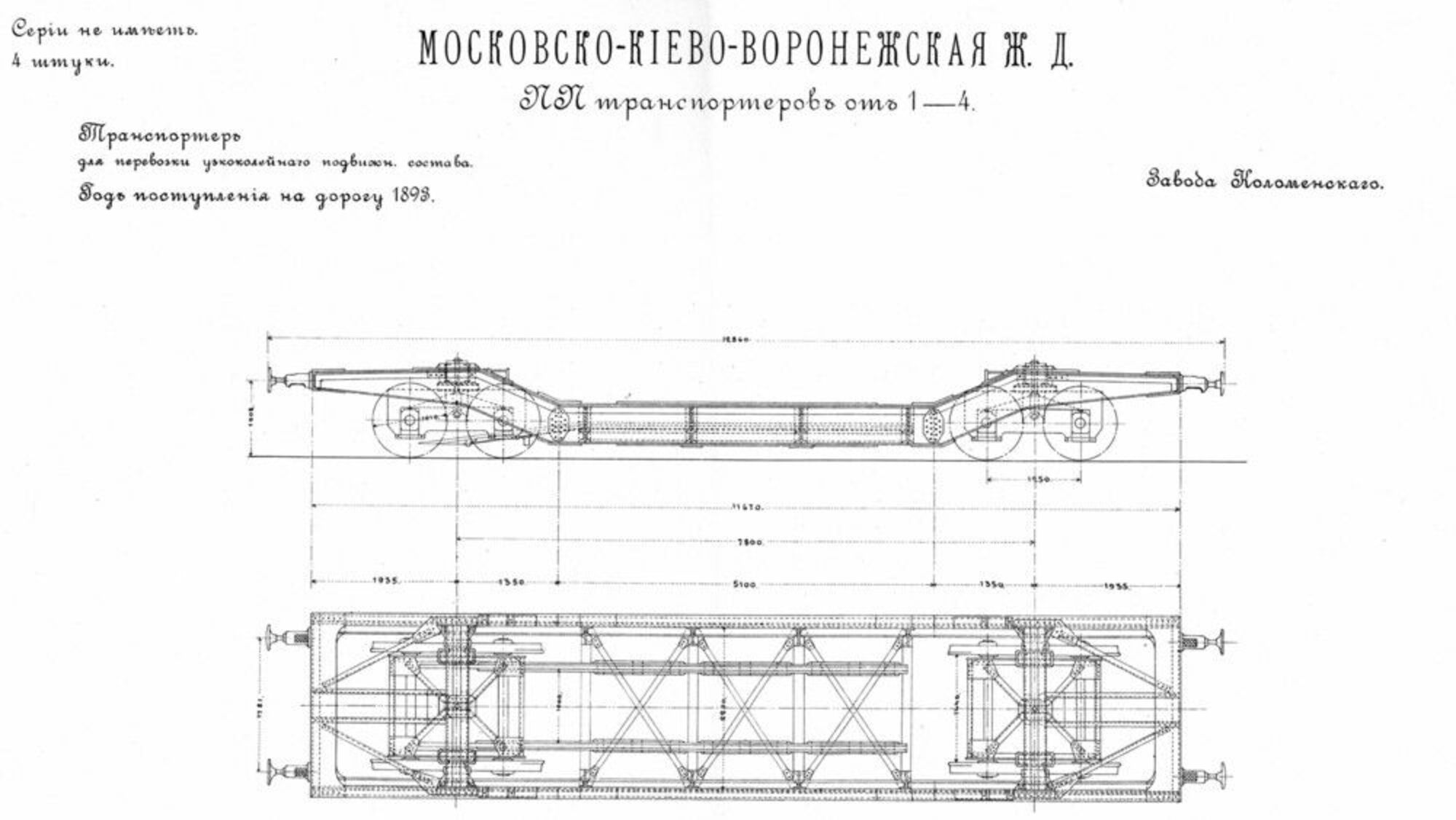
Transporter cars belong to a very narrowly specialized group of cars designed for long, large-sized and heavy cargo. They were built in pre-revolutionary Russia for the transportation of heavy gun carriages, barrels of large-caliber naval and battery guns, ship parts etc. They were also built for the transportation of bridge structures and narrow-gauge rolling stock.

In 1932 the Central Carriage Design Bureau developed a project for a 12-axle transporter for the transportation of high-altitude cargo, for which the main beam-platform was made curved in the area of ​​the loading platform. The carrying capacity was 120 tons. In 1933, a 70-ton six-axle welded transporter was designed.

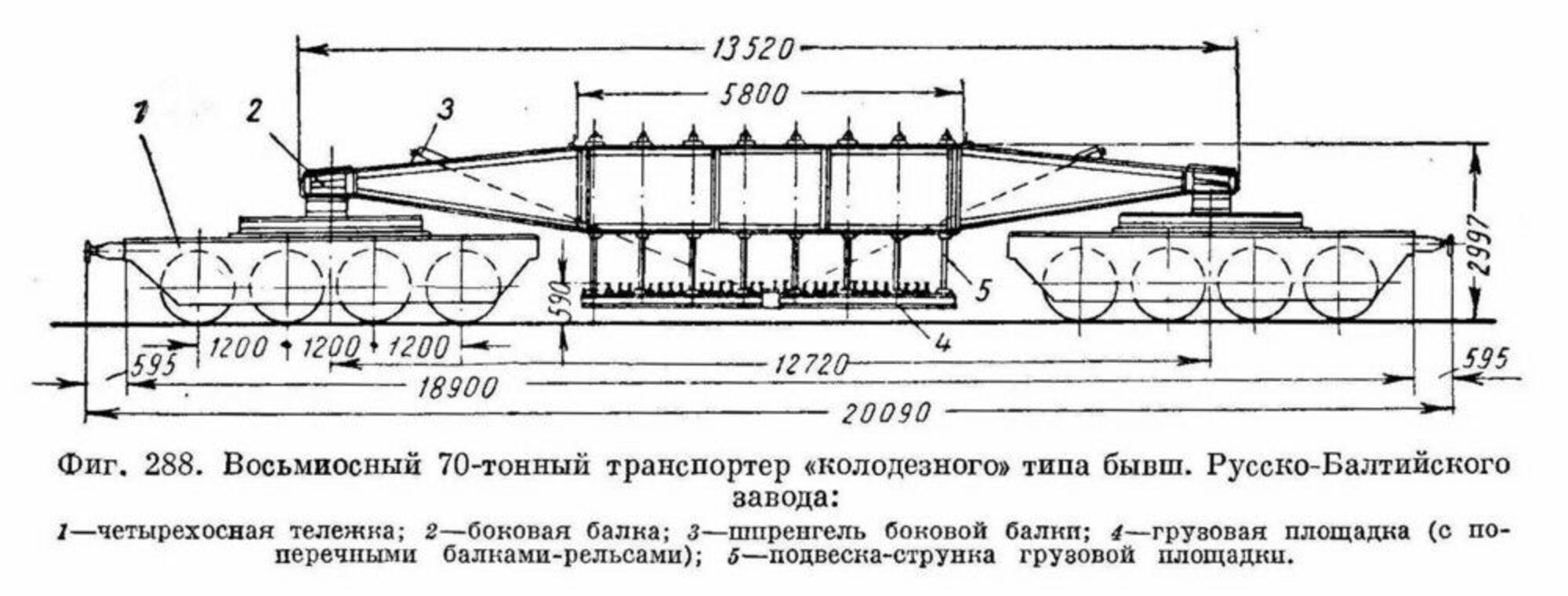
Articulated transporters were built for special large-sized cargo, meaning that the cargo itself played the role of the car frame. The carrying capacity of 28-axle articulated transporters reached 400 tons. Such transporters were built in single quantities by the Voroshilovgrad Diesel Locomotive Plant.

Museum exhibit

One of the leading enterprises for the production of transporters was the Popasnyansky Carriage Repair Plant, which built transporters with a carrying capacity of 55 to 120 tons.. The transport car № 39110341 located in the Museum of Russian Railways was built in 1962.

The creation of such cars was caused by the need to transport large and heavy equipment for the industrialization that had begun in the country, as well as military cargo.

The organization of non-transhipment service led to the development of normal, that is, normalized, rolling stock. Normal covered wagons (NTV), normal platforms, and tank cars were accepted for circulation. The normal platform was named for the length of its frame - 30-foot (9,204 mm). The wheelbase was 5,500 mm. The load capacity was initially 750 poods, gradually increasing to 900, and then to 1,000 poods. At the same time, the car axles and spring suspension were reinforced, and a spacer truss was additionally installed on the frame sides.

For some railways, four-axle platforms were also built in limited quantities, with a load capacity of 1,500 to 2,000 poods.

Parameters

Technical
specifications

Manufacturer
VRZ Popasnya
Loading capacity, t
110
Tare weight, t
66
Conveyor type
14 T111
Numbering designation
3911
Length by coupler axles, mm
25,410
Loading platform, mm
Length — 7,800; width — 2,480; height — 880
Wheel diameter by rolling circle, mm
950
Conveyor base, mm
16,800
Year of manufacture
1962
Trolley base, mm
1,850
Number of trolleys, pcs.
4
Number of brake axles, pcs.
8
Truck type
18-100
Speed ​​of loaded/empty conveyor, km/h
100/100
Bearing beam
Riveted
Minimum radius of fitting into a track curve of 1,520 mm, m
100

Drawings
and diagrams

History

Chronology

  1. 1869 Initially, freight and passengers could only move within the same railway; to move along an adjacent railway, freight had to be transshipped and passengers had to be transferred. In 1869, the First General Congress of representatives of 18 railways took place, which concluded agreements on non-transhipment service. In 1889, the General Agreement on the Mutual Use of Freight Cars was put into effect, which established the circulation of freight cars throughout the entire network of Russian Railways.
  2. 1929 At the end of 1929, the Kolomna Plant developed a project for a two-axle platform with an all-metal frame and a load capacity of 20 tons. The overall dimensions were retained as for a normal platform. The frame allowed for the installation of an automatic coupling, the height of the sides was increased from 229 to 625 mm. The latter had a positive effect on the transportation of bulk cargo.
  3. 1934 Since 1934, the construction of 50-ton four-axle platforms began at the Kalinin Carriage Works and the Bryansk Krasny Profintern Plant. Since 1935, construction of platforms began at the Chernomorsky Plant, and since 1937 at the newly built Uralvagonzavod.
  4. 1936 Since 1936, the platform design was redesigned. Thus, they began to use a longitudinal beam made of I-beams No. 55a. The variable height cross-section of such beams was obtained by partially cutting out the walls at the ends. After that, the lower shelves of the I-beams were bent and welded. The load-bearing capacity of platforms with beams made of I-beams was increased to 60 tons. After the war, these platforms were built until 1948 at the Kalinin and Uralsk plants.
  5. 1998 The platform was transferred to the museum by the Saint Petersburg-Baltic motorcar depot of the October Railway in 1998.