Today the museum is open from 10:00 to 18:00

Map

Exhibit description

Electric train ER10-002

Electric braking

The development of electric rolling stock primarily followed the path of energy saving. This was especially relevant for commuter trains with frequent stops, which required acceleration and braking modes. During mechanical braking with pads that are pressed against the rolling surface of the wheel, the kinetic energy of the train is converted into heat and goes into the atmosphere.

From the very beginning of the development of electric traction, engineers were attracted by the idea of ​​introducing electric braking, which could be regenerative, that is, with it, electric motors were switched to the mode of electric generators and gave energy back to the network, or rheostatic, when the generated electricity was extinguished on rheostats (resistances). Compared to mechanical braking, with rheostatic braking, the generated energy is also converted into heat, but the efficiency is higher and the wear of brake pads and wheel pairs is less.

On 3000 V DC electric locomotives, rheostatic braking has been used since their construction. On multiple unit rolling stock, this issue was only addressed in the early 1950s. In the period from 1952 to 1954 under the supervision of engineer L.M. Trakhtman, a regenerative-rheostatic braking system was developed. When regenerative braking ceased due to insufficient energy consumption from the network by other locomotives, replacement rheostatic braking was activated. The transition from one type of braking to another was carried out automatically.

The experimental sections were designated the RS series. Based on the test results, a ten-car electric train ER-6 was built in 1959. In 1960 it was tested first on the Riga - Ogre section of the Latvian Railway, and then on the VNIIZhT test ring. During tests on the section between stopping points of 2 km and at an average speed of 44–46 km/h, energy savings of 17.5 to 35.5% were achieved. The developments were later used in the design of the ER10 electric train.

From the very beginning of the development of electric traction, engineers were attracted by the idea of introducing electric braking, which could be regenerative or rheostatic. With regenerative braking, electric motors would be converted to electric generator mode and would give energy (electric current) back to the grid. With the rheostatic type, the electric energy generated during braking would be extinguished on rheostats (resistors).

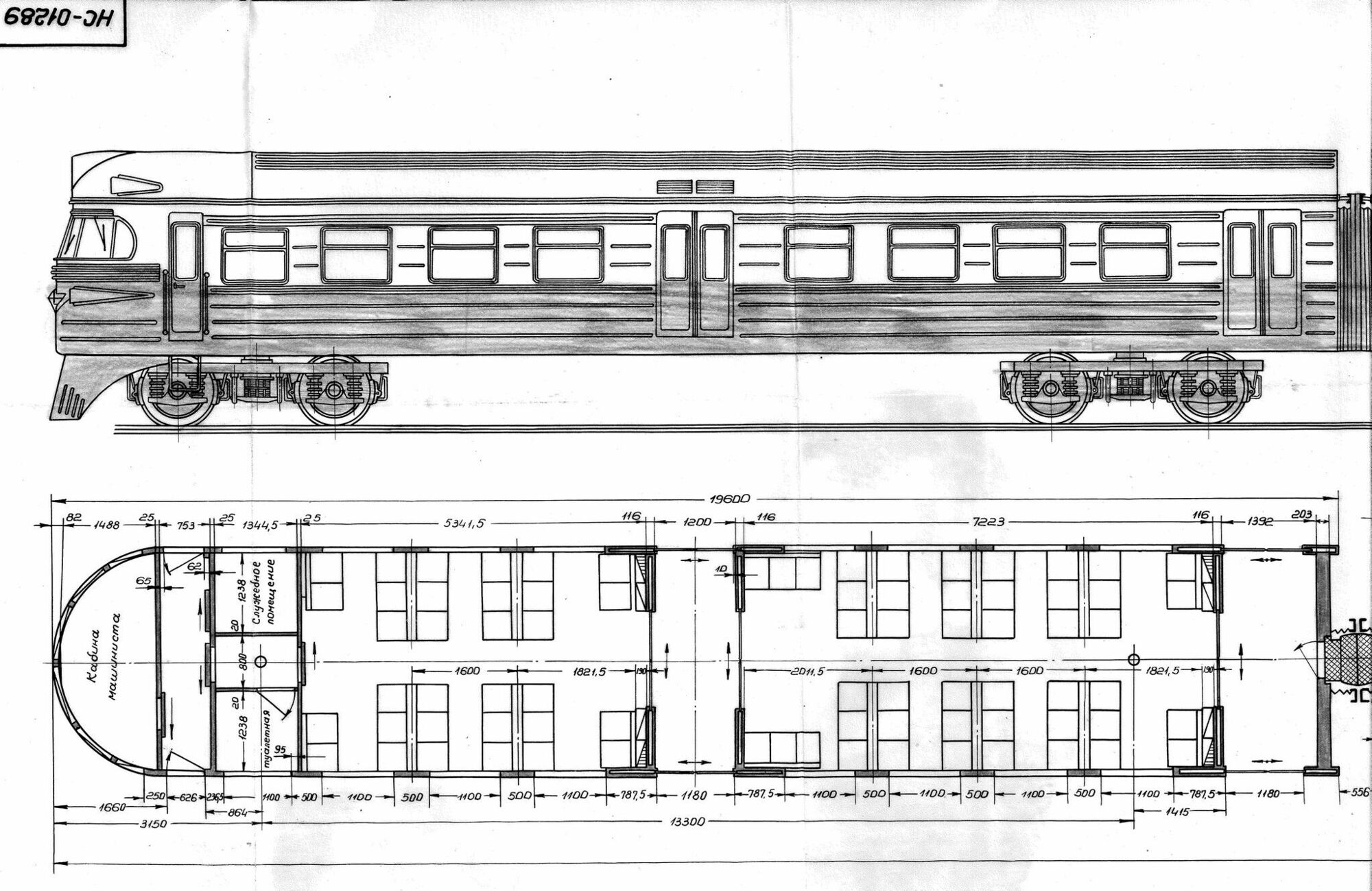
Another way of developing rolling stock was to increase the length of the cars in order to reduce the number of cars in the trains, as well as to increase the number of doors for faster boarding and disembarking of passengers.

The motor lead car No. 206 of the ER10 electric train has been preserved in good condition; it had been stored for a long time at the Moscow-Kurskaya (TC-1) depot of the Moscow Railway. From there, it was sent to the Central Museum of the October Railway in St. Petersburg (located on the territory of the former Varshavsky Station). After the relocation and renaming of the museum into the Museum of Russian Railways, it was moved to a new site near the Baltic Station in St. Petersburg.

Parameters

Technical
specifications

Electric motor voltage, V
750
Hourly mode, kW
185
Current of hourly mode, A
276
Anchor rotation speed at hourly mode, rpm
625–1,100
Continuous mode, kW
135–142
Current at continuous mode, A
210
Engine weight, kg
2,200
Batteries
Alkaline
Weight of first two sections, t
65.7
Weight of trailers, t
40
Total weight, kg
207.8
Number of seats in section
486 (112 in engine and 131 in trailer)

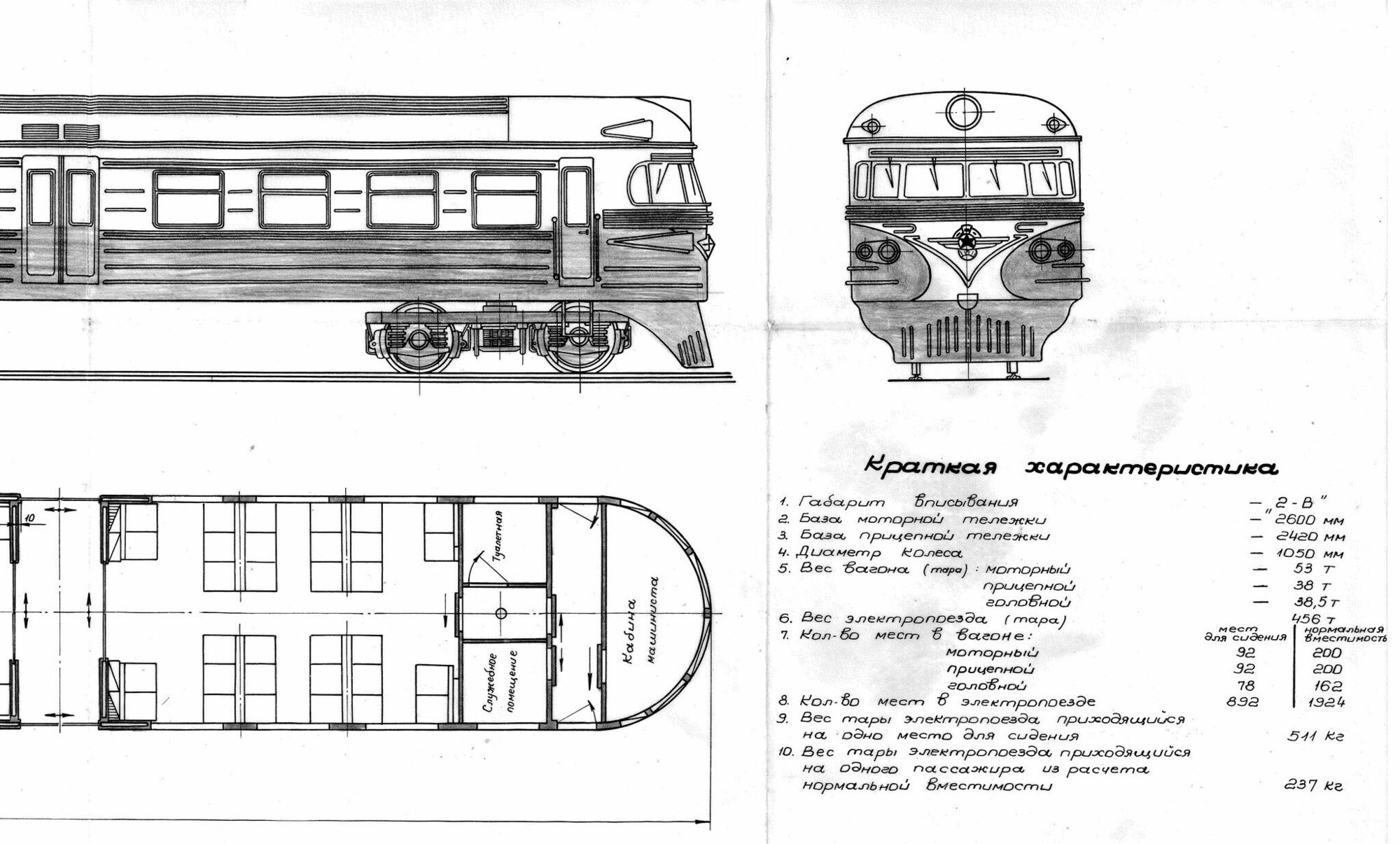
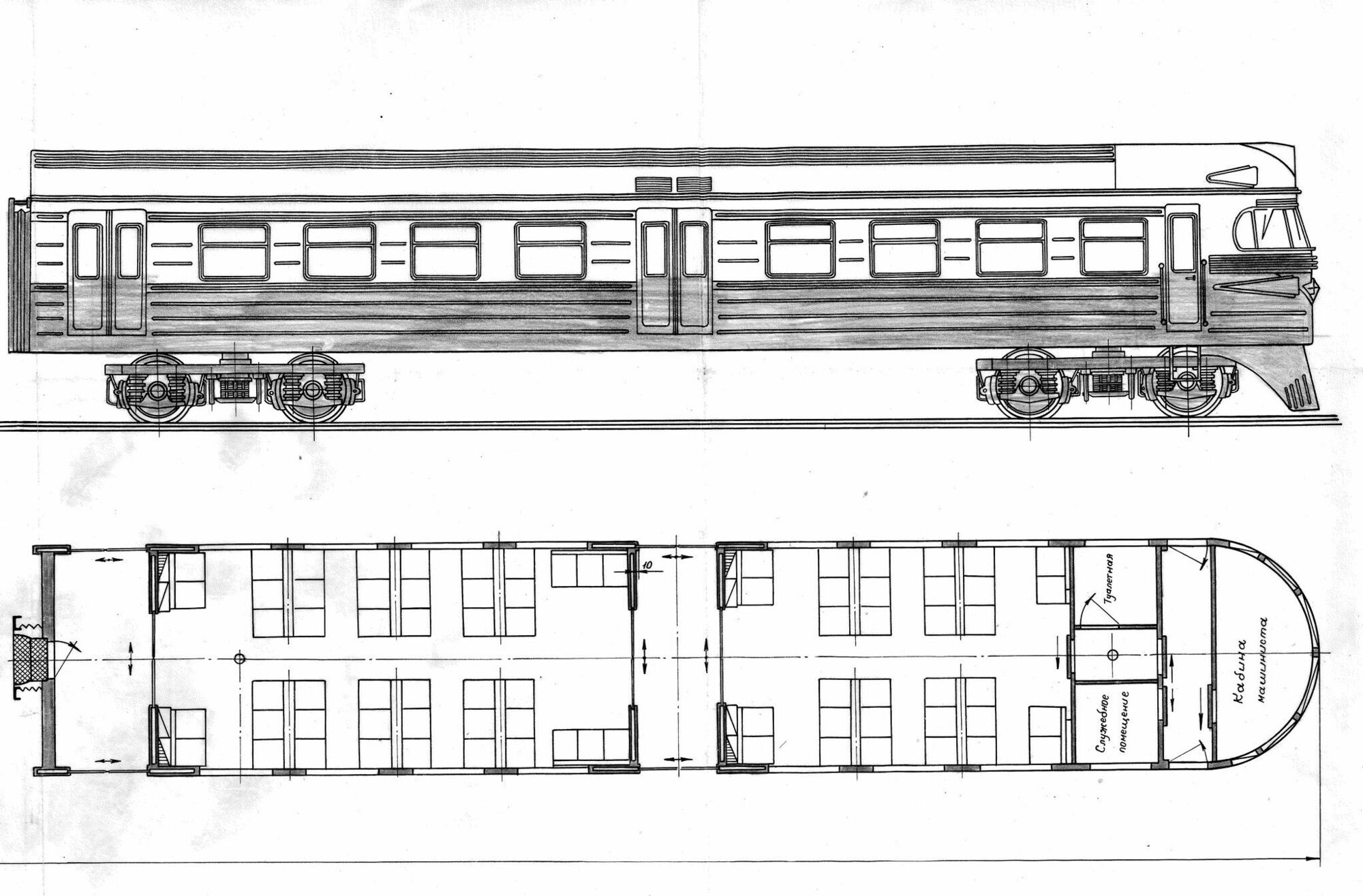
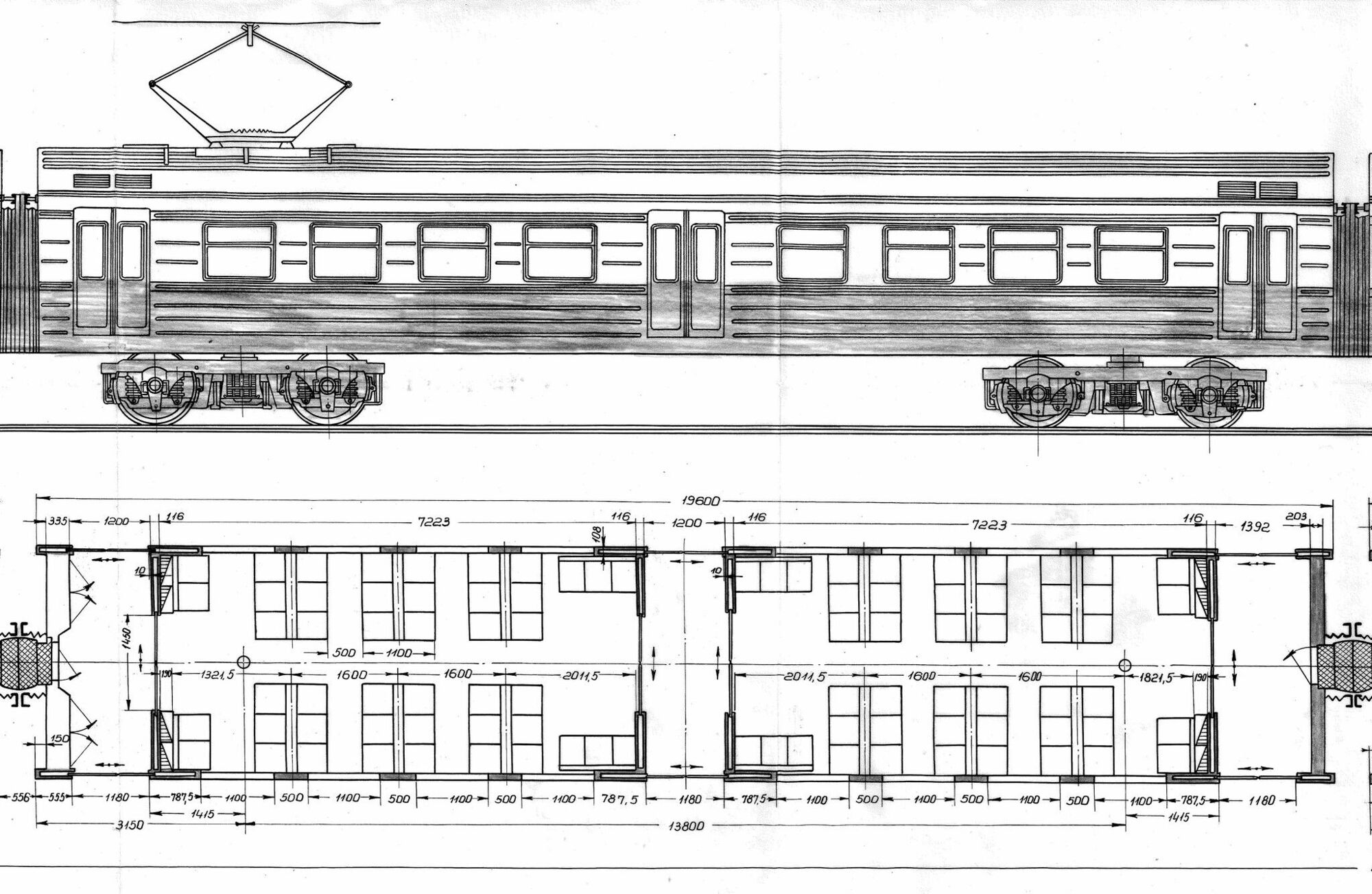
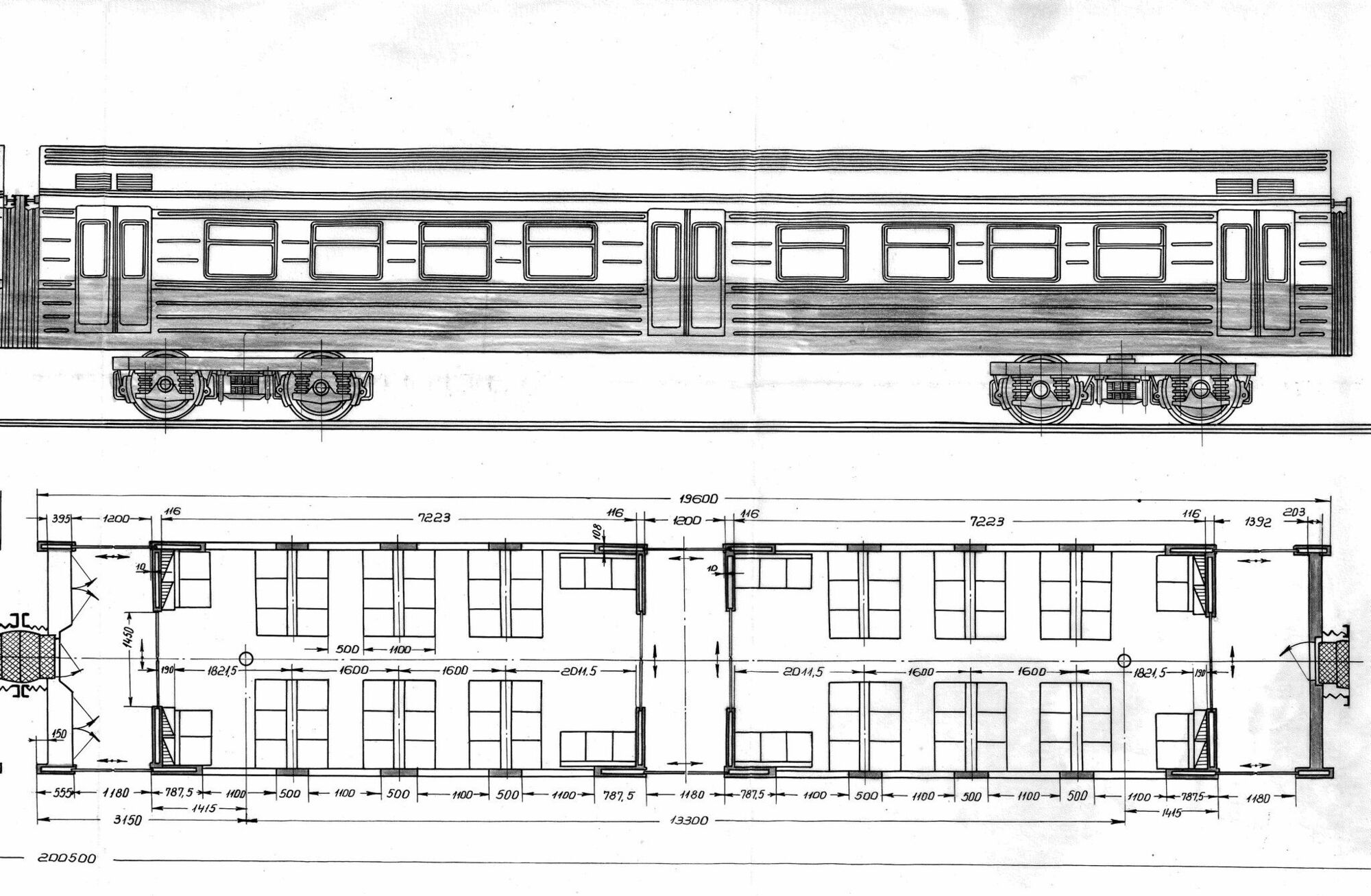
Drawings
and diagrams

History

Chronology

  1. 1950s Rheostatic braking was used on 3,000 V DC electric locomotives from the moment they were built. On multiple unit rolling stock, this issue was only addressed in the early 1950s. Between 1952 and 1954, a regenerative-rheostatic braking system was developed under the supervision of engineer L. M. Trakhtman. The necessary equipment was manufactured at the Dynamo plant in 1955–1956. At the Perovsky Electric Rolling Stock Repair Plant, two two-car sections of the SVM electric train were re-equipped with this equipment. The experimental sections were designated the RS series.
  2. 1958 In 1958, a project for the ER5 electric train was developed. The project envisaged cars 24.2 m long with three doors on each side. The train was to have regenerative-rheostatic braking. The design speed of the train was 130 km/h. The train was to consist of several types of cars, similar to the ER1 electric train: a lead trailer, a motor, and an intermediate trailer. During the working design, the composition scheme was changed. It was decided to make an eight-car train, consisting of two trains of four cars.
  3. 1959 Based on the test results, the Riga Carriage Building Plant and the Riga Electric Machine Building Plant built the ten-car ER-6 electric train in 1959. In 1960, the train was tested first on the Riga-Ogre section of the Latvian Railway, and then on the VNIIZhT test ring. During tests on the ring, the power supply made it possible to fully utilize the energy obtained during regenerative braking. During tests on a section between stopping points of 2 km and at an average speed of 44–46 km/h, energy savings of 17.5 to 35.5% were achieved.
  4. 1960 In 1960, the Riga Carriage Works (which built motor cars), Kalinin Carriage Works (trailer cars), and Riga Electric Machine Building Plant (electrical equipment) produced two new four-car electric trains, designated ER10. In total, six four-car electric trains were built in 1960–1961, which were combined into three eight-car electric trains.
  5. 1990s This train was still in operation until the early 1990s.