Today the museum is closed

Map

Exhibit description

Railcar ADM-751

Special equipment

Electrification of railways required the creation of not only new types of locomotives, power supply systems, but also the construction of a special contact network. Special equipment was designed for work at high altitudes and with the possibility of safe conditions for fitters.

Since the second half of the 1950s, the production of special equipment began at the Tikhoretsk Machine-Building Plant. During this period, the plant mastered the production of new types of machines: ballast compaction machines, crushing and sorting units, diesel locomotive jacks TD-40, snow removal machines SM-2 and snow removal trains based on this machine.

By the end of the 1950s they had mastered the production of fifteen types of products, including the DM type assembly and repair trolley. This trolley was intended for assembly and repair and repair work on electrified railways. It was also used as a traction unit with a trailer train of up to 20 tons.

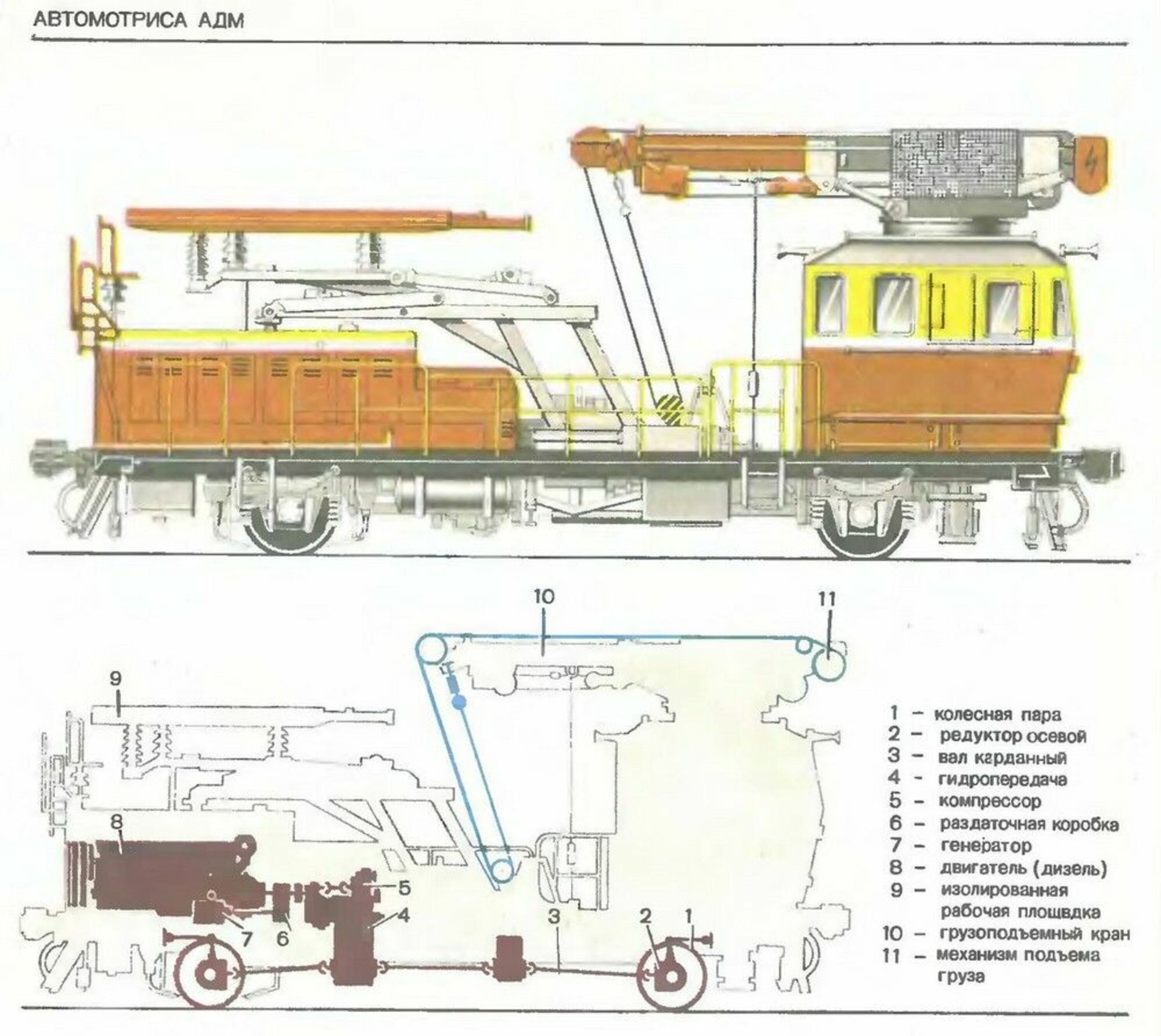
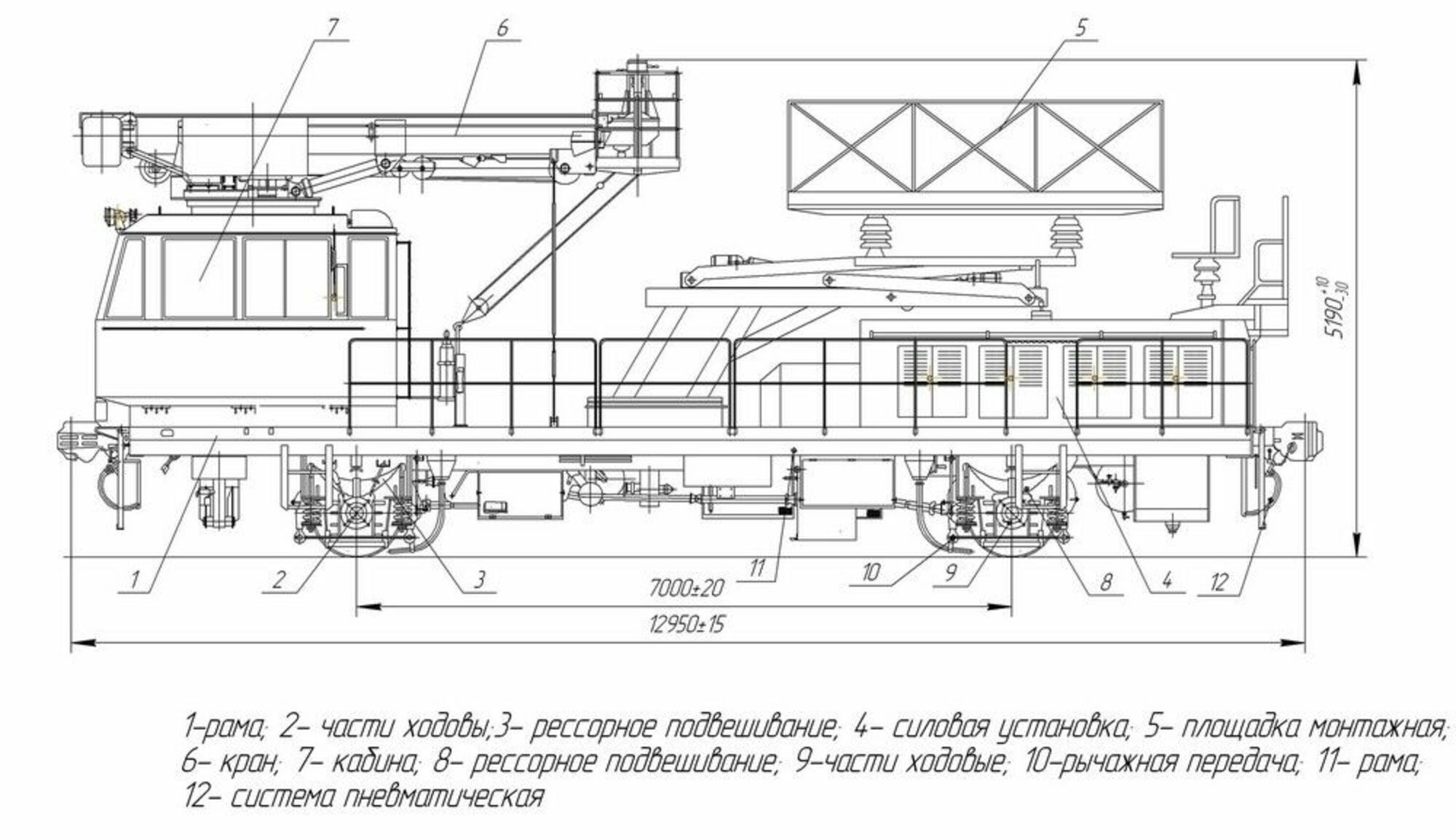
Since 1980 the Tikhoretsk Plant has continued to produce railcars for similar purposes. A new railcar with greater capabilities was created thanks to a crane installed on the driver's cabin, which was assigned the ADM series (diesel assembly railcar).

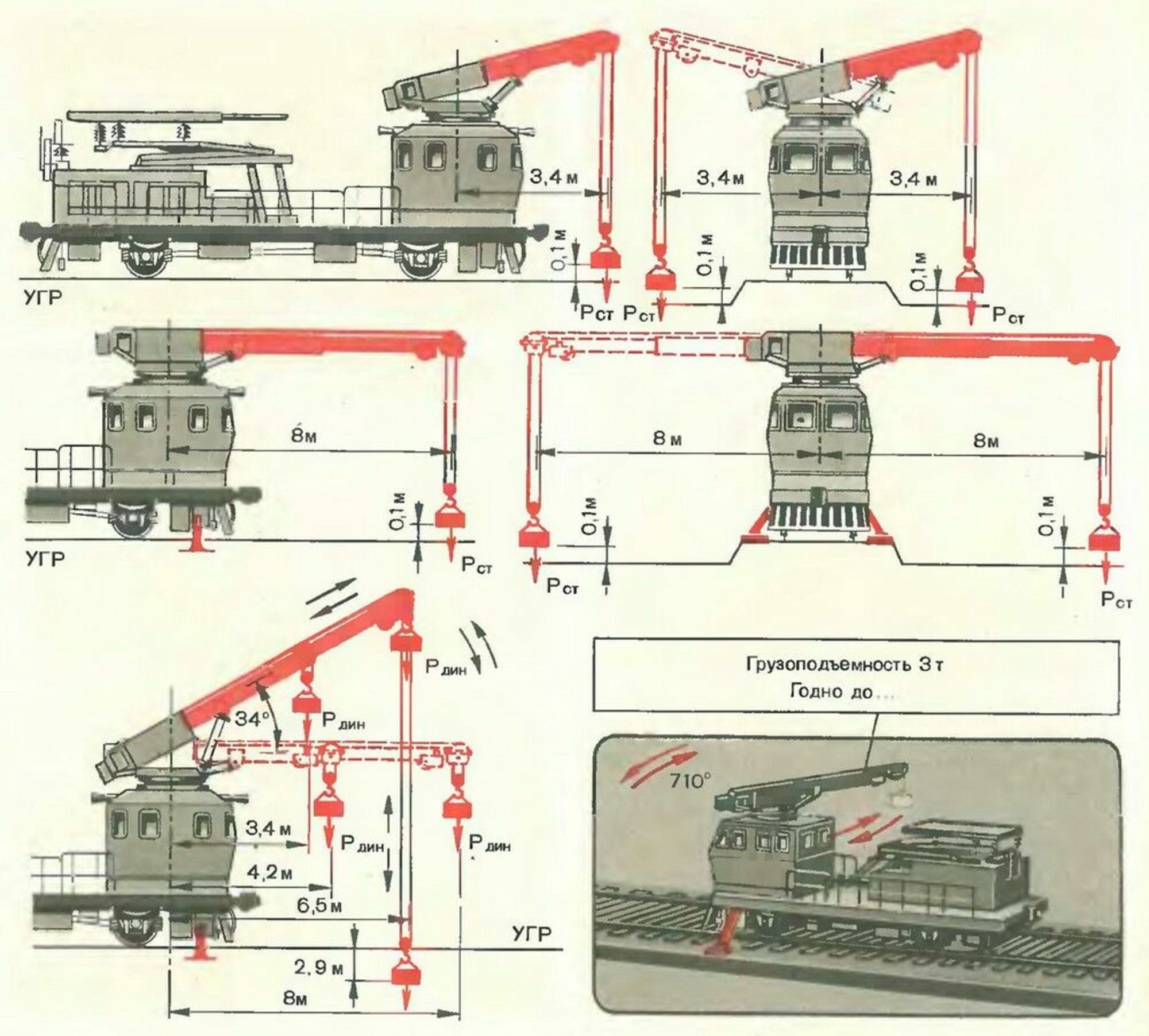
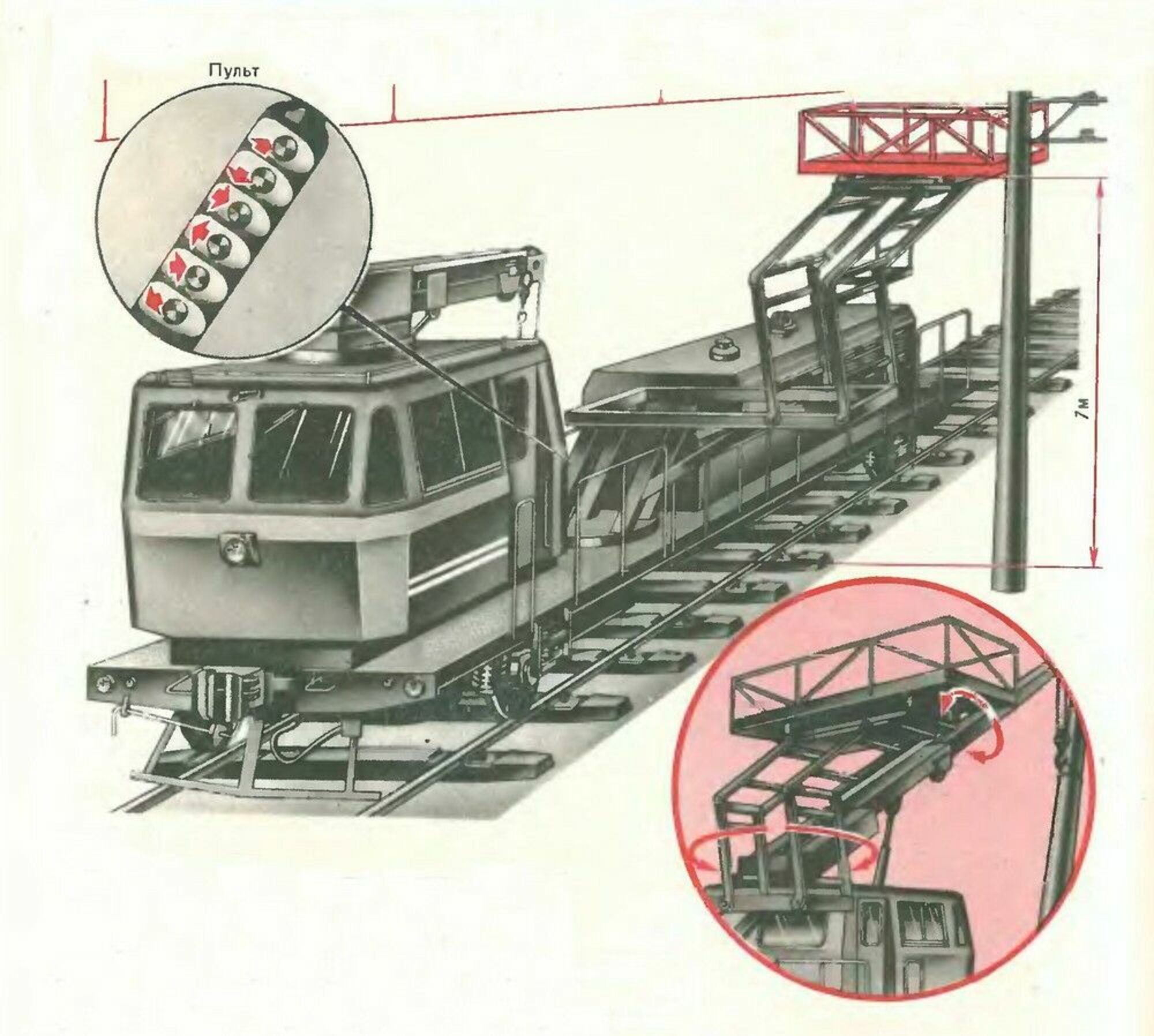
The crane equipment allows for the installation of contact network supports, and the isolated assembly platform — work under voltage. The railcar was controlled by the driver and his assistant. It had a lifting work platform, isolated from the grounded parts, which allowed work on the contact network under direct and alternating voltage. The platform was controlled remotely. Work could be carried out at a height of 6.8 m from the track axis. The machine could be operated with a trailer train of up to 60 tons.

In the museum

The diesel assembly railcar ADM 751 was built in 1988 by the Tikhoretsk Machine-Building Plant of Heavy Track Machines named after V.V. Vorovskogo. In 2015 it entered the Museum of Russian Railways in St. Petersburg.

Despite the appearance of more modern models, today some ADMs are still in operation. These railcars have become an important part of the history of the development of railway technology in our country.

Railway electrification required not only the creation of new types of locomotives and power supply systems, but also the construction of a special contact network. The contact wire was at a height of at least 5,750 mm above the rail head level (RHL), and at crossings - at least 6,000 mm. Special equipment was created to work at such a height and to ensure safe work for fitters.

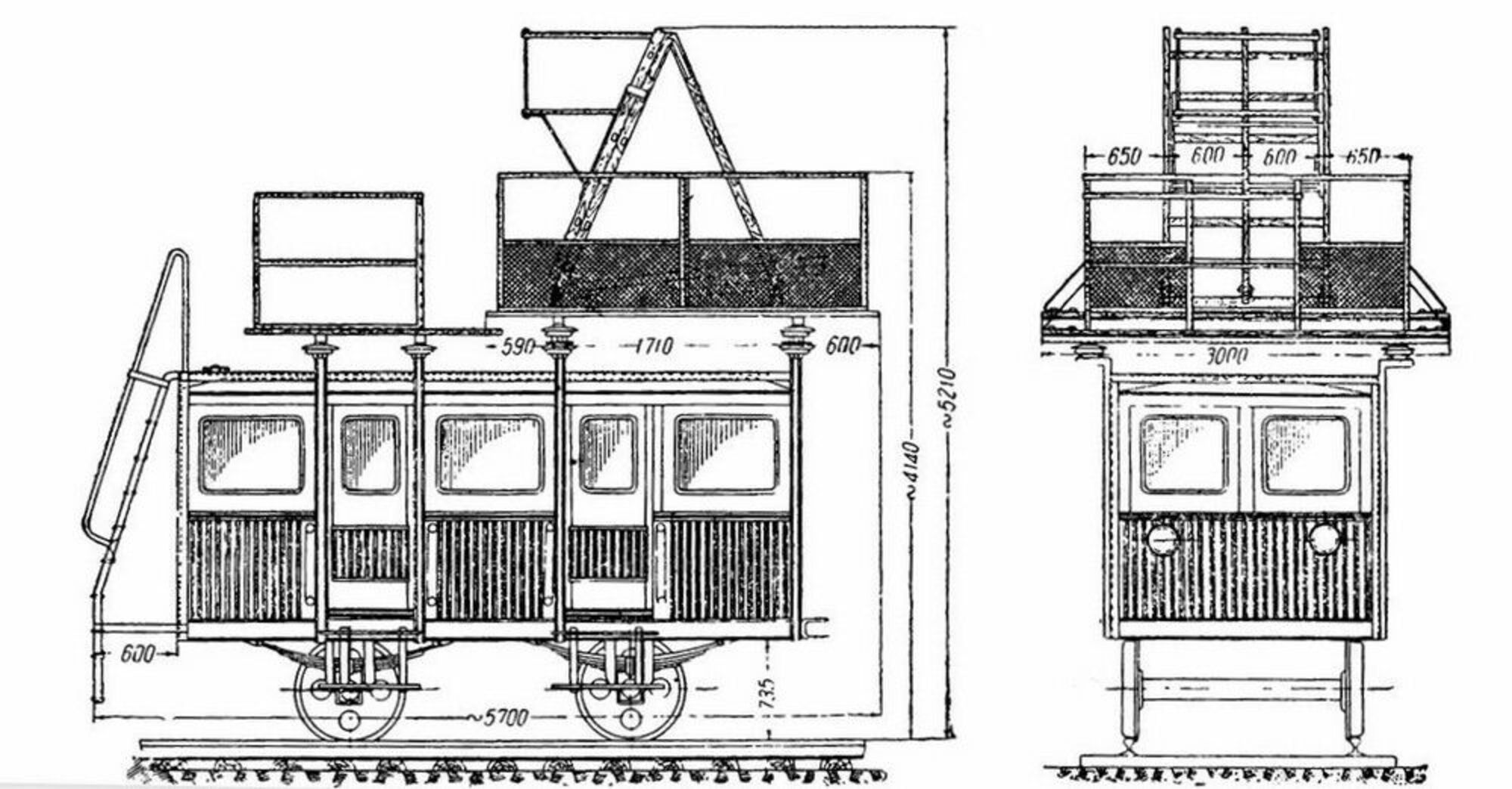
By the end of the 50s, they mastered the production of 15 types of products, including the DM type assembly and restoration trolley. This trolley was intended for assembly and repair and restoration work on electrified railways. It could also be used as a traction unit with a trailer train of up to 20 tons. The design of the chassis was borrowed from the MK2-15 motor locomotive of the Kaluga plant.

Parameters

Technical
specifications

Track, mm
1,524
Wheel arrangement
0-2-0
Load capacity, t
2.0
Number of passenger seats, pcs.
8
Tractive force (tangential), kg
2,160
Minimum radius of passable curves, m
90
Adhesive weight, t
13.6
Axle load, t
Front — 6.8; rear — 6.8
Length between buffers, mm
10,146
Base, mm
5,200
Width, mm
3,150
Height, mm
5,010
Wheel diameter by rolling circle, mm
600
Wheel type
Cast iron with bleached rim
Engine type
ZIL-120
Maximum power, h.p.
90
Number of cylinders, mm
6
Cylinder diameter, mm
101.6
Piston stroke, mm
114.3
Compression ratio
6.0
Engine capacity, l
5.55
Crankshaft speed at maximum power, rpm
2,400
Specific fuel consumption, g/(hp h)
255
Dry weight of engine with gearbox and clutch, kg
570
Primary fuel
Gasoline A-66
Transmission type
Mechanical
Clutch type
Friction, dry
Gearbox type
ZIL-150, five-speed
Capacity of one fuel tank, kg
95
Capacity of water cooling system, kg
30–40
Brake type
Shoe, lever
Number of brake pads per axle, pcs.
2
Air pressure in brake cylinders, kg/cm²
4.4
Manufacturer
V. V. Vorovskiy Tikhoretsk Locomotive Repair Plant

Drawings
and diagrams

History

Chronology

  1. 1929 In the pre-war period, the UA series railcar was used for these purposes, which was produced by the Kaluga Steam Locomotive and Carriage Repair and Railcar Manufacturing Plant from 1929 to 1941. A version with a platform on the roof for electricians was developed on its basis.
  2. 1950s Since the second half of the 1950s, production of special equipment began at the former Tikhoretsk Locomotive Repair Plant named after V. V. Vorovsky. These are former locomotive repair shops of the Vladikavkaz Railway, opened in 1899. For this purpose, the plant was transformed into a machine-building plant. During this period, the plant mastered the production of new types of machines: they made ballast-compacting machines, crushing and sorting units, TD-40 diesel locomotive jacks, SM-2 snow-removing machines and snow-removing trains based on this machine.
  3. 1980 Since 1980, the Tikhoretsk Plant has continued to produce railcars of this type. They created a new railcar with greater capabilities thanks to the crane installed on the driver's cabin. It was assigned the ADM series - diesel assembly railcar.
  4. 1988 ADM-751 was built by the Tikhoretsk Machine-Building Plant of Heavy Track Machines named after V. V. Vorovskiy in 1988, and entered the museum in 2015.