Today the museum is open from 10:00 to 18:00

Map

Exhibit description

Railway car № 522178

Freight Fleet

The main freight wagon fleet consists of open (gondola) and covered wagons, platforms and tanks. Special types of freight spaces include isothermal wagons, transport wagons, dump cars or self-unloading wagons, as well as industrial transport wagons.

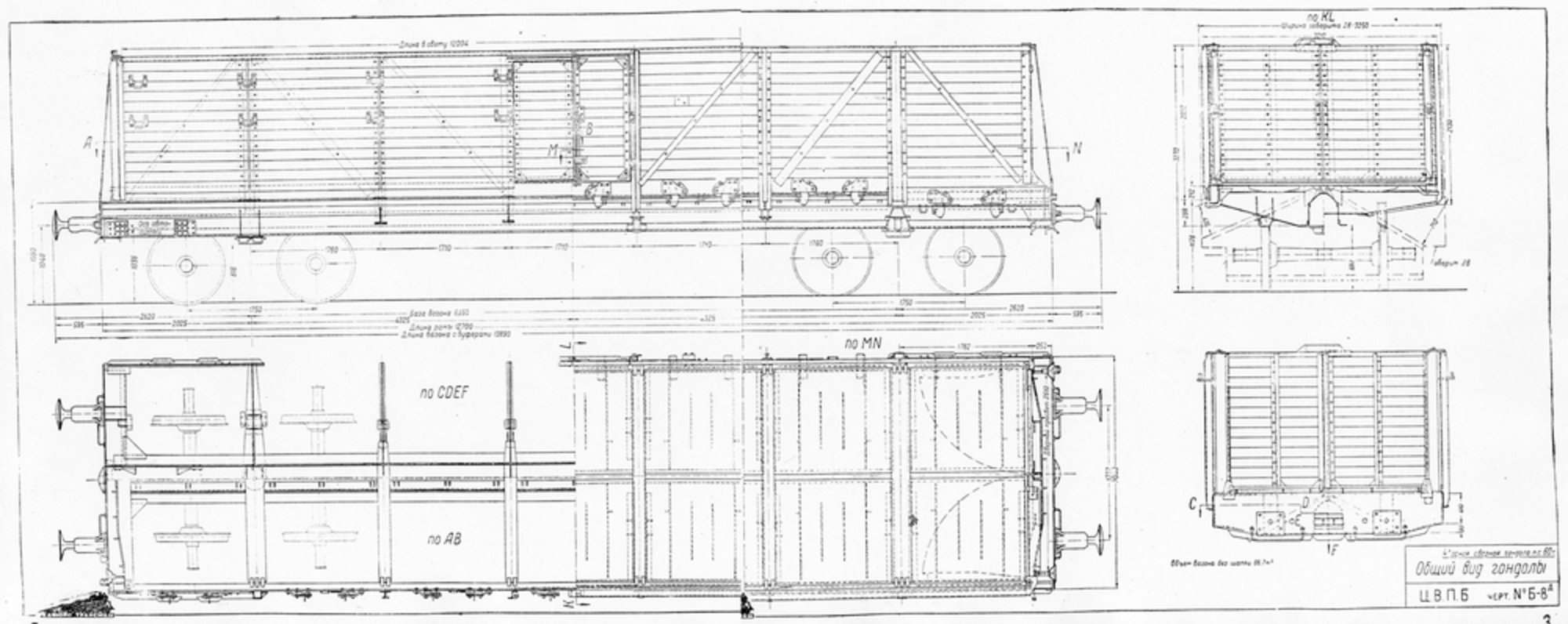
Freight gondola № 522178, located in the museum, was built by the Dneprodzerzhinsk Plant named after the newspaper "Pravda". The plant was originally a wagon department at the Dneprovsky Metallurgical Plant, located in the village of Kamenskoye, which later grew into the city of Dneprodzerzhinsk. In 1926 this department was transformed into a wagon building plant. It mainly produced heavy-duty cars, but also produced gondola cars, hopper cars for coke transportation, and dump cars.

Serial production of gondola cars began in 1936. These were cars with a load capacity of 60 tons on a steel frame and with walls formed by a diagonal truss covered with wooden boards 40 mm thick. Later, they received external double-leaf doors hung on hinges. The end walls had doors opening inward, which made it possible to transport long loads with the doors open. For unloading, 14 bottom hatches were provided. Two-axle Diamond belt bogies were rolled under the car.

Starting from 1936 such gondola cars were built by the Kryukov Plant, the Dneprodzerzhinsk Plant named after the newspaper "Pravda" and the Uralvagonzavod. For some time, gondola cars were built in the post-war period, with carbon steels being replaced by low-alloy ones. Side doors were eliminated: their openings weakened the strength of the walls. Stronger bogies with cast sidewalls of the MT-50 Uralvagonzavod type were rolled under the cars.

From the Thermal Power Plant to the Museum

Freight gondola car No. 522178 of the Pravda newspaper plant rolled off the assembly line in 1949. In the 1960s–1970s it was transferred to TEP-15 of Lenenergo, where it was used to transport peat. It is painted green, typical for freight cars that are leased. It was transferred to the museum from TEP-15 of St. Petersburg in 1999.

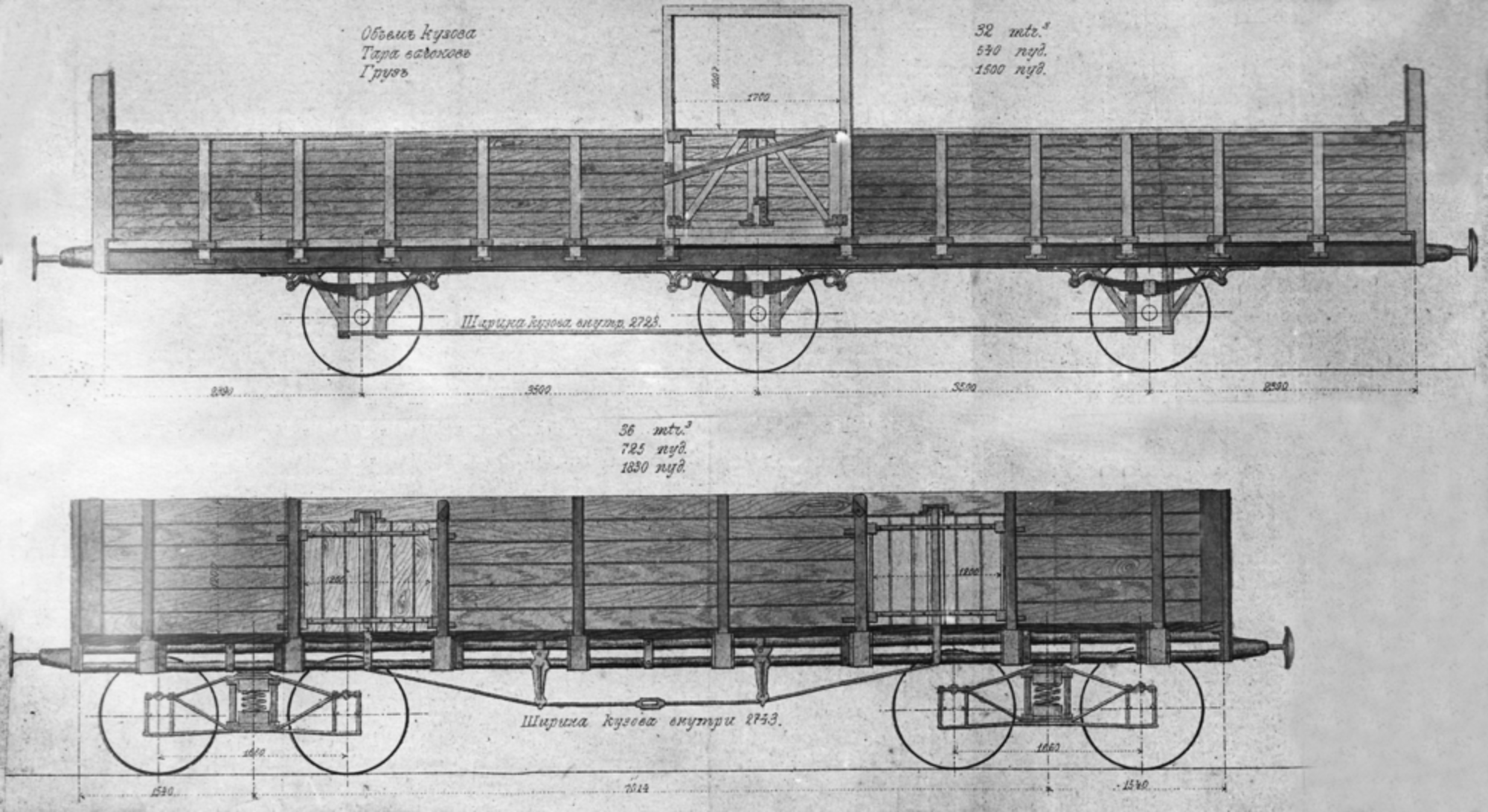
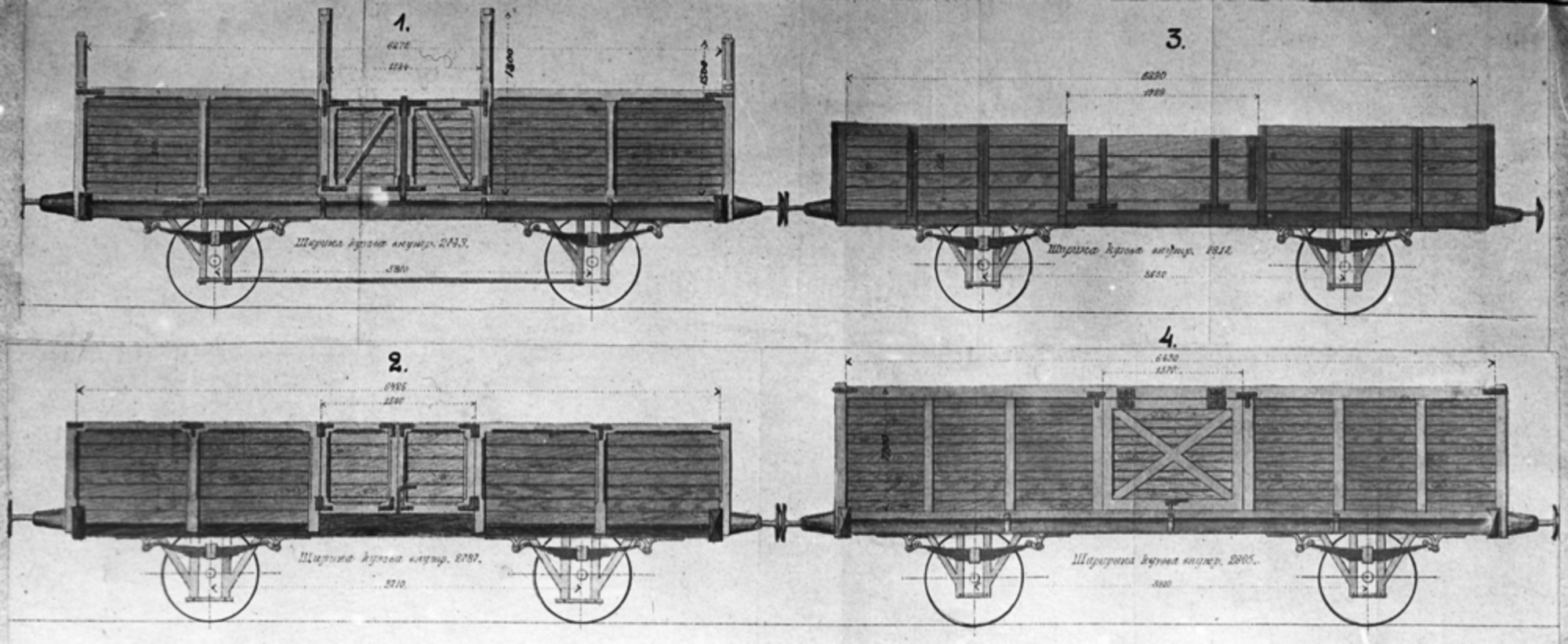
These were two-, less often three-axle gondola cars with a wooden body and doors in the middle of the car. Loading and unloading of cargo by human power - with shovels - or on wheelbarrows took place through these doors.

Parameters

Technical
specifications

Load capacity, t
60
Height inside, mm
1,880
Volume without heap, m³
66.7
Tare of gondola car, t
22
Length of hatch in clear, mm
1,550
Opening of hatch above bogie, mm
435
Opening of hatch between bogies, mm
710
Base of bogies, mm
8,650
Type of harness
Automatic coupling SA-3
Length by buffers, mm
13,890
External width, mm
3,210
Internal width, mm
2,960
Width of end doors, mm
2,610
Width of side doors, mm
1,570
Height, mm
3,270
Type of bogie
Diamond type waist
Base of bogie, mm
1,750

Drawings
and diagrams

History

Chronology

  1. 1862 Open wagons or gondola cars are used to transport bulk cargo that is not afraid of precipitation. The first gondola cars appeared in 1862 on the Moscow-Nizhny Novgorod Railway. They were used on the Ural Mining and Metallurgical Railway and the Donetsk Coal Railway. Most of them were concentrated on the Ekaterininskaya Railway, which served the Donetsk coal basin.
  2. 1903–1904 All-metal short-base gondola cars were also used. During the Russo-Japanese War in 1903–1904, a patent was purchased in France for the production of four-axle all-metal gondola cars of the Fox-Arbel system to deliver coal to Vladivostok and Port Arthur. The cars began to be produced at Russian factories in 1905–1906.
  3. 1915–1917 During the First World War, there was again a shortage of gondola cars, and they were ordered from America. The cars were delivered disassembled and assembled in specially built workshops in Vladivostok. They were delivered in 1915–1917.
  4. 1932 The country's industrialization program adopted in the early 1930s required large quantities of heavy-duty cars. A new type of car was designed at the Krasnoye Sormovo plant in Sormovo in 1932. In 1933, the first prototype was built, and since 1936, these gondola cars have been built by the Kryukov Plant, the Dneprodzerzhinsk Plant named after the newspaper "Pravda" and "Uralvagonzavod".
  5. 1949 The car presented in the museum was built by the Dneprodzerzhinsk Plant named after the newspaper "Pravda" in 1949.
  6. 1960s In the late 1960s - early 1970s, the car was transferred to TPP-15 "Lenenergo", where it was used to transport peat. It is painted green, typical for freight cars that are leased. It was received by the museum from TPP-15 St. Petersburg in 1999.