During and after the Great Patriotic War, many carriages that had previously been used on European railways ended up on the railways of the USSR. Some of them were war trophies, and some were rolling stock that had been transferred as reparations.
Secondary and side lines were not rebuilt, since rebuilding the entire rolling stock was economically inexpedient. The rolling stock included dozens of types of steam locomotives, many of which were "aged". And also hundreds of different types of cars, which had different types of wheel pairs, axle boxes, etc. It was impossible to exclude this train from the inventory, transfer or sell it - there would be nowhere to get a new one to replace it. Therefore, immediately after the war, European rolling stock was used in the annexed territories.
As the railway lines were rebuilt, the rolling stock was selectively converted to a wide gauge. The track width and the type of wheel pairs determine the width of the car frame. Therefore, when installing wheel pairs for a wide gauge, it was necessary to redesign the axle box assembly. That is, the assembly in which the wheel pair rotates. To do this, the guide boxes, or more correctly, the jaws, were redesigned. They were bent so as to increase the distance between the axle boxes in which the axle is located. In this case, it was necessary to move the spring suspension mount, for which additional supports were welded to the car frame. This feature makes it very easy to determine the origin of the car and understand whether it is European or not.
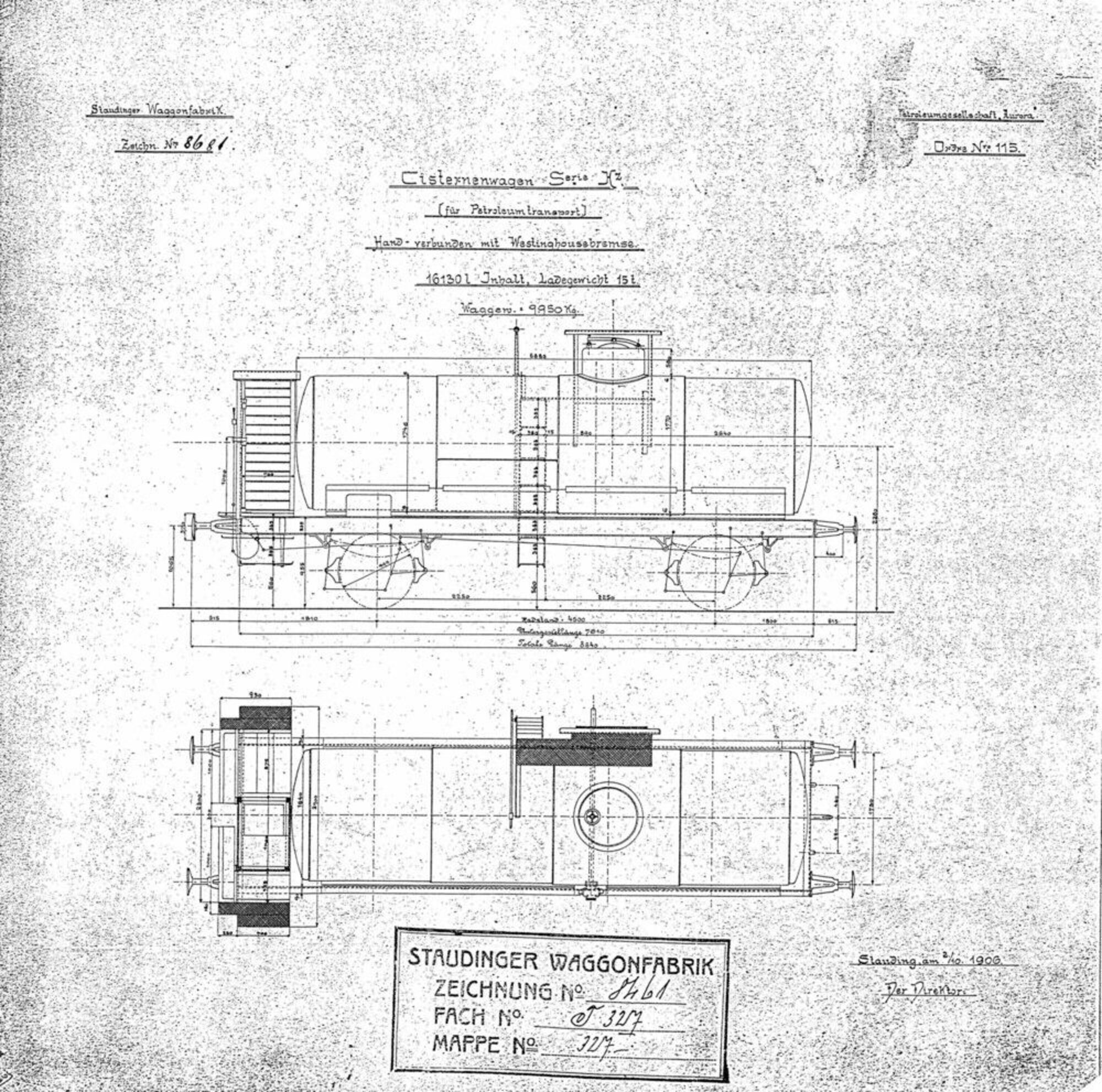
Among the rolling stock that was rebuilt, there were also tank cars for various purposes. Initially, they were used in train work. With the advent of modern rolling stock, they were transferred for business needs to railway divisions and industrial enterprises.
To determine the amount of cargo in tanks, there is a special calibration system.
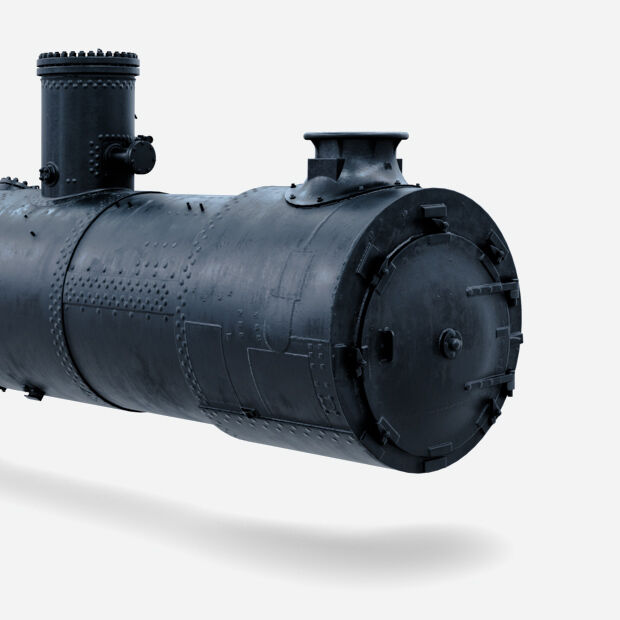
Boilers can have different lengths, diameters, and, accordingly, different volumes. And bulk cargo has different densities and different coefficients of thermal expansion. Therefore, it was not easy to determine the amount of cargo in a boiler.
For this, all tank boilers are calibrated by type. The type of tank boiler is applied to the boiler itself with overhead numbers and is located on the upper left side of the boiler. This also applies to modern tanks. Next, a special ruler is used, which is lowered into the tank boiler and the filling level of the cargo is determined. The amount of cargo is determined according to the table in a special calibration reference book.
That is, to determine the amount of cargo, it is necessary to know the type of tank boiler, the temperature of the cargo, its level in the boiler and the type of cargo itself.
There were other exceptions. For example, the Tver Plant even supplied passenger cars to Italy. But transportation and the development of detailed drawings were expensive, which limited the possibilities of export.