Today the museum is open from 10:00 to 18:00

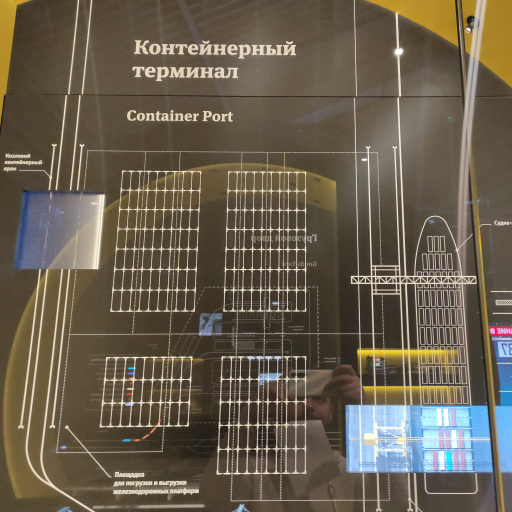
Map

Exhibit description

Track clearing machine Double-track snow plow of the TSUMZ system No. 340

By the early 1880s, non-self-propelled snowplows of all basic types were in operation in Russia: plows, rams, and rotary snowplows. Although plows were the least efficient, they remained the most common for a long time due to their simplicity.


Having renewed orders for snowplows in early 1920, the People's Commissariat of Railways of the RSFSR selected Björk snowplows. Built in the early 1920s, they served for a quarter of a century, but by the late 1940s, the need for their replacement arose.

The Central Directorate of Machine-Building Plants of the USSR Ministry of Railways (TsUMZ) took on the development of new snow removal equipment. The directorate took a comprehensive approach: they developed and introduced a snow plow, the "Taran" snow plow, a rotary snow plow, a self-propelled snow loader, and a snow plow. All of these were designated TsUMZ. It should also be noted that TsUMZ snow plows were built in both wide- and narrow-gauge versions.

In the 1950s, when TsUMZ snow plows were being built, the official term was "plow," whereas today the term "plow" is more commonly used, although there are almost no snow plows of this type left in service today.

Unlike earlier non-self-propelled snow plows (Björk, Burkovsky, and Riga systems), TSUMZ snow plows have pneumatic controls, making maintenance easier. A mechanical control is also available, but as a backup.


Like other non-self-propelled snow plows, TSUMZ snow plows were built for single- and double-track sections, differing in the design of the fenders. Single-track snow plows push snow in both directions, while double-track snow plows push snow in only one direction (the field side).

Parameters

Technical
specifications

Manufacturer
Tula Machine-Building Plant of the USSR Ministry of Railways
Year of manufacture
1951
Snow clearing depth
1 m
Snow clearing width
5.1 m with wings open and 2.4 m with wings closed
Blade clearing depth below the rail head
50 mm
Overall length
12.814 m
Rigid base
5.5 m
Height
4.29 m
Weight
26.5 tons

History

History

  1. 1920 The People's Commissariat of Railways of the RSFSR ordered Björk snowplows.
  2. Late 1940s. The Bureau of the Central Administration of Machine-Building Plants of the USSR Ministry of Railways (TsUMZ) began developing new snow removal equipment.
  3. 1951 The TsUMZ No. 340 double-track plow snowplow was built at the Tula Machine-Building Plant of the Ministry of Railways.
  4. 1987 The TsUMZ No. 340 snowplow became a museum exhibit in 1987.