Today the museum is open from 10:00 to 18:00

Map

Exhibit description

Telegraph communication line Telegraph pole

Telegraph lines

Telegraph poles of the Nikolaev railway were used to organize a telegraph line between St. Petersburg and Moscow.

In 1851–1852 Siemens und Halske manufactured 80 devices for the Russian Empire, and later it received orders for the construction of telegraph lines.

In 1854 the telegraph line was relocated — it became an overhead line. Three wires were suspended through insulators on wooden poles spaced at 67 m intervals. It was through this overhead line that government communications passed. The underground wire was intended for private telegraph communication: now anyone could use it.

Initially, only members of the government and railway employees could use the telegraph between the two cities. Railway workers needed the telegraph to report breakdowns or other emergency situations to other stations. Matters of state importance also began to be resolved along the way.

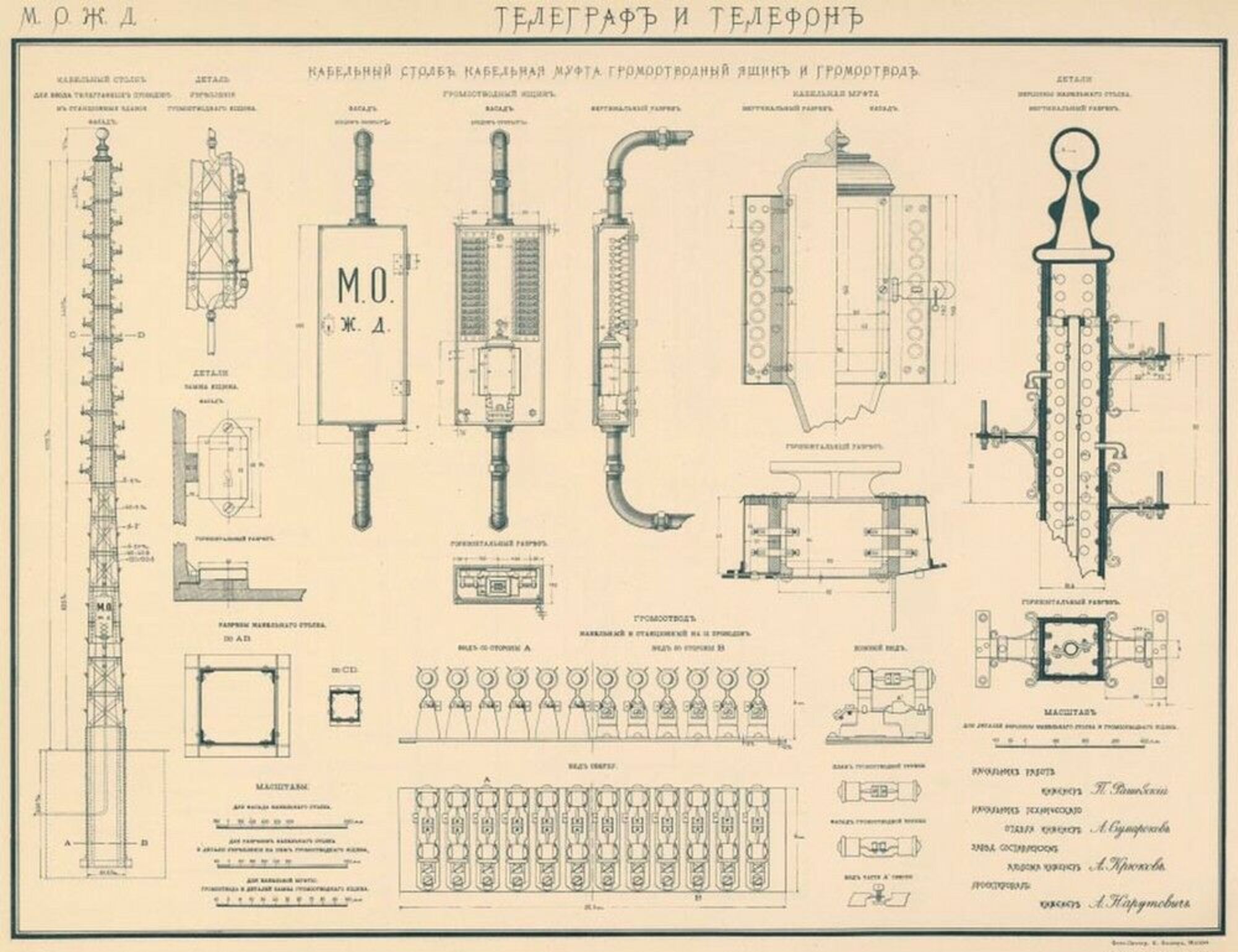
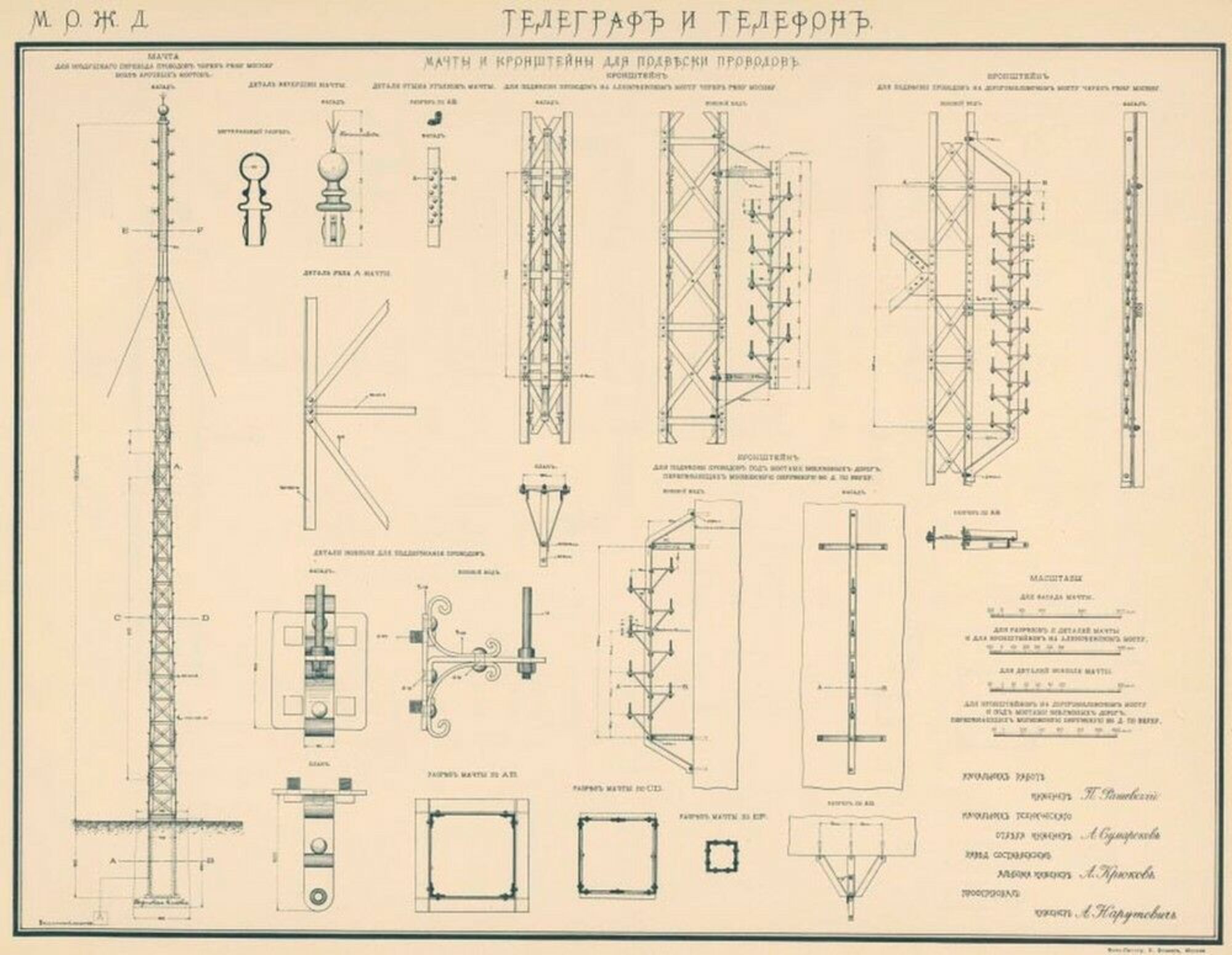
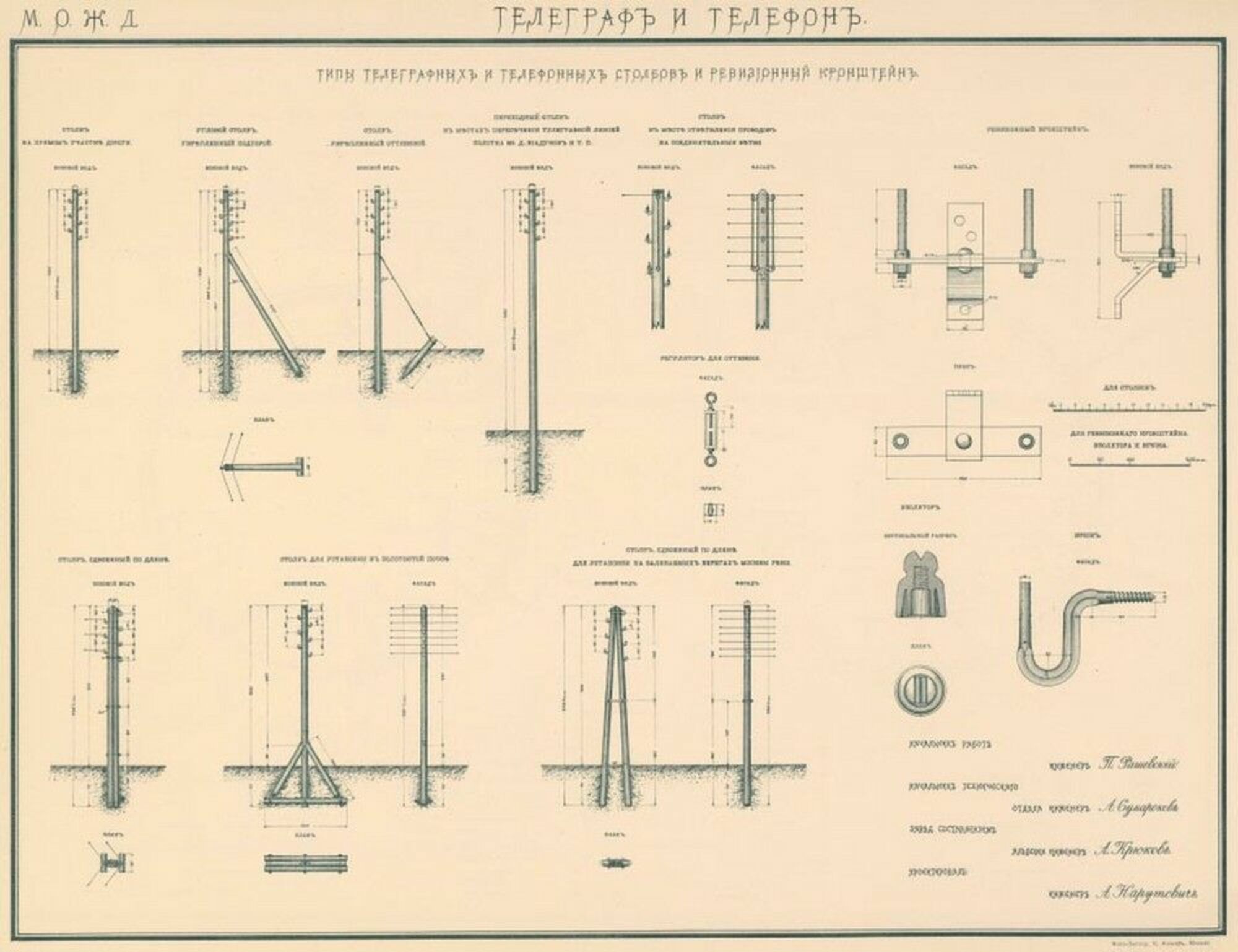
The standard height of the poles was 8.5 m. When telegraph lines crossed each other, or when crossing railways and highways, the height of the poles reached 12.5 m. If the telegraph pole was made of metal, it was equipped with a lightning rod with a copper or gilded tip to prevent rust and pins with platinum ends.

Long-distance telegraph communication was not cheap. The cost of sending a message consisted of a base rate and the price for each word in the message. On average, a short telegram cost ordinary people about 50 kopecks: that's how much a kilogram of meat cost in the mid-19th century. Usually, no more than a couple of hours passed from the time a telegram was sent until it was received by the addressee, sometimes less.

By 1855 telegraph lines connected cities throughout Central Russia.

In the museum

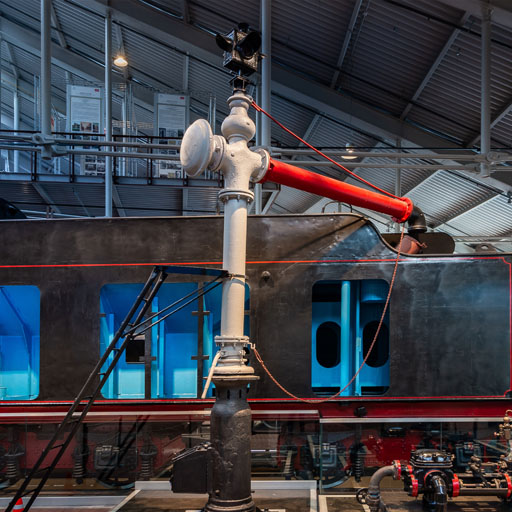
A telegraph pole made in the second half of the 19th century has been on display at the Russian Railways Museum since 2001. Before that, it stood on the main railway line St. Petersburg - Moscow and served as a crossing point for the telegraph line across the Obvodny Canal.

Parameters

Technical
specifications

Drawings
and diagrams

History

Chronology

  1. 1844 The design of the first telegraph line between Moscow and St. Petersburg began in 1844, even before the construction of the railway line. In 1852, the telegraph line began operating, and the first telegraph station was founded in Moscow in the building of the St. Petersburg-Moscow Railway station. The line was built by the German company Siemens & Halske. By the end of 1855, the telegraph connected Central Russia with the south, Finland and Warsaw. In 1880, several types of telegraph devices and teletypes began to be used in Russia.
  2. 1851–1852 In 1851–1852, Siemens & Halske manufactured 80 devices for the Russian Empire. Later, the company also received orders for the construction of telegraph lines. For this purpose, it opened a production branch in Russia in 1853. In 1898, the Joint-Stock Company of Russian Electrical Engineering Plants Siemens and Halske was founded on its basis; its plants produced cables, telegraphs, and telephones. The most widely used on the railway were black-writing devices of the "normal railway model Morse system".
  3. 2001 The cast-iron pole, which is on display at the museum, stood on the main railway line St. Petersburg - Moscow until 2001 and served at the crossing of the telegraph line over the Obvodny Canal. It was made in the second half of the 19th century and was used as a support for telegraph and telephone communication lines, as well as signaling circuits. It was delivered to the museum from the territory of the St. Petersburg-Glavny station of the October Railway in 2001.