Today the museum is open from 10:00 to 18:00

Map

Exhibit description

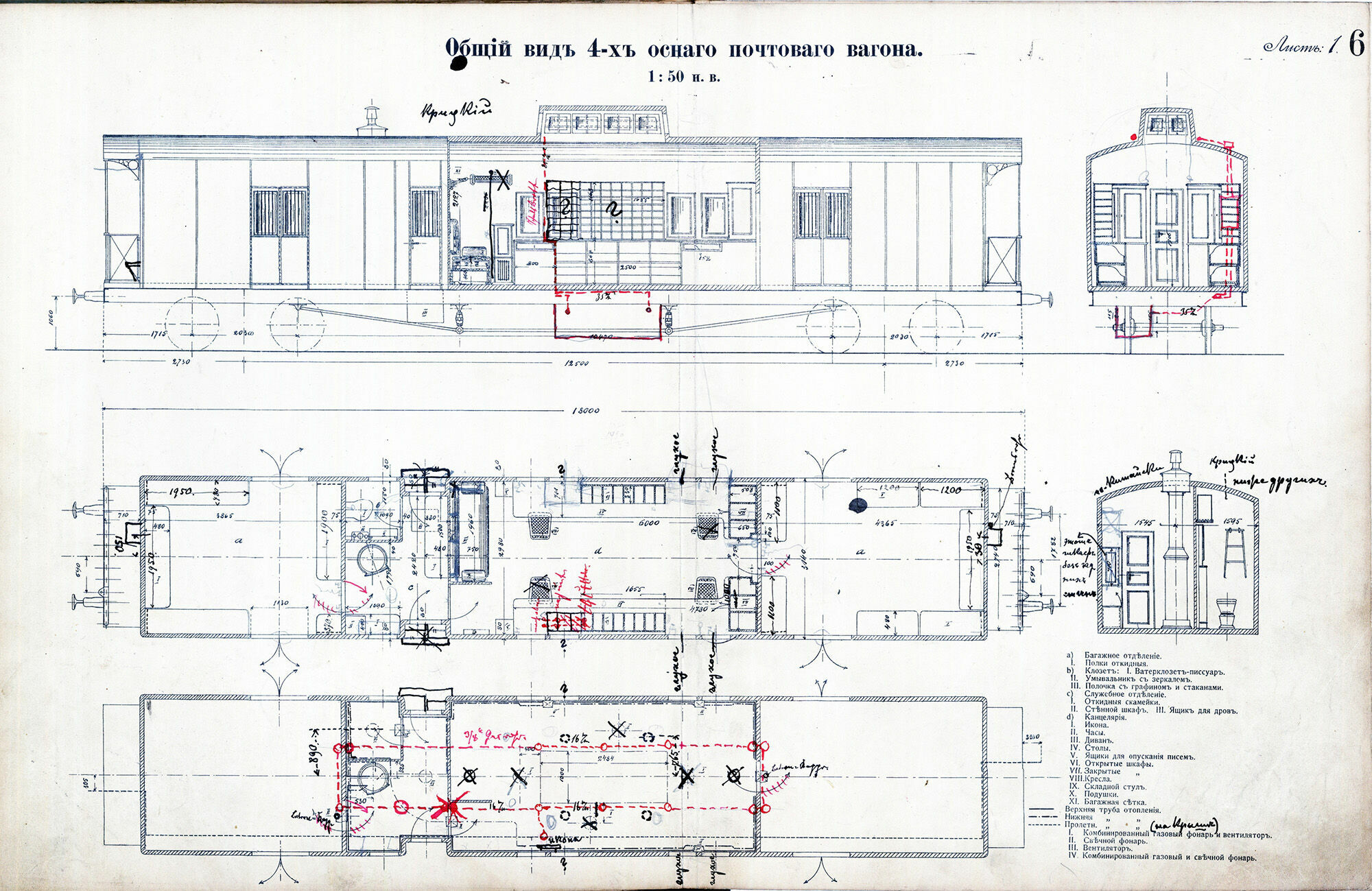
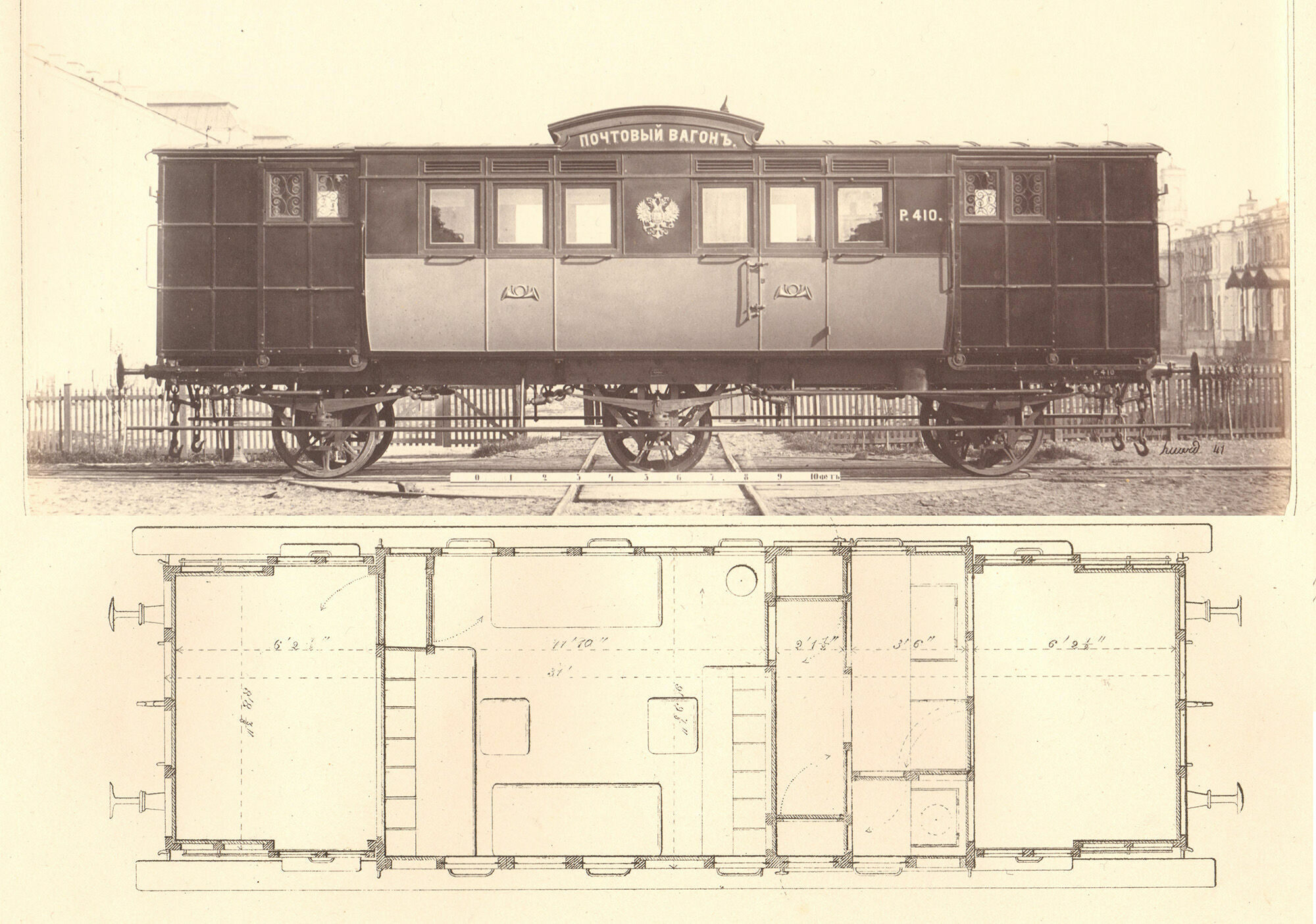
Mail Car S.Z. №558

Starting 1884, the transportation of mail on Russian railways was under the jurisdiction of the Main Directorate of Posts and Telegraphs, which was part of the Ministry of Internal Affairs. This department also owned the mail cars, but their design and orders for new rolling stock were coordinated with the Ministry of Railways.

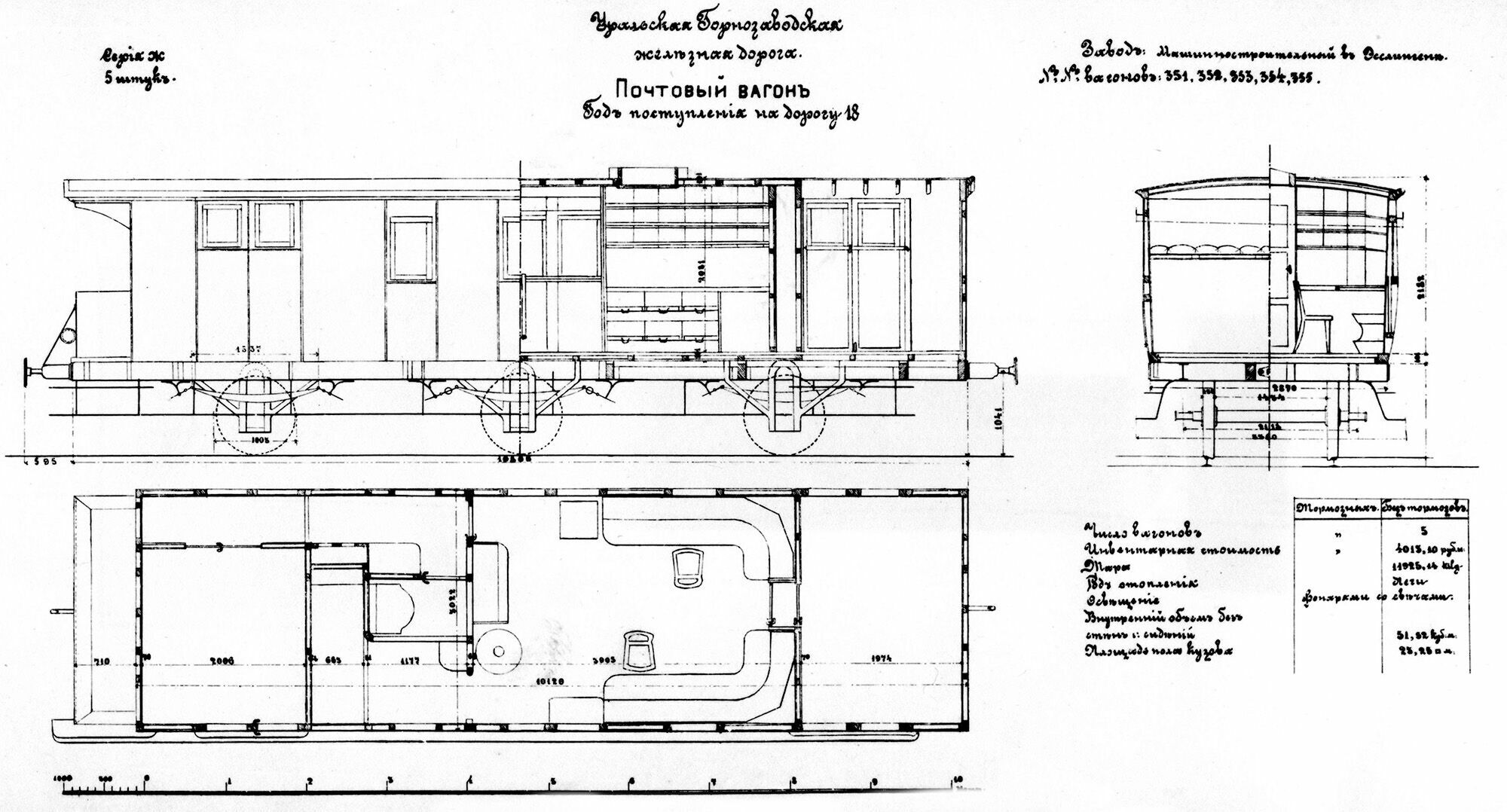
By the end of the 19th century, the volume of mail being transported by rail had increased so much that three-axle mail cars were not sufficient.

In the 1890s, the volume of mail transported by rail on certain routes began to exceed the capacity of the three-axle mail cars in service. As a result, towards the end of the 19th century, a small number of four-axle mail cars were constructed.

New Type

By 1901, the Russo-Baltic Wagon Factory (RBVZ) in Riga received an order from the Main Directorate of Posts and Telegraphs of the Ministry of Internal Affairs to build 14 cars for transporting postal baggage weighing up to 600 poods (9.8 t) for the Samara-Chelyabinsk line of the Samara-Zlatoust Railway and five cars for the Moscow-Kursk-Kharkiv line of the Moscow-Kyiv-Voronezh Railway.

After the first batch of 19 cars, production continued with minor changes, including an increase in storage space by eliminating the open brake platforms.

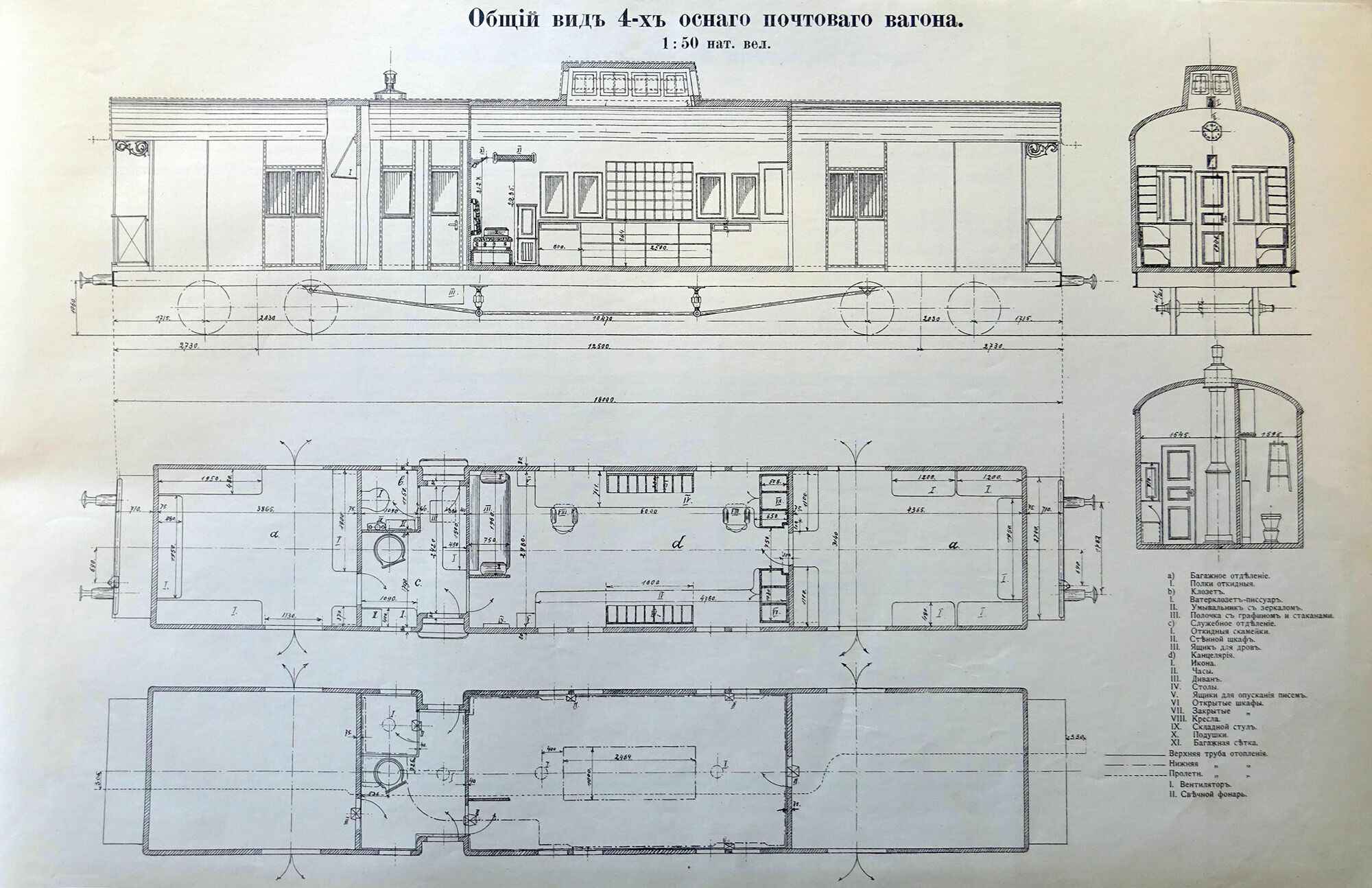
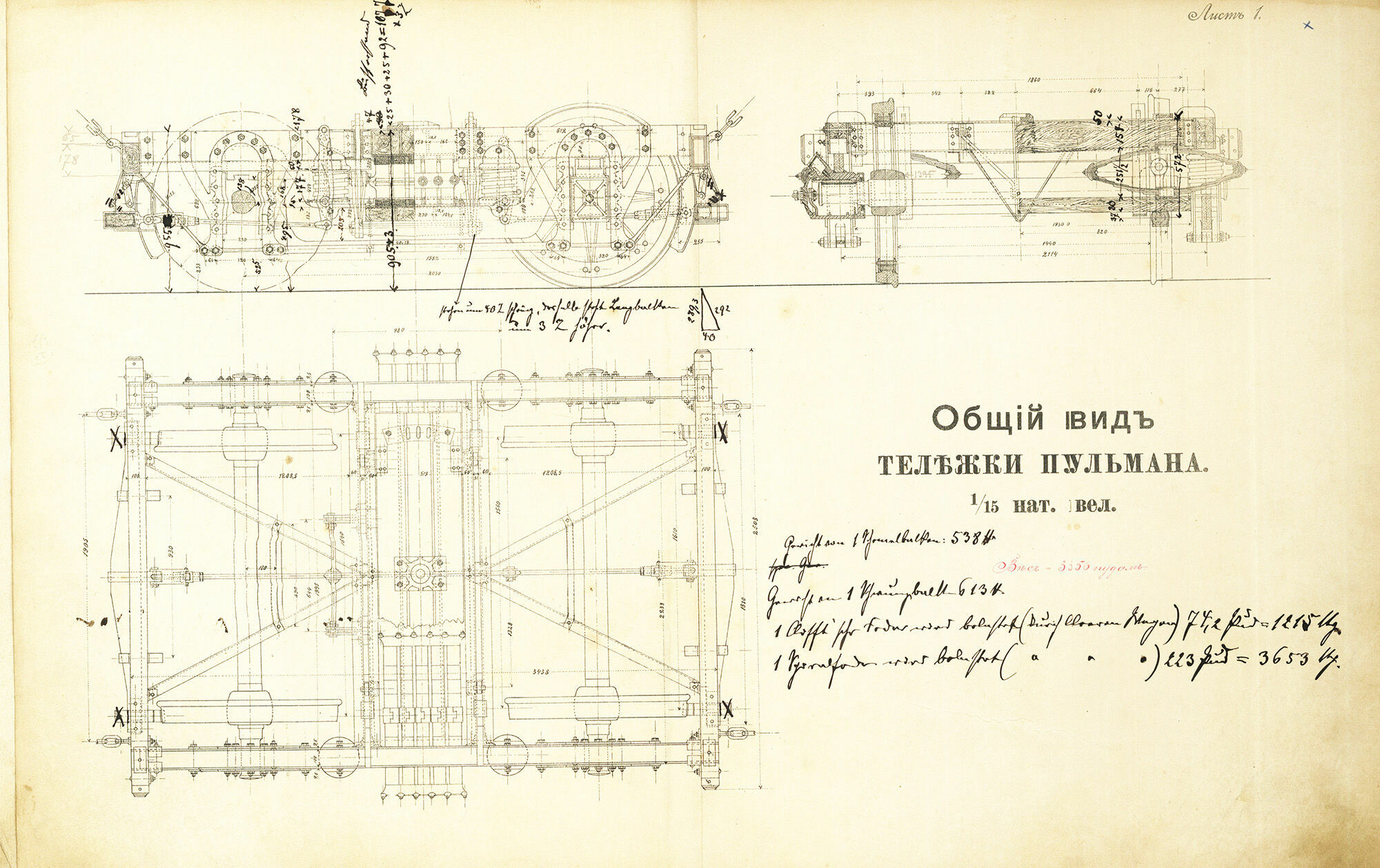
Since a new type of four-axle passenger cars with a body length of 18 m and Pullman trucks, designed for mass production for state-owned railways, was developed at the same time, RBVZ engineers used these passenger cars as a prototype. In 1902, the order was completed. Production of these cars continued with some modifications, the main ones being a change in the roof profile and an increase in storage space by eliminating the open brake platforms.

The design of the 18 m long mail cars on Pullman trucks served as the basis for the development of 20 m long mail cars with Fette trucks in 1927, and later the 20.2 m long mail cars that replaced them.

The car belongs to the first batch of four-axle postal cars designed for transporting postal baggage weighing up to 600 poods (9.8 t), with a body length of 18 m and Pullman trucks. It was built by the RBVZ in 1902 for the Samara-Chelyabinsk line of the Samara-Zlatoust Railway or Moscow-Kursk-Kharkiv line of the Moscow-Kiyv-Voronezh Railway. In 1951, it was assigned to the Leningrad-Moscow railway car station of the Oktyabrskaya Railway under No. 708. By 1973, it was excluded from the passenger fleet.

During its service, the car lost its hand brakes, and the storage space was enlarged by removing the brake platforms, similar to modifications made to cars built in the 1910s. However, it did not undergo further modernisations, such as the installation of automatic couplers, replacement of trucks, or the arrangement of compartments for personnel through a reduction in storage space, which were typical for similar cars.

The car has been preserved for the museum display because it was long-used to store linen at the technical inspection station
for long-distance coaches.

The car has been preserved because it was long-used to store linen at the technical inspection station for long-distance coaches at the Leningrad-Passazhirsky-Finlyandsky Station. It was transferred to the museum in 1990.

Parameters

Technical
specifications

Year of construction
1902
Wagon tare, t
15.4
Distance between the axes of the kingpin beams, mm
12,500
Body length, mm
18,000
Width, mm
3 140
Weight of transported postal baggage, t
9.8
Cart type
Pullman
Ventilation type
Natural
Lighting type
Candle
Body
Wooden
Autonomous heating
Water
Main heating
Steam
Frame
Metal, trusses reinforced

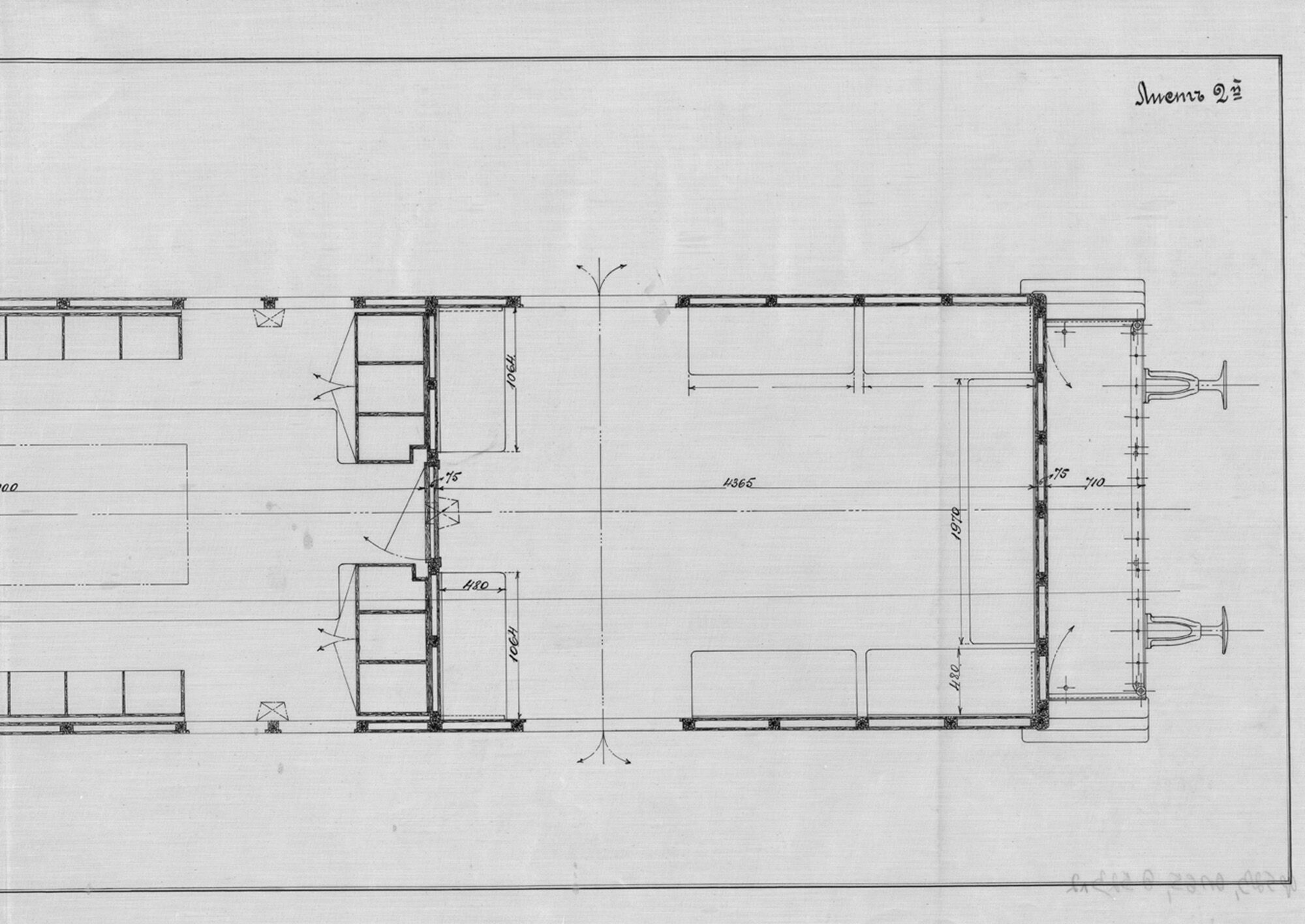
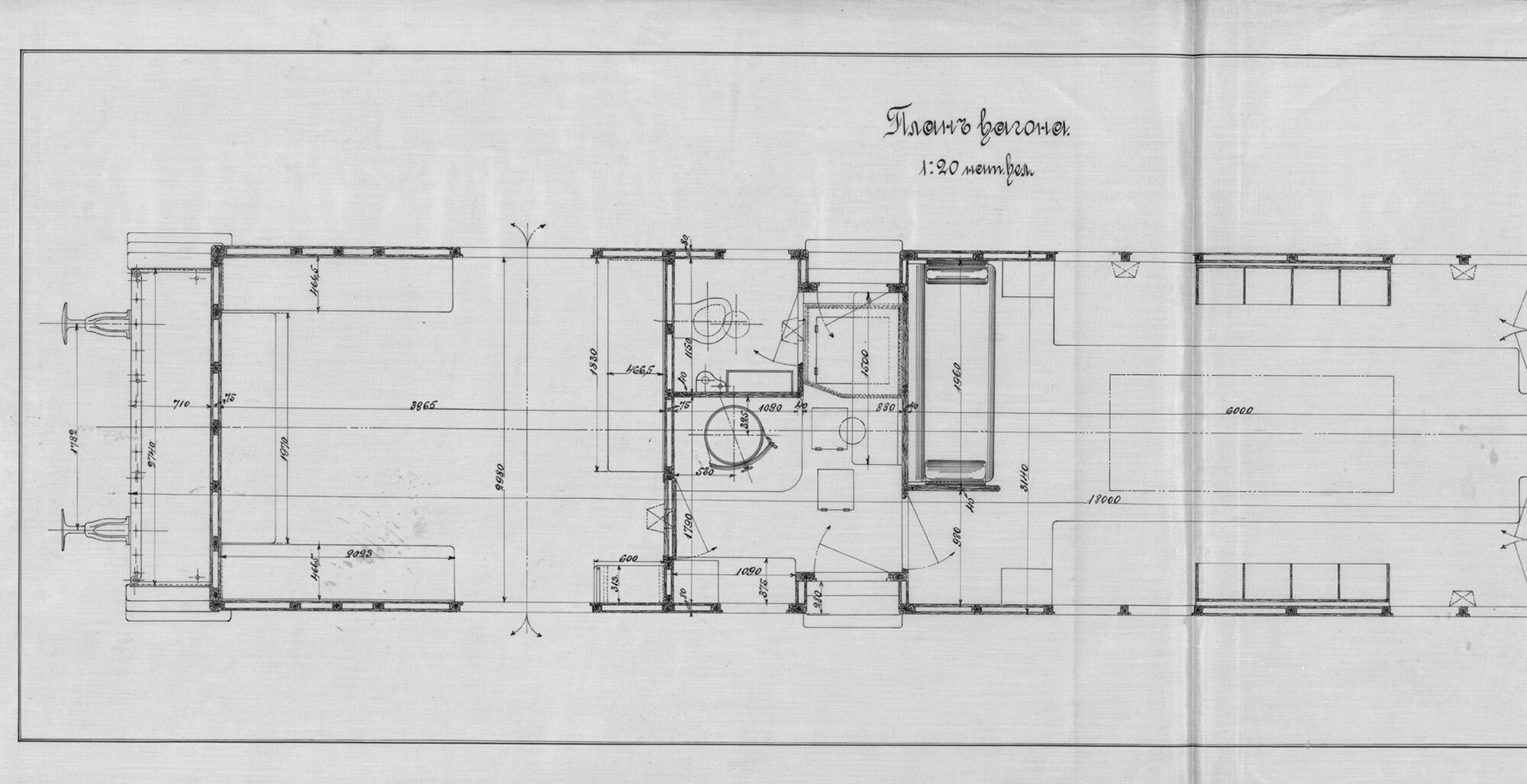
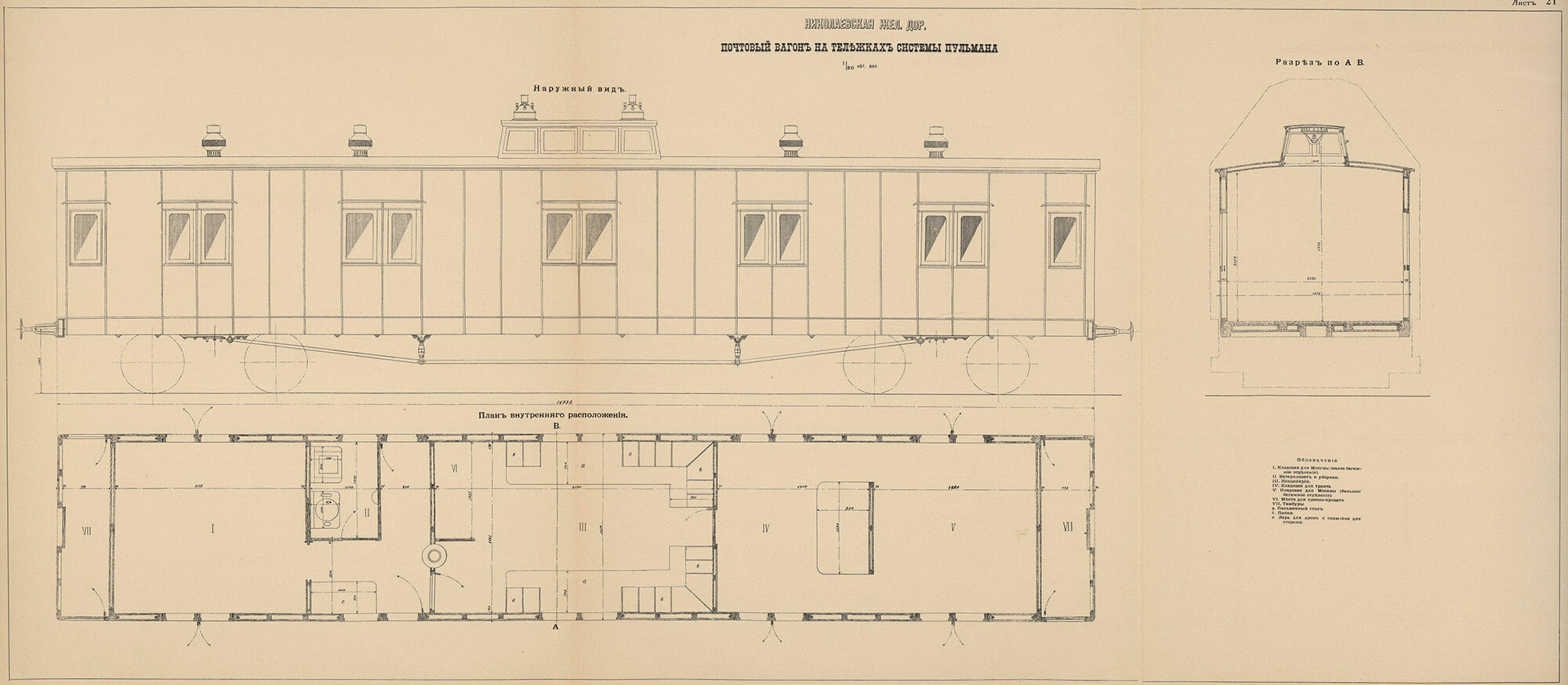
Drawings
and diagrams

History

Chronology

  1. 1849 The first mail cars entered service.
  2. 1896 Mail car No. 558 was presented at the All-Russian Trade and Art Exhibition in Nizhny Novgorod.
  3. 1970s The first standard mail cars entered service.
  4. 1902 A batch of four-axle postal cars was produced, marking a technological breakthrough.