Today the museum is open from 10:00 to 18:00

Map

Exhibit description

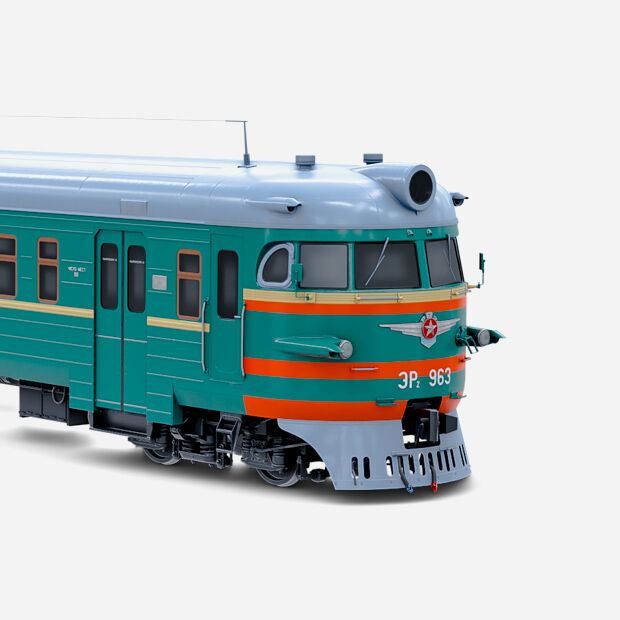
Lead car of the electric section SV 1024

SV 1024 is the driving trailing car from direct current three-car electric multiple unit SV 024. Class SV rolling stock were the first electric multiple units (electric trains) built in series production.

Work to electrify the railways began in the USSR in the later 1920s–early 1930s. The electrification of the Moscow–Mytishchi section of the Northern Railway network, which served very high volumes of suburban traffic in the north-eastern suburbs of Moscow, took place from 1927–1929. A direct-current system with a rated voltage of 1,500 V in the catenary was used, which at the time was considered the most suited for the conditions.

The electrification of railways in the Soviet Union began in the later 1920s. To begin with, a voltage of 1,500 V was used.

The first electrified line on the Oktyabrskaya Railway was the Leningrad-Baltiysky–Novy Peterhof section in 1933, later extended to Oranienbaum and through Krasnoye Selo to Gatchina. After conversion to electric traction, suburban traffic on these lines was served by electric trains produced at the Mytishchi Wagon Works.

Electric Multiple Units

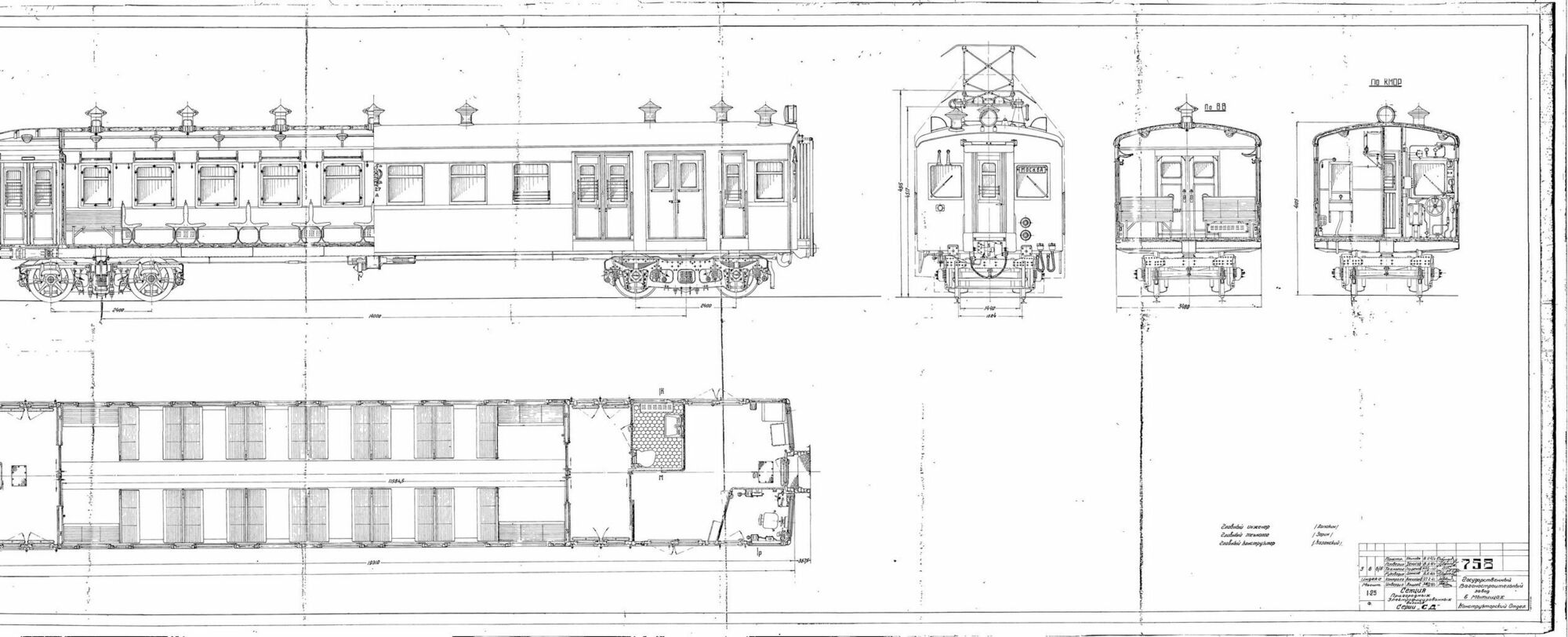
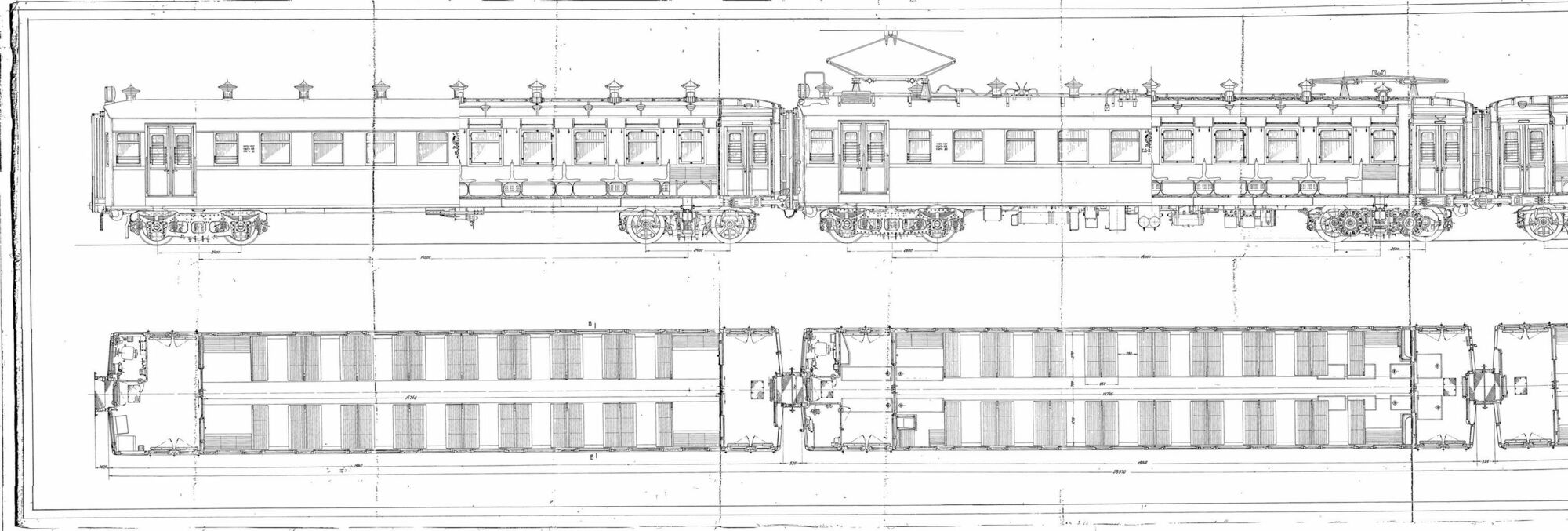
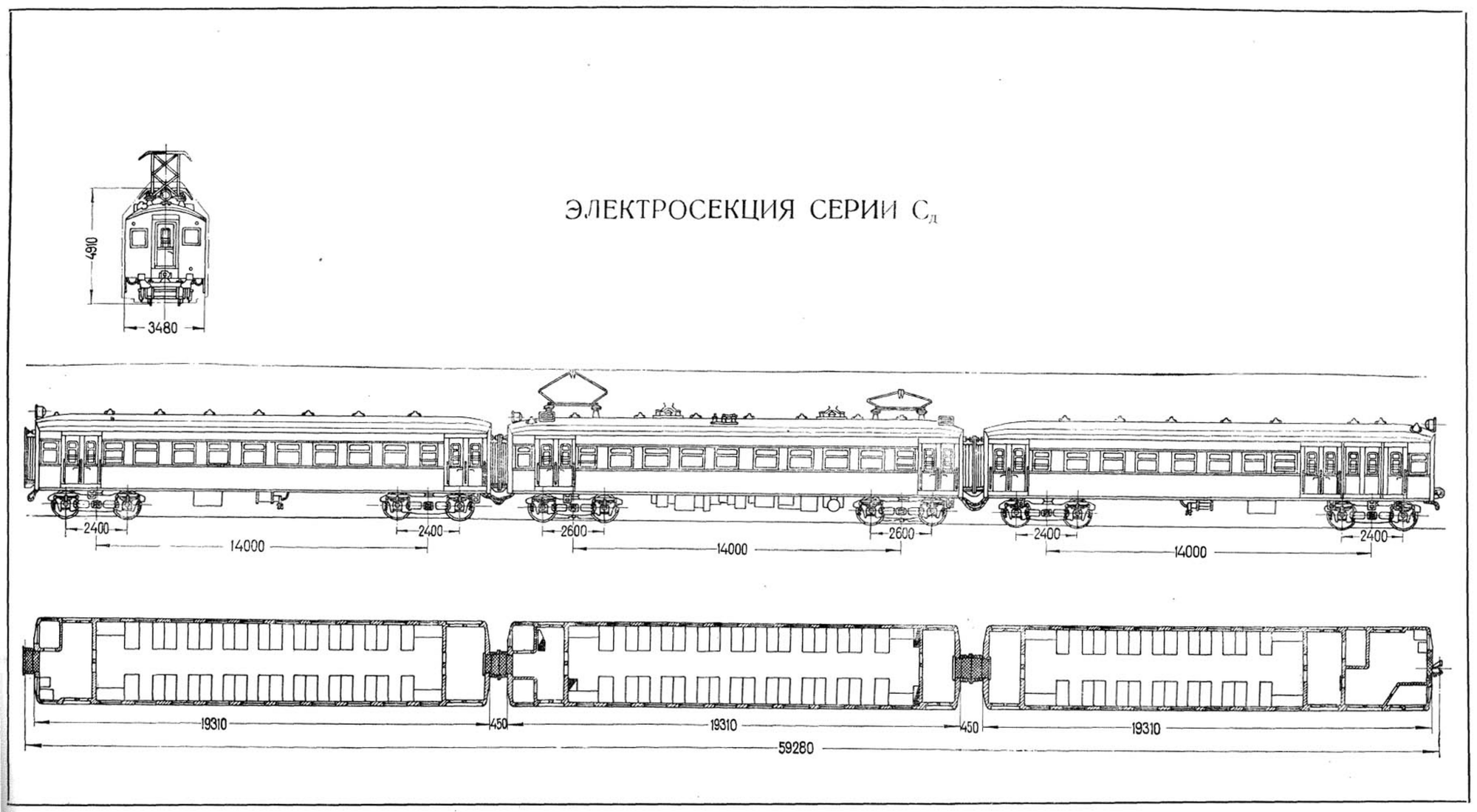
The electric multiple unit consisted of three four-axle cars operating as permanent rolling stock — one intermediate motor car located in the middle and two driving trailing cars at the ends. The intermediate motor car was equipped with two current collectors, four DP-150 traction electric motors manufactured by the Dynamo Plant in Moscow, support-axle suspension, and the main power unit. The trailer driving cars had control cabins at the front end of the body. One of the trailer cars in the rolling stock unit also had a luggage compartment and toilet.

The electric multiple unit consisted of three cars: a motor car in the middle and two driving cars at the ends. One of the driving cars had a toilet and luggage compartment.

These electric multiple units were produced at the Mytishchi Wagon Works from 1929. At first, the electric cars were built using electrical equipment manufactured by English company Vickers, purchased in a lot of 30. Subsequently, three more units were built using spare parts. From 1932, new electric multiple units were fitted with electrical equipment manufactured within the USSR, at the Dynamo Plant.

The electric multiple units were given the designation SV (if built using Vickers equipment) or SD (if built using Dynamo equipment). The letter S indicated the Northern (“Severnaya” in Russian) Railway.

In total, the Mytishchi Wagon Works produced 33 class SV three-car electric multiple units (no. 001–030, 033, 034, 036) from 1929 to 1934, and 232 class SD electric multiple units (no. 031, 032, 035, 037–164, 166–260, 262–267) from 1932 to 1941. Production continued until the outbreak of war and the evacuation of the plant in 1941.

The entire three-car electric multiple unit used the same number as the motor car alone, while the driving trailing cars had an additional figure 1 (car without luggage compartment) or 2 (car with luggage compartment). The cars making up electric multiple unit SV 024 were therefore given the following designations. Driving car without luggage compartment: SV 1024. This car is exhibited at the museum. Motor car: SV 024. Driving car with luggage compartment: SV2024.

The unit as a whole was referred to by the same designation as the motor car. To  refer to a driving car, this number had a 1 added if it had a toilet and a 2 added if it had a luggage compartment.

Operation

The majority of SV and SD-class electric multiple units were operated on electrified lines in the areas surrounding the Moscow and Leningrad Railway Junctions. Some were also operated on the Ordzhonikidze Railway (on the Mineralnye Vody-Kislovodsk section, electrified in 1936–1937) and Kuybyshev Railway (on the Kuybyshev-Bezymyanka section, electrified in 1944), among others.

In the event of high volumes of suburban passenger traffic flow, two or even three electric multiple units might be connected into a six- or even nine-car electric train.

Two or three electric multiple units could be combined into one train in the event of high volumes of passenger traffic flow.

In the post-war period, experiments began on operating units at two direct current voltages — 1,500 and 3,000 V — and later on, there was a systematic transition from 1,500 V to 3,000 V, which soon became the standard for the USSR’s railways. Accordingly, the electric multiple units were upgraded and given the new designation SM3.

Most SV and SD electric multiple units ceased being operated on the rail networks of the USSR in the 1970s.

The driving trailing car in the museum, SV 1024 from electric multiple unit SV 024, was built in 1932 and was operated from the Leningrad-Baltiysky Depot. In 1955, it was converted to 3,000 V and received the new designation SM3 1024. In the early 1960s, it was upgraded with pneumatically driven entrance doors. After being removed from the inventory, the car was used for a long time as a warehouse.

Parameters

Technical
specifications

Year of construction
1932
Nominal contact line voltage, V
1 500
Design speed, km/h
85
Service mass, t
37,5
Body length, m
23,6
Number of axes
4
Wheel diameter, mm
1 050
Design payload, TS
10
Length along axes of automatic couplers, mm
20 010
Body width, mm
3 480
Body height, mm
4 075
Wheelbase, mm
2 400
Number of seats
108
Number of standing places
52
Type of current, t
Constan

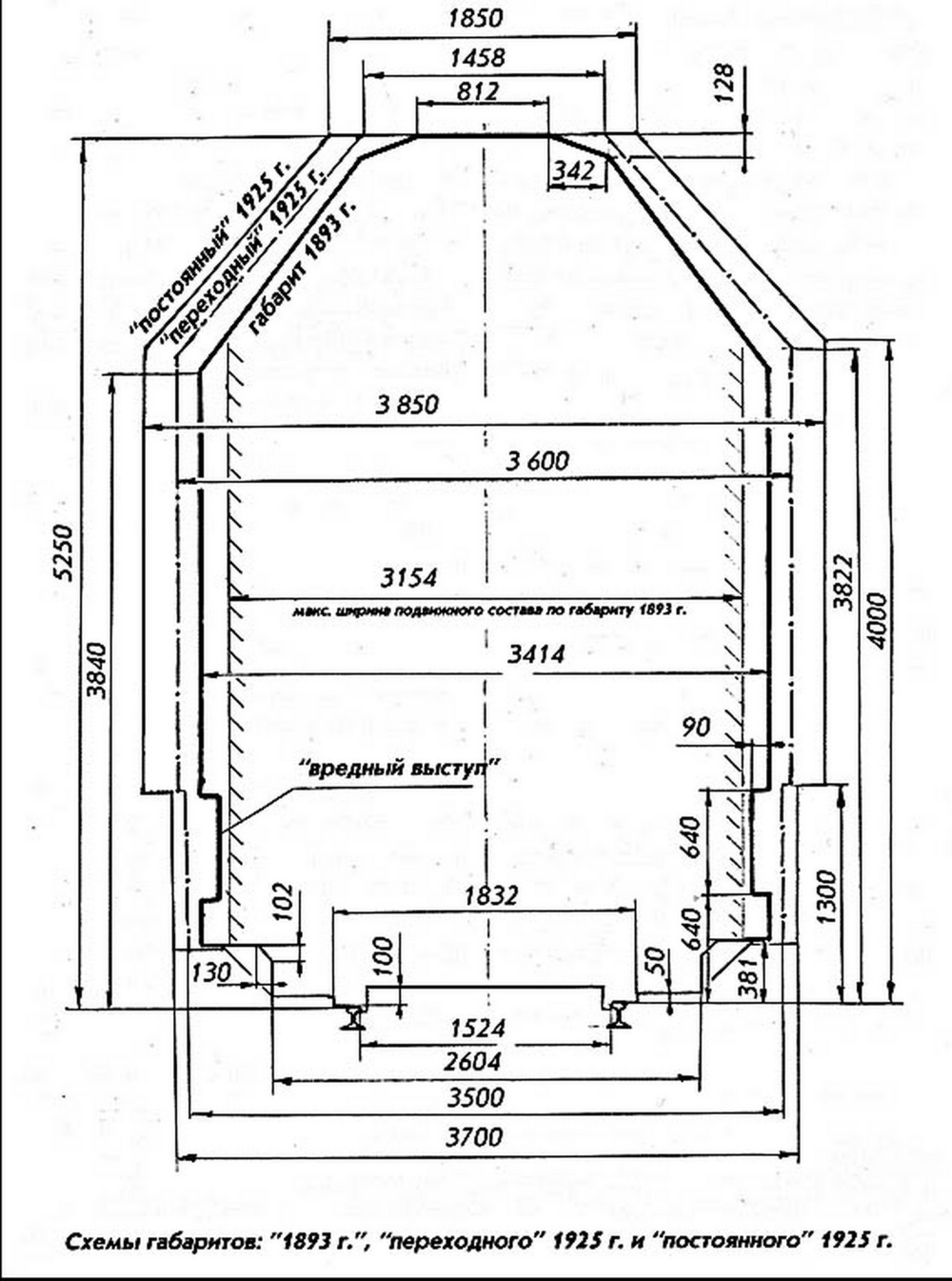
Drawings
and diagrams

History

Chronology

  1. Late 1920s Railway electrification in the USSR begins.
  2. 1927–1929 Electrification of the Moscow-Mytishchi section of the Northern Railway.
  3. 1929 Production of electric multiple units based on imported Vickers equipment begins at the Mytishchi Wagon Works.
  4. 1932 Production of electric multiple units with USSR-manufactured electrical equipment begins, starting at the Dynamo Plant.
  5. 1932 Driving trailing car SV 1024 from electric multiple unit SV 024 is built.
  6. 1955 Car SV 1024 is converted to 3,000 V.
  7. 1970s Operation of most SV and SD cars on USSR railways ends.
  8. 1996 Car SV 1024 is brought to the Russian Railway Museum in St. Petersburg.