Today the museum is closed

Map

Exhibit description

Electric train ВС250 "Sokol"

New program

In 1988 the USSR developed the scientific and technical program "High-speed environmentally friendly transport". A justification for the creation of high-speed highways (HSR) with a maximum speed of 300-350 km/h was prepared. In March 1991 the HSR project on the Leningrad - Moscow route was allocated. The implementation was carried out by the Russian Open Joint-Stock Company "High-Speed ​​Highways" (RAO "HSR").

The general developer was the Central Design Bureau of Marine Military Equipment "Rubin", the general designer was academician I.D. Spassky. The project was given the commercial name "Sokol". More than 60 domestic organizations and nine foreign companies were involved in the development and production of the train.

Most of the involved research centers of the defense complex took part in the creation of rolling stock for the first time; the designers lacked specific railway knowledge. The specialists of the Ministry of Railways expressed a negative attitude towards the decisions made by the developers. As a result, these organizations have been effectively removed from participation in the creation of the electric train since 1995.

The first experimental intermediate car body was manufactured on April 1 1998 and sent for strength testing, after which the experimental head part was assembled. From June 23 to December 28 1998 six bodies of the first train were manufactured. The experimental six-car train ES250-001 was first publicly presented on July 28 1999 in Tikhvin. In 2001 it underwent adjustment tests, according to the results of which it was not recommended for production. The project is closed.

Under arrest

After the bankruptcy of RAO VSM and the transfer of its shares, which belonged to the state, to OJSC Russian Railways in 2010, the new owner intended to transfer the train to educational institutions as a visual aid. Since 2010 the electric train ES250-001 has been under arrest on the territory of the Metallostroy depot in connection with enforcement proceedings on claims against RAO VSM.

Today, three cars of this train are in the museums of the October Railway in St. Petersburg (Baltic Station) and the Moscow Railway in Moscow (Rizhsky Station).

The high-speed train was to take on part of the passenger flow between the two largest cities in the country. The general developer of the first domestic high-speed train was the Rubin Central Design Bureau of Marine Engineering, the general designer was academician I. D. Spassky. The project was given the commercial name "Sokol". More than 60 organizations, enterprises of railway transport and the defense industry, as well as 9 foreign companies, were involved in the development and manufacture of the train's systems and equipment.

Unfortunately, from the very beginning of the project, interaction between RAO VSM and the Ministry of Railways did not improve. Most of the involved research centers of the defense industry took part in the creation of railway rolling stock for the first time. The designers lacked specific railway knowledge.

Today, three cars of this train are in the museums of the October Railway in St. Petersburg (Baltic Station) and the Moscow Railway in Moscow (Rizhsky Station).

Parameters

Technical
specifications

DC voltage, V
3 000
AC voltage/frequency, V/Hz
25 000/50
Composition
2 three-car couplings
Total composition:
6 cars
Car axles
4
Intermediate car length, mm
26 000
Leading car length, mm
27 000
6-car train full length, mm
162 800
Car width, mm
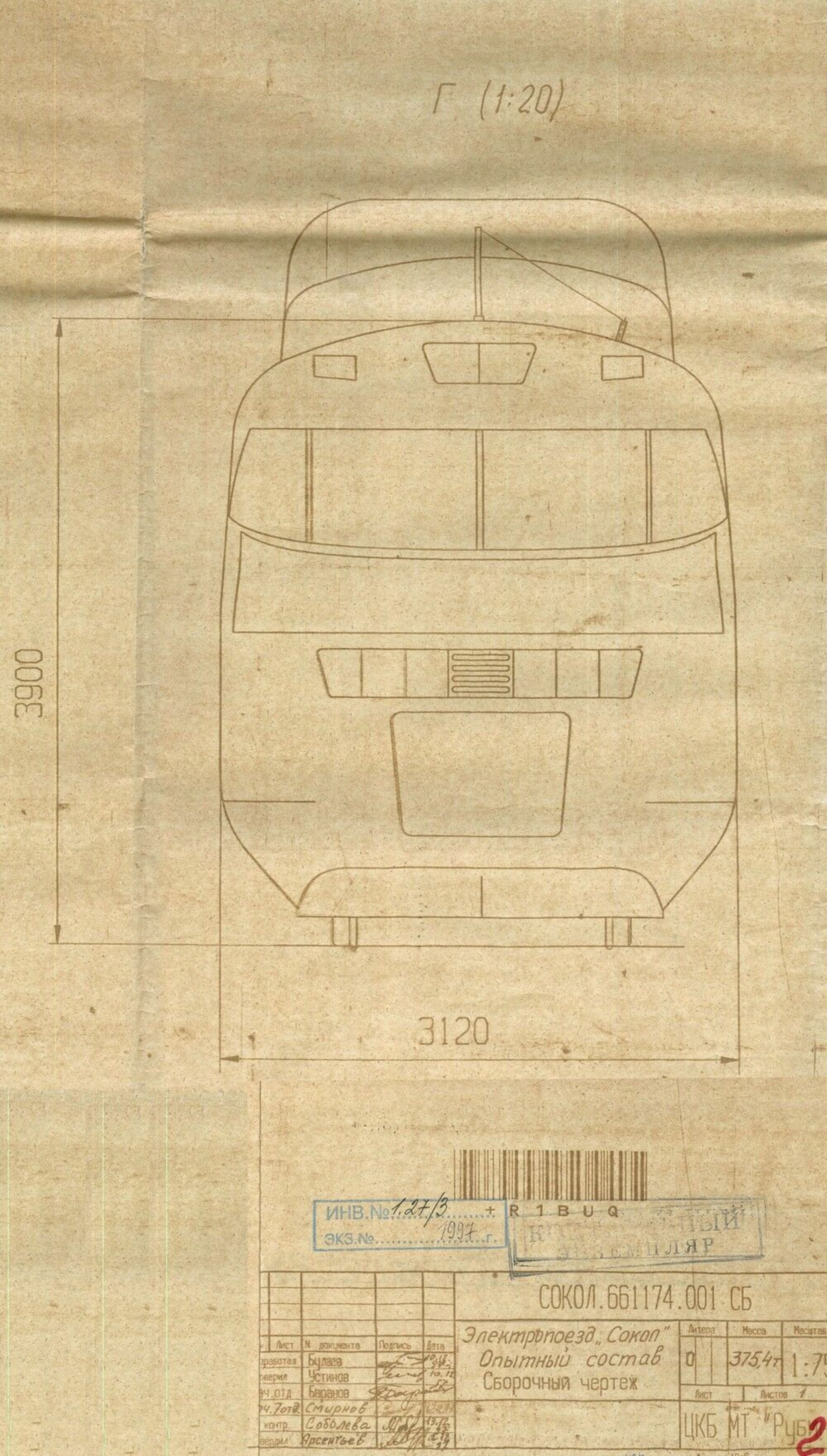
3 120
Car body height from crown of rail, mm
3 900
Total power (3-car), kW
7 425
Motor type
TAD355-675-6 asynchronous
Engines (3-car), pcs.
11
Design speed, km/h
250
Passenger capacity (6-car)
380 people.
Load on axle, t
17

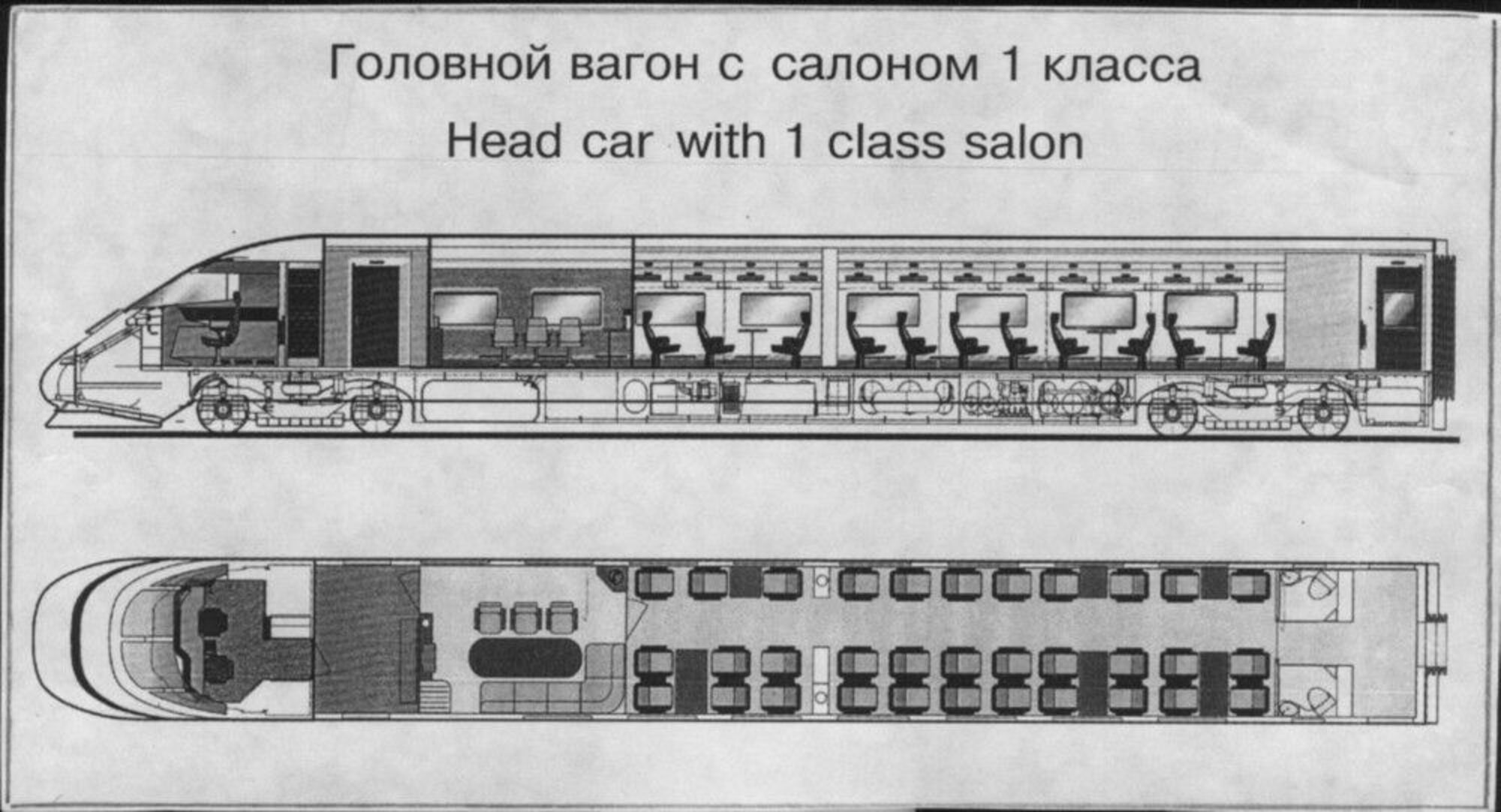
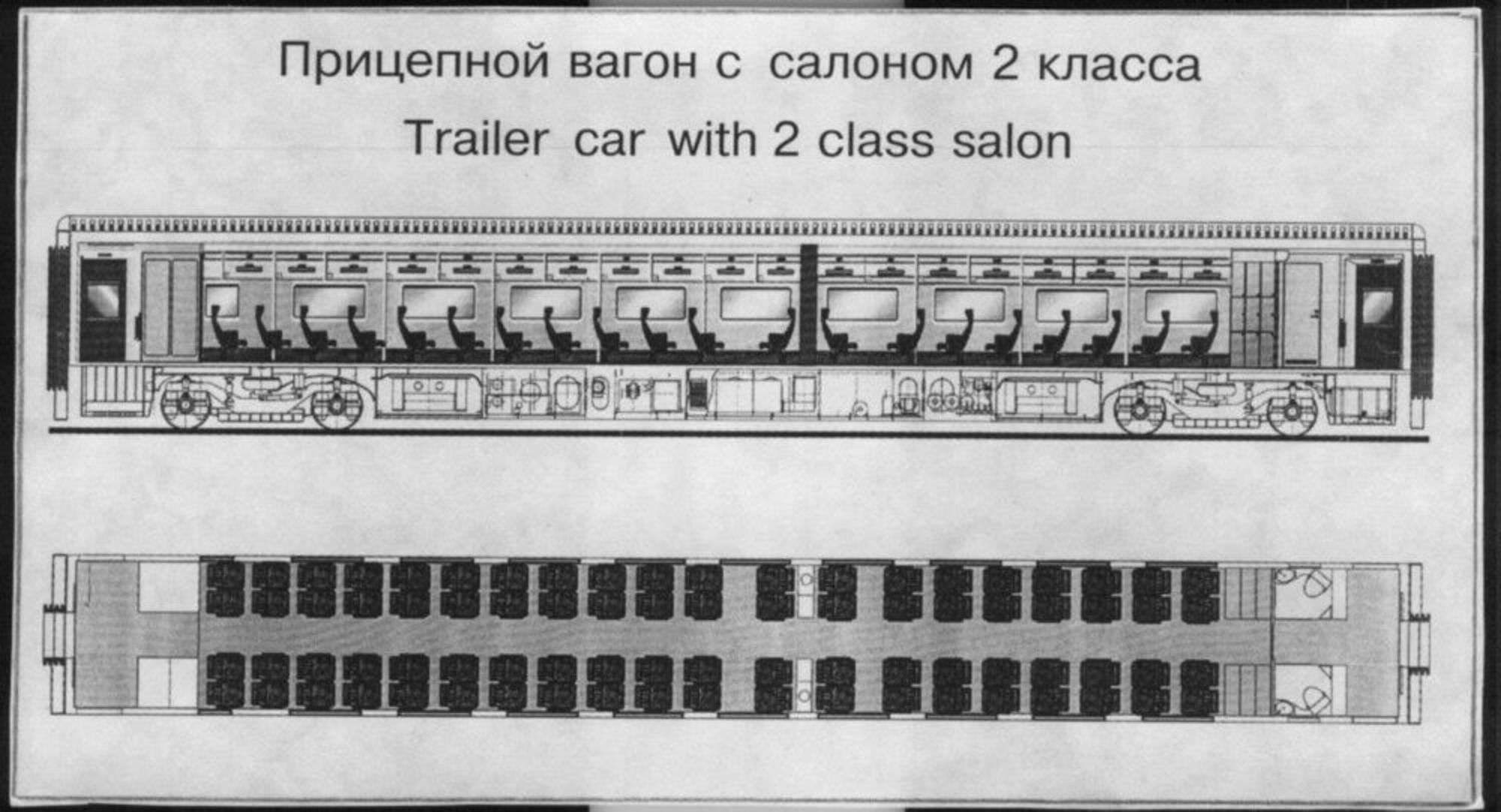
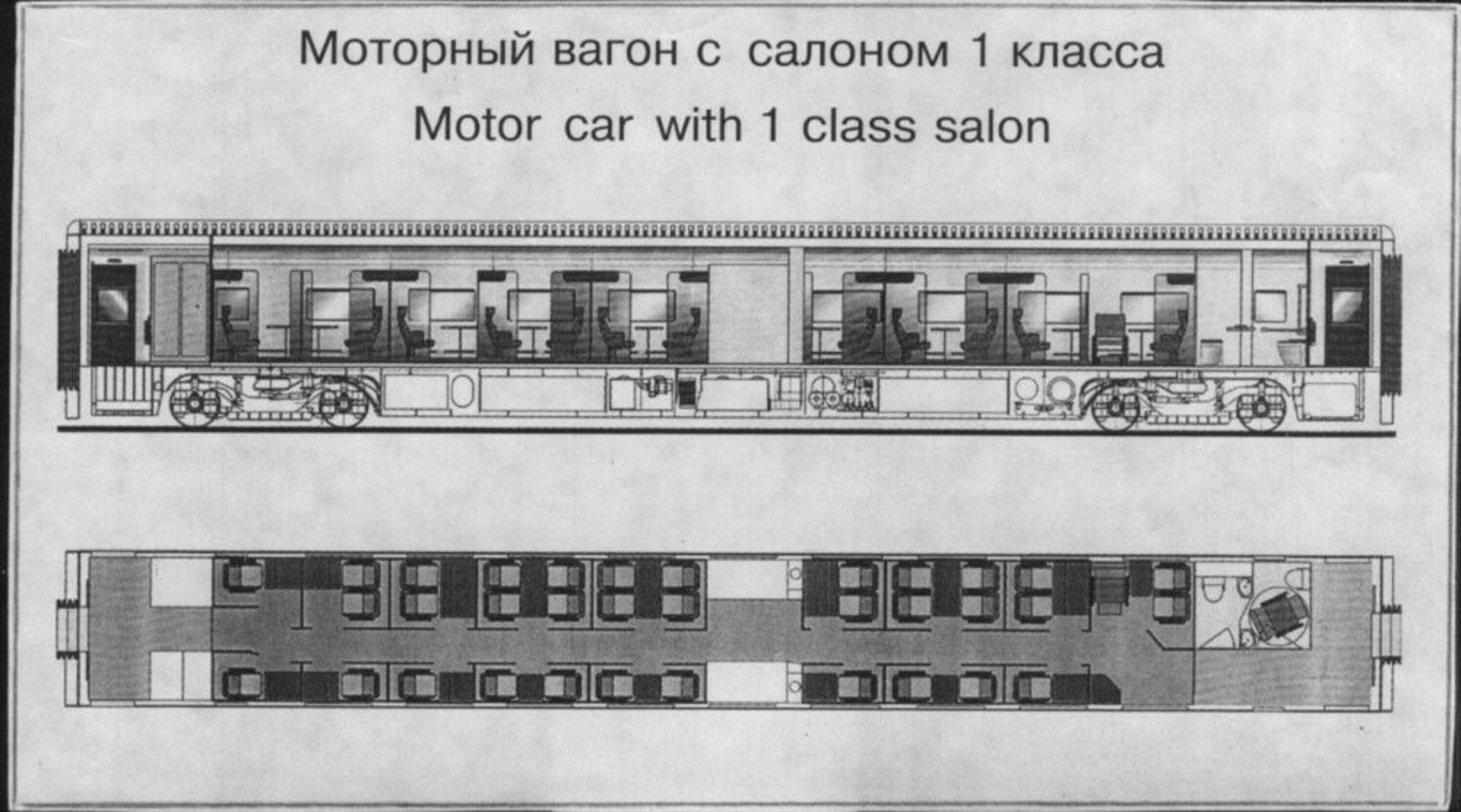
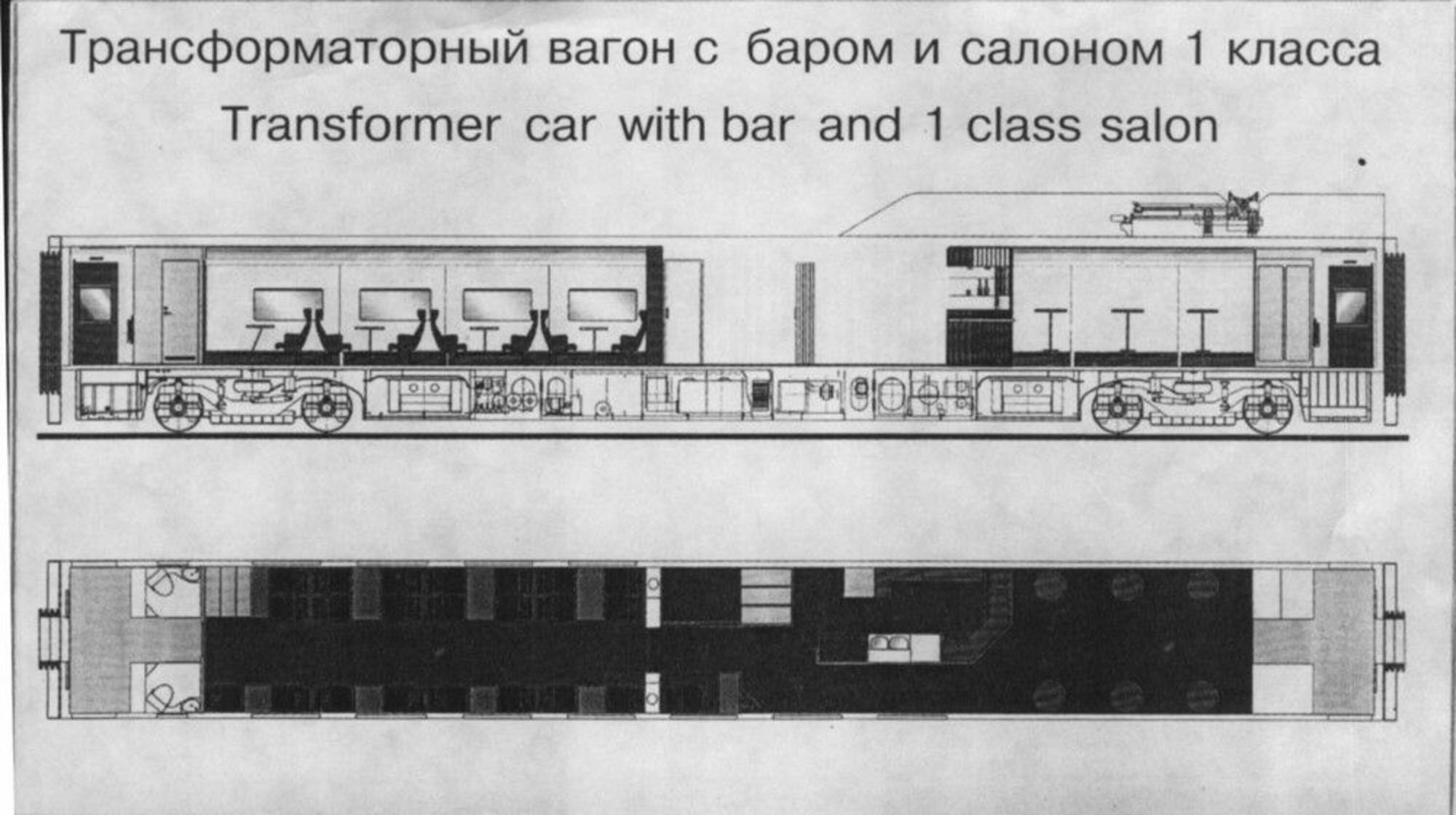
Drawings
and diagrams

History

Chronology

  1. 1988 The issue of organizing domestic high-speed traffic was very relevant. Therefore, in 1988, on the initiative of the USSR Ministry of Railways, the State Committee for Science and Technology and the USSR Academy of Sciences, the State Scientific and Technical Program "High-Speed Environmentally Friendly Transport" was developed and approved. Based on the provisions of the program, VNIIZhT prepared a scientific report, which substantiated all the main issues of creating high-speed highways (HSR) with a maximum speed of 300-350 km/h.
  2. 1991 After the collapse of the USSR, the discussions were localized in Russia. The first President of Russia Boris Yeltsin signed decree No. 120 of September 13, 1991 "On the creation of a high-speed passenger railway line St. Petersburg - Moscow". The project was entrusted to the Russian Open Joint-Stock Company "High-Speed Highways" (RAO VSM), which was formed in December 1991.
  3. 1993 In January 1993, the Rubin Central Design Bureau of Marine Engineering completed a preliminary design for the Sokol high-speed electric train according to the technical requirements of RAO VSM for the new railway line under construction between St. Petersburg and Moscow.
  4. 1995 The contradictions continued, and as a result, industry research organizations were effectively removed from participation in the development of the electric train since 1995. The electric train project was developed under the management and with the financing of RAO VSM. The shortage of financial resources in 1997 slowed down the pace of design and engineering work on the electric train.
  5. 1998 The first experimental intermediate car body was manufactured on April 1, 1998 and sent to the Krylov Central Research Institute for strength testing. Then, a 7-meter-long experimental head section was manufactured and sent there. From June 23 to December 28, 1998, six bodies for the first electric train were manufactured and sent to Tikhvin to Sokol-350 CJSC.
  6. 1999 The new electric train was designated ES250. The experimental six-car train ES250-001 was first publicly presented on July 28, 1999 in Tikhvin.
  7. 2001 The train underwent setup tests in 2001, as a result of which it was not recommended for production, and the project was closed.