Today the museum is open from 10:00 to 18:00

Map

Exhibit description

Railway car № 458-1888

Early Designs

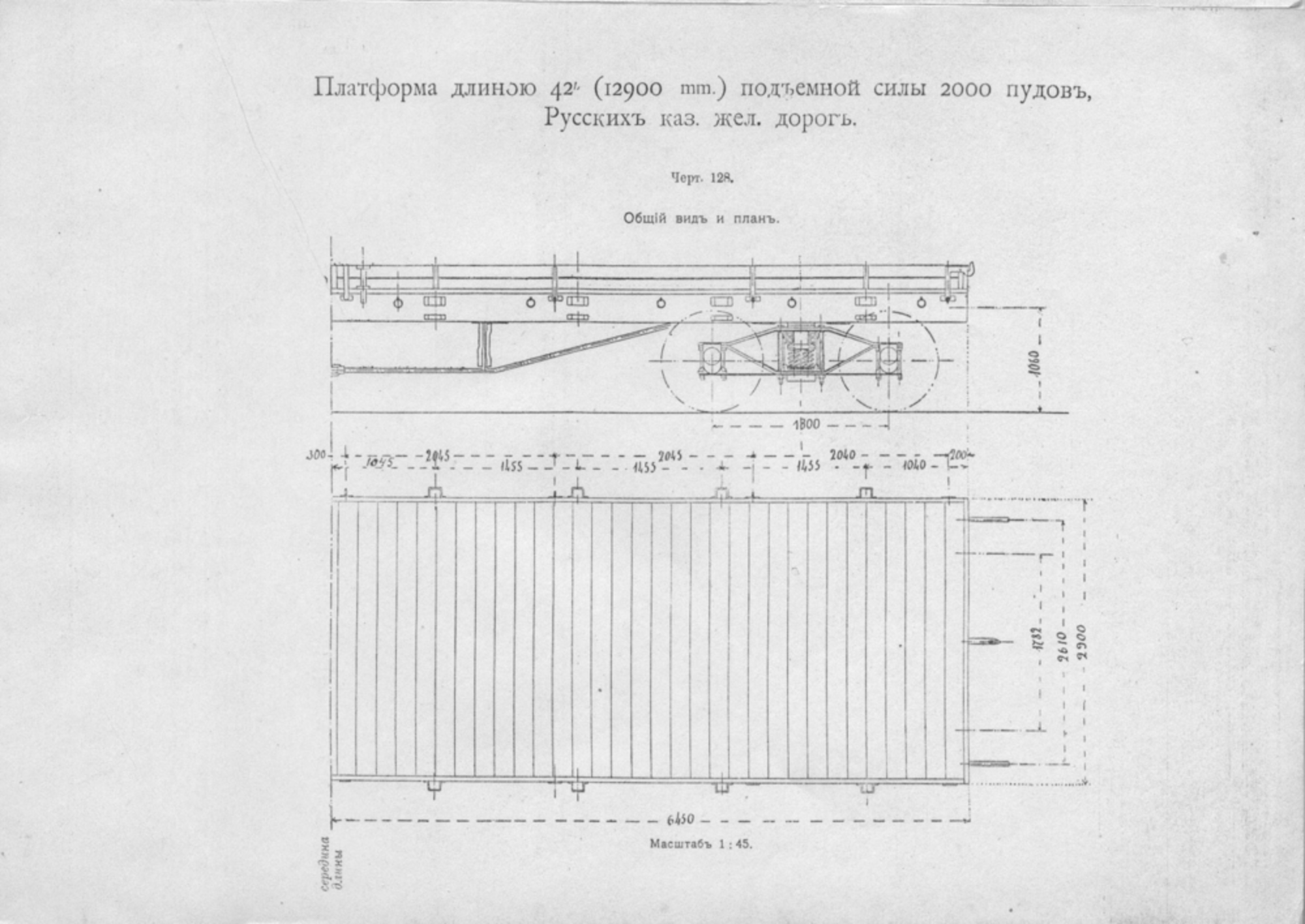
The first flatcars were two-axle with a load capacity of about 600 poods (9.6 t). The organization of non-transhipment service led to the development of "normal", that is, normalized rolling stock. The "normal" platform was named for the length of its frame — 30 feet (9,204 mm). The wheelbase was 5,500 mm.

The load capacity was initially 750 poods, gradually increasing to 900, and then 1,000 poods. Four-axle platforms with a load capacity of 1,500 to 2,000 poods were also built in limited quantities for some railways.

Soviet developments

At the end of 1929 the Kolomensky Plant developed a project for a two-axle platform with an all-metal frame and a load capacity of 20 tons. The overall dimensions were retained as for a normal platform. The frame allowed for the installation of an automatic coupling, the height of the sides was increased from 229 to 625 mm. The latter had a positive effect on the transportation of bulk cargo.

Since 1934 the construction of 50-ton four-axle platforms began at the Kalinin Carriage Works and the Bryansk Krasny Profintern Plant. Since 1935 the construction of platforms began at the Chernomorsky Plant, and since 1937 — at the newly built Uralvagonzavod.

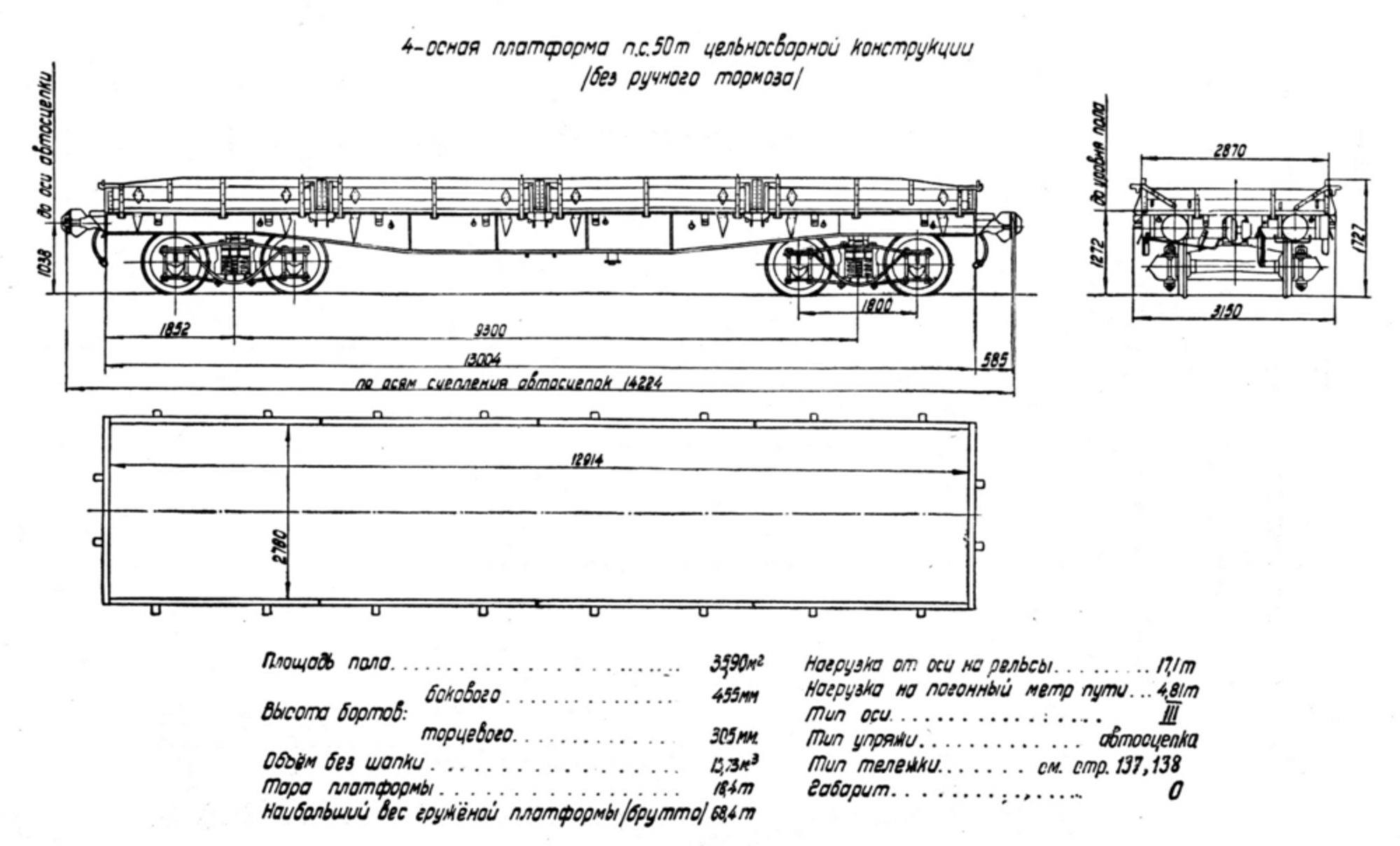
The platform was equipped with folding four-section wooden sides 455 mm high. The end sides were 305 mm high and also folded outward. To soften the fall of the folded side, triangular-shaped bumpers made of sheet steel were welded to the frame, which acted as springs. The platform floor was made of 50 mm, later 55 mm boards. The floor near the sides had holes for installing scaffolding posts. To fix the posts on the side beams of the frame, brackets were welded.

Since 1936 the platform design was subject to alterations, the main one was the use of a longitudinal beam made of No. 55a I-beams. The variable height cross-section of such beams was obtained by partially cutting out the walls at the ends, after which the lower shelves of the I-beams were bent and welded. The load capacity of platforms with I-beams was increased to 60 t. After the war, these platforms were built until 1948 at the Kalinin and Ural plants.

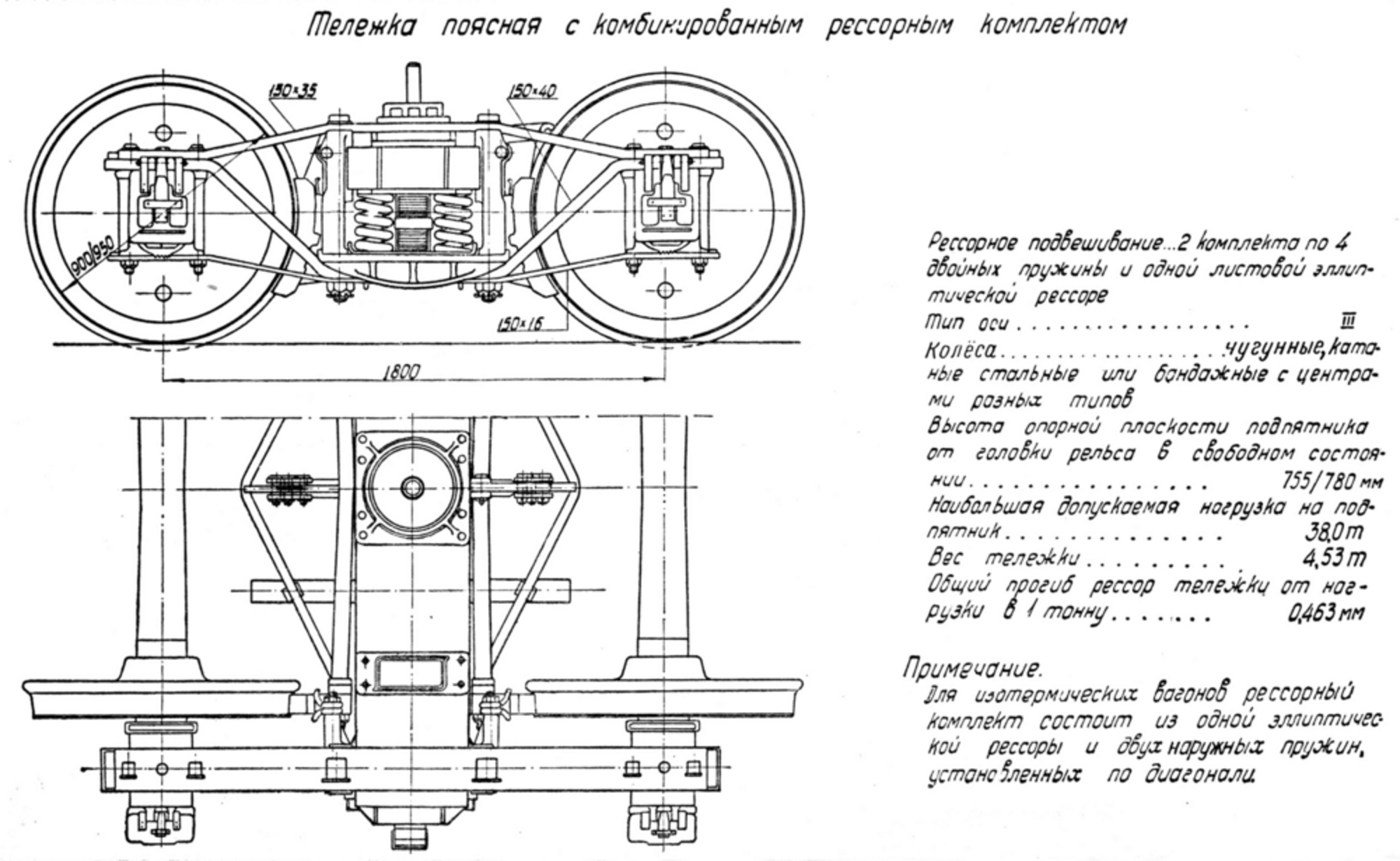
Thanks to the organization of non-transhipment service, they began to develop normal, that is, normalized rolling stock. Normal covered wagons (NTV), normal platforms and tank cars were accepted for circulation. The normal platform was so called because of the length of the frame - 30 feet (9,204 mm). The wheelbase was 5,500 mm. The load capacity was initially 750 poods, gradually increasing to 900, and then to 1,000 poods. At the same time, the car axles and spring suspension were reinforced, and a spacer truss was additionally installed on the frame sides.

Four-axle platforms with a load capacity of 1,500 to 2,000 poods were also built in limited quantities for some railways.

Parameters

Technical
specifications

Floor area, m²
35,90
Fence height: side, mm
435
Heapless volume, m³
13,73
Tare, t
18,4
Max gross weight, t
68,4
Rail load, t
17,1
Load per one track meter, t
4,81
Axle type
3
Coupling type
Automatic coupling
length by axles of automatic couplings, mm
14 224
Internal length, mm
12 914
Outer width, mm
3 130
Internal width, mm
2 870
Rail level height, mm
1 271
Fence end point height, mm
1 727
Length at automatic coupling axes, mm
14 224

Drawings
and diagrams

History

Chronology

  1. 1869 Initially, freight and passengers could only move within the same railway. To move along an adjacent railway, it was necessary to tranship freight and transfer passengers. In 1869, the First General Congress of representatives of 18 railways took place, which concluded agreements on non-transhipment service. In 1889, the General Agreement on the Mutual Use of Freight Cars was put into effect, which established the circulation of freight cars throughout the entire network of Russian Railways.
  2. 1929 At the end of 1929, the Kolomna Plant developed a project for a two-axle platform with an all-metal frame and a load capacity of 20 tons. The overall dimensions were retained as for a normal platform. The frame allowed for the installation of an automatic coupling, the height of the sides was increased from 229 to 625 mm. The latter had a positive effect on the transportation of bulk cargo.
  3. 1934 Since 1934, they began building 50-ton four-axle platforms at the Kalinin Carriage Works and the Bryansk Krasny Profintern Plant. In 1935, they began building platforms at the Chernomorsky Plant, and in 1937, at the newly built Uralvagonzavod.
  4. 1936 Since 1936, the platform design was redesigned. The main change was the use of a longitudinal beam made from No. 55a I-beams. The walls were partially cut out at the ends, which resulted in a variable-height cross-section. After that, the lower shelves of the I-beams were bent and welded. The load-bearing capacity of platforms with beams made from I-beams was increased to 60 tons. After the war, these platforms were built until 1948 at the Kalinin and Uralsk Plants.
  5. 1998 The platform was transferred to the museum by the Saint Petersburg-Baltic motorcar depot of the October Railway in 1998.