Today the museum is closed

Map

Exhibit description

Pharmacy-dressing wagon Kln No. 4178

The first hospital trains in the Russian Empire appeared with the onset of the Russo-Turkish war of 1877–1878. As early as 4th December 1876, an imperial decree was handed down on the creation of 14 hospital trains. These trains were to consist of 17 three-axle or 12 four-axle hospital cars, two passenger cars for medical personnel and orderlies and three covered two-axle goods cars. Each train was intended for the simultaneous transport of at least 250 wounded and sick.

As early as 4th December 1876, an imperial decree was handed down on the creation of 14 hospital trains.

During the Russo-Turkish war of 1877–1878, the hospital trains of the Russian Red Cross transported over 200 000 sick and wounded. During the Russo-Japanese war of 1903–1904, the hospital trains evacuated 87 000 sick and wounded, andduring World War I, additional hospital trains were put into service. 242 hospital trains operated on the side of the Red Army during the Russian Civil War.

During the Russo-Japanese war of 1903–1904, the hospital trains evacuated 87 000 sick and wounded.

Refurbishment

On 24th June 1941, the People’s Commissariat of Communication Routes gave the order for the railways to form 288 military hospital trains. 6,000 cars were allocated for this. All locomotive and car repair plants and workshops were involved in the refurbishments of the cars. By 1942, about 700 military hospital trains were in operation.

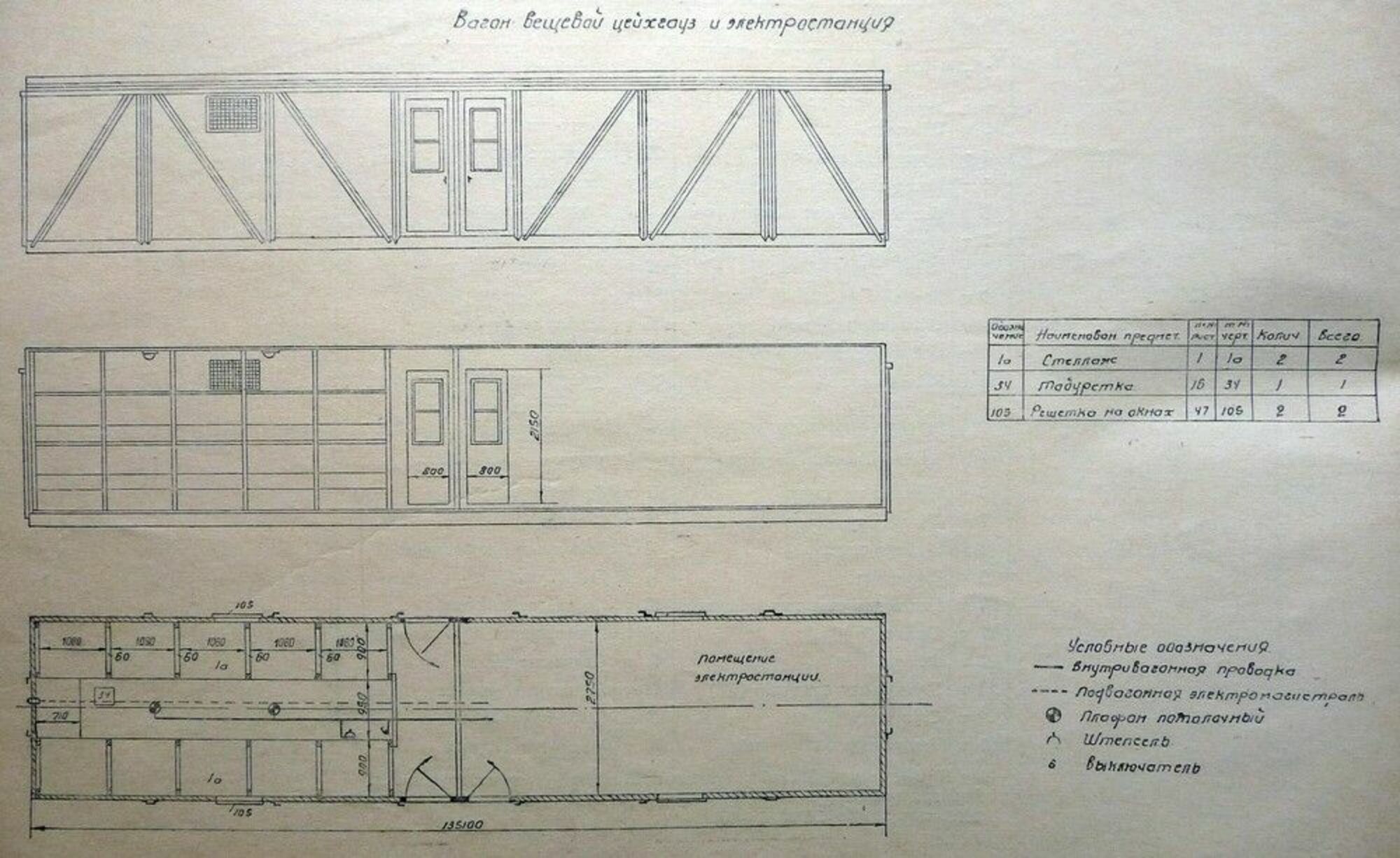
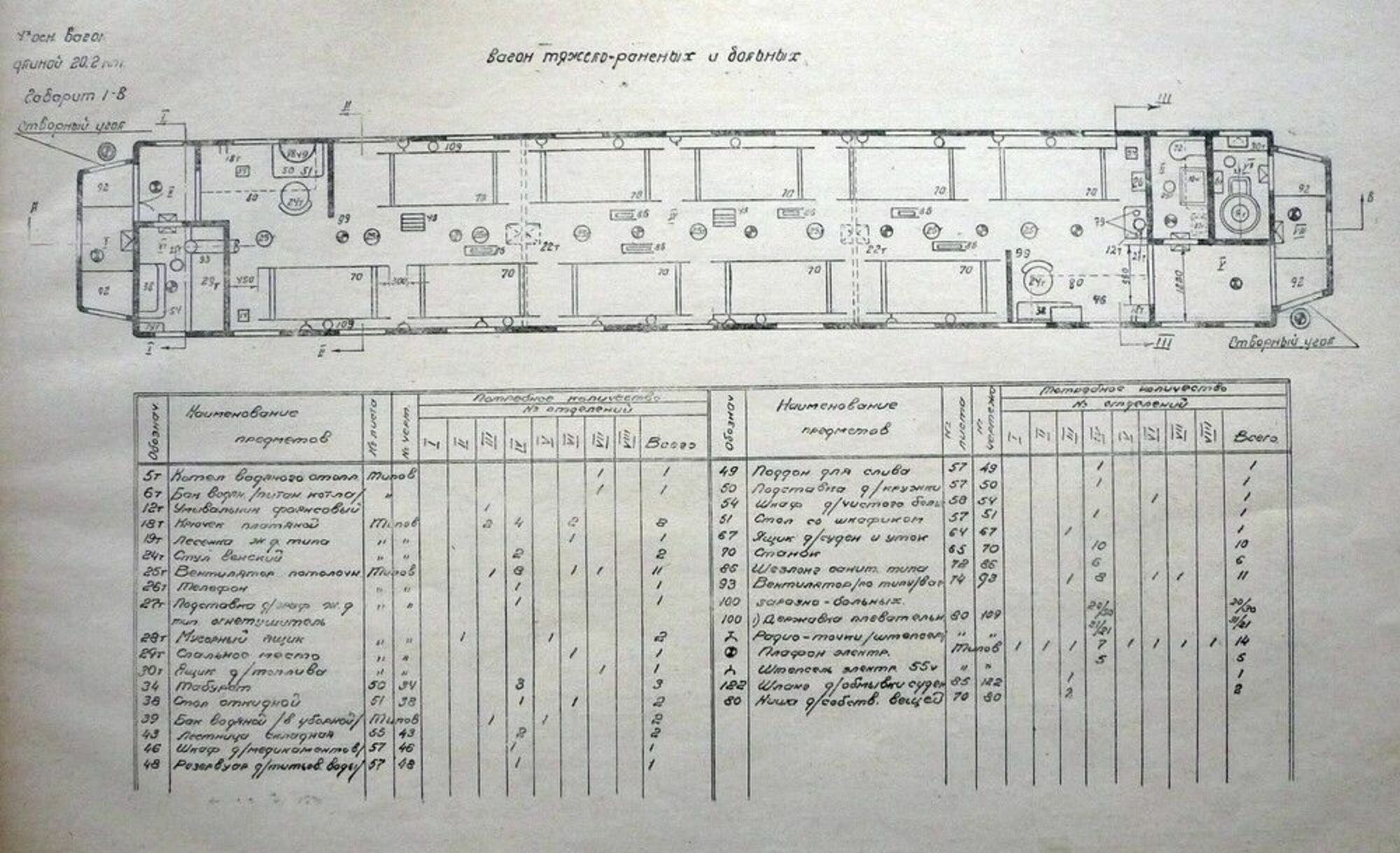
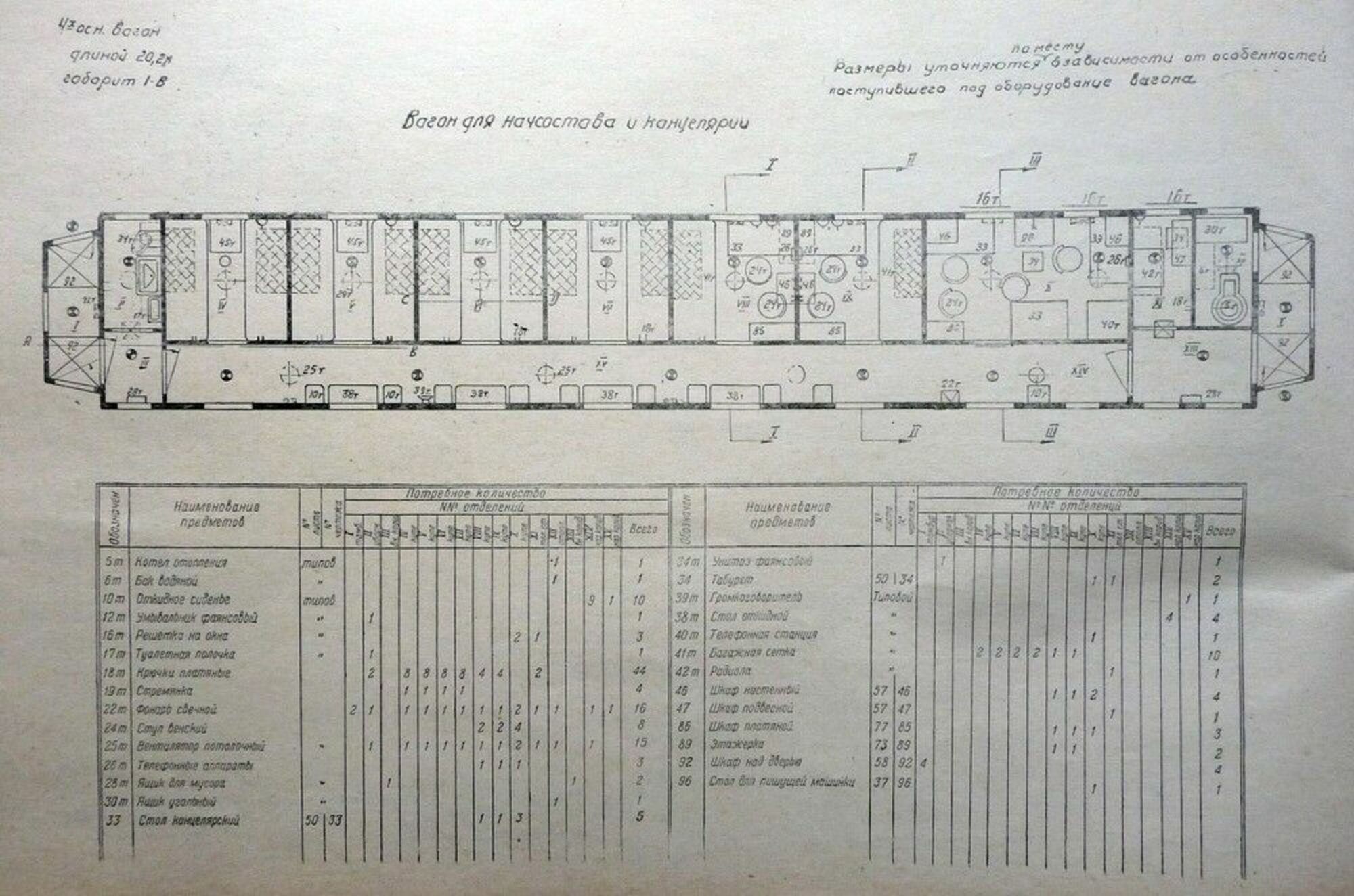
Military hospital trains consisted of specially equipped cars of the following types: clothing store and power generator, food and linen store, kitchen, car for the seriously wounded and sick, pharmacy and wound dressing car, car for the command staff and clerical work, cars for the crew, for the lightly wounded and sick, for contagious patients.

During World War II, several hundred permanent and temporary trains were used to transport the wounded.

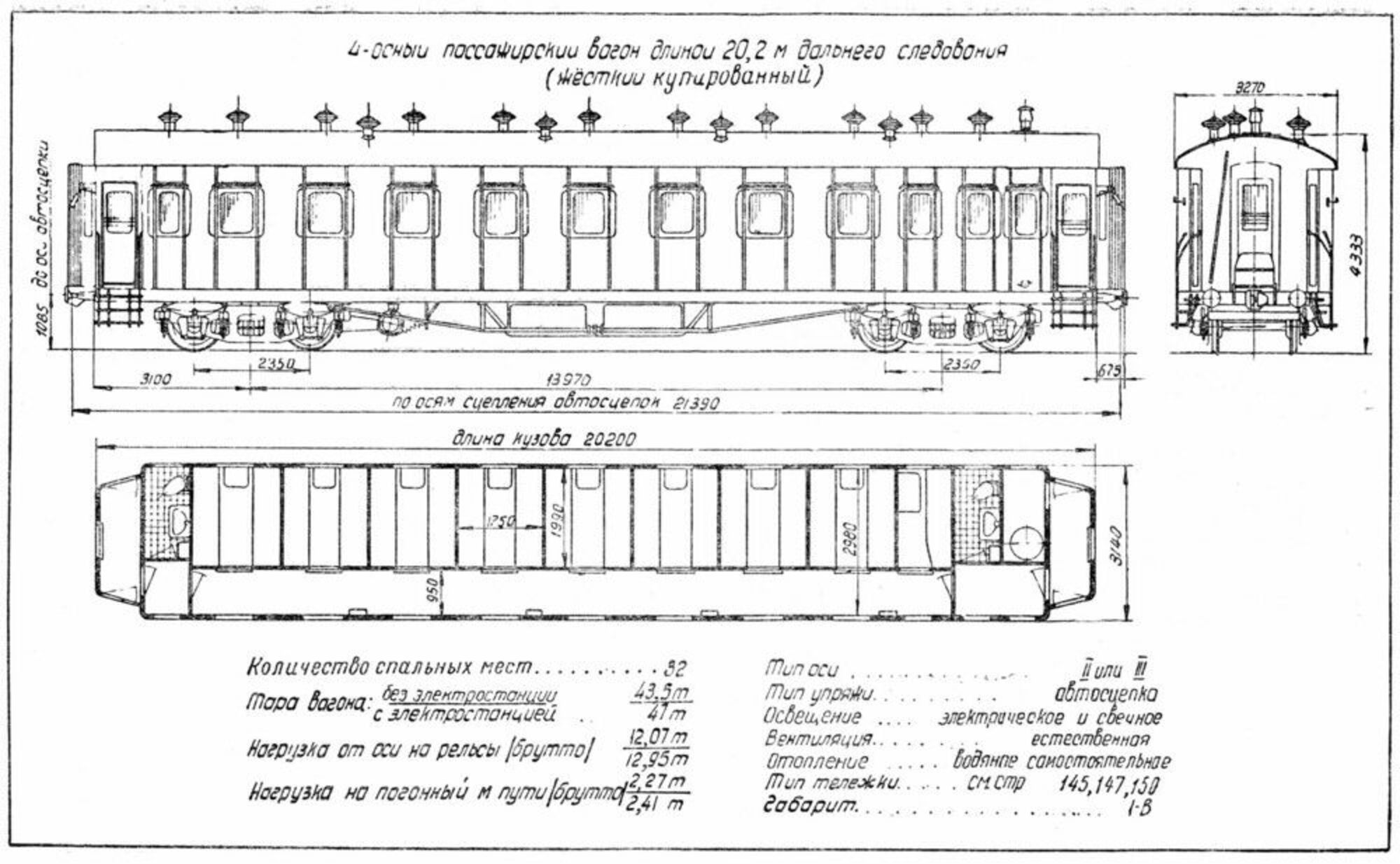
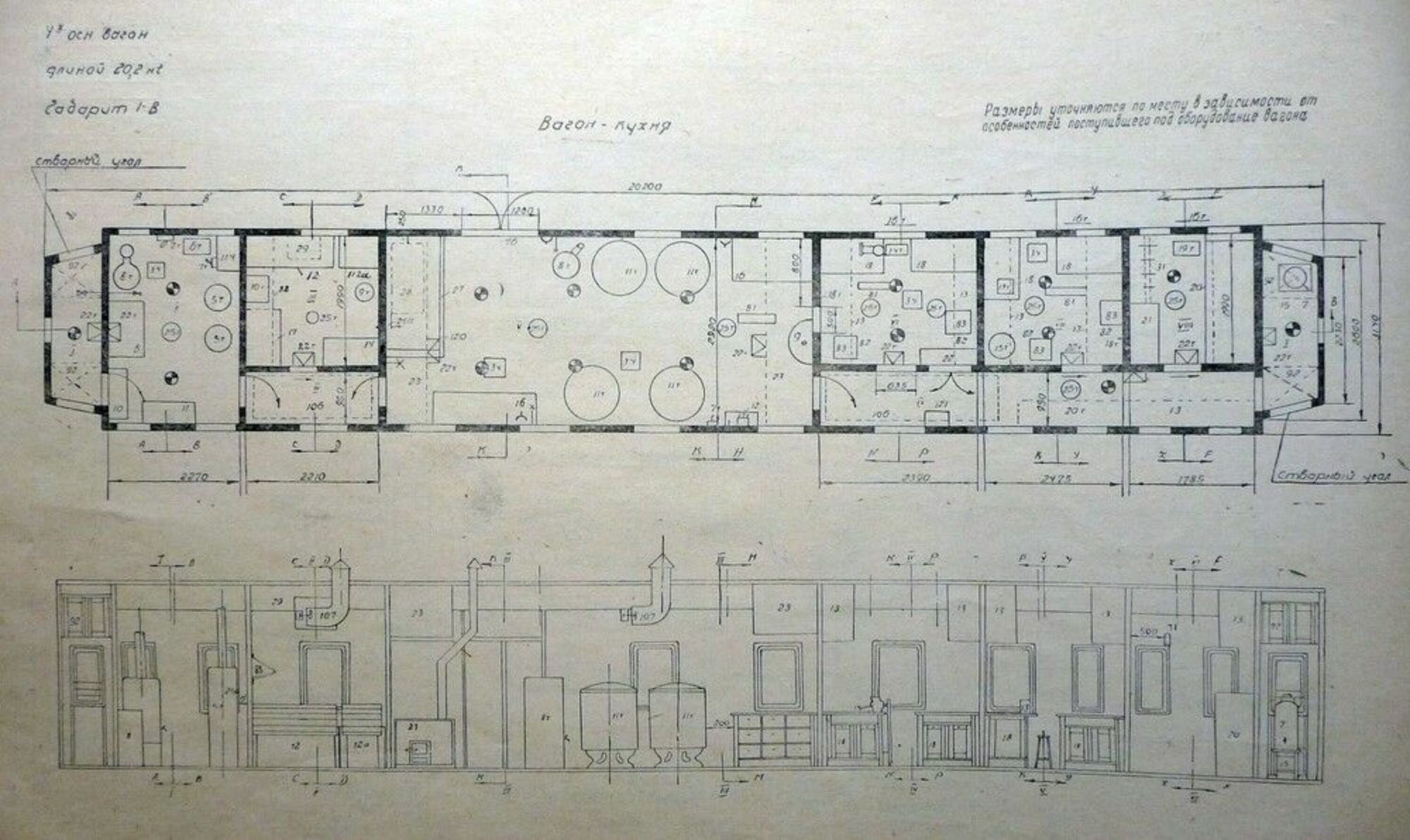
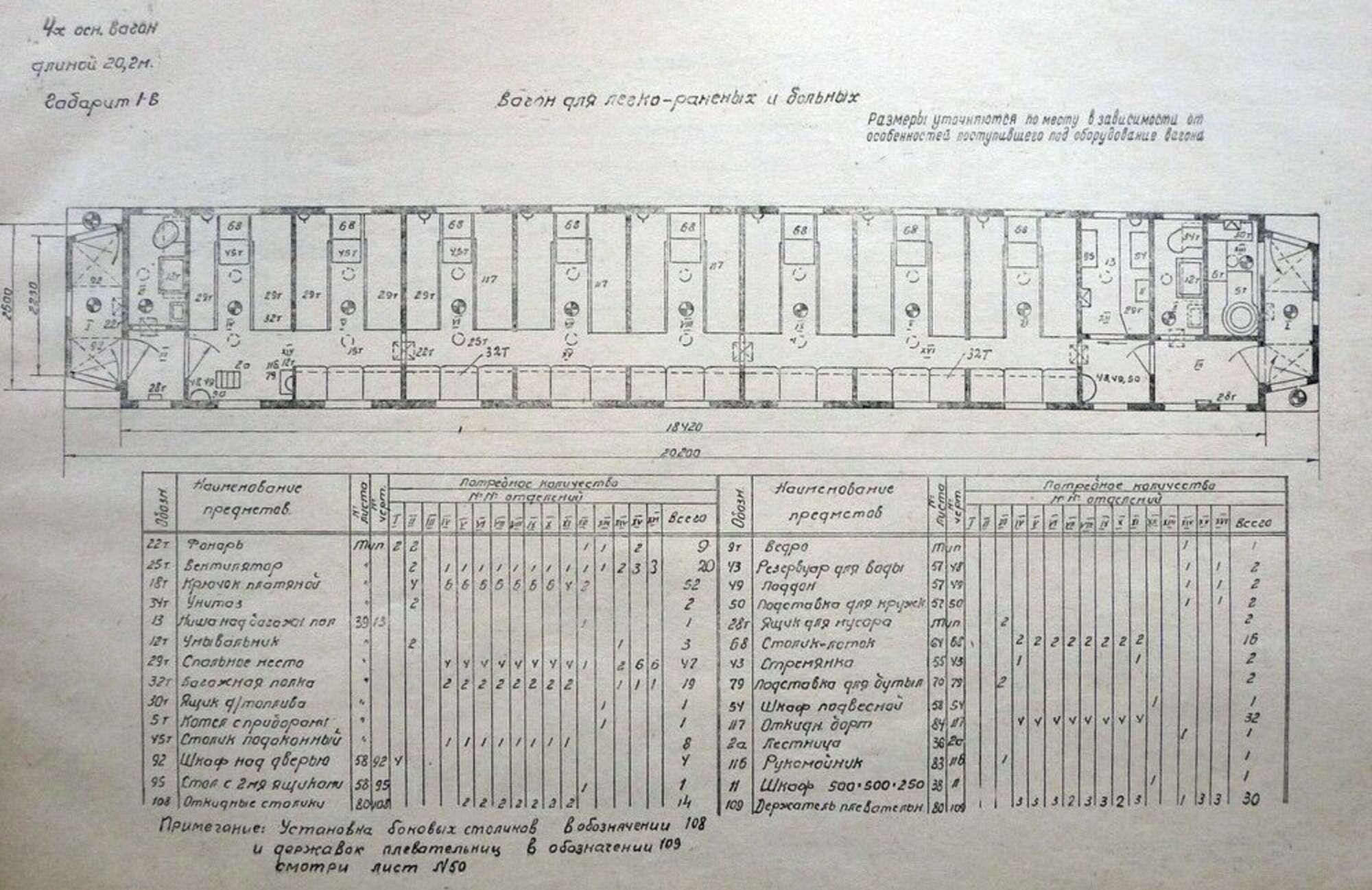
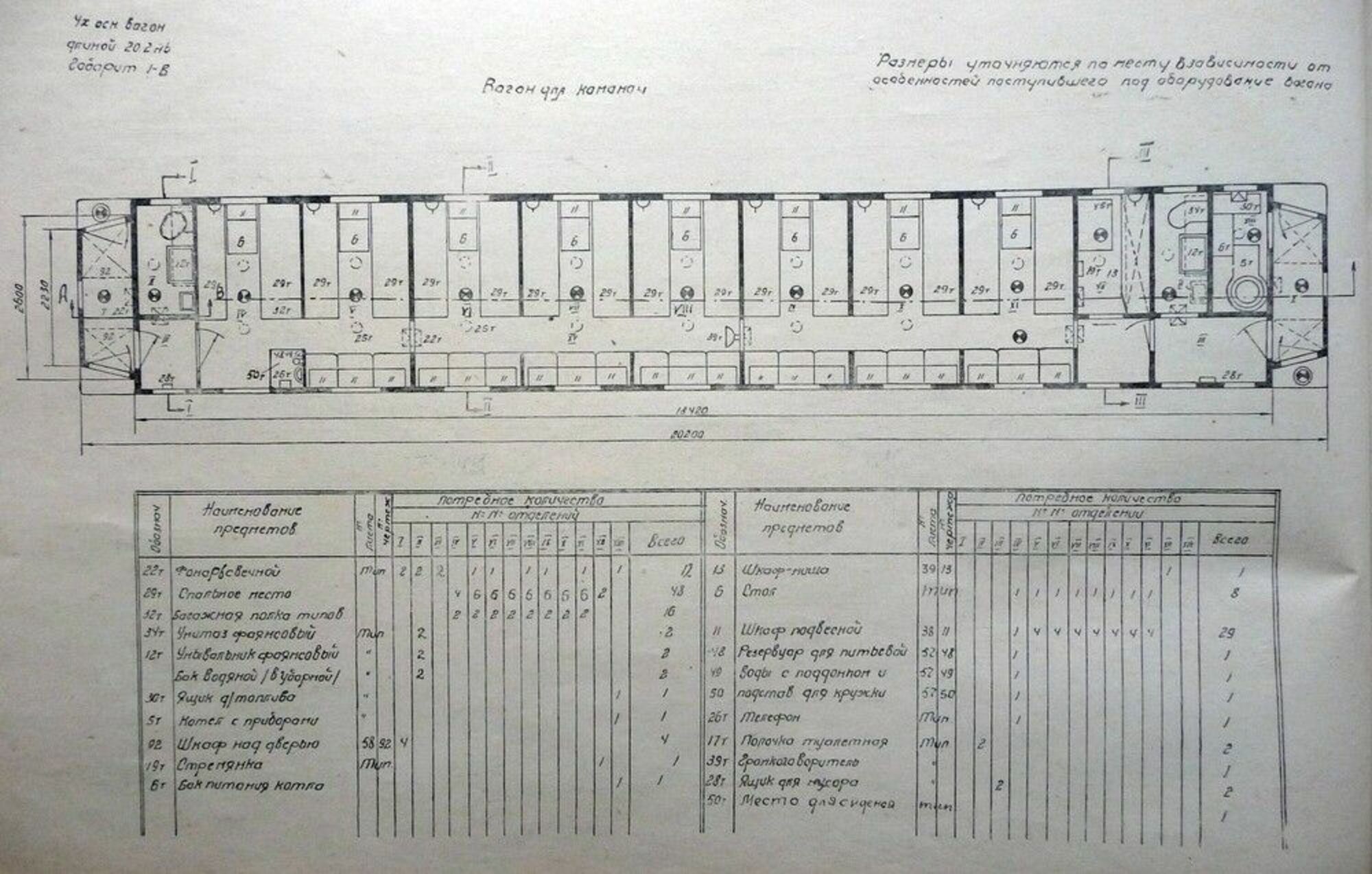
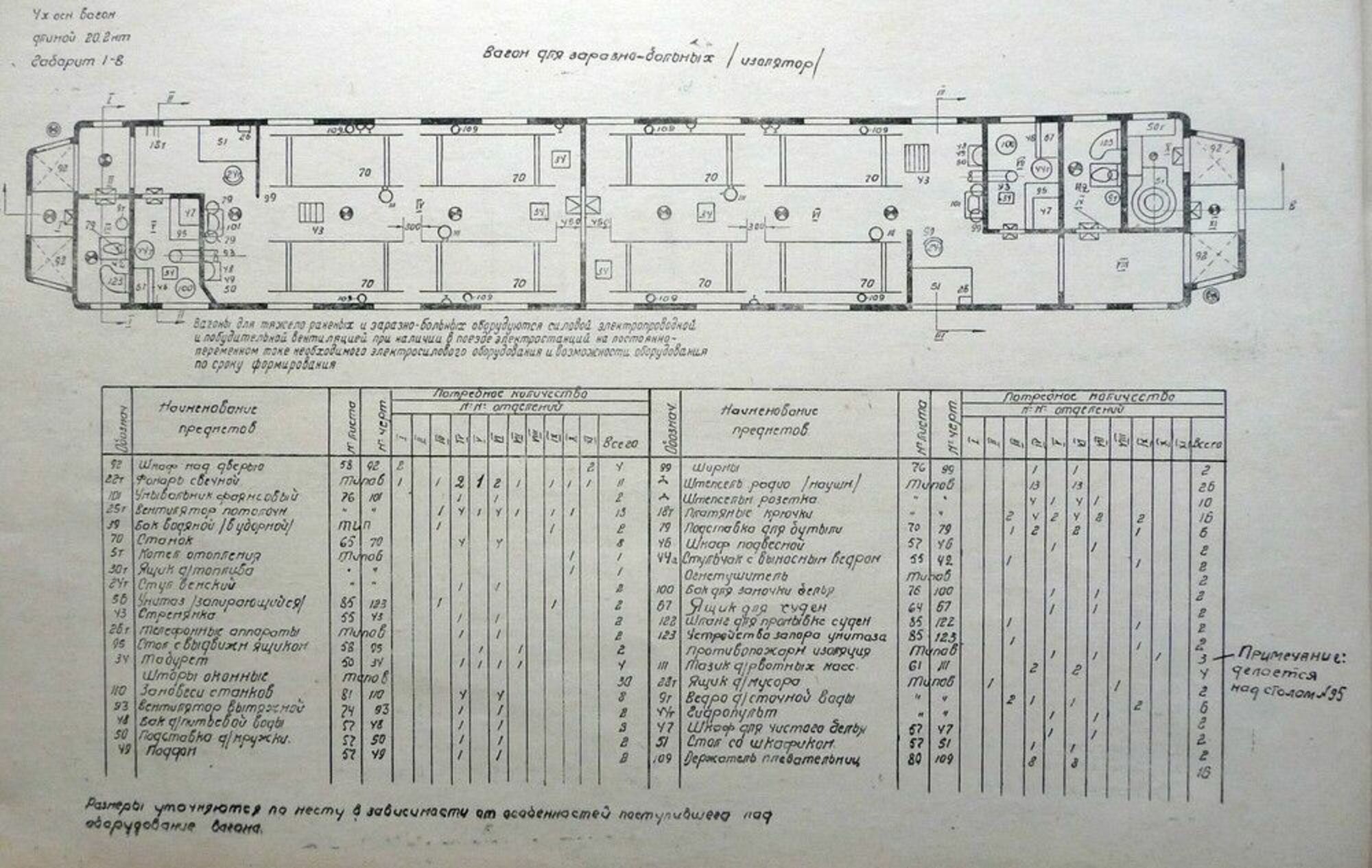
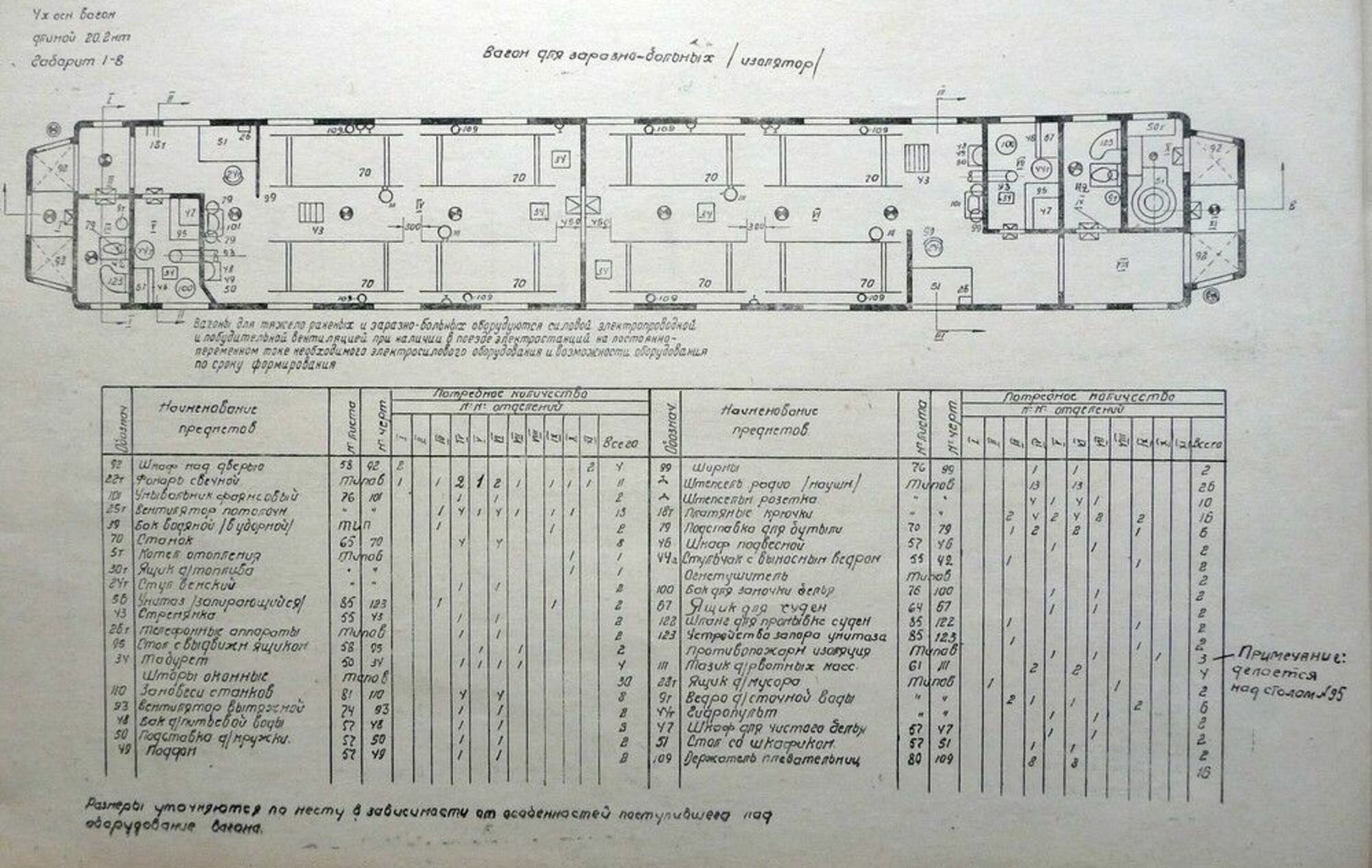
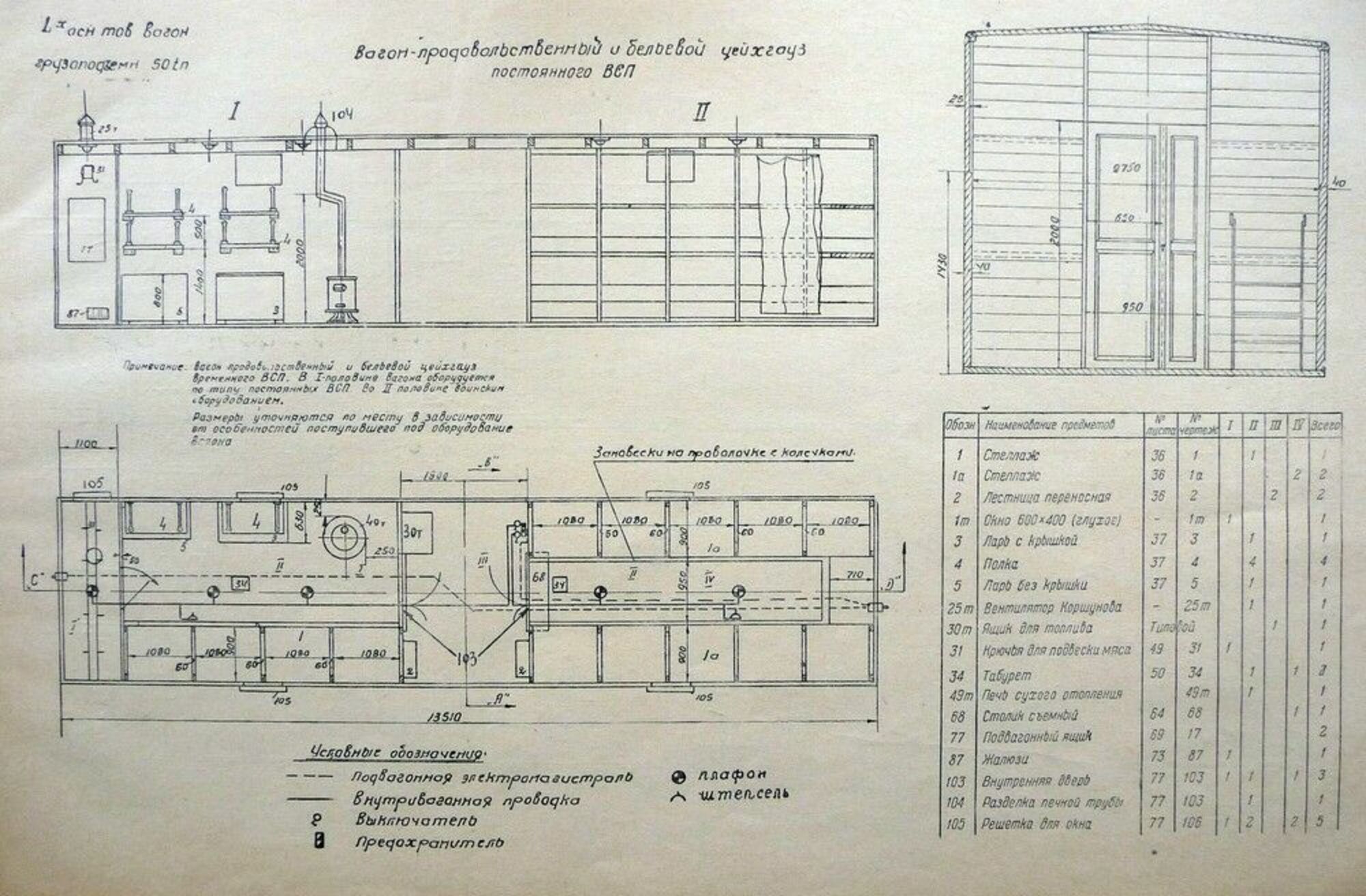
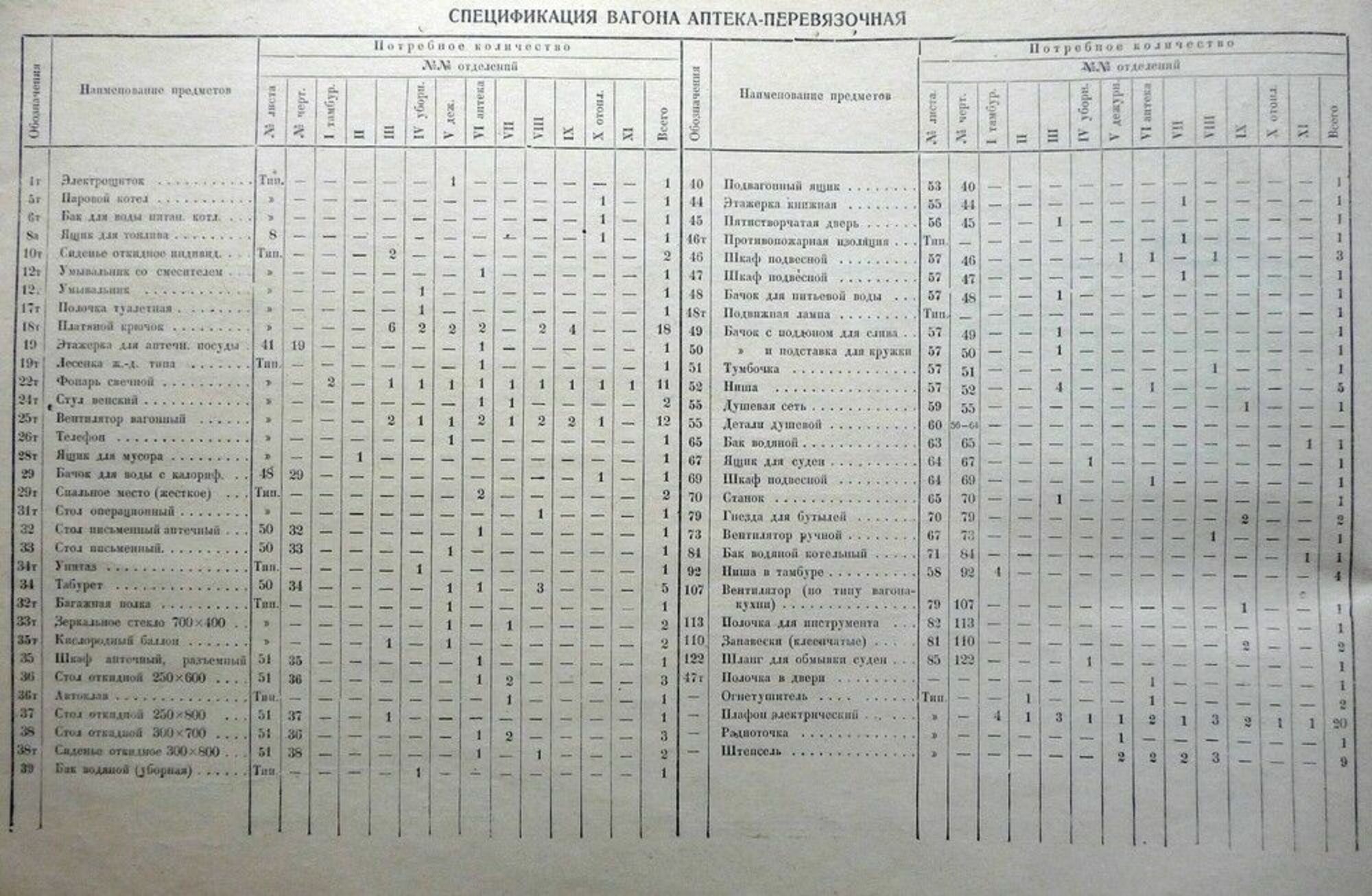
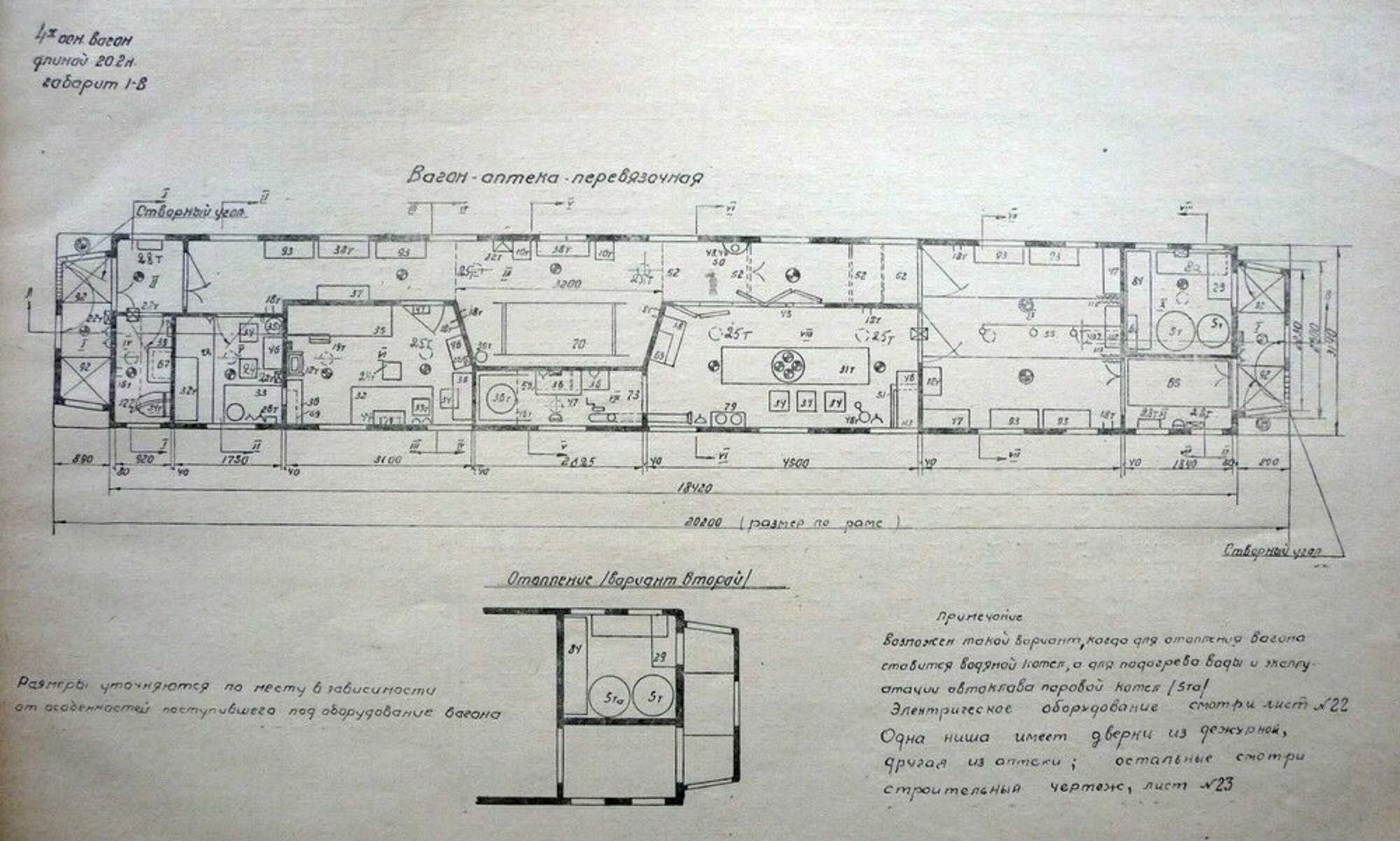
The car was restored based on the “Album of Drawings of Rolling Stock Equipment for Permanent and Temporary Military Hospital Trains”, published in 1941.

The pharmacy and wound dressing car Kln 4178 arrived at the Russian Railway Museum in September 2019 from  Podmoskovnaya Station. The car was restored based on the “Album of Drawings of Rolling Stock Equipment for Permanent and Temporary Military Hospital Trains”, published in 1941.

Parameters

Technical
specifications

Wagon container with generator, t
43,3
Axle load, gross, t
12,07 / 12,95
Load per linear meter of track, gross, t
2,27 / 2,41
Gauge
1В
Coupling type
Automatic coupling, harness
Ventilation
Natural
Length along the axles of automatic couplings, mm
21 390
Width, mm
3 270
Height, mm
4 333
Wagon container without generator, t
41
Lighting
Electric, candlestick
Heating, t
Water independen
Trolley type
Balance beamless Egorov plant, CVTK
Installed trolley
The CMV on rolling bearings

Drawings
and diagrams

History

Chronology

  1. 1877–1878 The first sanitary trains began to be formed in the Russian Empire with the approach of the Russo-Turkish War.
  2. December 4, 1876 An imperial decree was issued on the formation of 14 medical trains.
  3. 1877–1878 During the Russo-Turkish War, medical trains of the Russian Red Cross transported over 200,000 sick and wounded.
  4. 1903–1904 During the Russo-Japanese War, medical trains evacuated 87,000 sick and wounded.
  5. June 24, 1941 The People's Commissariat of Railways instructed the railways to form 288 military medical trains.
  6. 1942 About 700 military medical trains were in operation.
  7. September 2019 The drugstore-dressing car Kln 4178 was delivered to the Museum of Russian Railways from Podmoskovnaya station.