Today the museum is open from 10:00 to 18:00

Map

Exhibit description

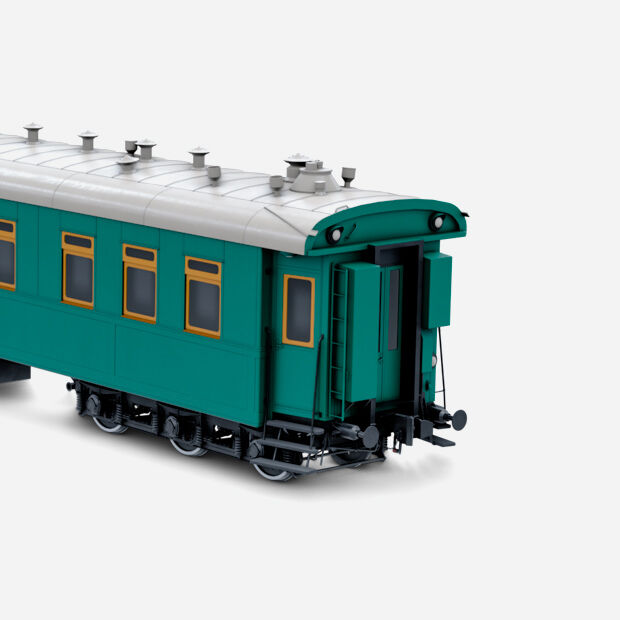
Baggage car No 433

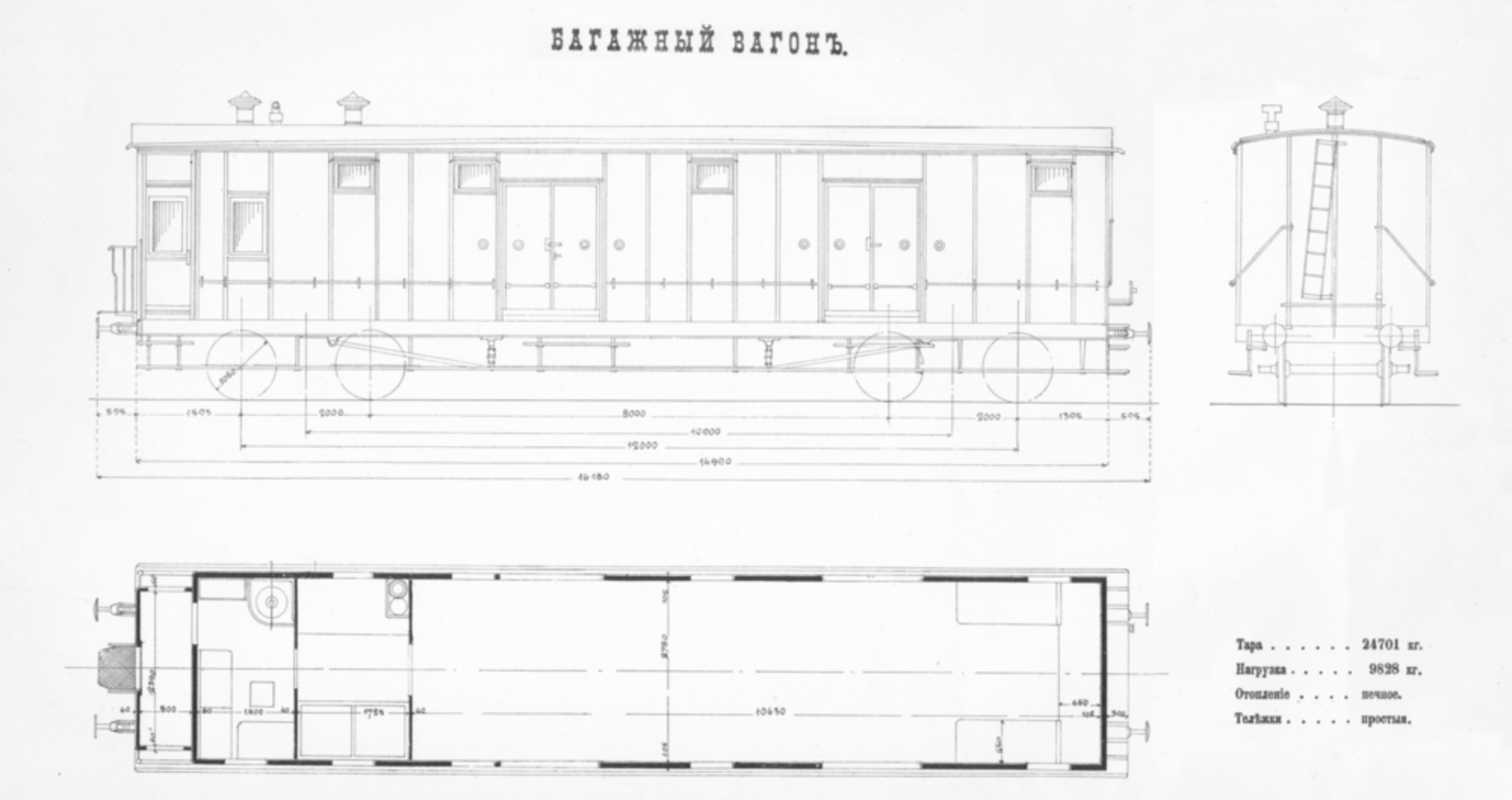
This is a common type of baggage car for state-owned railways, produced by carriage works from 1901 to 1908. The ingle-suspension trucks were identical to one of the types of third-class (hard-seated) cars built at that time.

Popular Type

Unlike their passenger counterparts, which were replaced by more advanced Pullman cars, baggage cars with a body length of 15 m became widespread.

At first, such cars were equipped with footboards, which allowed one to walk along the entire length of the car from the outside. They were dismantled during the operation.

At the beginning of the production of these cars, footboards were installed along the channels, providing passage along the entire car from the outside. During operation, the footboards were dismantled, and the single-suspension trucks were replaced with more advanced ones.

Parameters

Technical
specifications

Years of construction
1901–1908
Number of axes
4
Body length with vestibules, m
15
Distance between centers of pivot beams, m
10
Tara, t
35.416
Base, mm
7 120
Ventilation type
Natural
Heating type
stove
Lighting type
Candlestick
Frame
Metal, wood
Trolley type
Pullman
Spring suspension
Double

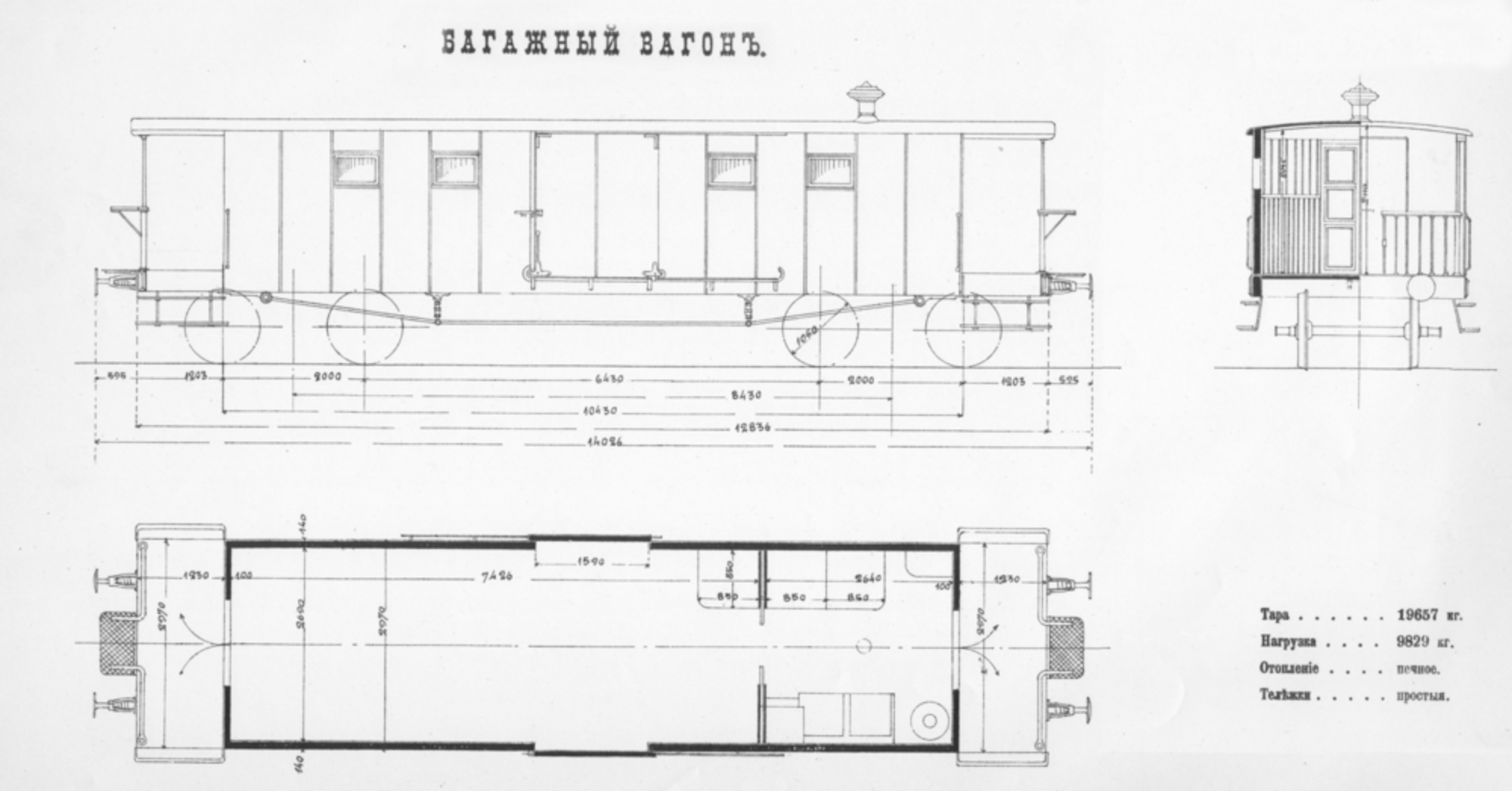
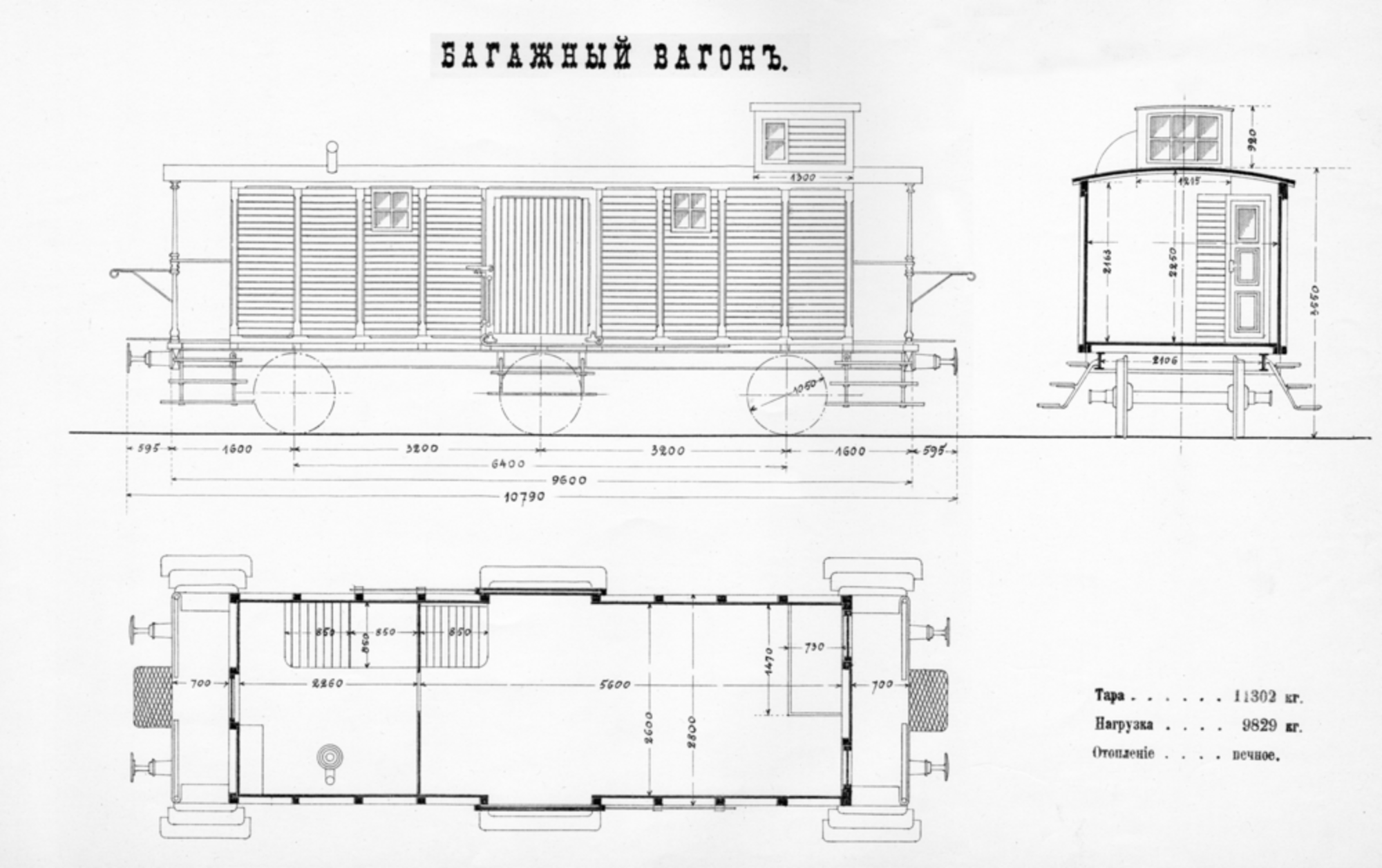
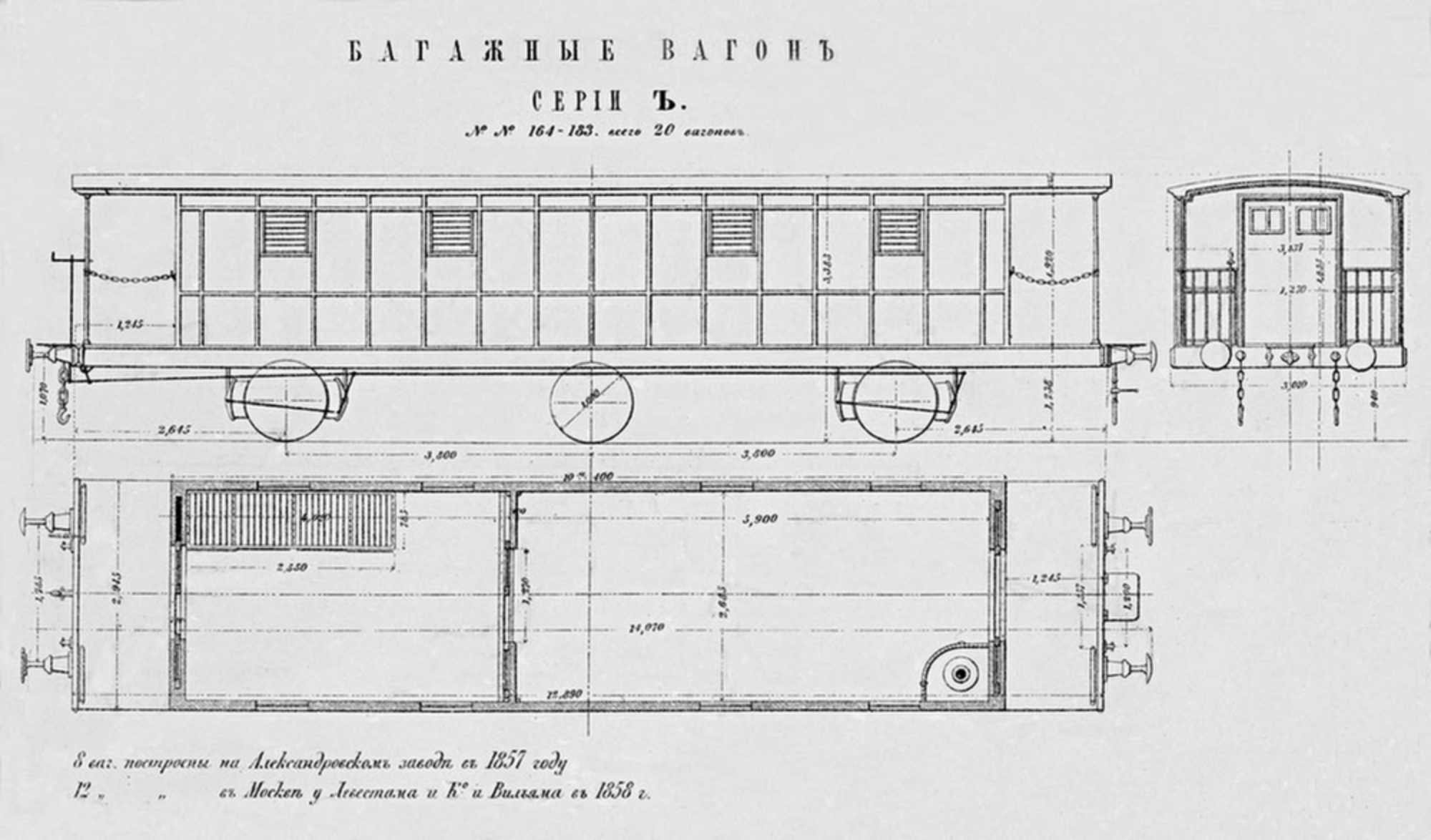
Drawings
and diagrams

History

Chronology

  1. 1896 A new type of four-axle baggage car is presented at the All-Russian Trade and Art Exhibition in Nizhny Novgorod.
  2. 1901–1908 Russian engineering plants master the production of new products: baggage cars for state-owned railways.
  3. 1990 The class Lk car no. 433 of the South Caucasus Railway is delivered to the museum from the St. Petersburg-Moskovsky Depot.
  4. 2017 The class Lk car no. 433 is restored during repair work carried out by ARS-M LLC.