Today the museum is open from 10:00 to 18:00

Map

Exhibit description

Diesel locomotive DM62-1731

Order from Hungary

The six-axle diesel locomotive M62 with direct current electric transmission was intended for use with freight trains. The first diesel locomotives of this series were created by order of the Hungarian People's Republic in 1964 for the normal gauge 1,435 mm. The dimensions of the diesel locomotive corresponded to the 02-T gauge used in European countries.

For 23 years, in 1965–1988, the Voroshilovgrad plant built M62 diesel locomotives not only for Hungary, but also for the Czechoslovak Socialist Republic, the Polish People's Republic, the Democratic People's Republic of Korea, and the Republic of Cuba. In total, more than 3,000 locomotives of this type were constructed, including 723 diesel locomotives for domestic railways.

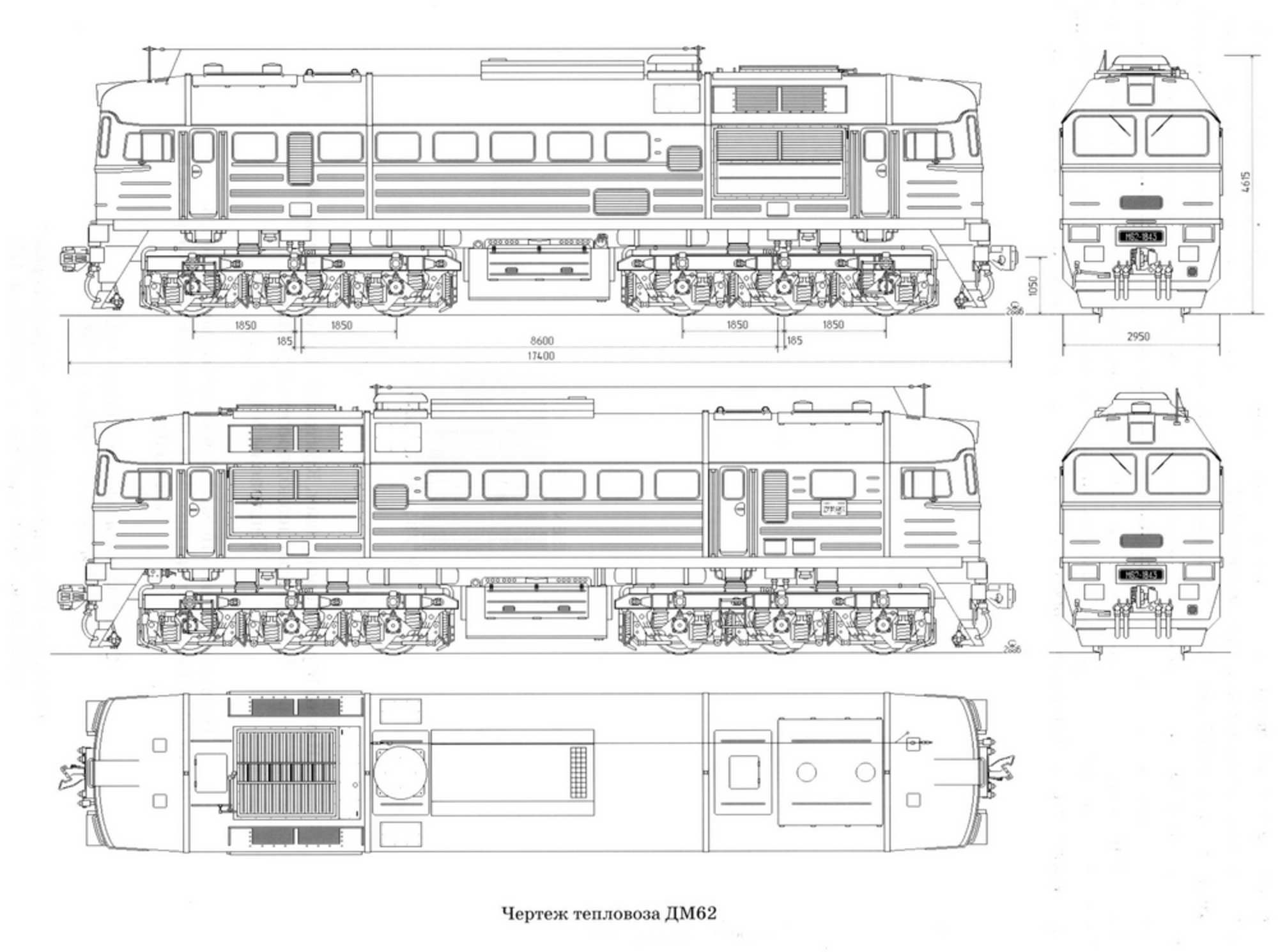
The DM62 diesel locomotive was constructed on the basis of the M62 diesel locomotive. This specialized version for operation as part of the combat railway missile system (BZhRK) was built in 1982-1994. The DM62 was distinguished by light shields, a filter-ventilation unit with gas mask ports, and other features. This modification was intended for domestic use only and was not exported. DM62 diesel locomotives were under the jurisdiction of the USSR Ministry of Defense.

The DM62 was produced for a relatively short period — 12 years, although they outlived the country that produced them. A total of 154 diesel locomotives were produced in 1982-1994. In the 1980s the DM62 diesel locomotives, which had been in service with the BZhRK for about three years, were transferred from the Ministry of Defense to the public railways of the Ministry of Railways after the dismantling of their special equipment. After the collapse of the USSR and the gradual curtailment of the railway missile basing program, this process continued. After the disbandment of the BZhRK, all the diesel locomotives were transferred to public roads and industrial enterprises.

A Rare Exhibit

The DM62-1731 diesel locomotive was built in 1983 at the Voroshilovgrad (now — Lugansk) October Revolution Diesel Locomotive Plant. The serial number of the locomotive is 4891. This is one of the very same 154 locomotives built for the BZhRK. It arrived at the museum from the Khvoynaya depot of the October Railway in July 2006.

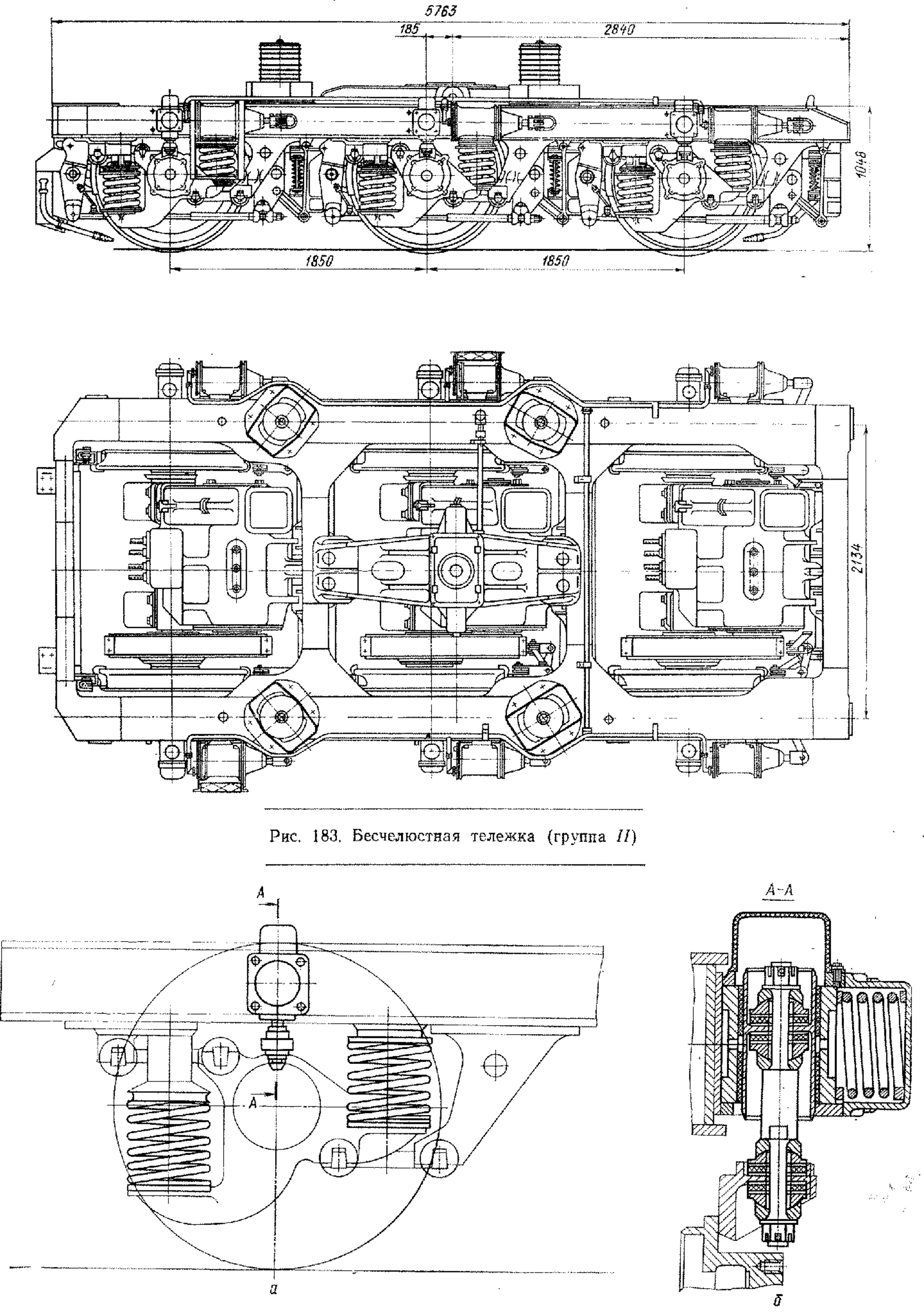
In addition to other wheel sets, each bogie was equipped with four brake cylinders instead of two, as for Soviet railways.

601 locomotives were delivered to the Czechoslovak Socialist Republic under the designation T679.1 for the 1,435 mm gauge and T679.5 (25 units) for operation on the 1,524 mm gauge in the areas bordering the USSR. Later, the designation system was changed, and they received new series - 781. 599 locomotives worked on Czechoslovak Railways, two locomotives on the 1,524 mm gauge were delivered to the East Slovak Iron and Steel Works (T679.5026) in Kosice and the Vojany Power Plant (T679.5027). The last delivered locomotive 781.600 is preserved in the Museum of Czech Roads. Today, all locomotives of this series have been decommissioned. For Czechoslovakia, this was the most widespread series of diesel locomotives on the railways.

Diesel locomotive M62-1 belongs to the Central Museum of Railway Transport.

Parameters

Technical
specifications

Length by axles of automatic couplings, mm
17,400
Width, mm
2,950
Height, mm
4,615
Power, hp
2,000
Shaft speed, rpm
750
Piston stroke, mm
300
Number of cylinders
12
Service weight, t
116
Fuel capacity, kg
3,500
Design speed, km/h
100
Truck type
Jawless
Maximum traction force in continuous mode, kN
191 at 20.9 km/h
Specific fuel consumption, hourly, g/hp
165
Diesel type
14D40 (12DN23/30) with two-stage supercharging
Diesel weight, kg
10,500

Drawings
and diagrams

History

Chronology

  1. 1964 In 1964, in order to conduct a pilot and operational check, identify weak points and determine the level of ease of maintenance, two pilot locomotives M62-1 and M62-2 were built. They were manufactured to 02-T gauge, equipped with SA-3 automatic couplers and wheel pairs for a gauge of 1,524 mm. The pilot locomotives were sent to the Liski depot of the South-Eastern Railway.
  2. 1965 From 1965 to 1988, the Lugansk plant built similar diesel locomotives not only for the Hungarian People's Republic, but also for the Czechoslovak Socialist Republic, the Polish People's Republic, the German Democratic Republic, the Democratic People's Republic of Korea, and the Republic of Cuba.
  3. 1965 From 1965 to 1978, 270 M62 001–270 locomotives for 1,435 mm gauge and 18 M62 501–518 locomotives for the broad 1,524 mm gauge were delivered to the Hungarian People's Republic.
  4. 1966 Locomotives were delivered to the Polish Railways from 1966 to 1988 - a total of 1,113 locomotives for the standard gauge of 1,435 mm. Between 1977 and 1980, 68 locomotives for the 1,524 mm gauge were purchased for the industry. The series received the designation ST44 and track numbers in the range from 0001 to 2058.
  5. 1966 From 1966 to 1975, the GDR purchased a total of 378 locomotives in three batches for its DR (Deutsche Reichsbahn) railways. They were initially designated V200 (001–378), from 1970 — BR200, and after 1992 — series 220.
  6. 1970 Locomotives were built for the railways of the Soviet Union from 1970 to 1976. A total of 723 locomotives of this series were produced: from M62-1, M62-2 and from M62-1003 to M62-1723.
  7. 1971 Experimental diesel locomotives M62-1 and M62-2 after operation on the South-Eastern, Central Asian and Lvov railways were transferred in 1971 for work in track machine stations.