Today the museum is open from 10:00 to 18:00

Map

Exhibit description

Covered wagon Ok 470 843

The car was created in 1942 at the Steinfurt plant in the German Königsberg, now the Russian Kaliningrad. It was delivered to the USSR as a war trophy or as part of reparations supplies. Soviet railway workers adapted it for work on the USSR railways with a track gauge of 1,524 mm.

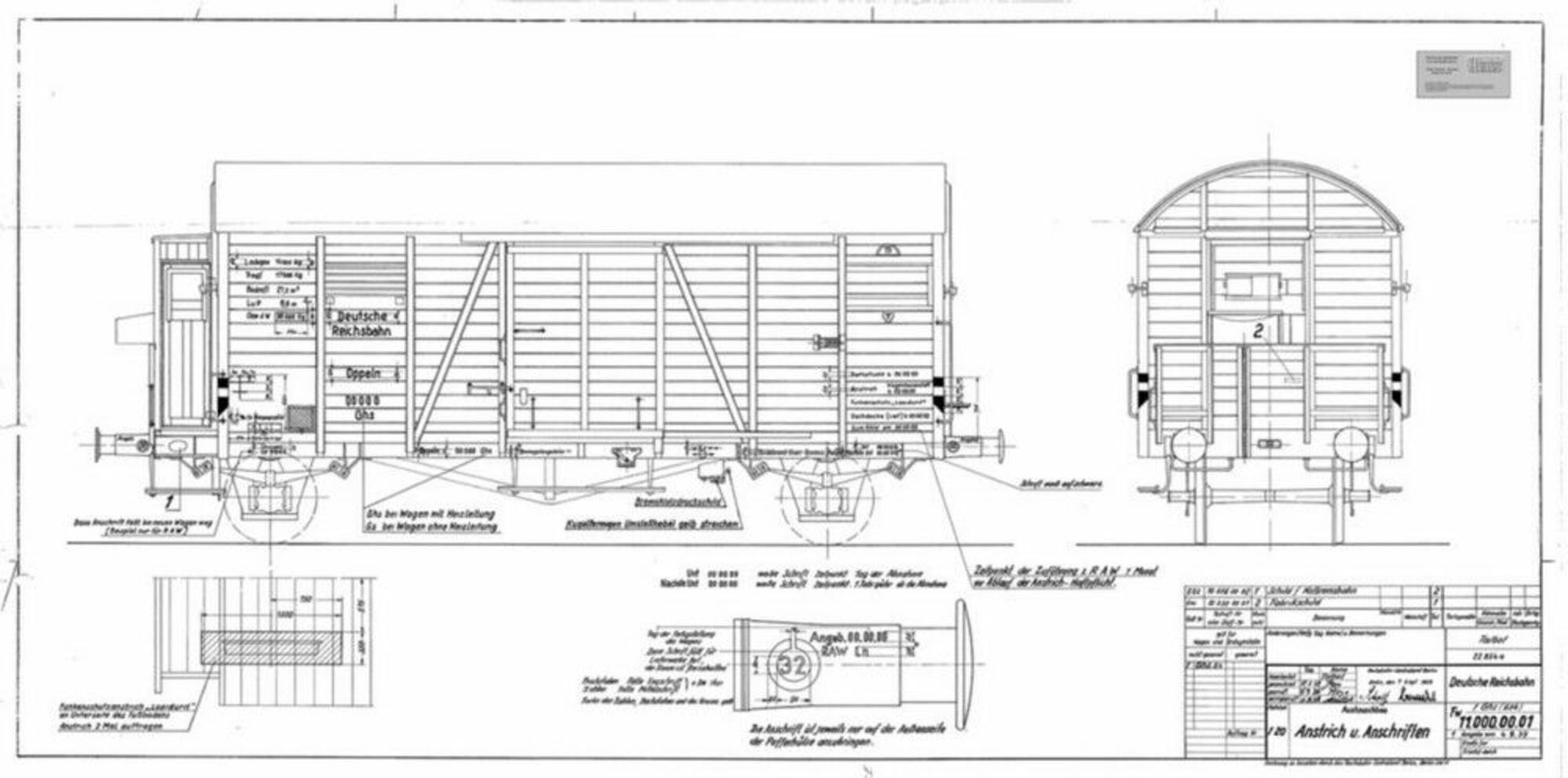
The wagon was named after the German city of Oppeln, now Opole in Poland. From 1921 onwards, German freight wagon types were named after cities. This system made it easier to identify a wagon’s purpose and design features.

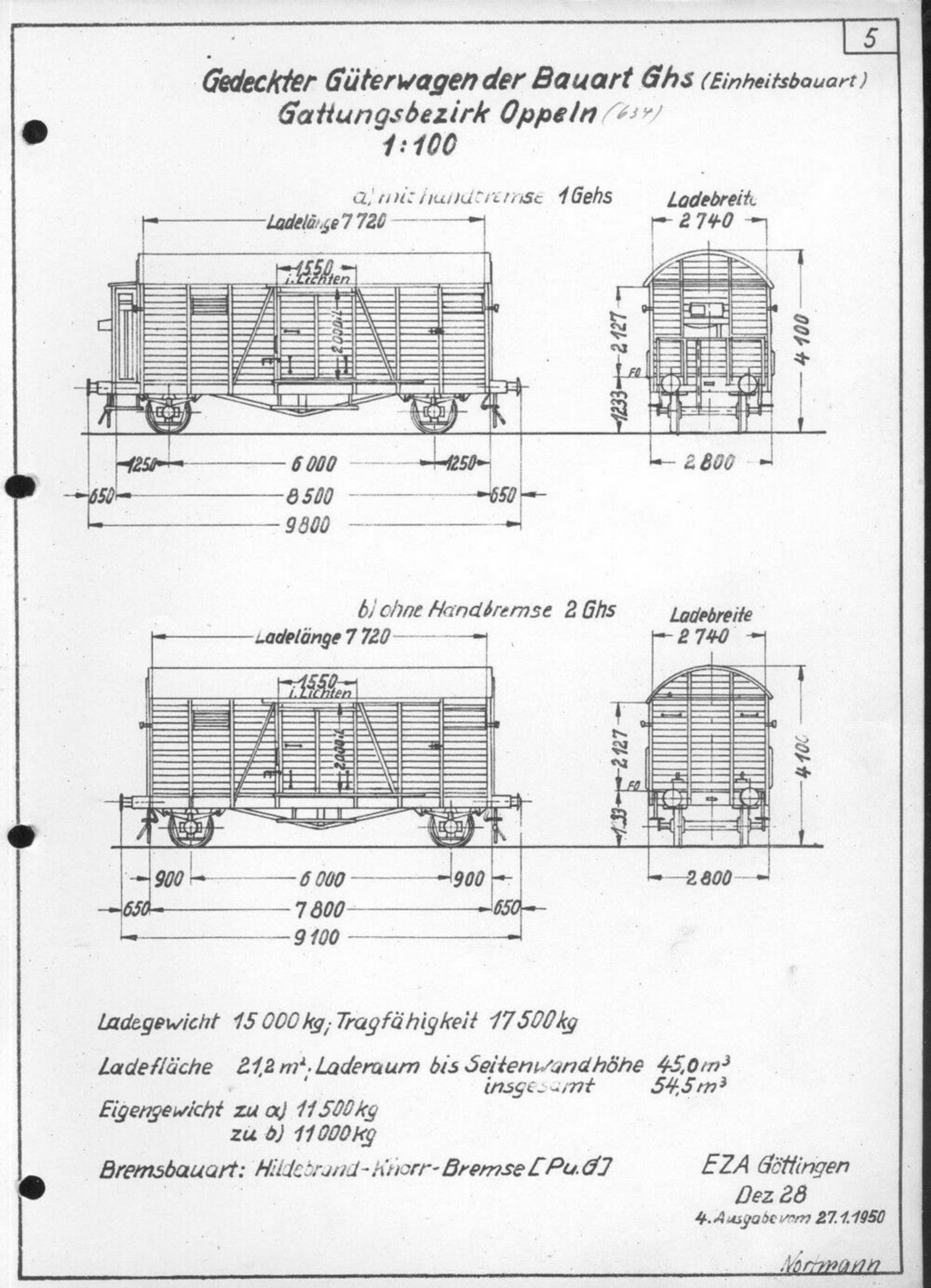
Serial production of Oppeln covered freight wagons began in 1937, with welded construction introduced in 1938. By 1945, around 28,100 short-type wagons, known as kurzer Oppeln, had been built. Approximately 6,150 were equipped with hand brakes and a brakeman’s cab.

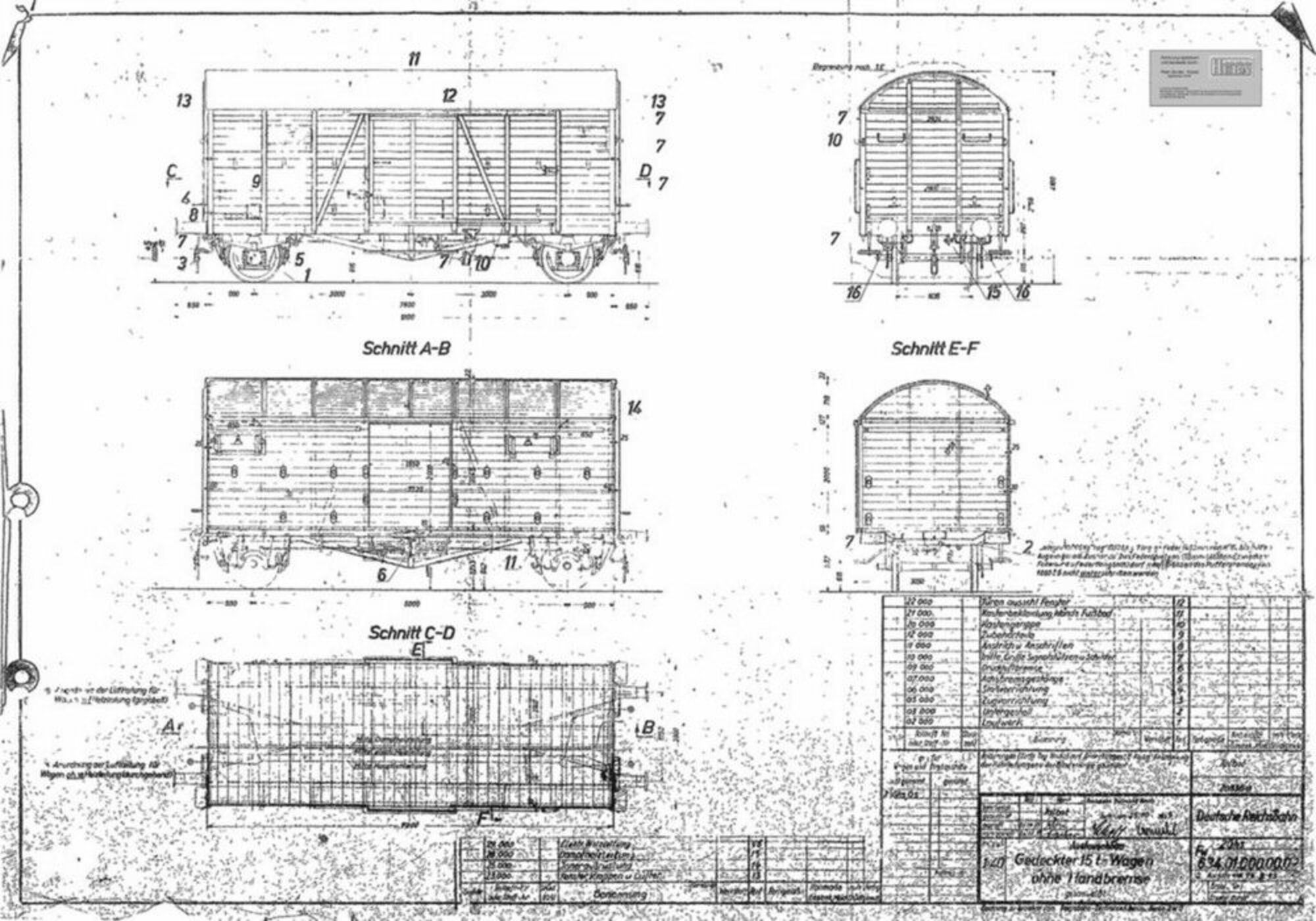
The European railway gauge was narrower than the Soviet gauge, so the wagon could not be used without modification. To adapt it to the 1,524 mm gauge, railway workers modified the axle-box assemblies and the mountings of the spring suspension. Traces of this conversion still reveal the wagon’s European origin.

Oppeln type covered cars with a carrying capacity of 15 tons were built for German railways from 1934 About a quarter of them were equipped with hand brakes. The rest had only air brakes or were produced without brakes.

Parameters

Technical
specifications

Year of construction
1942
Number of axles
2
Load capacity, t
17,5
Tara, t
15
Body volume, m3
45
Distance between axles
6 000 mm
Frame length
7 000 mm
Buffer length
8 500 mm
Bow spring suspension
Single
Bow spring length
1 400 mm
Design speed
90 km/h

Drawings
and diagrams

History

Chronology

  1. 1934–1937 The first experimental Oppeln wagons were built. Serial production for the rapid transportation of goods began in 1937.
  2. 1938 Welding was introduced in the construction of the wagons, simplifying and accelerating production.
  3. 1942 Wagon Ok 470-843 was built at the Steinfurt works in Königsberg, now Kaliningrad.
  4. By 1945 Around 28,100 kurzer Oppeln wagons had been built in Europe. Approximately 6,150 were equipped with a hand brake and a brakeman’s cab.
  5. 1996 Wagon Ok 470-843 entered the museum’s collection from Track Maintenance Station No. 28 at Gory on the October Railway.