Today the museum is closed

Map

Exhibit description

Third-Class Suburban Passenger Car R.O. No. 3249

In the early 20th century, dachas — second homes in the countryside — became very popular in Russia. Anton Chekhov wrote: “In the past, there were only the fine and the common folk in the countryside; now, there are also dachniks [an emerging new class of people wealthy enough to own a dacha]. All cities, even the smallest, are now surrounded by dachas. In twenty years’ time, the dachniks will have multiplied to an extraordinary extent.”

In early 20th-century Russia, dachas became extremely popular. This created demand for a new type of passenger transport — suburban traffic.

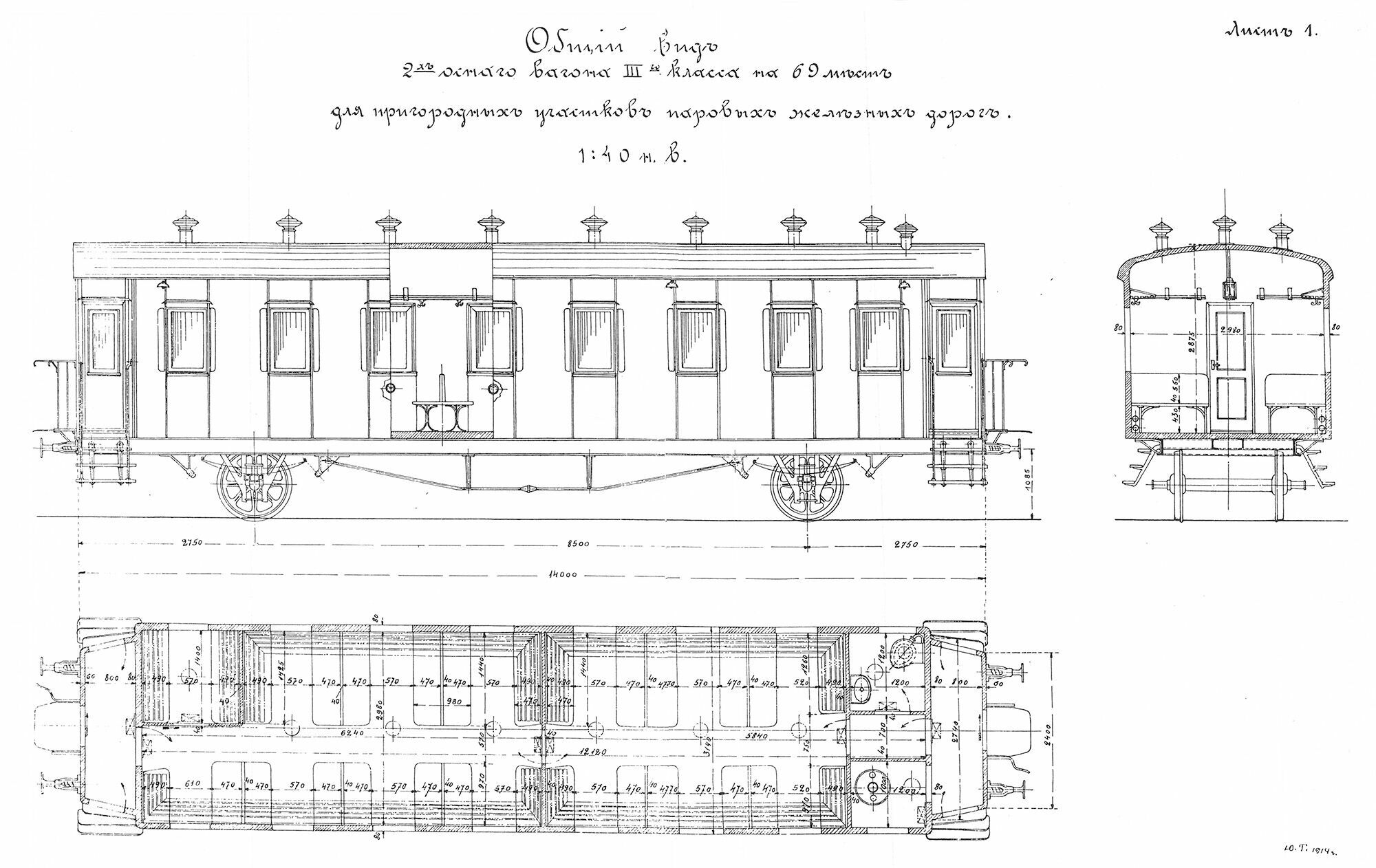
The increasing popularity of dachas created demand for a new type of passenger transport — suburban traffic. New cars were required, with seats only and providing a level of comfort no lower than third class. The “Specifications for a two-axle third-class car (69 seats) for suburban traffic, 14 metres long” were approved by the head of the Railway Administration of the Ministry of Railways in the Technical Meeting Journal of 24th September 1912.

These cars were built in the Russo-Baltic, the Fēnikss (both in Riga) and the Petrograd wagon works from 1914 to 1918. In the mid-1920s, they became a model for the development of Soviet two-axle passenger cars, which used more modern Noltein suspension. These cars were produced in both suburban and long-distance versions.

Museum Exhibit

The car exhibited by the museum was built no earlier than 1915, during WW I, when it was permitted to use pine instead of oak when building the body frame. In 1951, it was assigned to Leningrad-Finlyandskiy Railway Car Station of the Oktyabrskaya Railway under number 2998, and by 1973, it had been removed from the passenger car fleet.

During WW I, due to the lack of materials, it was permitted to use pine instead of oak when building the body frame.

The car came to the museum from Track Laying Machine Station No. 29 (Toskovo) of the Oktyabrskaya Railway in 1996.

Parameters

Technical
specifications

Car manufacturer
Partnership of St. Petrsburg Car Works
Manufacturer since 1915
Russian-Baltic plant in Riga
Manufacturer since 1916
Tver Plant
Year of issue
1914–1918
General data
Customer
State-owned railways
Wagon type
Class III rigid suburban
Number of axles
2
Number of seating places
69
Car length by buffers, mm
15 190
Wagon length by frame, mm
14 000
Body outside width, mm
3 140
Wheelbase, mm
8 500
Height from floor level to roof top, mm
2 875
Lighting
Candlestick
Linkage suspension
Single
Ventilation
Natural by means of roof deflectors

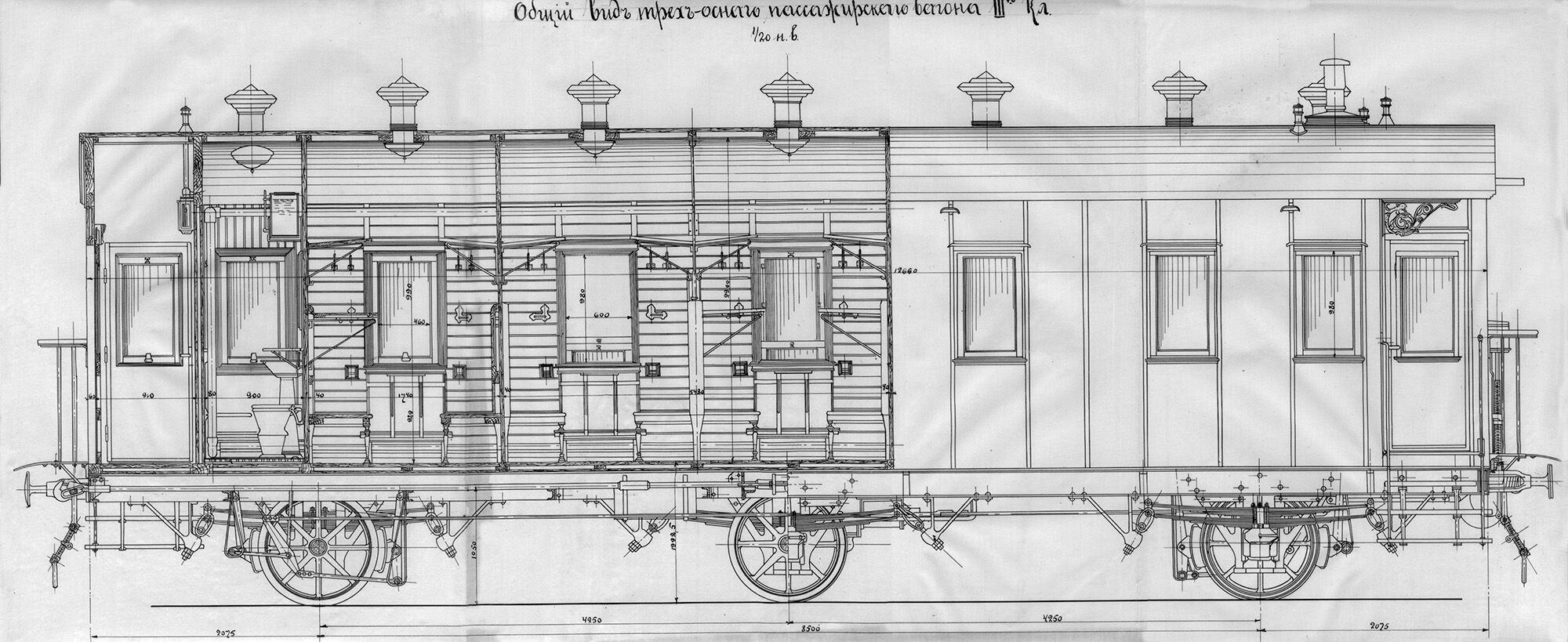
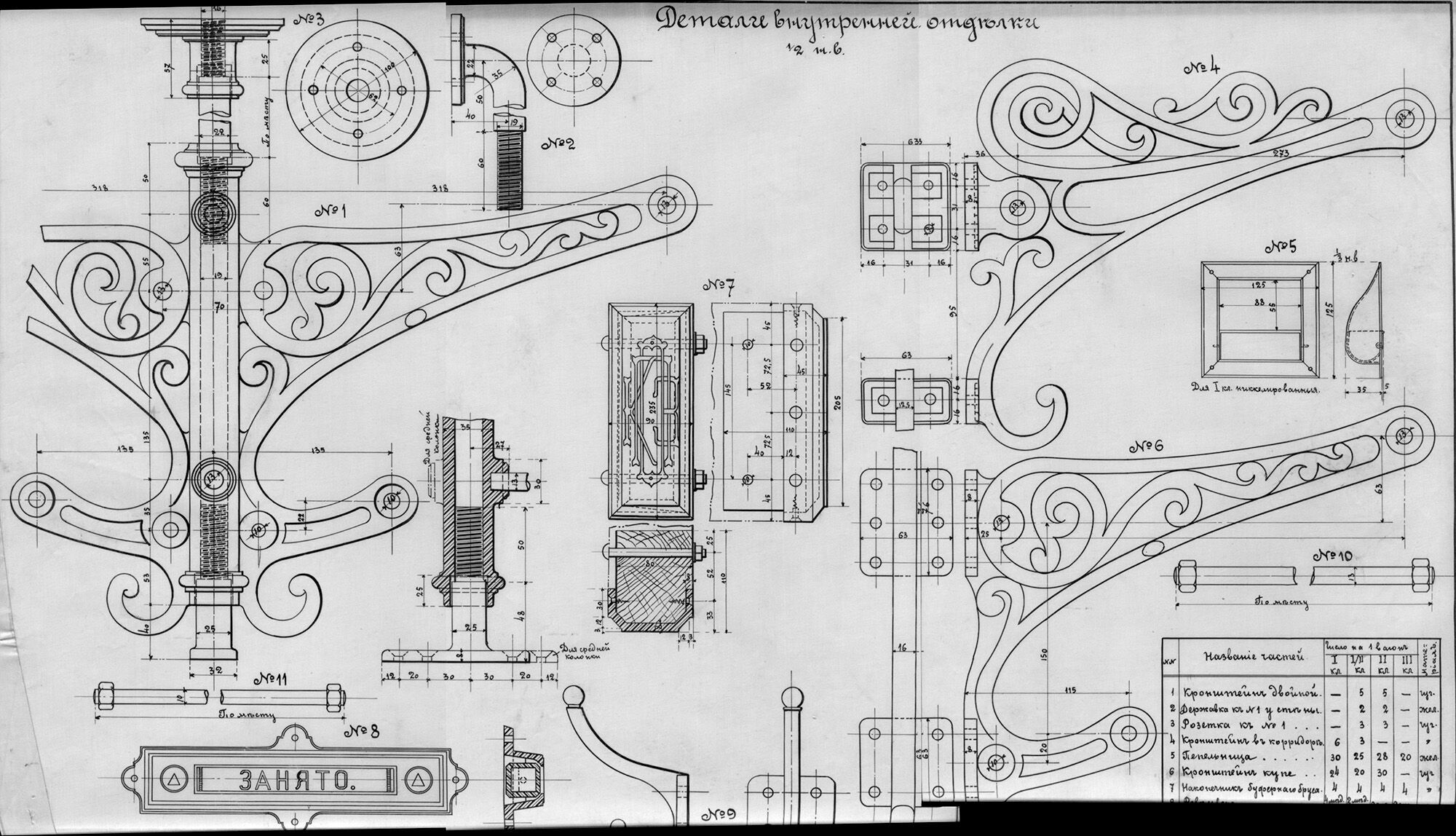
Drawings
and diagrams

History

Chronology

  1. 1912 The head of the Railway Administration of the Ministry of Railways approves the “Specifications for a two-axle third-class car (69 seats) for suburban traffic, 14 metres long”.
  2. 1914–1918 Wagon works in Riga and Petrograd build two-axle third-class passenger cars with 69 seats for suburban traffic.
  3. 1915–1918 Construction of car no. 3249 of the Riga-Oryol Railway.
  4. 1926 Third-class cars become a model for the development of Soviet two-axle passenger cars, which used more modern Noltein suspension.
  5. 1951 The car is assigned to Leningrad-Finlyandskiy Railway Car Station of the Oktyabrskaya Railway under number 2998.
  6. 1973 The exhibit is removed from the car fleet.
  7. 1996 The car comes to the museum from Track Laying Machine Station No. 29 (Toskovo) of the Oktyabrskaya Railway.
  8. 2012–2013 The body of the car is repaired by ARS-M LLC.
  9. 2016 The interior is restored by ARS-M LLC.